


Travel Vaccines: How to Get Vaccinated for Yellow Fever, Malaria, and More
If you’re planning an international trip, you may need to update your vaccinations. Learn where to get travel vaccines, such as for yellow fever, and how to save on the cost.
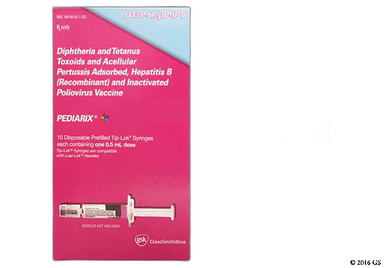
Pediarix is a combination vaccine that protects your child from infections due to diphtheria, tetanus, pertussis (collectively also known as DTaP), hepatitis B, and poliomyelitis (or polio). This vaccine is a 3-dose series, typically given to children ages 6 weeks to 6 years old as injections into the muscle.

Prevention of:
Pediarix is an inactivated vaccine that protects your child from three types of bacteria (Corynebacterium diphtheriae (diphtheria), Clostridium tetani (tetanus), and Bordetella pertussis (pertussis), and two viruses (hepatitis B virus and poliovirus). The vaccine helps your child's immune system make antibodies that will attack these bacteria or viruses if they ever infect your child.
| Common Brands | Pediarix |
|---|---|
| Drug Class | Vaccine |
| Controlled Substance Classification | Not a controlled medication |
| Generic Status | No lower-cost generic available |
| Availability | Prescription only |

The following side effects may get better over time as your body gets used to the medication. Let your healthcare provider know immediately if you continue to experience these symptoms or if they worsen over time.
The following side effects occurred in at least 25% of people who received Pediarix:
Contact your healthcare provider immediately if you experience any of the following.
Side effects that you should report to your care team as soon as possible:
Side effects that usually do not require medical attention (report these to your care team if they continue or are bothersome):




Pediarix can cause some serious health issues. This risk may be even higher for certain groups. If this worries you, talk to your doctor or pharmacist about other options.
As with any vaccine, there's a rare chance that your child might have a severe allergic reaction to Pediarix. The risk is higher if your child is allergic to latex since the tip caps of the prefilled syringes are made with natural rubber latex. Your provider might ask you and your child to stay at the pharmacy or clinic for a short period of time after you've received your vaccine to make sure your child can get proper care in case of a serious allergic reaction. Sometimes, these reactions can happen after you've already left the clinic. Get medical help right away if you notice symptoms of a severe allergic reaction, such as feeling faint, swelling of the face, closing of the throat, difficulty breathing, hives or rash, dizziness, nausea, or chest pain.
Pediarix might raise your child's risk of developing a fever compared to receiving the vaccines separately. Monitor your child for fever after they get this vaccine, and ask your child's provider which medications you can give to them if needed.
Tell your child's provider or pharmacist if your child has ever had side effects within 2-3 days after receiving a pertussis vaccine, such as high fever (105 degrees F or higher), fainting, continuous crying lasting at least 3 hours, or seizures with or without a fever.
Pediarix might not work as well in people with a weakened immune system. This can raise the risk of getting diphtheria, tetanus, and whooping cough, even after you've received the vaccine. If your child has any medical conditions (e.g., HIV (human immunodeficiency virus) or cancer) or takes medications that weaken the immune system (e.g., high-dose corticosteroids or transplant medications), talk to your child's provider before they receive Pediarix.
Fainting is associated with injectable vaccines, such as Pediarix. Signs of fainting include changes in vision, a tingling sensation, and stiffening or twitching of your arms and legs. Let your child's provider know if your child has fainted after vaccines in the past so they can be monitored.
Vaccines that are injected into the muscle, like Pediarix, can raise the risk of apnea in babies who were born prematurely. This is a condition where babies have a temporary pause in their breathing, with or without a slowed heart rate or low oxygen level. If your baby was born prematurely, be sure to discuss the benefits and risks of receiving Pediarix with your child's provider.
Although very rare, some people have reported getting GBS after they've received vaccines containing tetanus toxoid-like Pediarix. GBS is a rare condition that causes muscle weakness and paralysis. Let your child's provider know right away if your child has experienced these symptoms, especially if it occurred within 6 weeks of receiving a tetanus toxoid-containing vaccine.

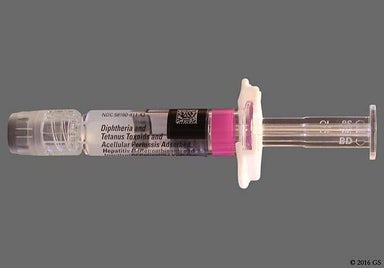
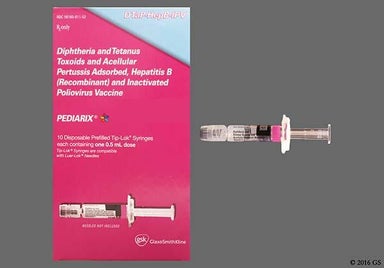
 Syringe
| Dosage | Quantity | Price as low as | Price per unit |
|---|---|---|---|
| 0.5ml | 1 syringe | $87.00 | $87.00 |
Pediarix is given as an injection into the thigh muscle (children younger than 1 year of age) or shoulder muscle (children 1 year and older) by a healthcare provider.
Note: Please see FAQs for more details about the use of Pediarix outside of the primary vaccine schedule.


Contraindications are specific health conditions or situations in which a person should not take a medication due to safety concerns. If you have any of the following conditions or if any of the following apply to you, let your healthcare provider know because Pediarix will not be safe for you to take.


Prescription savings
Stop paying too much for your prescriptions. Compare prices, get pharmacy coupons, and save up to 80%. Find expert answers to your health questions so you can make the best decisions for yourself and your family.
Health conditions
Medications & treatment
Access & affordability
 Our monthly healthcare membership can help you save thousands on your prescription costs.
Resources

The Advisory Committee on Immunization Practices (ACIP) of the Centers for Disease Control and Prevention (CDC) recommends routine vaccination against DTaP, hepatitis B, and polio for all children. Pediarix is a combination vaccine for children age 6 weeks up until 7 years who need to receive the first 3 doses of the DTaP, hepatitis B, and polio vaccine series.
It's important for your child to complete the DTaP, hepatitis B, and polio vaccine series so they can be fully protected from diphtheria, tetanus, pertussis (whooping cough), hepatitis B, and polio. These infections can cause severe complications, including death. If your child needs to complete the DTaP, hepatitis B, and polio vaccine series, Pediarix is a good option since it's a combination vaccine, which means fewer shots and less pain for your child.
Three doses of Pediarix is enough to complete the hepatitis B vaccine series, but your child will need to get additional vaccines to complete their DTaP and polio vaccine series. Please ask your child's provider what specific vaccines your child still needs to get. Be sure to tell their provider that your child has received Pediarix because this can affect what other vaccines their provider recommends to complete their DTaP and polio series.
Your child might be able to receive Pediarix if they've already received a different DTaP, hepatitis B, or polio-containing vaccine. But it depends on how many doses your child has already received and which manufacturer(s) the vaccines are from. For example, if your child received 1 or 2 doses of Infanrix (DTaP vaccine), they can get Pediarix to complete the first 3 doses in the series, since the DTaP components are the same. But it isn't known if children who received 1 or more doses of a DTaP vaccine from a different manufacturer can safely get Pediarix. For more information on whether your child can receive Pediarix, contact your child's provider or pharmacist.
There are many different vaccines available in the United States that help protect against diphtheria, tetanus, and pertussis. In general, upper-case letters in the abbreviations mean full-strength doses of each part of the vaccine, whereas lower-case letters mean lower-strength doses. The Tdap and DTaP vaccines protect against all three infections (diphtheria, tetanus, and pertussis). On the other hand, the DT and Td vaccines only protect against tetanus and diphtheria. The DTaP and DT vaccines are for babies and young children who need full-strength doses to build up protection, whereas the Tdap and Td vaccines are recommended for older children and adults. Pediarix is a DTaP vaccine that also has hepatitis B and polio vaccines in one shot.
