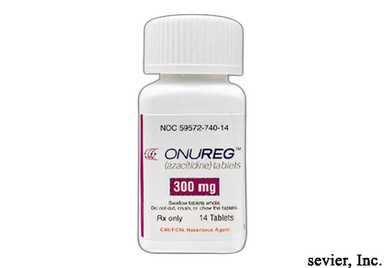
Onureg
Onureg (azacitidine) is a first-choice oral medication used for maintenance treatment of acute myeloid leukemia (AML). This medication is only for people who no longer have signs and symptoms of AML (complete remission) after receiving induction chemotherapy, but aren’t able to complete intensive curative therapy, like a stem cell (bone marrow) transplant. It can help people with this condition live longer. Onureg (azacitidine) is only taken for 2 weeks during each monthly chemotherapy cycle. But it can put you at risk for serious side effects, such as infections, nausea, and diarrhea.


What is Onureg (azacitidine)?
What is Onureg (azacitidine) used for?
- Acute myeloid leukemia maintenance treatment in adults
How Onureg (azacitidine) works
Onureg (azacitidine) is a chemotherapy medication called a hypomethylating agent. It works by inserting itself in the genetic material of cancer cells. By doing this, Onureg (azacitidine) turns on certain genes that help kill cancer cells. As a result, AML cells no longer grow out of control.
Drug facts
| Common Brands | Onureg |
|---|---|
| Drug Class | Antimetabolite |
| Controlled Substance Classification | Not a controlled medication |
| Generic Status | No lower-cost generic available |
| Availability | Prescription only |

Side effects of Onureg (azacitidine)
The following side effects may get better over time as your body gets used to the medication. Let your healthcare provider know immediately if you continue to experience these symptoms or if they worsen over time.
Common Side Effects
- Low white blood cells (up to 74%)
- Nausea (65%)
- Low platelets (65%)
- Vomiting (60%)
- Diarrhea (50%)
- Tiredness or weakness (44%)
- Constipation (39%)
- Fever, cough, and other symptoms of pneumonia (27%)
- Low red blood cells (25%)
- Stomach pain (22%)
Less Common Side Effects
- Weight loss
- Joint pain
- Not feeling hungry
- Low white blood cells with fever
- Dizziness
- Pain in extremity
Onureg (azacitidine) serious side effects
Contact your healthcare provider immediately if you experience any of the following.
- Serious infections: fever, headache, chills, extreme tiredness, low energy, muscle aches, cough, sore throat, congestion
- Serious bleeding: unusual bruising or bleeding, bleeding that takes longer to stop, bleeding from the nose or gums, black or tarry stool
The following Onureg (azacitidine) side effects have also been reported
Side effects that you should report to your care team as soon as possible:
- Allergic reactions—skin rash, itching, hives, swelling of the face, lips, tongue, or throat
- Infection—fever, chills, cough, sore throat, wounds that don't heal, pain or trouble when passing urine, general feeling of discomfort or being unwell
- Low red blood cell level—unusual weakness or fatigue, dizziness, headache, trouble breathing
- Unusual bruising or bleeding
Side effects that usually do not require medical attention (report these to your care team if they continue or are bothersome):
- Constipation
- Diarrhea
- Fatigue
- Loss of appetite
- Nausea
- Stomach pain
- Vomiting

Get your GoodRx coupon

Pros and cons of Onureg (azacitidine)
Pros
- Taken by mouth once a day
- First-choice treatment option for maintenance treatment of AML
- Taken with or without food
Cons
- Common side effects include nausea, vomiting, diarrhea, and tiredness.
- Brand-name only, so it might be expensive
- Might affect your ability to have children

Pharmacist tips for Onureg (azacitidine)

- Take Onureg (azacitidine) with or without food at the same time every day. Swallow the tablet whole. Don’t cut, chew, or crush the tablet.
- You’re more likely to experience nausea or vomiting with Onureg (azacitidine) during the first 2 cycles of treatment. Your provider will prescribe you anti-nausea medication, such as ondansetron (Zofran) or prochlorperazine, to ease these symptoms. Take these medications 30 minutes before taking each dose of Onureg (azacitidine), for at least the first 2 cycles of treatment. If you don’t experience any nausea, your provider might stop the nausea medications for future cycles.
- You might have diarrhea while taking Onureg (azacitidine). If so, let your provider know because they can recommend antidiarrheal medications, like loperamide (Imodium A-D), to ease your symptoms.
- If you miss a dose of Onureg (azacitidine), or vomit after taking a dose, don’t take another dose that day. Take your next dose at the normally scheduled time.
- Ask your provider or pharmacist about the best way to handle and throw away Onureg (azacitidine) safely. Anticancer medications can be very harmful to people who handle or come into contact with them.

Risks and warnings for Onureg (azacitidine)
Onureg (azacitidine) can cause some serious health issues. This risk may be even higher for certain groups. If this worries you, talk to your doctor or pharmacist about other options.
Low blood cell counts
Onureg (azacitidine) can cause your red blood cell, white blood cell, and platelet counts to drop. When these cell counts are lower than normal, you might get tired more easily or be at higher risk for bleeding and developing infections. Your provider will check your blood cell counts every other week during your first 2 chemotherapy cycles, and then monthly before the start of each cycle. Let your provider know if you develop a fever or start to feel sick, have any unusual bruising or bleeding, or feel very tired or out of breath. If this happens you might need to have your dose lowered or stop this medication altogether.
Risk of early death in people with certain blood problems (myelodysplastic syndromes)
- Risk factors: Myelodysplastic syndrome
If you have a blood condition called myelodysplastic syndrome (MDS), let your provider know because Onureg (azacitidine) isn't recommended for you. Clinical trials showed that there's a higher risk for early death (typically from sepsis) after Onureg (azacitidine) treatment for people with MDS than people without MDS. If you have MDS, ask your provider about other treatment options.
Possible risk of harm to an unborn baby
Based on animal studies, Onureg (azacitidine) can harm an unborn baby if taken by mothers during pregnancy. Because of these risks, females who are able to become pregnant should use birth control during Onureg (azacitidine) treatment and for at least 6 months after the last dose. Let your provider know right away if you become pregnant while you’re still receiving Onureg (azacitidine).
If you’re male and have a partner who’s able to become pregnant, you should use birth control during treatment with Onureg (azacitidine) and for at least 3 months after the last dose.
Possible risk for fertility problems
Onureg (azacitidine) might cause fertility problems in males and females. This can affect your ability to have children. Let your healthcare provider know if you have concerns about fertility before starting Onureg (azacitidine).

Onureg (azacitidine) dosage
 Tablet
| Dosage | Quantity | Price as low as | Price per unit |
|---|---|---|---|
| 300mg of | 14 tablets | $28,605.56 | $2,043.25 |
Typical dosage for Onureg (azacitidine)
Acute myeloid leukemia
Each chemotherapy cycle with Onureg (azacitidine) lasts about 1 month (28 days).
- Days 1-14: The typical dose is to take 300 mg by mouth daily.
- Days 15-28: Don’t take any Onureg (azacitidine).
Repeat chemotherapy cycle.
Your dose of Onureg (azacitidine) might be different if you experience certain side effects.




