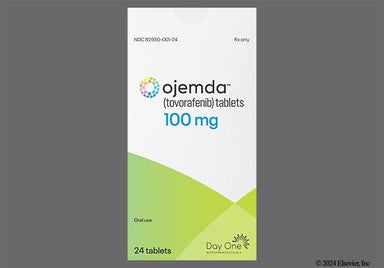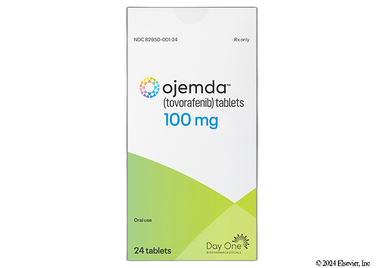
Ojemda
Ojemda (tovorafenib) is a targeted cancer medication called a kinase inhibitor. It's used to treat a type of brain tumor called pediatric low-grade glioma (LGG) with certain BRAF gene changes. Ojemda (tovorafenib) is approved for people 6 months and older. It's used when their tumor has come back after treatment or doesn't get better with other treatments. Ojemda (tovorafenib) comes as tablets and as an oral suspension. It's taken by mouth once a week. Common side effects include rash, hair color changes, and tiredness.


What is Ojemda (tovorafenib)?
What is Ojemda (tovorafenib) used for?
- Pediatric low-grade glioma (LGG) that has come back or hasn't responded well to treatment and has certain BRAF gene changes
How Ojemda (tovorafenib) works
Ojemda (tovorafenib) is a type of kinase inhibitor.
It works by blocking RAF kinases or proteins, including BRAF, that tell cells when to grow and divide. In some low-grade gliomas, changes in the BRAF gene keep these growth signals turned on. This causes tumor cells to grow too quickly
By blocking BRAF signals, Ojemda (tovorafenib) can help slow the growth and spread of brain tumor cells.
Drug facts
| Common Brands | Ojemda |
|---|---|
| Drug Class | BRAF inhibitor |
| Controlled Substance Classification | Not a controlled medication |
| Generic Status | No lower-cost generic available |
| Availability | Prescription only |

Side effects of Ojemda (tovorafenib)
The following side effects may get better over time as your body gets used to the medication. Let your healthcare provider know immediately if you continue to experience these symptoms or if they worsen over time.
Common Side Effects
- Lower hemoglobin levels (90%)
- Lower phosphate levels (87%)
- Higher liver enzyme levels (up to 83%)
- Higher creatine phosphokinase (CPK) levels (83%)
- Rash (77%)
- Hair color changes (76%)
- Tiredness (55%)
- Viral infection (55%)
- Lower potassium levels (51%)
- Lower white blood cell count (up to 50%)
- Vomiting (50%)
- Headache (45%)
- Bleeding (42%)
- Fever (39%)
- Dry skin (36%)
- Constipation (33%)
- Nausea (33%)
- Acne-like rash (31%)
- Upper respiratory tract infection (31%)
Less Common Side Effects
- Stomach pain
- Diarrhea
- Mouth sores
- Itching
- Swelling
- Nail bed infection (paronychia)
- Photosensitivity reaction (rash, sunburn)
- Skin discoloration
- Muscle pain
- Joint pain
- Slower growth in height
- Higher bilirubin levels
- Lower sodium levels
- Lower albumin protein levels
Ojemda (tovorafenib) serious side effects
Contact your healthcare provider immediately if you experience any of the following.
- Serious bleeding: severe headache, dizziness, weakness, coughing up blood, vomiting blood, red or black stools
- Severe skin reactions: severe rash, blistering, peeling, redness, irritation, painful sunburn-like reaction
- Liver problems: yellow skin or eyes, dark urine, nausea, vomiting, loss of appetite, tiredness, pain in the upper right side of the stomach
The following Ojemda (tovorafenib) side effects have also been reported
Side effects that you should report to your care team as soon as possible:
- Allergic reactions—skin rash, itching, hives, swelling of the face, lips, tongue, or throat
- Bleeding—bloody or black, tar-like stools, vomiting blood or brown material that looks like coffee grounds, red or dark brown urine, small red or purple spots on skin, unusual bruising or bleeding
- Liver injury—right upper belly pain, loss of appetite, nausea, light-colored stool, dark yellow or brown urine, yellowing skin or eyes, unusual weakness or fatigue
- Skin reactions on sun-exposed areas
Side effects that usually do not require medical attention (report these to your care team if they continue or are bothersome):
- Acne
- Change in hair color
- Constipation
- Dry skin
- Fatigue
- Headache
- Nausea

Get your GoodRx coupon

Pros and cons of Ojemda (tovorafenib)
Pros
- An option when other treatments haven't worked well or when the tumor comes back
- Taken once a week at home
- Comes as tablets and as an oral suspension
- Approved for children as young as 6 months old
Cons
- Can cause rash and sun sensitivity
- Can cause hair color changes (lighter, gray, or white)
- Needs regular growth checks
- Needs regular blood tests to watch for liver problems

Pharmacist tips for Ojemda (tovorafenib)

- Take Ojemda (tovorafenib) on the same day every week. Keeping a regular weekly routine helps your child's treatment stay on track. Choose an "Ojemda day" or set a calendar reminder to avoid missing doses.
- Take Ojemda (tovorafenib) with or without food. The medication doesn't have to be timed with food, so you can give it whenever works best for your family's schedule.
- If your child misses a Ojemda (tovorafenib) dose by 3 days or less, give it as soon as you remember. Then, your child should take their next dose on the usual scheduled day. If it’s been more than 3 days, skip the missed dose and wait for the next scheduled day. This helps lower the chance of taking doses too close together.
- If vomiting happens right after taking Ojemda (tovorafenib), give the dose again. This helps make sure your child takes the full weekly dose.
- Talk to your child's oncology care team about side effects while taking Ojemda (tovorafenib). They can recommend ways to prevent or manage side effects if they happen. For example, gentle, fragrance-free skin care products or moisturizers can help soothe dry or irritated skin.
- Protect your child's skin from the sun while they're taking Ojemda (tovorafenib). The medication can make skin more sensitive to sunlight. This can raise the risk of sunburn. Your child should have sunscreen on, wear sunglasses, and wear protective clothing when outside. Tell the care team if a skin reaction gets worse.
- Keep all scheduled blood work while taking Ojemda (tovorafenib). These tests help the care team find liver problems early, before your child has symptoms. Blood tests are usually done about 1 month after starting treatment and then every 3 months.
- Tell the care team about any unusual bleeding while taking Ojemda (tovorafenib). This medication can raise the risk of bleeding, which can sometimes be very serious. Get medical help right away if your child has a headache that's worse than usual, coughs up blood, has black stools, or has a nosebleed that won’t stop.
- Tell the care team and pharmacist about all your child's medications, vitamins, and supplements. Some can affect how Ojemda (tovorafenib) works, and Ojemda can affect how other medications work. Some interactions can also raise the risk of side effects. The care team can make sure your child's medications are safe to take together.
- If your teen can become pregnant: Use nonhormonal birth control while taking Ojemda (tovorafenib) and for 28 days after the last dose. Ojemda (tovorafenib) can harm an unborn baby. It also can make hormonal birth control, such as birth control pills, work less well. Tell the oncologist right away if your teen becomes pregnant during treatment.
- If your teen has a partner who can become pregnant: Your teen should use birth control (e.g., condoms) while taking Ojemda (tovorafenib) and for 2 weeks after the last dose. This medication can harm an unborn baby if a pregnancy happens during treatment. Tell the oncologist right away if your teen's partner becomes pregnant.
How to take Ojemda (tovorafenib) tablets:
- Swallow Ojemda (tovorafenib) tablets whole with water. Don’t chew, cut, or crush them because that can affect how the medication works.
How to take the Ojemda (tovorafenib) oral suspension:
- Read the Instructions for Use for the Ojemda (tovorafenib) oral suspension. Make sure you know how to prepare, measure, and give the medication. If you're not sure, ask the oncology care team.
- Prepare Ojemda (tovorafenib) oral suspension as outlined in the Instructions for Use. Add exactly 14 mL of room-temperature water to each bottle, then shake well to mix. If you see foam, let it settle before measuring the dose.
- Use the Ojemda (tovorafenib) oral suspension within 15 minutes after mixing. Throw away any liquid that isn't used by then or any leftover liquid. The liquid can't be saved for later.
- Measure the dose using the oral dosing syringe that comes with Ojemda (tovorafenib). This helps make sure your child gets the right amount. Follow the Instructions for Use to measure and give the prescribed dose.

Risks and warnings for Ojemda (tovorafenib)
Ojemda (tovorafenib) can cause some serious health issues. This risk may be even higher for certain groups. If this worries you, talk to your doctor or pharmacist about other options.
Bleeding
Bleeding can happen while taking Ojemda (tovorafenib). This can include nosebleeds. In some cases, serious bleeding can happen in important parts of the body, such as in or around the brain tumor.
Watch for signs of bleeding while your child is taking Ojemda (tovorafenib). Call the oncologist if your child has nosebleeds often or bleeds that take longer than usual to stop. They might pause Ojemda (tovorafenib) and restart it at a lower dose after the bleeding gets better. If the bleeding is severe, they might stop treatment altogether.
Get medical help right away if your child has signs of serious bleeding. These include vomiting or coughing up blood, black or bloody stools, a severe headache, dizziness, or weakness.
Skin problems, including sun sensitivity
Ojemda (tovorafenib) can cause rash, which can sometimes look like acne. It can also make the skin more sensitive to the sun, making it easier to get a sunburn.
Help your child limit their time in direct sunlight during treatment. When going outside, have them use sunscreen, wear sunglasses, and wear clothing that covers their skin, even on cloudy days.
Tell the care team if your child develops a new rash, redness, peeling, skin irritation, or a sunburn-like reaction during treatment. Also tell them if a rash gets worse. Depending on how severe the reaction is, the oncologist can recommend skin care, a visit with a skin specialist, or changes to the Ojemda (tovorafenib) dose.
Liver problems
Ojemda (tovorafenib) can cause liver problems. In studies, some people had higher liver enzyme levels and higher bilirubin levels on their blood test results. These can be signs of liver injury. This sometimes started within a few weeks of treatment.
The oncologist will check your child's liver with blood tests before treatment starts. After starting, they'll check your child's liver 1 month later and then every 3 months after that. These tests help find liver problems before symptoms appear.
Call the oncologist right away if your child has yellow skin or eyes, dark urine, nausea, vomiting, loss of appetite, or pain in the upper right side of the stomach. These can be signs of liver problems.
If lab tests or symptoms show liver problems, the oncologist might pause Ojemda (tovorafenib) and restart it at the same or a lower dose later. If signs are severe, they might stop the medication completely.
Slowed growth in children
- Risk factors: Children and teens who are still growing
Ojemda (tovorafenib) can slow how quickly a child grows. In studies, changes in height growth were reported. But some children's growth slowly improved after treatment was interrupted or stopped.
Your child’s care team will check their growth regularly during treatment. This helps them see if there any changes early and decide if Ojemda (tovorafenib) should be paused, adjusted, or continued as planned. Talk to the oncologist or your child's pediatrician if you’re worried that your child isn’t growing as expected.
Harm during pregnancy
- Risk factors: Pregnancy | Can become pregnant | Using hormonal birth control alone
It's possible that Ojemda (tovorafenib) can harm an unborn baby. This is based on how the medication works and findings from animal studies.
If your teen can become pregnant, they'll likely need to get a pregnancy test done. This is important for the care team to check for pregnancy before treatment starts. Your teen should use effective nonhormonal birth control while taking Ojemda (tovorafenib) and for 28 days after the last dose. Ojemda (tovorafenib) can make hormonal birth control work less well.
If your teen has a partner who can become pregnant, they should use effective birth control, such as condoms, during treatment. Be sure to keep using this form of birth control for 2 weeks after the last dose.
Tell the care team right away if a pregnancy happens or might have happened during treatment with Ojemda (tovorafenib).

Ojemda (tovorafenib) dosage
 Bottle of oral suspension
| Dosage | Quantity | Price as low as | Price per unit |
|---|---|---|---|
| 12ml of 25mg/ml | 8 bottles | $79,517.30 | $9,939.66 |
 Box
Box| Dosage | Quantity | Price as low as | Price per unit |
|---|---|---|---|
| 16 tablets of 100mg | 1 box | $39,761.90 | $39,761.90 |
| 20 tablets of 100mg | 1 box | $39,761.93 | $39,761.93 |
| 24 tablets of 100mg | 1 box | $39,761.97 | $39,761.97 |
Typical dosage for Ojemda (tovorafenib)
The oncologist will calculate the right dose from your child's body surface area (BSA). The BSA is based on your child's height and weight.
Ojemda (tovorafenib) comes as tablets and an oral suspension (liquid). Children with a smaller BSA should take the oral suspension instead of the tablets.
The oncologist will tell you exactly how much Ojemda (tovorafenib) to give. The recommended dose is 380 mg/m² of BSA taken by mouth once a week. The maximum dose is 600 mg once a week.

How much does Ojemda (tovorafenib) cost?
$39,761.90

What are alternatives to Ojemda (tovorafenib)?

Ojemda (tovorafenib) images