

How Much Does the RSV Vaccine Cost?
The RSV vaccine for adults can cost about $350 without insurance. But it is covered by many insurance plans, including Medicare. Find out prices and ways to save.
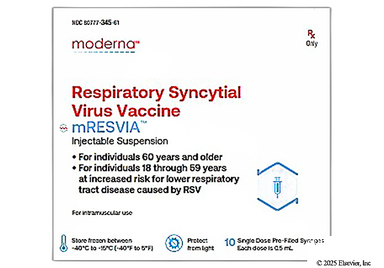
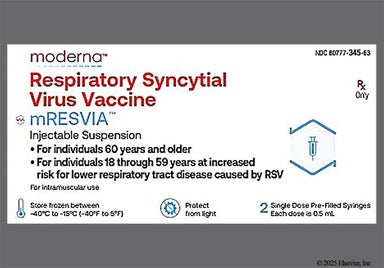
MRESVIA is an mRNA vaccine that's used to protect adults 60 years and older from illness caused by respiratory syncytial virus (RSV). This vaccine is injected into the muscle by a trained healthcare professional (HCP), and you only need to get one dose. Some potential side effects of the MRESVIA RSV vaccine include pain at the injection site, tiredness, headache, and muscle pain.

MRESVIA is an mRNA vaccine. This vaccine contains lab-made mRNA (genetic information) that teaches your body to make a part of a protein found on RSV.
Your immune system recognizes that this harmless protein doesn't belong in your body. This causes your immune system to make antibodies against the protein. The antibodies tell other immune cells to get rid of it.
Your immune system learns what the RSV protein looks like. So when you get infected with RSV, your immune system is ready to fight and protect you from infection.
| Common Brands | MRESVIA |
|---|---|
| Drug Class | Vaccine |
| Controlled Substance Classification | Not a controlled medication |
| Generic Status | No lower-cost generic available |
| Availability | Prescription only |

The following side effects may get better over time as your body gets used to the medication. Let your healthcare provider know immediately if you continue to experience these symptoms or if they worsen over time.
Contact your healthcare provider immediately if you experience any of the following.
Side effects that you should report to your care team as soon as possible:
Side effects that usually do not require medical attention (report these to your care team if they continue or are bothersome):




MRESVIA can cause some serious health issues. This risk may be even higher for certain groups. If this worries you, talk to your doctor or pharmacist about other options.
Although rare, it's possible for MRESVIA to cause a severe allergic reaction. Get medical help right away if you experience tightness in your chest; trouble breathing; skin rash; or swelling in your lips, tongue, throat, or face after you get your MRESVIA shot.
Some people might feel faint after they get injectable vaccines like MRESVIA. To lower your risk of fainting, stay seated for a while after your vaccination and stand up slowly to make sure you don't fall.
MRESVIA might not work as well for people with a weakened immune system. Talk to your primary care provider before you get vaccinated with MRESVIA if you have a medical condition that lowers the immune system, such as human immunodeficiency virus (HIV) or cancer. Also speak with your primary care provider if you take medications that weaken your immune system, like high-dose corticosteroids or transplant medications).

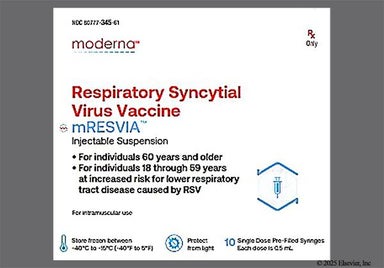
 Carton
| Dosage | Quantity | Price as low as | Price per unit |
|---|---|---|---|
| 0.5ml prefilled syringe | 1 carton | $320.90 | $320.90 |


Prevention of serious lung infections caused by respiratory syncytial virus (RSV) in:
Prevention of serious lung infections caused by respiratory syncytial virus (RSV) in:



Prescription savings
Stop paying too much for your prescriptions. Compare prices, get pharmacy coupons, and save up to 80%. Find expert answers to your health questions so you can make the best decisions for yourself and your family.
Health conditions
Medications & treatment
Access & affordability
Medication discounts


According to the manufacturer Moderna, Mresvia is expected to be available by the 2024/2025 respiratory virus season. Check with your primary care provider or local pharmacy to find out more information.
No, Mresvia isn't a live vaccine. It doesn't contain any live virus. It's an mRNA vaccine that teaches your body to make a protein that's found on RSV, which causes your immune system to build antibodies against it for protection.
During a clinical study that included over 35,000 older adults, researchers found that Mresvia was around 84% effective at preventing illness from RSV infection. The vaccine protected people against both types of RSV (A and B).
The CDC recommends that older adults get their RSV vaccine in the late summer or early fall. This is because RSV typically spreads in the fall and winter. Ask your primary care provider about whether an RSV vaccination is appropriate for you, and if so, when you should get it.
All three are RSV vaccines that are FDA approved for people ages 60 years and older. But Abrysvo is also approved for people between 32 to 36 weeks of pregnancy. Mresvia, Arexvy, and Abrysvo are all given as an injection in the muscle. They each work slightly differently. Talk to your primary care provider about which RSV vaccine might be best for you.
