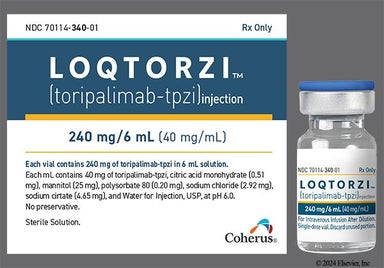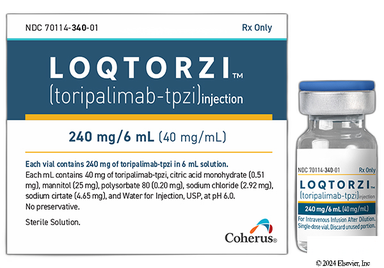
Loqtorzi
Loqtorzi (toripalimab) is an immunotherapy medication used to treat a type of advanced head and neck cancer called nasopharyngeal cancer. It helps your immune system recognize and attack cancer cells. You can receive it alone or with chemotherapy. The medication is given as an intravenous (IV) infusion, usually once every 2 or 3 weeks. Common side effects include muscle pain, cough, and tiredness.


What is Loqtorzi (toripalimab)?
What is Loqtorzi (toripalimab) used for?
- Advanced or metastatic nasopharyngeal cancer, used together with chemotherapy (cisplatin and gemcitabine)
- Advanced or metastatic nasopharyngeal cancer that didn’t improve after platinum-based chemotherapy or can’t be removed with surgery, used alone
How Loqtorzi (toripalimab) works
Loqtorzi (toripalimab) is an immunotherapy called a programmed death-1 inhibitor, or PD-1 inhibitor.
Some cancer cells use the programmed death-1 (PD-1) pathway to hide from the immune system, which lets the cancer keep growing.
Loqtorzi (toripalimab) blocks this pathway, helping your immune system recognize and attack cancer cells more effectively, which can slow or stop cancer growth.
Drug facts
| Common Brands | Loqtorzi |
|---|---|
| Drug Class | PD-1 inhibitor |
| Controlled Substance Classification | Not a controlled medication |
| Generic Status | No lower-cost generic available |
| Availability | Prescription only |

Side effects of Loqtorzi (toripalimab)
The following side effects may get better over time as your body gets used to the medication. Let your healthcare provider know immediately if you continue to experience these symptoms or if they worsen over time.
Common Side Effects
Used with chemotherapy:
- Lower blood cell counts (up to 94%)
- Changes in electrolyte levels (up to 78%)
- Nausea (71%)
- Vomiting (68%)
- Rise in liver enzymes (up to 58%)
- Reduced appetite (55%)
- Constipation (39%)
- Low thyroid levels (38%)
- Rash (36%)
- Fever (32%)
- Diarrhea (31%)
- Numbness or tingling (30%)
- Cough (26%)
- Muscle or bone pain (25%)
- Upper respiratory tract infection (23%)
- Trouble sleeping (23%)
- Dizziness (21%)
- Weakness (21%)
Used alone:
- Lower blood cell counts (up to 52%)
- Changes in electrolyte levels (up to 35%)
- Rise in liver enzymes (up to 30%)
- Low thyroid levels (27%)
- Tiredness (22%)
- Cough (20%)
Less Common Side Effects
Used with chemotherapy:
- Mouth sores
- Itching
- Tiredness
- Headache
- Nose bleed
- High blood pressure
Used alone:
- Fever
- Muscle or bone pain
- Reduced appetite
- Constipation
- Itching
- Rash
- Weight loss
Loqtorzi (toripalimab) serious side effects
Contact your healthcare provider immediately if you experience any of the following.
- Serious immune-related side effects: rash, blisters, skin peeling, diarrhea, trouble breathing, coughing, chest pain, severe stomach pain, mucus or blood in stool
- Serious reaction during infusion: chills, fever, itching, fast heartbeat, trouble breathing
The following Loqtorzi (toripalimab) side effects have also been reported
Side effects that you should report to your care team as soon as possible:
- Allergic reactions—skin rash, itching, hives, swelling of the face, lips, tongue, or throat
- Dry cough, shortness of breath or trouble breathing
- Eye pain, redness, irritation, or discharge with blurry or decreased vision
- Heart muscle inflammation—unusual weakness or fatigue, shortness of breath, chest pain, fast or irregular heartbeat, dizziness, swelling of the ankles, feet, or hands
- Hormone gland problems—headache, sensitivity to light, unusual weakness or fatigue, dizziness, fast or irregular heartbeat, increased sensitivity to cold or heat, excessive sweating, constipation, hair loss, increased thirst or amount of urine, tremors or shaking, irritability
- Infusion reactions—chest pain, shortness of breath or trouble breathing, feeling faint or lightheaded
- Kidney injury (glomerulonephritis)—decrease in the amount of urine, red or dark brown urine, foamy or bubbly urine, swelling of the ankles, hands, or feet
- Liver injury—right upper belly pain, loss of appetite, nausea, light-colored stool, dark yellow or brown urine, yellowing skin or eyes, unusual weakness or fatigue
- Pain, tingling, or numbness in the hands or feet, muscle weakness, change in vision, confusion or trouble speaking, loss of balance or coordination, trouble walking, seizures
- Rash, fever, and swollen lymph nodes
- Redness, blistering, peeling, or loosening of the skin, including inside the mouth
- Sudden or severe stomach pain, bloody diarrhea, fever, nausea, vomiting
Side effects that usually do not require medical attention (report these to your care team if they continue or are bothersome):
- Constipation
- Fatigue
- Loss of appetite
- Muscle pain or cramps
- Nausea
- Skin rash
- Vomiting

Pros and cons of Loqtorzi (toripalimab)
Pros
- First FDA approved medication for nasopharyngeal cancer
- Given once every 2 or 3 weeks
- Recommended option for certain types of head and neck cancer
Cons
- Given as an IV infusion by a healthcare professional
- Can cause immune-related side effects that can be serious
- Careful monitoring and lab testing are required

Pharmacist tips for Loqtorzi (toripalimab)

- Put your Loqtorzi (toripalimab) infusion appointments on your calendar. You’ll usually get an infusion every 2 or 3 weeks. If you miss an appointment, call your clinic right away to reschedule.
- Your first Loqtorzi (toripalimab) infusion will take about 1 hour. After that, future infusions can be done over 30 minutes. The first dose is given more slowly so your care team can watch for infusion-related reactions.
- Get medical help right away if you have an infusion-related reaction with Loqtorzi (toripalimab). Symptoms can include chills, shaking, rash, trouble breathing, dizziness, fever, or back pain.
- Tell your oncology care team right away if you notice any immune-related side effects while taking Loqtorzi (toripalimab). Watch for rash, itching, cough, trouble breathing, or diarrhea, since you might need treatment quickly.
- Get your lab tests done as directed while taking Loqtorzi (toripalimab). Some side effects can show up in blood tests before you feel symptoms.
- If you need to take steroids to manage side effects from Loqtorzi (toripalimab), don’t stop them suddenly. Your oncologist will give you a plan to slowly lower the dose to avoid side effects.
- If you can get pregnant, use reliable birth control while taking Loqtorzi (toripalimab) and for 4 months after your last dose. This medication can harm an unborn baby, so tell your care team right away if you become pregnant.
- Don’t breastfeed while taking Loqtorzi (toripalimab) and for 4 months after your last dose. We don’t know if it passes into breast milk, and it could be unsafe for a baby.

Risks and warnings for Loqtorzi (toripalimab)
Loqtorzi (toripalimab) can cause some serious health issues. This risk may be even higher for certain groups. If this worries you, talk to your doctor or pharmacist about other options.
Immune-related side effects
Immunotherapy medications such as Loqtorzi (toripalimab) can cause immune-related side events. This happens when your immune system becomes too active and starts attacking healthy cells, not just cancer cells. These side effects can happen anywhere in your body and at any time while you're taking Loqtorzi (toripalimab). They can be mild or very serious.
Some side effects don’t cause symptoms you can feel and only show up on blood tests, such as liver or kidney problems. That’s why it’s important to get your lab work done on time, even if you feel well.
Other side effects cause symptoms you might notice, like diarrhea, rash, or trouble breathing. Tell your care team right away if you notice anything new or unusual. Depending on how severe your symptoms are, you might need to pause treatment or take a steroid to help you feel better.
Infusion-related reactions
Some people can have a reaction while getting a Loqtorzi (toripalimab) infusion. Your care team will watch you closely during treatment, but tell them right away if you feel shivering or shaking, chills, wheezing, itching, flushing, rash, or fever.
In many cases, slowing down or pausing the infusion can help manage these reactions so you can continue treatment. If the reaction is severe, you might need to stop the medication.
Complications from stem cell transplants
- Risk factors: People who have received a stem cell (bone marrow) transplant
Some people who take immunotherapy medications like Loqtorzi (toripalimab) and have had a stem cell transplant can have serious side effects. This can include liver damage called veno-occlusive disease (VOD). It can also lead to graft-versus-host disease (GVHD).
Before starting Loqtorzi (toripalimab), tell your oncologist if you’ve had a stem cell transplant in the past or plan to have one later. Your care team will monitor you closely for signs of these problems during and after treatment.
Harm to unborn baby
Based on animal studies and how Loqtorzi (toripalimab) works, this medication could cause harm to an unborn baby. If you’re able to get pregnant, use effective birth control while taking Loqtorzi (toripalimab) and for 4 months after your last dose.

Loqtorzi (toripalimab) dosage
Typical dosage for Loqtorzi (toripalimab)
The typical dose depends on whether you’re taking Loqtorzi (toripalimab) by itself or with chemotherapy.
- Together with chemotherapy: The typical dose is 240 mg as an infusion through the vein (IV) every 3 weeks.
- Used alone: Your care team will calculate your specific dose based on your weight. The typical dose is 3 mg/kg as an infusion through the vein (IV) every 2 weeks.

Loqtorzi (toripalimab) images