lidocaine / hydrocortisone
Lidocaine / hydrocortisone is a prescription pain relief cream used to treat adults with hemorrhoids, anal fissure, and other inflammatory skin conditions. The anal cream is a combination of two medications, lidocaine (local anesthetic) and hydrocortisone (corticosteroid). These two medications work together to numb pain and relieve itching and inflammation. Lidocaine / hydrocortisone comes as a cream that you apply 2 times a day. Common side effects include temporary burning and itching at the application site.


What is Lidocaine / hydrocortisone?
What is Lidocaine / hydrocortisone used for?
Relieving itching, pain, soreness, and swelling due to:
- Hemorrhoids
- Anal fissure (tear in the skin of the anus)
- Anal itching
How Lidocaine / hydrocortisone works
Lidocaine / hydrocortisone is a combination of two different topical medications.
- Lidocaine is a local anesthetic. It eases pain and skin irritation by numbing the nerves and making them less sensitive to pain or irritation.
- Hydrocortisone is a topical corticosteroid. When it’s used on the skin, it lowers the amount of inflammatory chemicals that cause redness, itching, and swelling. This helps to reduce skin inflammation.
Drug facts
| Common Brands | Ana-Lex |
|---|---|
| Drug Class | Local anesthetic / Corticosteroid |
| Controlled Substance Classification | Not a controlled medication |
| Generic Status | Lower-cost generic available |
| Availability | Prescription only |

Side effects of Lidocaine / hydrocortisone
The following side effects may get better over time as your body gets used to the medication. Let your healthcare provider know immediately if you continue to experience these symptoms or if they worsen over time.
Common Side Effects
- Temporary stinging or burning
- Temporary pale skin
- Skin redness
The following Lidocaine / hydrocortisone side effects have also been reported
Along with its needed effects, a medicine may cause some unwanted effects. Although not all of these side effects may occur, if they do occur they may need medical attention.
Check with your doctor immediately if any of the following side effects occur:
Incidence not known
Burning or stinging sensation of the skin
paleness or redness of the skin
swelling of the skin
Other side effects not listed may also occur in some patients. If you notice any other effects, check with your healthcare professional.
Call your doctor for medical advice about side effects. You may report side effects to the FDA at 1-800-FDA-1088.

Get your GoodRx coupon

Pros and cons of Lidocaine / hydrocortisone
Pros
- Works directly in the area to relieve anal symptoms
- Combines two different topical medications
Cons
- Need to use twice a day
- Can be uncomfortable and messy to apply

Pharmacist tips for Lidocaine / hydrocortisone

- Wash your hands before and after using lidocaine / hydrocortisone to prevent getting the medication in your eyes. If it does get into your eyes, wash your eyes with water or saline and contact your healthcare team if irritation doesn't go away.
- Don’t put lidocaine / hydrocortisone in your eyes, nose, mouth, or ears. Get medical attention right away if you think that your child might’ve accidentally swallowed this medication.
- It's best to use the bathroom before applying lidocaine / hydrocortisone rectally. Going to the bathroom after using the medication might cause you to wash or wipe off the medication before it starts to work.
- Before applying lidocaine / hydrocortisone, clean the area with water and let it dry. Some products include a cleansing wipe that you can use.
- Lidocaine / hydrocortisone can cause temporary stinging or burning on open areas of the skin where the cream was applied. This should go away on its own, but if it doesn’t, let your prescriber know.
- If your symptoms don’t improve or get worse while using lidocaine / hydrocortisone, talk to your prescriber. You might need a different treatment.
- Store lidocaine / hydrocortisone up and away and out of children's reach and sight. This prevents them from accidentally swallowing medication that was left out. Always put it away every time you use it.

Risks and warnings for Lidocaine / hydrocortisone
Lidocaine / hydrocortisone can cause some serious health issues. This risk may be even higher for certain groups. If this worries you, talk to your doctor or pharmacist about other options.
Change in stress hormones levels
- Risk factors: Using lidocaine / hydrocortisone for a long period of time | Using more lidocaine / hydrocortisone than recommended | Covering applied areas with a bandage | Young children
If too much topical steroid is absorbed through the skin, it can interrupt your body's ability to make stress hormones and affect many bodily functions. Although lidocaine / hydrocortisone contains a topical steroid, a topical steroid, this is rare. But your risk is higher if you apply lidocaine / hydrocortisone for a long time or apply it over larger areas of skin. To prevent changes in hormone levels, your healthcare team will prescribe the lowest possible dose of lidocaine / hydrocortisone for the shortest amount of time.
In addition, if you suddenly stop using lidocaine / hydrocortisone after having done so for a long time and over a large skin area, you might experience topical steroid withdrawal (TSW). Some symptoms include itchy, burning, or flaky skin. Don't suddenly stop using this medication without talking to them first.
Skin infection
Lidocaine / hydrocortisone can lower your body's ability to fight infections, including infections on your skin. It's especially important to treat skin infections with an appropriate antifungal or antibacterial if you're using lidocaine / hydrocortisone. If you notice redness, pain, swelling, or pus where you are applying this medication, stop using it and talk to your prescriber right away.

Lidocaine / hydrocortisone dosage
 Kit
Kit| Dosage | Quantity | Price as low as | Price per unit |
|---|---|---|---|
| 14 tubes of 3%/0.5% cream | 1 kit | $72.56 | $72.56 |
| 20 tubes of 3%/0.5% cream | 1 kit | $85.02 | $85.02 |
| 20 tubes of 3%/2.5% gel | 1 kit | $85.62 | $85.62 |
| 24 tubes of 2%/2% cream | 1 kit | $77.51 | $77.51 |
| 20 tubes of 3%/1% cream | 1 kit | $74.51 | $74.51 |
 Tube of cream
| Dosage | Quantity | Price as low as | Price per unit |
|---|---|---|---|
| 28.35g of 3%/0.5% | 1 tube | $24.19 | $24.19 |
| 85g of 3%/0.5% | 1 tube | $62.64 | $62.64 |
Tube of gel| Dosage | Quantity | Price as low as | Price per unit |
|---|---|---|---|
| 100g of 2.8%/0.55% | 1 tube | $74.20 | $74.20 |

Interactions between Lidocaine / hydrocortisone and other drugs
Although certain medicines should not be used together at all, in other cases two different medicines may be used together even if an interaction might occur. In these cases, your doctor may want to change the dose, or other precautions may be necessary. When you are taking this medicine, it is especially important that your healthcare professional know if you are taking any of the medicines listed below. The following interactions have been selected on the basis of their potential significance and are not necessarily all-inclusive.
Using this medicine with any of the following medicines is not recommended. Your doctor may decide not to treat you with this medication or change some of the other medicines you take.
- Dihydroergotamine
- Dronedarone
- Saquinavir
- Vernakalant
Using this medicine with any of the following medicines is usually not recommended, but may be required in some cases. If both medicines are prescribed together, your doctor may change the dose or how often you use one or both of the medicines.
- Amifampridine
- Amiodarone
- Amprenavir
- Arbutamine
- Atazanavir
- Bupivacaine Liposome
- Bupropion
- Cobicistat
- Dasabuvir
- Delavirdine
- Disopyramide
- Donepezil
- Encainide
- Etravirine
- Flecainide
- Fosamprenavir
- Fosphenytoin
- Hyaluronidase
- Lopinavir
- Metoprolol
- Mexiletine
- Moricizine
- Nadolol
- Phenytoin
- Procainamide
- Propafenone
- Quinidine
- Sotalol
- Succinylcholine
- Telaprevir
- Tocainide
Using this medicine with any of the following medicines may cause an increased risk of certain side effects, but using both drugs may be the best treatment for you. If both medicines are prescribed together, your doctor may change the dose or how often you use one or both of the medicines.

How much does Lidocaine / hydrocortisone cost?
$24.19

Lidocaine / hydrocortisone contraindications
Contraindications are specific health conditions or situations in which a person should not take a medication due to safety concerns. If you have any of the following conditions or if any of the following apply to you, let your healthcare provider know because Lidocaine / hydrocortisone will not be safe for you to take.
- Certain active infections (e.g., chickenpox, herpes)

What are alternatives to Lidocaine / hydrocortisone?
Relieving itching, pain, soreness, and swelling due to:

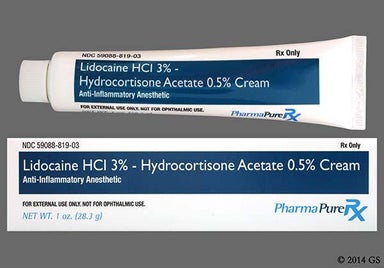
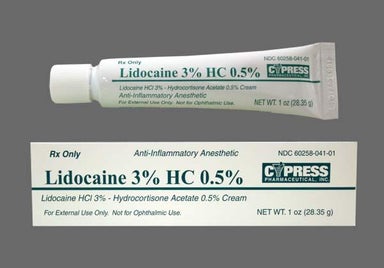
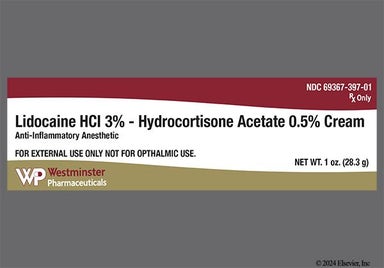
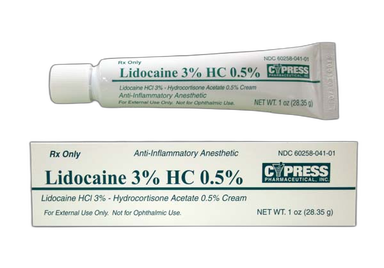
Lidocaine / hydrocortisone images