levorphanol
Levorphanol is an older opioid medication that's used to help with pain that isn't relieved by non-opioid pain medications. While it typically works well to relieve pain, it's a controlled substance because it has a high risk of misuse, dependency, and addiction. Because of these risks, it might not be the best choice for everyone.


What is Levorphanol?
What is Levorphanol used for?
- Pain that isn't relieved by non-opioid pain medications alone
How Levorphanol works
Levorphanol is an opioid receptor agonist. It attaches to certain signaling proteins in your brain called mu-opioid receptors to lower how much pain you feel.
Drug facts
| Common Brands | Levo-Dromoran |
|---|---|
| Drug Class | Opioid |
| Controlled Substance Classification | Schedule II |
| Generic Status | Lower-cost generic available |
| Availability | Prescription only |

Risks and warnings for Levorphanol
Levorphanol can cause some serious health issues. This risk may be even higher for certain groups. If this worries you, talk to your doctor or pharmacist about other options.
Potential for addiction and misuse
- Risk factors: Personal or family history of alcohol or substance use disorder | Personal or family history of mental health problems
 Levorphanol is a controlled substance because it has a risk for addiction and misuse. Take the medication exactly as prescribed. Don't change the dose or how often you take it without talking to your provider first. Misusing this medication might cause it to not work as well. It can also raise the risk for serious and possibly life-threatening side effects, such as dangerously slow breathing, inability to stay awake, and opioid overdose. Your healthcare provider will prescribe the lowest amount of levorphanol that's necessary to manage your pain for the shortest period of time possible.
Dangerously slow breathing (respiratory depression)
- Risk factors: Taking medications that can cause slow breathing | Drinking alcohol | Older age | Being frail | Medical conditions that cause breathing problems (e.g., COPD, asthma, head injury) | Taking too much levorphanol
Levorphanol can cause dangerously slow breathing, which can be life-threatening. This can happen to anyone and even at recommended doses. But the risk is greatest when you first start treatment or if your dose goes up. Don't take levorphanol with alcohol or other medications that slow your body down (e.g., benzodiazepines, other opioids, muscle relaxants). Doing so raises your risk of extremely slowed breathing. If you or your loved one notices that you have trouble breathing or have bluish-colored lips, fingers, or toes, call 911 to get medical help right away.
Opioid overdose
- Risk factors: History of opioid use disorder | Previous opioid overdose | Taking high doses of levorphanol | Taking more opioids than prescribed | Alcohol use
Take levorphanol exactly as prescribed. Taking too much levorphanol or taking it more often than prescribed can lead to an accidental overdose. Symptoms of an opioid overdose include not responding to sound or touch, extremely slowed breathing, extreme sleepiness, slow heartbeat, and cold or clammy skin. Be sure you and your loved ones know how to recognize an overdose. Your provider will likely prescribe naloxone (Narcan, Zimhi), an opioid antagonist that can treat an opioid overdose. Make sure you carry naloxone with you at all times in case you experience an overdose. Call 911 right away if this happens. Store your medication out of reach from children, pets, or visitors to prevent accidental exposure or overdose.
Difficulty concentrating and extreme sleepiness
- Risk factors: Taking high doses of levorphanol | Age 65 years or older | Drinking alcohol | Taking other medications that can cause sleepiness | Liver problems
Levorphanol can cause extreme sleepiness and lower your ability to think, react, and focus. Don't drink alcohol or take other medications that can cause sleepiness or "brain fog" (e.g., benzodiazepines, muscle relaxants, sleep medications) with levorphanol. Doing so can worsen these side effects. Make sure you know how levorphanol affects you before driving a car or doing activities where you need to focus. Talk to your healthcare provider right away if you feel too sleepy from taking levorphanol.
Harm to newborn babies
Long-term use of levorphanol during pregnancy can cause your unborn baby to become dependent on the medication. This is because opioids like levorphanol can pass through the placenta to your unborn baby. Once your baby is born, they can experience withdrawal symptoms, such as high-pitched crying, poor feeding and sucking behavior, trembling, abnormal sleep patterns, and seizures. This condition is called neonatal opioid withdrawal syndrome and can be life-threatening if not recognized and treated in time. Let your healthcare provider know if you've used levorphanol during pregnancy or if you notice these symptoms in your baby.
Physical dependence and withdrawal
- Risk factors: Long-term use of levorphanol
If taken regularly for a long time, levorphanol can cause physical dependence. This means that your body relies on the medication to function. You might experience withdrawal if you stop taking the medication suddenly. Withdrawal symptoms include anxiety, restlessness, irritability, runny nose, yawning, sweating, and chills. Don't lower your dose or stop taking the medication suddenly without talking to your healthcare provider first. Your provider will slowly lower your dose to prevent withdrawal symptoms. If you have concerns about taking levorphanol because of this risk, talk to your healthcare provider about alternative pain medications.
Low blood pressure
- Risk factors: History of low blood pressure | Unstable blood pressure | Taking certain medications that can slow the body down
Levorphanol can cause extremely low blood pressure. Your blood pressure might drop suddenly when you stand from a sitting or lying down position. This can lead to dizziness and fainting. To avoid falling, get up slowly if you've been sitting or lying down. If dizziness or lightheadedness doesn't go away, talk to your healthcare provider.
Low adrenal hormone levels
- Risk factors: Taking levorphanol for longer than 1 month
Some people taking opioids like levorphanol experienced low adrenal hormone levels. This might be more likely to happen after taking opioids for longer than 1 month. Symptoms include tiredness, dizziness, weakness, not feeling hungry, nausea, and vomiting. Let your provider know if you experience these symptoms. If your adrenal hormone levels are too low, you might need to stop levorphanol and be treated with corticosteroids.
Seizures
- Risk factors: History of seizure conditions
If you've had a seizure in the past, opioids can raise the risk of having seizures more often. Levorphanol can also raise your risk of seizures in certain situations. Get medical help right away if you have a seizure while taking levorphanol.
Drug interactions
Levorphanol can interact with medications, which can raise your risk of side effects or affect how well your medications work for you.
Though rare, taking levorphanol with other medications that raise serotonin levels (e.g., antidepressants, migraine medications) can raise your risk of a potentially life-threatening condition called serotonin syndrome. This condition happens when there's too much of a chemical called serotonin in the brain. Get medical help if you experience symptoms of serotonin syndrome, such as fast heart rate, muscle stiffness or spasms, fever, and confusion.
Sometimes, opioids like levorphanol can affect how well diuretics ("water pills") work to lower blood pressure or swelling due to fluid buildup in the body. If you need to take a diuretic at the same time as levorphanol, let your provider know if you experience worsening swelling or higher blood pressure than usual.
Tell your provider and pharmacist about all your prescriptions and over-the-counter products you take before starting levorphanol. They can check for any drug interactions.

Side effects of Levorphanol
The following side effects may get better over time as your body gets used to the medication. Let your healthcare provider know immediately if you continue to experience these symptoms or if they worsen over time.
Common Side Effects
- Sleepiness
- Feeling tired
- Headache
- Dizziness
- Constipation
- Nausea
- Vomiting
- Stomach pain
Less Common Side Effects
- Upset stomach or indigestion
- Dry mouth
- Sweating
- Irregular heartbeat
- Feeling nervous
- Changes to vision
- Itching
- Rash
- Difficulty urinating
Levorphanol serious side effects
Contact your healthcare provider immediately if you experience any of the following.
- Dangerously slow breathing: trouble breathing; bluish-colored lips, fingers, or toes
- Accidentally taking too much (overdose): not responding to sound or touch, slowed breathing, extreme sleepiness, slow heartbeat, cold or clammy skin
- Opioid withdrawal: anxiety, suicidal thoughts, irritability, restlessness, runny nose, yawning, sweating, chills, wide pupils
- Serious allergic reaction: hives; shortness of breath; chest tightness; swelling of lips, tongue, throat, face, or eyes
The following Levorphanol side effects have also been reported
Along with its needed effects, a medicine may cause some unwanted effects. Although not all of these side effects may occur, if they do occur they may need medical attention.
Check with your doctor immediately if any of the following side effects occur:
Incidence not known
Agitation
attempts at killing oneself
bluish lips or skin
blurred vision
change in consciousness
cold, clammy skin
confusion
darkening of the skin
decrease in the frequency of urination
decreased awareness or responsiveness
decreased urine output
difficulty in passing urine (dribbling)
difficulty swallowing
dizziness, faintness, or lightheadedness when getting up suddenly from a lying or sitting position
extra heartbeat
extremely shallow or slow breathing
fast, slow, irregular, pounding, or racing heartbeat or pulse
fast, weak pulse
hostility
hives or welts, itching, skin rash
lightheadedness
loss of appetite
loss of consciousness
muscle twitching
no blood pressure or pulse
not breathing
overactive reflexes
poor coordination
puffiness or swelling of the eyelids or around the eyes, face, lips, or tongue
rapid weight gain
restlessness
seizures
severe sleepiness
shivering
stopping of the heart
sweating
swelling of the face, ankles, or hands
talking or acting with excitement you cannot control
tightness in the chest
trembling or shaking
twitching
unusual drowsiness, dullness, tiredness, weakness or feeling of sluggishness
vomiting
Get emergency help immediately if any of the following symptoms of overdose occur:
Symptoms of overdose
Chest pain or discomfort
constricted, pinpoint, or small pupils (black part of the eye)
decreased awareness or responsiveness
difficult or troubled breathing
difficulty with sleeping
dilated neck veins
disorientation
drowsiness to profound loss of consciousness
extreme tiredness or weakness
headache
irregular, fast or slow, or shallow breathing
no muscle tone or movement
not breathing
pale or blue lips, fingernails, or skin
seeing, hearing, or feeling things that are not there
sleepiness or unusual drowsiness
swelling of the face, fingers, feet, or lower legs
Some side effects may occur that usually do not need medical attention. These side effects may go away during treatment as your body adjusts to the medicine. Also, your health care professional may be able to tell you about ways to prevent or reduce some of these side effects. Check with your health care professional if any of the following side effects continue or are bothersome or if you have any questions about them:
Incidence not known
Abnormal dreams
absence of or decrease in body movement
belching
change in personality
changes in vision
discouragement
double vision
false beliefs that cannot be changed by facts
feeling sad or empty
increase in body movements
indigestion
irritability
loss of interest or pleasure
loss of memory
nervousness
poor insight and judgment
problems with memory or speech
redness of the skin
seeing double
stomach discomfort, upset, or pain
sweating
trouble concentrating
trouble recognizing objects
trouble sleeping
trouble thinking and planning
trouble walking
twitching, twisting, uncontrolled repetitive movements of the tongue, lips, face, arms, or legs
upper abdominal or stomach pain
Other side effects not listed may also occur in some patients. If you notice any other effects, check with your healthcare professional.
Call your doctor for medical advice about side effects. You may report side effects to the FDA at 1-800-FDA-1088.

Get your GoodRx coupon

Pros and cons of Levorphanol
Pros
- Pain-relieving effect starts within 1 hour and lasts for 6 to 15 hours
- Can take with or without food
- Available as a lower-cost generic
Cons
- High risk of misuse and dependency
- Must slowly lower the dose to stop the medication after long-term use to avoid withdrawal symptoms
- Might need to take every 6 to 8 hours for continued pain relief, depending on how long the effects last for you
- A controlled medication, so there are special requirements to get a prescription filled

Pharmacist tips for Levorphanol

- Take levorphanol exactly as your provider instructed you to. Don't change your dose or stop taking levorphanol without talking to your provider first. They might need to lower your dose slowly before you can stop taking it completely. This lowers your risk of getting bothersome withdrawal symptoms, like sweating, chills, irritability, anxiety, and trouble sleeping.
- You might get constipation as a common side effect of levorphanol. To help lower your risk, make sure to drink plenty of fluids throughout the day and eat fiber-rich foods. If these lifestyle changes aren't enough, talk to your provider about medications that might help with the constipation or a change to your pain treatment plan.
- Levorphanol can make you sleepy and affect your ability to think, react, and focus. Don't drive or do activities that you need to concentrate for until you know how this medication affects you.
- Avoid drinking alcohol while taking levorphanol. This combination can make you very sleepy, dizzy, and unable to think clearly.
- Levorphanol can interact with a lot of medications, such as certain antidepressants, benzodiazepines, sleep medications, and monoamine oxidase inhibitors (MAOIs), among others. These interactions can raise your risk of dangerous side effects or make your medications not work as well for you. Make sure to tell your provider about all the medications you're taking before starting levorphanol. Don't start any new medications while taking levorphanol without talking to your provider first. They can make sure all your medications are safe to take with levorphanol.
- Your provider might prescribe naloxone (Narcan) along with levorphanol. Naloxone is a medication that's used to reverse the effects of levorphanol in case of an accidental overdose. Make sure to tell your family and close friends where you keep your naloxone in the event of an emergency. If you do use naloxone for an overdose, make sure to call for emergency medical help because its effects are temporary.

Levorphanol dosage


Interactions between Levorphanol and other drugs
Although certain medicines should not be used together at all, in other cases two different medicines may be used together even if an interaction might occur. In these cases, your doctor may want to change the dose, or other precautions may be necessary. When you are taking this medicine, it is especially important that your healthcare professional know if you are taking any of the medicines listed below. The following interactions have been selected on the basis of their potential significance and are not necessarily all-inclusive.
Using this medicine with any of the following medicines is not recommended. Your doctor may decide not to treat you with this medication or change some of the other medicines you take.
- Nalmefene
- Naltrexone
- Safinamide
Using this medicine with any of the following medicines is usually not recommended, but may be required in some cases. If both medicines are prescribed together, your doctor may change the dose or how often you use one or both of the medicines.
- Acepromazine
- Alfentanil
- Almotriptan
- Alprazolam
- Amifampridine
- Amineptine
- Amitriptyline
- Amitriptylinoxide
- Amobarbital
- Amoxapine
- Amphetamine
- Anileridine
- Aripiprazole
- Asenapine
- Baclofen
- Benperidol
- Benzhydrocodone
- Benzphetamine
- Bromazepam
- Bromopride
- Brompheniramine
- Buprenorphine
- Buspirone
- Butabarbital
- Butorphanol
- Calcium Oxybate
- Cannabidiol
- Carbamazepine
- Carbinoxamine
- Carisoprodol
- Carphenazine
- Cetirizine
- Chloral Hydrate
- Chlordiazepoxide
- Chlorpheniramine
- Chlorpromazine
- Chlorzoxazone
- Citalopram
- Clobazam
- Clomipramine
- Clonazepam
- Clopidogrel
- Clorazepate
- Clozapine
- Cocaine
- Codeine
- Cyclobenzaprine
- Desipramine
- Desmopressin
- Desvenlafaxine
- Dexmedetomidine
- Dextroamphetamine
- Dextromethorphan
- Dezocine
- Diazepam
- Dibenzepin
- Dichloralphenazone
- Difenoxin
- Dihydrocodeine
- Diphenhydramine
- Diphenoxylate
- Dolasetron
- Donepezil
- Doxepin
- Doxylamine
- Droperidol
- Duloxetine
- Eletriptan
- Enflurane
- Escitalopram
- Esketamine
- Estazolam
- Eszopiclone
- Ethchlorvynol
- Ethopropazine
- Ethylmorphine
- Fenfluramine
- Fentanyl
- Flibanserin
- Fluoxetine
- Fluphenazine
- Flurazepam
- Fluspirilene
- Fluvoxamine
- Fospropofol
- Frovatriptan
- Furazolidone
- Gabapentin
- Gabapentin Enacarbil
- Granisetron
- Halazepam
- Haloperidol
- Halothane
- Hexobarbital
- Hydrocodone
- Hydromorphone
- Hydroxytryptophan
- Hydroxyzine
- Imipramine
- Iproniazid
- Isocarboxazid
- Isoflurane
- Ketamine
- Ketazolam
- Ketobemidone
- Lasmiditan
- Lemborexant
- Levocetirizine
- Levomilnacipran
- Linezolid
- Lisdexamfetamine
- Lithium
- Lofepramine
- Lofexidine
- Lorazepam
- Lorcaserin
- Loxapine
- Magnesium Oxybate
- Meclizine
- Melitracen
- Melperone
- Meperidine
- Mephobarbital
- Meprobamate
- Meptazinol
- Mesoridazine
- Metaxalone
- Methadone
- Methamphetamine
- Methdilazine
- Methocarbamol
- Methohexital
- Methotrimeprazine
- Methylene Blue
- Metoclopramide
- Midazolam
- Milnacipran
- Mirtazapine
- Moclobemide
- Molindone
- Moricizine
- Morphine
- Morphine Sulfate Liposome
- Nalbuphine
- Naratriptan
- Nefazodone
- Nialamide
- Nicomorphine
- Nitrazepam
- Nitrous Oxide
- Nortriptyline
- Olanzapine
- Ondansetron
- Opipramol
- Opium
- Opium Alkaloids
- Orphenadrine
- Oxazepam
- Oxycodone
- Oxymorphone
- Ozanimod
- Palonosetron
- Papaveretum
- Paregoric
- Paroxetine
- Pentazocine
- Pentobarbital
- Perampanel
- Perazine
- Periciazine
- Perphenazine
- Phenelzine
- Phenobarbital
- Pimozide
- Piperacetazine
- Pipotiazine
- Piritramide
- Potassium Oxybate
- Prazepam
- Pregabalin
- Primidone
- Procarbazine
- Prochlorperazine
- Promazine
- Promethazine
- Propofol
- Protriptyline
- Quazepam
- Quetiapine
- Ramelteon
- Rasagiline
- Remifentanil
- Remimazolam
- Rizatriptan
- Scopolamine
- Secobarbital
- Selegiline
- Sertindole
- Sertraline
- Sibutramine
- Sodium Oxybate
- St John's Wort
- Sufentanil
- Sulpiride
- Sumatriptan
- Suvorexant
- Tapentadol
- Temazepam
- Thiethylperazine
- Thiopental
- Thiopropazate
- Thioridazine
- Tianeptine
- Tilidine
- Tizanidine
- Tolonium Chloride
- Topiramate
- Tramadol
- Tranylcypromine
- Trazodone
- Triazolam
- Trifluoperazine
- Trifluperidol
- Triflupromazine
- Trimeprazine
- Trimipramine
- Tryptophan
- Venlafaxine
- Vilazodone
- Vortioxetine
- Zaleplon
- Ziprasidone
- Zolmitriptan
- Zolpidem
- Zopiclone
- Zotepine
Using this medicine with any of the following medicines may cause an increased risk of certain side effects, but using both drugs may be the best treatment for you. If both medicines are prescribed together, your doctor may change the dose or how often you use one or both of the medicines.

How much does Levorphanol cost?
$279.34

Levorphanol contraindications
Contraindications are specific health conditions or situations in which a person should not take a medication due to safety concerns. If you have any of the following conditions or if any of the following apply to you, let your healthcare provider know because Levorphanol will not be safe for you to take.
- Severely slowed breathing (respiratory depression)
- Severe asthma
- Conditions that cause blockage of the stomach passageway

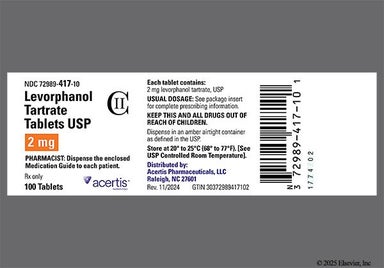
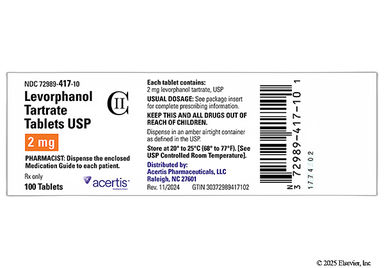
Levorphanol images