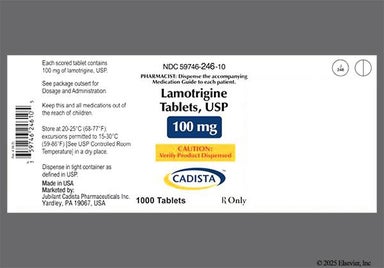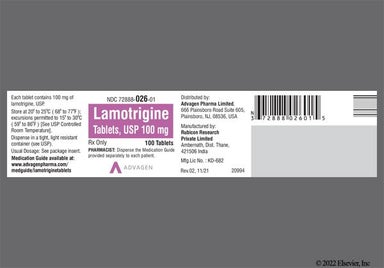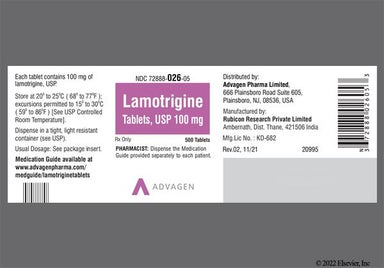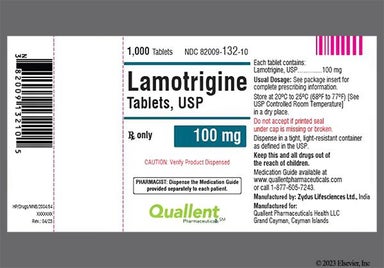
Lamotrigine Coupon - Lamotrigine 100mg tablet

lamotrigine

Generic Lamictal
Used for Bipolar Disorder, Epilepsy, Lennox-Gastaut Syndrome

Lamotrigine (Lamictal) is an antiepileptic medication. The immediate-release version can treat different types of seizures as well as bipolar 1 disorder. But the extended-release version is only for seizures. Your dose depends on your age, the other medications you take, and what problem you're treating. Side effects can include dizziness, headache, and serious skin reactions. It can also cause withdrawal symptoms like seizures if you stop taking it suddenly.

Reviewed by:Last reviewed on November 12, 2025
basics-icon

What is Lamotrigine (Lamictal)?

What is Lamotrigine (Lamictal) used for?

How Lamotrigine (Lamictal) works

Lamotrigine (Lamictal) is an antiepileptic medication. It's not exactly clear how it works. But research suggests that it can block and prevent signals in your brain that make your nerves too active. This helps calm the brain and prevent seizures.

For bipolar disorder, researchers aren't sure how lamotrigine (Lamictal) works to keep your mood in balance.

When does Lamotrigine (Lamictal) start working?Time passed since treatment started:
HOURS
DAYS
WEEKS
MONTHS
Full effect

Drug facts

Common BrandsLamictal, Lamictal XR, Lamictal ODT
Drug ClassAntiepileptic
Controlled Substance ClassificationNot a controlled medication
Generic StatusLower-cost generic available
AvailabilityPrescription only
side-effects-icon

Side effects of Lamotrigine (Lamictal)

The following side effects may get better over time as your body gets used to the medication. Let your healthcare provider know immediately if you continue to experience these symptoms or if they worsen over time.

Common Side Effects

Immediate release:

  • Dizziness (38%)
  • Headache (29%)
  • Double vision (28%)
  • Problems with coordination (22%)
  • Nausea (19%)
  • Blurry vision (16%)
  • Sleepiness (14%)
  • Runny or stuffy nose (14%)
  • Sore throat (10%)
  • Rash (10%)

Extended release:

  • Dizziness (14%)
  • Nausea (7%)
  • Vomiting (6%)
  • Tremor (6%)
  • Feeling tired (6%)
  • Double vision (5%)
  • Diarrhea (5%)

Less Common Side Effects

Immediate release:

  • Vomiting
  • Diarrhea
  • Constipation
  • Stomach pain
  • Indigestion
  • Flu-like symptoms
  • Fever
  • Cough
  • Trouble sleeping

Extended release:

  • Feeling like the room is spinning (vertigo)
  • Blurry vision
  • Low appetite

Note: Side effects were from adults taking lamotrigine (Lamictal) and other medications for seizures. Side effects might be different for children or for people with bipolar disorder.

Lamotrigine (Lamictal) serious side effects

Contact your healthcare provider immediately if you experience any of the following.

  • Serious rash: rash, blisters, peeling skin, painful sores, swelling
  • Severe allergic reaction: rash that spreads over your body, fever, swollen lymph nodes
  • Overactive immune reaction to the medication: fever, rash, swollen lymph nodes, stomach pain, swelling of the stomach, yellowing of the eyes or skin, irritability, trouble with coordination
  • Irregular heartbeat
  • Suicidal thoughts and behavior
  • Meningitis (inflammation in the brain): sudden headache, stiff neck, fever, rash, chills, eye sensitivity to bright lights, sleepiness, confusion, muscle pain, nausea, vomiting
When do Lamotrigine (Lamictal) possible side effects begin and end?
Time passed since treatment started:
H
D
W
M
Risk of dizziness
Risk of sleepiness
Risk of skin rash
Seek immediate medical care if you experience this side effect.
If a line continues to the right, you'll likely keep experiencing this side effect once it starts.

Source: DailyMed

The following Lamotrigine (Lamictal) side effects have also been reported

Along with its needed effects, a medicine may cause some unwanted effects. Although not all of these side effects may occur, if they do occur they may need medical attention.

Check with your doctor immediately if any of the following side effects occur:

More common

Blurred vision

changes in vision

chest pain, discomfort, or tightness

clumsiness or unsteadiness

decreased urine output

dilated neck veins

double vision

irregular breathing

irregular heartbeat

nausea

pain or discomfort in the arms, jaw, back, or neck

poor coordination

seizure that will not stop

skin rash

sweating

swelling of the face, fingers, feet, or lower legs

trouble breathing

unusual tiredness or weakness

vomiting

weight gain

Less common

Anxiety

chest pain

confusion

continuous, uncontrolled back and forth or rolling eye movements

depression

increase in seizures

infection

irritability

Rare

Blistering, peeling, or loosening of the skin

chills

cough

dark urine

diarrhea

fever

general feeling of discomfort or illness

headache

itching

joint pain

loss of appetite

memory loss

muscle cramps, pain, or weakness

red or irritated eyes

runny nose

shivering

small red or purple spots on the skin

sore throat

sores, ulcers, or white spots on the lips or in the mouth

swelling of the face, mouth, hands, or feet

swollen lymph nodes

trouble sleeping

unusual bleeding or bruising

yellow eyes or skin

Incidence not known

Back, leg, or stomach pains

bleeding gums

bloating

blood in the urine

bloody, black or tarry stools

bluish lips or skin

constipation

cough

coughing or vomiting blood

difficulty with swallowing

fainting

fast heartbeat

general body swelling

heartburn

high fever

hoarseness

lightheadedness

loss of balance control

lower back or side pain

mask-like face

muscle spasms

nosebleeds

not breathing

pain or burning in the throat

painful or difficult urination

pains in the stomach or side, possibly radiating to the back

pale skin

persistent bleeding or oozing from puncture sites, mouth, or nose

rapid, shallow breathing

redness, soreness, or itching skin

shuffling walk

slowed movement

slurred speech

sores, welting, or blisters

stiffness of the arms and legs

swollen or painful glands

tic-like (jerky) movements

Get emergency help immediately if any of the following symptoms of overdose occur:

Symptoms of overdose

Clumsiness or unsteadiness (severe)

continuous, uncontrolled back and forth or rolling eye movements (severe)

dizziness (severe)

drowsiness (severe)

dryness of the mouth (severe)

headache (severe)

increased heart rate

loss of consciousness

slurred speech (severe)

Some side effects may occur that usually do not need medical attention. These side effects may go away during treatment as your body adjusts to the medicine. Also, your health care professional may be able to tell you about ways to prevent or reduce some of these side effects. Check with your health care professional if any of the following side effects continue or are bothersome or if you have any questions about them:

More common

Dizziness

drowsiness

Less common

Indigestion

loss of strength

menstrual pain

pain

trembling or shaking

trouble with sleeping

unusual weight loss

Other side effects not listed may also occur in some patients. If you notice any other effects, check with your healthcare professional.

Call your doctor for medical advice about side effects. You may report side effects to the FDA at 1-800-FDA-1088.

prices-container

Get your GoodRx coupon

Avg retail price
$9.000
GoodRx discount
$9.00
See prices
pros-and-cons-icon

Pros and cons of Lamotrigine (Lamictal)

Pros

  • Available in different formulations (regular immediate-release tablets, chewable tablets, quick-dissolving tablets, and extended-release tablets)
  • Can use a starter kit to help with dosing when you first start the medication
  • Approved for children of certain ages with seizures (age depends on formulation)

Cons

pharmacist-tips-icon

Pharmacist tips for Lamotrigine (Lamictal)

pharmacist
  • Each time you pick up lamotrigine (Lamictal) from the pharmacy, make sure it's the right medication since it comes in different formulations. The immediate-release version comes as regular tablets, chewable tablets, and tablets that melt on your tongue (orally disintegrating tablets or ODTs). The extended-release version only comes as tablets. Ask your pharmacist if you're not sure which one you're taking.
  • You can take lamotrigine (Lamictal) with or without food.
  • For lamotrigine (Lamictal) regular immediate-release tablets: Swallow the tablets whole. If you have trouble swallowing, talk to your prescriber about other options.
  • For lamotrigine (Lamictal) chewable tablets for oral suspension: You can swallow these tablets whole. You can also chew them and then drink some water or watered down juice to swallow all the medication. Another option is to put the tablet in a cup with a small amount of liquid, wait about a minute, stir, and then drink it right away.
  • For lamotrigine (Lamictal ODT) orally disintegrating tablets: Place the tablet on your tongue. Then, move the tablet around your mouth to help it dissolve quickly. Once dissolved, you can swallow the medication with or without water.
  • For lamotrigine (Lamictal XR) extended-release tablets: Swallow the tablets whole. Don't chew, crush, or cut the tablets. This can change how the medication gets absorbed into your body. Talk to your prescriber if you have trouble swallowing the extended-release tablets.
  • You might get a starter kit when you first start lamotrigine (Lamictal). This can help you stay on track with your dose changes every week at the beginning of treatment. Closely look at the blister pack before using. Don't use if any of the pockets are torn, broken, or missing.
  • Lamotrigine (Lamictal) can make you feel dizzy, sleepy, or tired. It can also make your vision blurry. Don't drive or use machines until you know how this medication affects you.
  • Lamotrigine (Lamictal) can sometimes cause rash, which can be serious. Watch out for a rash, blisters, or peeling skin. If you notice this, get medical help right away.
  • Tell your prescribers and pharmacists about the medications you take or plan to take. Lamotrigine (Lamictal) can interact with many medications. For example, it can interact with other anti-seizure medications and birth control pills. It's important for your care team to check that all your medications are safe to take together. They can recommend changes if needed.
  • Don't stop taking lamotrigine (Lamictal) suddenly because it can raise your risk of seizures. If you want to stop taking the medication, talk to your prescriber first. They can help you lower your dose slowly and safely over time.
faq-icon

Common questions about Lamotrigine (Lamictal)

It's not common, but some people have reported weight gain while taking lamotrigine (Lamictal). In general, this medication isn't known to have an effect on body weight. This is unlike some other anti-seizure medications. If you're worried about weight changes while taking lamotrigine (Lamictal), talk to your prescriber.

A dose of 300 mg is high for a starting dose of lamotrigine (Lamictal). This medication is started at a lower dose. Then, the dose is raised slowly over several weeks to lower the risk of side effects. As a maintenance dose, calling 300 mg high depends on many things. It depends on your age, weight (for children), and liver and kidney function. It also depends on what condition you're treating and what other medications you take. Because your dose is personalized for you, ask your prescriber or pharmacist if you're worried about your dose.

No, lamotrigine (Lamictal) isn't an antipsychotic. It belongs to a group of medications called antiepileptics. This medication works in a different way than antipsychotics.

Yes, lamotrigine (Lamictal) can sometimes make you sleepy. To be safe, don't drive or do anything that you need to be alert for until you know how this medication affects you. If you get too sleepy from the medication and it's affecting your daily life, talk to your prescriber.

It can take up to several weeks to feel the full effects of lamotrigine (Lamictal). A part of this is because you start at a low dose first and then your dose is raised over several weeks. This lowers your risk of serious side effects from the medication. Typically, your prescriber will raise your dose slowly every 1 to 2 weeks until you get to a dose that works for you. Keep taking the medication as prescribed, even if you don't feel too different at first. It's important not to stop taking it suddenly because this can cause seizures. Follow up with your prescriber about how you're doing with lamotrigine (Lamictal).

No, lamotrigine (Lamictal) isn't a controlled substance. It isn't known to have a risk of addiction or misuse.

It's pretty rare for people taking lamotrigine (Lamictal) to have hair loss as a side effect. If you notice more hair falling out or your hair getting thinner, tell your care team. They can help figure out what might be causing it and talk about ways to manage it.

If you're pregnant or planning to be, talk to your prescriber about the risks and benefits of taking lamotrigine (Lamictal). It's important to keep seizures or bipolar disorder under control while pregnant. Some studies suggest that lamotrigine (Lamictal) has a relatively low risk of serious harm to babies compared to other seizure medications. In fact, clinical guidelines for epilepsy recommend lamotrigine (Lamictal) as an option during pregnancy. If you become pregnant, tell your prescriber right away so they can help you choose the safest option. If you take seizure medication while pregnant, you can join the North American Antiepileptic Drug (NAAED) Pregnancy Registry. It helps researchers learn more about the safety of these medications during pregnancy.

educational-icon

How to save using GoodRx

Compare Prices
1. Compare PricesSpecify your dosage and quantity to find out exactly how much you can save.
Select your free coupon
2. Select your free couponYou can use the displayed coupon, or compare prices at other pharmacies near you.
Show coupon to your pharmacist
3. Show coupon to your pharmacistPresent your printed or electronic coupon when you pick up your prescription.
Get free couponLearn more
warnings-icon

Risks and warnings for Lamotrigine (Lamictal)

Lamotrigine (Lamictal) can cause some serious health issues. This risk may be even higher for certain groups. If this worries you, talk to your doctor or pharmacist about other options.

Serious skin rashes

  • Risk factors: History of rash from other anti-seizure medications | Children | Taking a higher-than-recommended starting dose of lamotrigine (Lamictal) | Raising the dose of lamotrigine (Lamictal) too fast | Taking divalproex (Depakote) or valproic acid

In rare cases, lamotrigine (Lamictal) can cause a serious rash. It can sometimes be serious even to need hospital care. Some serious rashes that can happen can be related to Stevens-Johnson syndrome (SJS) or toxic epidermal necrolysis (TEN).

The risk of rash might be higher if your starting dose is too high or if your dose is raised too fast. It can also be higher if you also take divalproex (Depakote) or valproic acid. In studies, serious rash happened more often in children than in adults. And, people who've had allergic reactions or rashes from other anti-seizure medications might also have a higher risk.

Serious skin rashes can happen at any time while taking lamotrigine (Lamictal). But they're most common within 2 to 8 weeks after starting the medication. Get medical care right away if you notice a rash, blisters, peeling skin, painful sores, or swelling.

Serious allergic reaction

Some people have had a serious allergic reaction to lamotrigine (Lamictal) called drug reaction with eosinophilia and systemic symptoms (DRESS). This reaction is rare, but it can be life-threatening and cause problems with your organs or blood. It can happen with or without a rash.

Get medical help right away if you suddenly get a rash that spreads over your body and have a fever. Also watch for swollen lymph nodes. These can be early signs of DRESS and you should get checked out as soon as possible.

Overactive immune response to the medication

Although it's rare, some people taking lamotrigine (Lamictal) can have an overactive immune response to the medication. This reaction is called hemophagocytic lymphohistiocytosis (HLH). It can be life-threatening if it isn't caught and treated early.

Symptoms can happen within 8 to 24 days after starting lamotrigine (Lamictal). This can include fever, rash, and swollen lymph nodes. You might also have stomach pain, swelling of the stomach, and yellowing of the eyes or skin. Other signs include irritability or trouble with coordination. Get medical help right away if you notice any of these symptoms while taking this medication.

Irregular heartbeat

  • Risk factors: Heart failure | Heart disease | Irregular heartbeat (arrhythmia) | Risk of coronary artery disease (CAD) | Taking other medications that can affect heart rhythm

Studies suggest that lamotrigine (Lamictal) might cause an irregular heartbeat, which could lead to serious problems. Your risk might be higher if you have heart disease, heart failure, or an irregular heart rhythm (arrhythmia). It can also be higher if you have risk factors for coronary artery disease (CAD), like high cholesterol or smoking. Taking other medications that affect heart rhythm can raise the risk too.

Tell your prescriber about your medical history and any medications you take. They can check if you're at risk for heart rhythm problems with lamotrigine (Lamictal). Your prescriber can help you decide if this medication is safe for you.

Risk of suicidal thoughts and behavior

  • Risk factors: History of depression | Taking anti-seizure medications

As with many other anti-seizure medications, lamotrigine (Lamictal) can raise the risk of suicidal thoughts or behavior. The risk can appear as early as 1 week after starting the medication.

Let your friends and family know to watch for any signs of depression or unusual changes in mood or behavior. If this happens, tell your prescriber. If you start thinking about hurting yourself, call 911 right away.

Meningitis (inflammation in the brain)

Although rare, lamotrigine (Lamictal) raises the chance of a very serious brain problem called meningitis. This happens when the lining around the brain is inflamed. Symptoms of meningitis have happened anytime from 1 to 45 days after starting treatment.

Get medical help right away if you have a sudden headache, stiff neck, fever, nausea, or vomiting. Other signs are rash, chills, eye sensitivity to bright lights, sleepiness, and confusion. These can be early signs of meningitis.

Withdrawal seizures

  • Risk factors: Stopping lamotrigine (Lamictal) suddenly

Don't suddenly stop taking lamotrigine (Lamictal) without talking to your prescriber. Otherwise, it can cause seizures. If you need to stop lamotrigine (Lamictal), talk to your prescriber. They'll help you lower your dose slowly until you can stop it altogether.

Possible eye problems

  • Risk factor: Taking lamotrigine (Lamictal) long term

Lamotrigine (Lamictal) could potentially cause eye problems. This could happen because the medication can attach to melanin, a natural chemical that gives color to your eyes. The risk might be higher if you've been taking the medication for a long time. Keep in mind that it's not fully know what the effects of lamotrigine (Lamictal) are on the eyes or vision.

If you notice any changes in your vision while taking lamotrigine (Lamictal), tell your prescriber or optometrist. They can give you an eye exam to make sure it's safe for you to keep taking the medication.

Interactions with other medications

Some medications can interfere with how your body gets rid of lamotrigine (Lamictal). This can affect how much lamotrigine (Lamictal) is in your body, how well it works, and how likely you are to have side effects. In a similar way, lamotrigine (Lamictal) can change how your body removes other medications, which can affect your safety.

For example, divalproex (Depakote) and valproic acid can raise the amount of lamotrigine (Lamictal) in your body. This can make side effects, like a serious rash, more likely. If you need to take one of these medications, you'll usually get prescribed a lower dose of lamotrigine (Lamictal) to help keep you safe.

Another example is with medications that contain estrogen, such as birth control pills. They can lower how much lamotrigine (Lamictal) is in your body. This means that the medication might not work as well. During the week when you take the non-active birth control pills, the amount of lamotrigine (Lamictal) in your body goes back up. During that week, your risk of side effects might be higher.

Tell your prescribers and pharmacist about all the medications you take or plan to take. They can make sure everything is safe to take together and adjust your doses if needed.

dosage-icon

Lamotrigine (Lamictal) dosage

The average cost for 30 tablets of 100mg of Lamotrigine (Lamictal) is $9.00 with a free GoodRx coupon. This is 0.00% off the average retail price of $9.00.
chewable tabletChewable tablet
DosageQuantityPrice as low asPrice per unit
5mg60 chewable tablets$19.36$0.32
25mg120 chewable tablets$29.19$0.24
kitKit
DosageQuantityPrice as low asPrice per unit
35 tablets of 25mg (blue)1 kit$163.40$163.40
49 tablets of 25mg and 100mg (orange)1 kit$258.46$258.46
98 tablets of 25mg and 100mg (green)1 kit$439.04$439.04
28 tablets of 25mg (blue odt)1 kit$92.34$92.34
56 tablets of 50mg and 100mg (green odt)1 kit$252.20$252.20
35 tablets of 25mg and 100mg (orange odt)1 kit$116.49$116.49
orally disintegrating tabOrally disintegrating tab
DosageQuantityPrice as low asPrice per unit
25mg60 orally disintegrating tabs$53.37$0.89
50mg30 orally disintegrating tabs$41.08$1.37
100mg60 orally disintegrating tabs$64.50$1.08
200mg30 orally disintegrating tabs$46.15$1.54
tabletTablet
DosageQuantityPrice as low asPrice per unit
25mg60 tablets$9.00$0.15
100mg30 tablets$9.00$0.30
150mg30 tablets$10.39$0.35
200mg30 tablets$9.00$0.30

Typical dosage for Lamotrigine (Lamictal)

In general, you start lamotrigine (Lamictal) at a low dose, and the dose will be raised in the following weeks. The dose depends on what you're taking lamotrigine (Lamictal) for, your age, and the other medications you're taking. Your dose might also differ if you have kidney or liver problems. General dosing is listed below.

  • Immediate-release tablets (Lamictal)

    • Immediate-release tablets come in different forms. These include regular tablets and chewable tablets for suspension. There are also orally disintegrating tablets (Lamictal ODT).
    • Seizures
      • People 13 years and older: The typical starting dose ranges from 25 mg by mouth every other day to 50 mg by mouth once daily. Your prescriber will raise your dose every 1 to 2 weeks to reach a maintenance dose. The typical maintenance dose ranges from 100 mg to 500 mg per day, split into 1 or 2 doses throughout the day.
      • Children 2 to 12 years: The prescriber will calculate the dose based on your child's body weight. This medication is taken by mouth once or twice per day. The dose is slowly raised over several weeks to a maintenance dose.
    • Bipolar 1 disorder
      • Adults: The typical starting dose ranges from 25 mg by mouth every other day to 50 mg by mouth once daily. Your prescriber will raise your dose every 1 to 2 weeks to reach a maintenance dose. The typical maintenance dose can range from 100 mg to 200 mg daily. Some people might need doses up to 200 mg twice daily.
  • Extended-release tablets (Lamictal XR)

    • Seizures
      • People 13 years and older: The typical starting dose ranges from 25 mg by mouth every other day to 50 mg by mouth every day. Your prescriber will raise your dose every 1 to 2 weeks to reach a maintenance dose. The typical maintenance dose ranges from 200 mg to 600 mg once daily.
interactions-icon

Interactions between Lamotrigine (Lamictal) and other drugs

Lamotrigine (Lamictal) may interact with certain medications or supplements. Always let your doctor and pharmacist know about any other medications or supplements (including prescribed and over-the-counter medications, vitamins, and dietary or herbal supplements) that you are currently taking. The list below does not include all possible drug interactions with Lamotrigine (Lamictal). Please note that only the generic name of each medication is listed below.

Although certain medicines should not be used together at all, in other cases two different medicines may be used together even if an interaction might occur. In these cases, your doctor may want to change the dose, or other precautions may be necessary. When you are taking this medicine, it is especially important that your healthcare professional know if you are taking any of the medicines listed below. The following interactions have been selected on the basis of their potential significance and are not necessarily all-inclusive.

Using this medicine with any of the following medicines is usually not recommended, but may be required in some cases. If both medicines are prescribed together, your doctor may change the dose or how often you use one or both of the medicines.

Using this medicine with any of the following medicines may cause an increased risk of certain side effects, but using both drugs may be the best treatment for you. If both medicines are prescribed together, your doctor may change the dose or how often you use one or both of the medicines.

cost-icon

How much does Lamotrigine (Lamictal) cost?

To access savings, use a GoodRx coupon and pay just a fraction of the retail price.
alternatives-icon

What are alternatives to Lamotrigine (Lamictal)?

There are a number of medications that your doctor can prescribe in place of Lamotrigine (Lamictal). Compare a few possible alternatives below.
Lamotrigine (Lamictal)
Used for:
$9.00Lowest GoodRx priceView prices
Used for:
$12.91Lowest GoodRx priceView prices
Used for:
$9.00Lowest GoodRx priceView prices
latest-news-icon

News about Lamotrigine (Lamictal)

Some Lamictal (lamotrigine) side effects are mild, while others are rare but more serious. Here are 11 side effects to look out for.
11 Lamictal (Lamotrigine) Side Effects to Know About
Some Lamictal (lamotrigine) side effects are mild, while others are rare but more serious. Here are 11 side effects to look out for.
Bipolar disorder is a mental health condition that can affect mood and behavior. Learn about different bipolar disorder medications with GoodRx.
A List of Bipolar Disorder Medications: Lithium, Antipsychotics, and More
Bipolar disorder is a mental health condition that can affect mood and behavior. Learn about different bipolar disorder medications with GoodRx.
Epilepsy is a seizure disorder caused by a disruption in the brain's nerve pathways. Learn about the many antiepileptic medications available here.
10 Common Antiepileptic Seizure Medications to Know
Epilepsy is a seizure disorder caused by a disruption in the brain's nerve pathways. Learn about the many antiepileptic medications available here.
Medications like Tylenol and Aleve are hepatotoxic, meaning they could raise liver enzymes and damage your liver over time. See the list of medications to avoid.
14 Medications That May Elevate Liver Enzymes and Raise Your Risk of Liver Damage
Medications like Tylenol and Aleve are hepatotoxic, meaning they could raise liver enzymes and damage your liver over time. See the list of medications to avoid.
Learn about the costs of Lamictal (lamotrigine) without insurance, ways to save with the generic, as well as factors that affect the price.
How Much Is Lamictal Without Insurance?
Learn about the costs of Lamictal (lamotrigine) without insurance, ways to save with the generic, as well as factors that affect the price.
Lamotrigine (Lamictal) may cause sexual dysfunction, like erectile dysfunction and low libido, in some people. Here’s how to manage sexual side effects of Lamictal.
Does Lamotrigine Cause Sexual Side Effects?
Lamotrigine (Lamictal) may cause sexual dysfunction, like erectile dysfunction and low libido, in some people. Here’s how to manage sexual side effects of Lamictal.
Lamotrigine is an anti-seizure drug for epilepsy. Here are some foods and drinks to avoid while taking lamotrigine.
5 Foods and Drinks to Avoid While Taking Lamotrigine (Lamictal)
Lamotrigine is an anti-seizure drug for epilepsy. Here are some foods and drinks to avoid while taking lamotrigine.
Lamotrigine helps manage seizures and symptoms of bipolar 1 disorder. Here are typical lamotrigine dosages for adults, and what to do if you miss a dose.
Lamotrigine (Lamictal) Dosages for Adults: Your GoodRx Guide
Lamotrigine helps manage seizures and symptoms of bipolar 1 disorder. Here are typical lamotrigine dosages for adults, and what to do if you miss a dose.
Lamotrigine (Lamictal) is a medication taken for seizures and bipolar disorder. Learn which drugs interact with lamotrigine, possible side effects, and more.
5 Lamotrigine Interactions to Know About
Lamotrigine (Lamictal) is a medication taken for seizures and bipolar disorder. Learn which drugs interact with lamotrigine, possible side effects, and more.
Some prescriptions may spell trouble for your skin. Steroids, like prednisone, and anticonvulsants, like Lamictal, can cause breakouts. Learn more about which drugs cause acne here.
7 Medications That Can Cause Acne
Some prescriptions may spell trouble for your skin. Steroids, like prednisone, and anticonvulsants, like Lamictal, can cause breakouts. Learn more about which drugs cause acne here.
images-icon

Lamotrigine (Lamictal) images

White Round M L52 - Lamotrigine 100mg Tablet
This medicine is White, Round, Scored Tablet Imprinted With "M L52".White Round M L52 - Lamotrigine 100mg Tablet
White Round 1047 - Lamotrigine 100mg Tablet
This medicine is White, Round, Scored Tablet Imprinted With "1047".White Round 1047 - Lamotrigine 100mg Tablet
White Round Zc 80 - Lamotrigine 100mg Tablet
This medicine is White, Round, Scored Tablet Imprinted With "Zc 80".White Round Zc 80 - Lamotrigine 100mg Tablet
White Triangle 112 And U U - Lamotrigine 100mg Tablet
This medicine is White, Triangle, Scored Tablet Imprinted With "112" And "U U".White Triangle 112 And U U - Lamotrigine 100mg Tablet
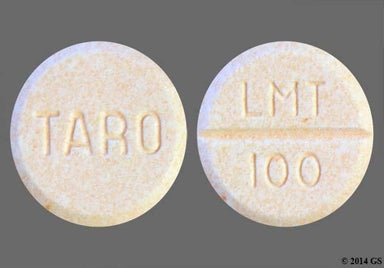
Peach Round Lmt 100 And Taro - Lamotrigine 100mg Tablet
This medicine is Peach, Round, Scored Tablet Imprinted With "Lmt 100" And "Taro".Peach Round Lmt 100 And Taro - Lamotrigine 100mg Tablet
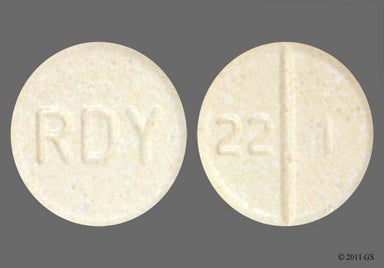
Yellow Round Rdy And 22 1 - Lamotrigine 100mg Tablet
This medicine is Yellow, Round, Scored Tablet Imprinted With "Rdy" And "22 1".Yellow Round Rdy And 22 1 - Lamotrigine 100mg Tablet
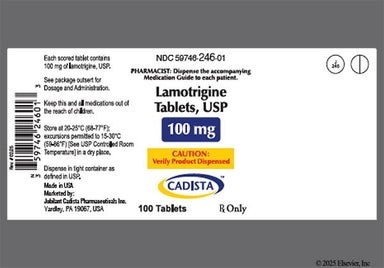
White Round J 246 - Lamotrigine 100mg Tablet
This medicine is White, Round, Scored Tablet Imprinted With "J 246".White Round J 246 - Lamotrigine 100mg Tablet
White Round J 246 - Lamotrigine 100mg Tablet
This medicine is White, Round, Scored Tablet Imprinted With "J 246".White Round J 246 - Lamotrigine 100mg Tablet
White Round L 122 - Lamotrigine 100mg Tablet
This medicine is White, Round, Scored Tablet Imprinted With "L 122".White Round L 122 - Lamotrigine 100mg Tablet
Peach Shield D 94 - Lamotrigine 100mg Tablet
This medicine is Peach, Shield, Scored Tablet Imprinted With "D 94".Peach Shield D 94 - Lamotrigine 100mg Tablet
White Round Logo 61 - Lamotrigine 100mg Tablet
This medicine is White, Round, Scored Tablet Imprinted With "Logo 61".White Round Logo 61 - Lamotrigine 100mg Tablet
White Round Logo 61 - Lamotrigine 100mg Tablet
This medicine is White, Round, Scored Tablet Imprinted With "Logo 61".White Round Logo 61 - Lamotrigine 100mg Tablet
White Round Logo 61 - Lamotrigine 100mg Tablet
This medicine is White, Round, Scored Tablet Imprinted With "Logo 61".White Round Logo 61 - Lamotrigine 100mg Tablet
White Round Zc 80 - Lamotrigine 100mg Tablet
This medicine is White, Round, Scored Tablet Imprinted With "Zc 80".White Round Zc 80 - Lamotrigine 100mg Tablet

Get savings updates for Lamotrigine (Lamictal)

Receive price alerts, news, and other messages from GoodRx about Lamotrigine (Lamictal) and other healthcare topics and relevant savings offers.

By providing your email, you consent to receive marketing communications from GoodRx, which may include content and/or data related to men's health, women's health, reproductive care, or sexual health. You agree to the GoodRx Terms of Use and acknowledge the Privacy Policy. You can unsubscribe at any time.

References

Best studies we found

American Academy of Neurology. (2024). Guideline issued for people with epilepsy who may become pregnant.

Barry, J. M., et al. (2023). Empiric dosing strategies to predict lamotrigine concentrations during pregnancy. Pharmacotherapy.

Betchel, N. T., et al. (2023). Lamotrigine. StatPearls.

GoodRx Health has strict sourcing policies and relies on primary sources such as medical organizations, governmental agencies, academic institutions, and peer-reviewed scientific journals. Learn more about how we ensure our content is accurate, thorough, and unbiased by reading our editorial guidelines.

Was this page helpful?