Lacrisert
Lacrisert (hydroxypropyl cellulose) is a long-acting artificial tears insert that helps relieve eye dryness and irritation. It's placed between your eyeball and lower eyelid. The insert can be difficult to place, especially in the beginning, but it only has to be placed once a day unlike similar eye drops.


What is Lacrisert (hydroxypropyl cellulose)?
What is Lacrisert (hydroxypropyl cellulose) used for?
- Moderate-to-severe dry eye conditions, especially in people who don't find relief after trying artificial tear solutions first
- Dry eyes caused by your eyes not fully closing (exposure keratitis)
- Recurrent damage to the surface of the eye (corneal erosions)
- Less eyelid closing and tear production when the eye senses something is bothering it (lowered corneal sensitivity)
How Lacrisert (hydroxypropyl cellulose) works
Lacrisert (hydroxypropyl cellulose) is a lubricating eye insert. It thickens the tear film on the surface of your eye to moisten and soothe (lubricate) dry eyes.
Drug facts
| Common Brands | Lacrisert |
|---|---|
| Drug Class | Ophthalmic agent |
| Controlled Substance Classification | Not a controlled medication |
| Generic Status | No lower-cost generic available |
| Availability | Prescription only |

Side effects of Lacrisert (hydroxypropyl cellulose)
The following side effects may get better over time as your body gets used to the medication. Let your healthcare provider know immediately if you continue to experience these symptoms or if they worsen over time.
Common Side Effects
- Blurry vision
- Eye discomfort or irritation
- Red eyes
- Eyelash matting or stickiness
- Eyelid swelling
- Light sensitivity
- Allergic reactions
The following Lacrisert (hydroxypropyl cellulose) side effects have also been reported
Along with its needed effects, a medicine may cause some unwanted effects. Although not all of these side effects may occur, if they do occur they may need medical attention.
Some side effects may occur that usually do not need medical attention. These side effects may go away during treatment as your body adjusts to the medicine. Also, your health care professional may be able to tell you about ways to prevent or reduce some of these side effects. Check with your health care professional if any of the following side effects continue or are bothersome or if you have any questions about them:
Less common
Blurred vision
eye redness or discomfort or other irritation not present before use of this medicine
increased sensitivity of eyes to light
matting or stickiness of eyelashes
swelling of eyelids
watering of eyes
Other side effects not listed may also occur in some patients. If you notice any other effects, check with your healthcare professional.
Call your doctor for medical advice about side effects. You may report side effects to the FDA at 1-800-FDA-1088.

Pros and cons of Lacrisert (hydroxypropyl cellulose)
Pros
- Typically used once daily, unlike artificial tear drops
- Preservative-free and provides all-day relief for dry eyes
Cons
- Must follow instructions closely; can be harder to put in than eye drops
- Available as a brand medication only, so it can be expensive

Pharmacist tips for Lacrisert (hydroxypropyl cellulose)

- Lacrisert (hydroxypropyl cellulose) can be used at night or in the morning.
- If you wear makeup, put your makeup on first, then place the insert.
- Your healthcare provider will show you how to properly use the Lacrisert (hydroxypropyl cellulose) insert. Still, read and follow the placement instructions carefully for your following doses.
- Each package contains two reuseable applicators and a plastic container for storage after each use.
- Always wash your hands with soap and water before using any type of eye drop, including Lacrisert (hydroxypropyl cellulose) inserts. This helps prevent eye infections.
- When placed correctly, you shouldn't be able to see the Lacrisert (hydroxypropyl cellulose) insert and it should feel comfortable.
- Adding 1 to 2 drops of artificial tears after you place Lacrisert (hydroxypropyl cellulose) into your eye can help the insert soften faster.
- Don't rub your eye(s) when you're using the inserts, especially right after you wake up. This can cause the insert to fall out.

Risks and warnings for Lacrisert (hydroxypropyl cellulose)
Lacrisert (hydroxypropyl cellulose) can cause some serious health issues. This risk may be even higher for certain groups. If this worries you, talk to your doctor or pharmacist about other options.
Carefully follow instructions for inserting and removing Lacrisert (hydroxypropyl cellulose)
Make sure to carefully follow the directions included with your Lacrisert (hydroxypropyl cellulose) package every time you place and remove an insert. Doing it incorrectly can scratch or damage the surface of your eye (cornea).
Blurry vision
Lacrisert (hydroxypropyl cellulose) can cause blurry vision. Avoid operating machinery, driving a car, or doing any potentially dangerous activities that require your focus until your vision returns to normal.

Lacrisert (hydroxypropyl cellulose) dosage
 Package
| Dosage | Quantity | Price as low as | Price per unit |
|---|---|---|---|
| 60 inserts of 5mg | 1 package | $579.50 | $579.50 |

Interactions between Lacrisert (hydroxypropyl cellulose) and other drugs
Although certain medicines should not be used together at all, in other cases two different medicines may be used together even if an interaction might occur. In these cases, your doctor may want to change the dose, or other precautions may be necessary. Tell your healthcare professional if you are taking any other prescription or nonprescription (over-the-counter [OTC]) medicine.

How much does Lacrisert (hydroxypropyl cellulose) cost?
$579.50

What are alternatives to Lacrisert (hydroxypropyl cellulose)?

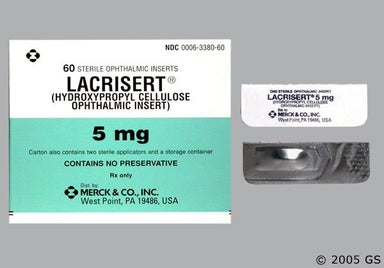
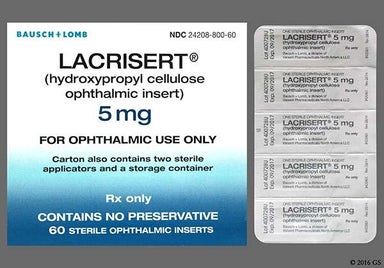
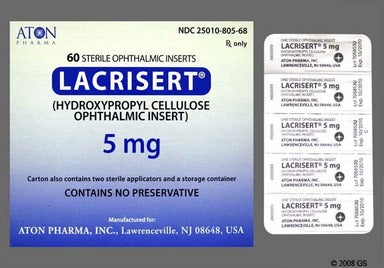
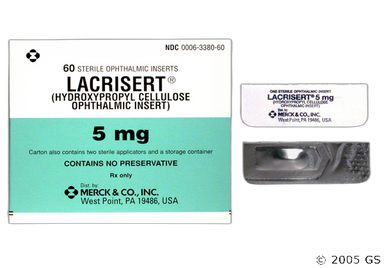
Lacrisert (hydroxypropyl cellulose) images