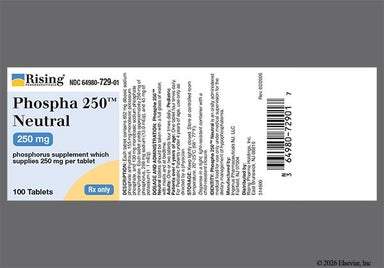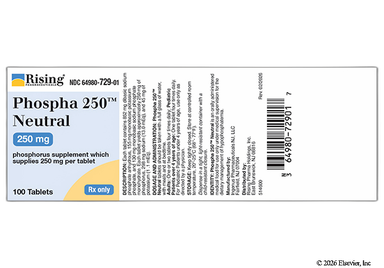
Phospha 250 Neutral
Potassium phosphate / sodium phosphate is a phosphorus supplement. Some brands (e.g., K-PHOS® No. 2) are used as urinary acidifiers to help prevent kidney stones. Other brands (e.g., K-PHOS Neutral, Phospha 250 Neutral) are used to raise phosphate and pyrophosphate levels in the urine. This supplement comes as oral tablets and is typically taken by mouth 4 times a day. But specific dosing can also depend on the brand and your body's response to the medication. Diarrhea, nausea, and stomach pain are possible side effects.


What is Potassium phosphate / sodium phosphate?
What is Potassium phosphate / sodium phosphate used for?
- Lowering urinary pH (e.g., K-PHOS® No. 2)
- Raising phosphate and pyrophosphate levels in the urine (e.g., K-PHOS Neutral, Phospha 250 Neutral)
- Phosphorus supplement
How Potassium phosphate / sodium phosphate works
Potassium phosphate / sodium phosphate is a phosphorus supplement.
Some brands are taken to acidify the urine, meaning to lower the urinary pH. This can help prevent kidney stones, ease odor and skin rash caused by urine that has too much ammonia, and help methenamine hippurate (Hiprex) work better at controlling urinary tract infections (UTIs).
Other brands are taken as a phosphorus supplement. Phosphorus is a mineral that has many important roles in the body, such as formation of bone cells and making energy. Potassium phosphate / sodium phosphate can also be taken to raise phosphate and pyrophosphate levels in the urine.
Drug facts
| Common Brands | K-Phos No. 2, K-Phos Neutral |
|---|---|
| Drug Class | Urinary acidifier |
| Controlled Substance Classification | Not a controlled medication |
| Generic Status | Lower-cost generic available |
| Availability | Prescription or over-the-counter |

Side effects of Potassium phosphate / sodium phosphate
The following side effects may get better over time as your body gets used to the medication. Let your healthcare provider know immediately if you continue to experience these symptoms or if they worsen over time.
Common Side Effects
- Diarrhea
- Nausea
- Stomach pain
- Vomiting
- Bone and joint pain
Less Common Side Effects
- Headache
- Dizziness
- Confusion
- Numbness, tingling, pain, or weakness of hands or feet
- Muscle cramps
Potassium phosphate / sodium phosphate serious side effects
Contact your healthcare provider immediately if you experience any of the following.
Seizures
The following Potassium phosphate / sodium phosphate side effects have also been reported
Along with its needed effects, a medicine may cause some unwanted effects. Although not all of these side effects may occur, if they do occur they may need medical attention.
Check with your doctor immediately if any of the following side effects occur:
Incidence not known
Bone pain
convulsions
decreased urine output
dizziness
fast or irregular heartbeat
headache
joint pain
mental confusion
muscle cramps
numbness or tingling around the lips
numbness, tingling, pain, or weakness of the hands or feet
shortness of breath
swelling of the feet or lower legs
troubled breathing
unusual thirst
unusual tiredness or weakness
unusual weight gain
weakness or heaviness of the legs
Some side effects may occur that usually do not need medical attention. These side effects may go away during treatment as your body adjusts to the medicine. Also, your health care professional may be able to tell you about ways to prevent or reduce some of these side effects. Check with your health care professional if any of the following side effects continue or are bothersome or if you have any questions about them:
Other side effects not listed may also occur in some patients. If you notice any other effects, check with your healthcare professional.
Call your doctor for medical advice about side effects. You may report side effects to the FDA at 1-800-FDA-1088.

Get your GoodRx coupon

Pros and cons of Potassium phosphate / sodium phosphate
Pros
- Can help lower risk of kidney stones
- Can help some UTI antibiotics work better
- Taken by mouth
Cons
- Typically has to be taken 4 times a day
- Can cause diarrhea and stomach upset
- Can't be used in people with severe kidney problems

Pharmacist tips for Potassium phosphate / sodium phosphate

- Take each dose of potassium phosphate / sodium phosphate with a full glass of water.
- Potassium phosphate / sodium phosphate can cause mild diarrhea during the first few days of taking it. It's important to stay hydrated during this time so your body doesn't lose too much fluids. If the diarrhea is severe or doesn't go away after a few days, tell your care team.
- Since potassium phosphate / sodium phosphate can affect your electrolyte levels, your prescriber might want to do blood tests to check your calcium, phosphorus, sodium, and potassium levels while taking the medication.
- Don't take potassium phosphate / sodium phosphate with antacids that contain magnesium, aluminum, or calcium. Doing so can prevent your body from absorbing phosphate.
- If you take other potassium-containing medications or potassium-sparing diuretics with potassium phosphate / sodium phosphate, you're at higher risk for having high potassium levels. Talk to your healthcare professional (HCP) if you have nausea, irregular heartbeat, or muscle weakness while taking potassium phosphate / sodium phosphate.
- Tell your healthcare team about all the medications you're taking. Taking certain medications, including hydralazine and corticosteroids can cause your sodium levels to rise too high. This can put you at risk for seizures and confusion.
- If you have kidney stones, you could pass them when starting potassium phosphate / sodium phosphate. Tell your prescriber if your kidney stone symptoms get worse.

Risks and warnings for Potassium phosphate / sodium phosphate
Potassium phosphate / sodium phosphate can cause some serious health issues. This risk may be even higher for certain groups. If this worries you, talk to your doctor or pharmacist about other options.
Passing of old kidney stones
- Risk factors: History of kidney stones
Starting treatment with potassium phosphate / sodium phosphate might cause you to pass old kidney stones through your urine. Small kidney stones will pass more easily, causing little to no pain. Call your prescriber if you think you're passing old kidney stones, or if you experience severe pain, fever, or blood in the urine.
Worsening of certain health conditions
Potassium phosphate / sodium phosphate might not be safe to take if you have certain health conditions. Talk to your healthcare professional before taking this medication if you have heart conditions or high blood pressure. This medication might not be appropriate for people with liver problems or pancreatitis as well. Make sure to let your care team know your full medical history so they can decide if potassium phosphate / sodium phosphate is safe for you.

Potassium phosphate / sodium phosphate dosage
 Tablet
| Dosage | Quantity | Price as low as | Price per unit |
|---|---|---|---|
| 250mg | 180 tablets | $29.26 | $0.16 |

Interactions between Potassium phosphate / sodium phosphate and other drugs
Although certain medicines should not be used together at all, in other cases two different medicines may be used together even if an interaction might occur. In these cases, your doctor may want to change the dose, or other precautions may be necessary. When you are receiving this dietary supplement, it is especially important that your healthcare professional know if you are taking any of the medicines listed below. The following interactions have been selected on the basis of their potential significance and are not necessarily all-inclusive.
Using this dietary supplement with any of the following medicines is not recommended. Your doctor may decide not to treat you with this dietary supplement or change some of the other medicines you take.
- Bepridil
- Burosumab-twza
- Cisapride
- Dronedarone
- Mesoridazine
- Pimozide
- Piperaquine
- Saquinavir
- Sparfloxacin
- Terfenadine
- Thioridazine
- Ziprasidone
Using this dietary supplement with any of the following medicines is usually not recommended, but may be required in some cases. If both medicines are prescribed together, your doctor may change the dose or how often you use one or both of the medicines.
- Alfuzosin
- Amiloride
- Amiodarone
- Amisulpride
- Amitriptyline
- Amoxapine
- Anagrelide
- Apomorphine
- Aripiprazole
- Aripiprazole Lauroxil
- Arsenic Trioxide
- Asenapine
- Astemizole
- Azilsartan
- Azilsartan Medoxomil
- Azithromycin
- Bedaquiline
- Buprenorphine
- Buserelin
- Candesartan
- Canrenoate
- Canrenone
- Ceritinib
- Chloroquine
- Chlorpromazine
- Cilazapril
- Ciprofloxacin
- Citalopram
- Clarithromycin
- Clofazimine
- Clomipramine
- Clozapine
- Crizotinib
- Cyclosporine
- Dabrafenib
- Dasatinib
- Degarelix
- Delamanid
- Desipramine
- Deslorelin
- Deutetrabenazine
- Digoxin
- Disopyramide
- Dofetilide
- Dolasetron
- Domperidone
- Donepezil
- Droperidol
- Efavirenz
- Enalapril
- Enalaprilat
- Encorafenib
- Entrectinib
- Eplerenone
- Eprosartan
- Erdafitinib
- Erythromycin
- Escitalopram
- Fingolimod
- Flecainide
- Fluconazole
- Fluoxetine
- Formoterol
- Foscarnet
- Fosinopril
- Fostemsavir
- Gatifloxacin
- Gemifloxacin
- Glasdegib
- Gonadorelin
- Goserelin
- Granisetron
- Halofantrine
- Haloperidol
- Histrelin
- Hydroxychloroquine
- Hydroxyzine
- Ibutilide
- Iloperidone
- Imipramine
- Inotuzumab Ozogamicin
- Irbesartan
- Ivabradine
- Ivosidenib
- Ketoconazole
- Lapatinib
- Lefamulin
- Lenvatinib
- Levofloxacin
- Lisinopril
- Lofexidine
- Lopinavir
- Losartan
- Lumefantrine
- Macimorelin
- Mefloquine
- Methadone
- Metronidazole
- Mifepristone
- Mirtazapine
- Moexipril
- Moxifloxacin
- Nafarelin
- Nilotinib
- Norfloxacin
- Nortriptyline
- Octreotide
- Ofloxacin
- Olmesartan
- Ondansetron
- Osilodrostat
- Osimertinib
- Oxaliplatin
- Ozanimod
- Paliperidone
- Panobinostat
- Pasireotide
- Pazopanib
- Perindopril
- Pimavanserin
- Pitolisant
- Ponesimod
- Posaconazole
- Procainamide
- Prochlorperazine
- Promethazine
- Propafenone
- Protriptyline
- Quetiapine
- Quinapril
- Quinidine
- Quinine
- Ramipril
- Ranolazine
- Ribociclib
- Selpercatinib
- Sertraline
- Sevoflurane
- Siponimod
- Solifenacin
- Sorafenib
- Sotalol
- Spirapril
- Spironolactone
- Sulpiride
- Sunitinib
- Tacrolimus
- Telavancin
- Telithromycin
- Telmisartan
- Tetrabenazine
- Trandolapril
- Trazodone
- Triamterene
- Triclabendazole
- Trimipramine
- Triptorelin
- Valsartan
- Vandetanib
- Vardenafil
- Vemurafenib
- Vinflunine
- Voclosporin
- Voriconazole
- Zofenopril
- Zuclopenthixol
Using this dietary supplement with any of the following medicines may cause an increased risk of certain side effects, but using both drugs may be the best treatment for you. If both medicines are prescribed together, your doctor may change the dose or how often you use one or both of the medicines.
- Aluminum Carbonate, Basic
- Aluminum Hydroxide
- Aluminum Phosphate
- Calcium Acetate
- Calcium Carbonate
- Calcium Citrate
- Dihydroxyaluminum Aminoacetate
- Dihydroxyaluminum Sodium Carbonate
- Magaldrate
- Magnesium Carbonate
- Magnesium Hydroxide
- Magnesium Oxide
- Magnesium Trisilicate

How much does Potassium phosphate / sodium phosphate cost?

Potassium phosphate / sodium phosphate contraindications
Contraindications are specific health conditions or situations in which a person should not take a medication due to safety concerns. If you have any of the following conditions or if any of the following apply to you, let your healthcare provider know because Potassium phosphate / sodium phosphate will not be safe for you to take.
- Infected phosphate stones
- Severe kidney damage
- High blood phosphate levels

What are alternatives to Potassium phosphate / sodium phosphate?

Potassium phosphate / sodium phosphate images