

Travel Vaccines: How to Get Vaccinated for Yellow Fever, Malaria, and More
If you’re planning an international trip, you may need to update your travel vaccines. Learn where to get travel vaccines and how to save on the cost.
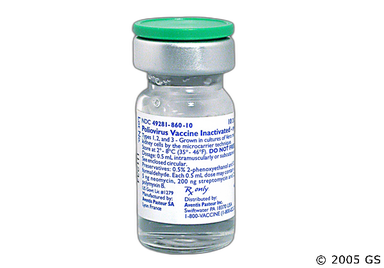
The polio vaccine, also known as the inactivated polio vaccine (IPV or IPOL), is a vaccine that lowers your risk of getting infected with poliovirus. It can be injected into the muscle or under the skin. It's a routine vaccine that's given to all children in the United States, but some adults might need to get it as well.

IPOL is an inactivated vaccine that protects you from 3 types of poliovirus, which is a virus that causes a condition known as poliomyelitis (or polio). The vaccine helps your body's immune system make antibodies against the virus, which will attack the virus if it ever infects your body.
| Common Brands | IPOL, IPV |
|---|---|
| Drug Class | Vaccine |
| Controlled Substance Classification | Not a controlled medication |
| Generic Status | No lower-cost generic available |
| Availability | Prescription only |

The following side effects may get better over time as your body gets used to the medication. Let your healthcare provider know immediately if you continue to experience these symptoms or if they worsen over time.
Information about side effects comes from studies that only included children age 2 month, 4 month, and 18 month. Side effects are typically more common in younger children.
Contact your healthcare provider immediately if you experience any of the following.
Side effects that you should report to your care team as soon as possible:
Side effects that usually do not require medical attention (report these to your care team if they continue or are bothersome):




IPOL can cause some serious health issues. This risk may be even higher for certain groups. If this worries you, talk to your doctor or pharmacist about other options.
As with any vaccine, there's a small chance that you might have a severe allergic reaction to IPOL. Tell your provider if you have an allergy to any of the ingredients listed above because these are in IPOL. Your provider might ask you to stay at the pharmacy or clinic for a short period of time after you've received your vaccine to make sure you can get proper care in case of a serious allergic reaction. Sometimes, these reactions can happen after you've already left the clinic. Get medical help right away if you notice symptoms of a severe allergic reaction, such as feeling faint, swelling of the face, closing of the throat, difficulty breathing, hives or rash, dizziness, shaking, nausea, or chest pain.
If you have a weakened immune system because of a medical condition or medications, you can still get IPOL. Please be aware that the vaccine might not work as well for you compared with people who have a healthy immune system. Take extra precaution to protect yourself from polio, such as washing your hands very well with soap and water after you use the bathroom or before you eat or cook.

 Vial
Vial| Dosage | Quantity | Price as low as | Price per unit |
|---|---|---|---|
| 0.5ml | 1 vial | $53.92 | $53.92 |


Contraindications are specific health conditions or situations in which a person should not take a medication due to safety concerns. If you have any of the following conditions or if any of the following apply to you, let your healthcare provider know because IPOL will not be safe for you to take.


Prescription savings
Stop paying too much for your prescriptions. Compare prices, get pharmacy coupons, and save up to 80%. Find expert answers to your health questions so you can make the best decisions for yourself and your family.
Health conditions
Medications & treatment
Access & affordability
 Our monthly healthcare membership can help you save thousands on your prescription costs.
Resources

Ipol is recommended as a 4-dose series for all children starting at 2 months of age. The first dose can be given as early as 6 weeks old. Most adults born in the United States don't need Ipol because they would've already been vaccinated as a child. However, some adults might need it if they've never been vaccinated against polio before or if they're at high risk for infection. These adults can get 1 to 3 doses of Ipol, depending on how many doses of the vaccine they've gotten in the past. Ask your provider or pharmacist if you aren't sure if you need Ipol.
There are combination vaccines that combines multiple vaccines in one shot. They not only protect against polio, but also multiple other infections. These vaccines are more convenient because they mean fewer shots and less pain for your child. Examples of combination vaccines that also contain a poliovirus vaccine include Kinrix, Pentacel, and Pediarix. Ask your child's provider if these combination vaccines are right for your child.
Oral poliovirus vaccine (OPV) is a polio vaccine that's taken by mouth and contains a weakened, live form of the poliovirus. While OPV is still available in some parts of the world today, it's no longer available in the United States because it led to vaccine-derived poliovirus (VDVP). This resulted in the spread of polio and put some people at risk for serious illness. To prevent VDVP, the United States uses Ipol as the only stand-alone polio vaccine.
It's not known if Ipol causes harm to unborn babies when given to people who are pregnant. It should only be used in pregnancy if the benefits are greater than the risks. If you're pregnant, don't get Ipol until you've talked to your provider first.
If your child missed their scheduled dose of Ipol, your child doesn't need to start the vaccine series all over again. Delays in vaccine dose doesn't mean your child is less protected against polio, as long as they complete their vaccine series in the future. Just continue with the next dose as soon as you're able to schedule it. If you have any questions about when your child should have their next Ipol dose, talk to their provider.
