


What to Know About Aldara Cream (Imiquimod) for Basal Cell Carcinoma
Aldara (imiquimod) is a topical cream that targets and kills cancer cells in the skin. Learn how Aldara treats basal cell carcinoma, including the side effects.
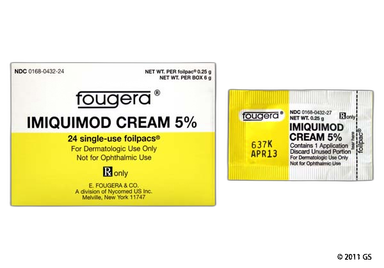
Imiquimod 5% cream (Aldara) is a prescription cream that's applied to the skin. It's used to treat actinic keratosis on the face or scalp and a type of skin cancer called superficial basal cell carcinoma in adults. It also treats genital and anal warts in people ages 12 years and older. Imiquimod 5% is usually applied onto the affected skin several times a week. The most common side effects are skin itching, irritation, and burning.

Imiquimod 5% is a topical skin product. It's known as an immune response modifier.
It's not exactly clear how imiquimod 5% cream works. It's thought to turn on certain parts of your immune system. When you apply it to your skin, certain immune cells move to the treated area. These immune cells help fight certain types of skin cancer, skin damage from the sun, and genital warts.
| Common Brands | Aldara |
|---|---|
| Drug Class | Topical skin product |
| Controlled Substance Classification | Not a controlled medication |
| Generic Status | Lower-cost generic available |
| Availability | Prescription only |

The following side effects may get better over time as your body gets used to the medication. Let your healthcare provider know immediately if you continue to experience these symptoms or if they worsen over time.
Along with its needed effects, a medicine may cause some unwanted effects. Although not all of these side effects may occur, if they do occur they may need medical attention.
Check with your doctor immediately if any of the following side effects occur:
More common
Blisters on the skin
body aches or pain
chills
difficulty with breathing
ear congestion
itching in the genital or other skin areas
loss of voice
open sores or scabs on the skin
pain or tenderness around the eyes and cheekbones
redness of the skin (severe)
scaling
shortness of breath or troubled breathing
skin rash
stuffy or runny nose
tightness of the chest or wheezing
unusual tiredness or weakness
Less common
Abdominal or stomach pain
ankle, knee, or great toe joint pain
bladder pain
bloody or cloudy urine
blurred vision
difficult, burning, or painful urination
dizziness
fainting
fast or irregular heartbeat
frequent urge to urinate
hoarseness
joint stiffness or swelling
lower back or side pain
lump in the abdomen or stomach
nervousness
persistent non-healing sore
pink growth on the skin
pounding in the ears
reddish patch or irritated area
severe headache
shiny bump on the skin
slow or fast heartbeat
swollen, painful, or tender lymph glands in the neck, armpit, or groin
white, yellow or waxy scar-like area
Incidence not known
Blue lips and fingernails
convulsions
coughing that sometimes produces a pink frothy sputum
dilated neck veins
extreme fatigue
fast, irregular, or pounding heartbeat
headache
irregular breathing
nausea or vomiting
pain in the shoulders, arms, jaw, or neck
slurred speech
sudden and severe inability to speak
suicide
sweating
swelling of the face, fingers, feet, or lower legs
temporary blindness
weakness in the arm or leg on one side of the body
Get emergency help immediately if any of the following symptoms of overdose occur:
Symptoms of overdose
Confusion
dizziness, faintness, or lightheadedness when getting up suddenly from a lying or sitting position
Some side effects may occur that usually do not need medical attention. These side effects may go away during treatment as your body adjusts to the medicine. Also, your health care professional may be able to tell you about ways to prevent or reduce some of these side effects. Check with your health care professional if any of the following side effects continue or are bothersome or if you have any questions about them:
More common
Burning or stinging of the skin (mild)
flaking of the skin
mild headache
pain, soreness, or tenderness of the skin (mild)
rash
redness of the skin (mild)
swelling at place of application
Other side effects not listed may also occur in some patients. If you notice any other effects, check with your healthcare professional.
Call your doctor for medical advice about side effects. You may report side effects to the FDA at 1-800-FDA-1088.



How to use imiquimod 5%:
For actinic keratosis on the face or scalp:
For superficial basal cell carcinoma:
For genital and anal warts:

Imiquimod 5% can cause some serious health issues. This risk may be even higher for certain groups. If this worries you, talk to your doctor or pharmacist about other options.
Imiquimod 5% can cause severe local skin reactions after a few uses. This can include oozing, blisters, and peeling. It can also make certain inflammatory skin problems worse. If this happens, tell your prescriber. They might recommend you to take a break from the medication.
If you're using imiquimod 5% cream for genital warts on the outside of the vagina, severe swelling around the area can make it hard to urinate. If this happens, let your prescriber know. They can help decide if you should pause or stop treatment.
Don't use imiquimod 5% cream on skin that hasn't fully healed after surgery or another skin treatment.
Imiquimod 5% can make the treated skin more sensitive to the sun. It can also be more sensitive to sunlamps, tanning beds, and other sources of ultraviolet (UV) light. This can make it easier for your skin to get sunburned.
Avoid direct sun exposure and tanning beds while using imiquimod 5%. Also, use sunscreen and wear protective clothing, such as a hat, when you go out. If you get a sunburn, wait until it heals before using imiquimod 5% again in that area. If you need to be out in the sun for a long time for your job or if you tend to get sunburned easily, talk to your prescriber.
Some people have had flu-like symptoms while using imiquimod 5% cream. These include tiredness, fever, nausea, muscle aches, or chills. If this happens, tell your prescriber. They might decide to pause treatment until your symptoms improve.

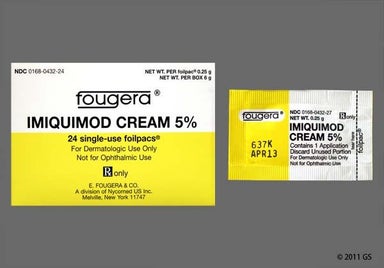
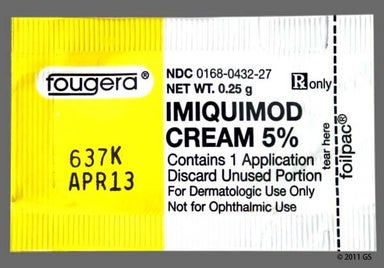
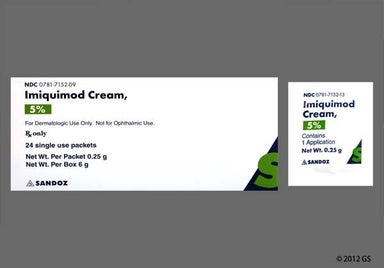
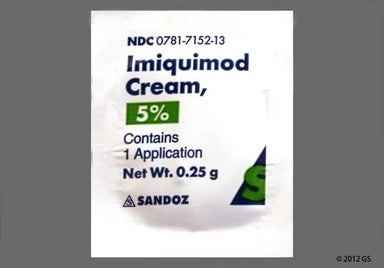
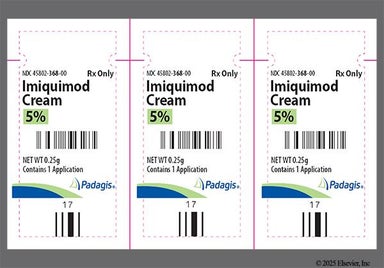
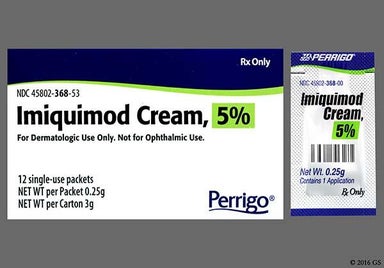
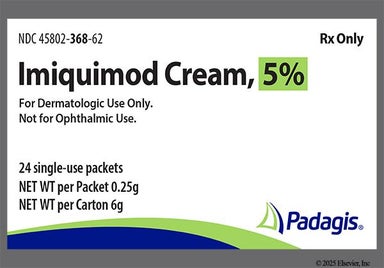
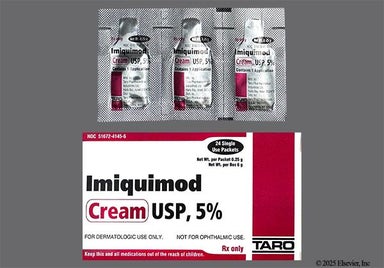
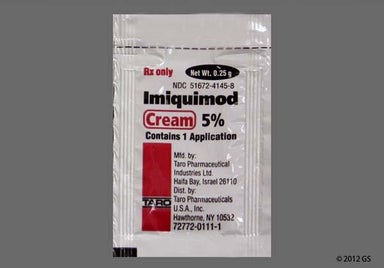
 Packet
| Dosage | Quantity | Price as low as | Price per unit |
|---|---|---|---|
| 5% | 24 packets | $28.64 | $1.19 |

Although certain medicines should not be used together at all, in other cases two different medicines may be used together even if an interaction might occur. In these cases, your doctor may want to change the dose, or other precautions may be necessary. Tell your healthcare professional if you are taking any other prescription or nonprescription (over-the-counter [OTC]) medicine.


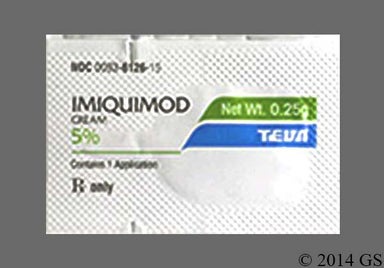
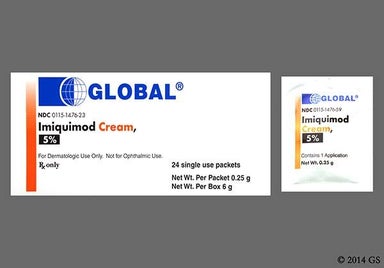
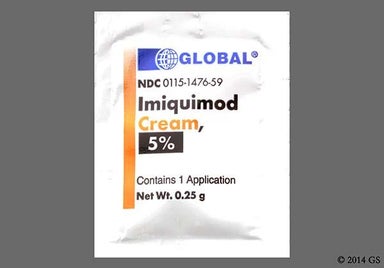

Prescription savings
Stop paying too much for your prescriptions. Compare prices, get pharmacy coupons, and save up to 80%. Find expert answers to your health questions so you can make the best decisions for yourself and your family.
Health conditions
Medications & treatment
Access & affordability
Medication discounts

How long Imiquimod takes to work depends on the skin condition you're treating. In general, it can take several weeks to a few months of using the cream as directed before you see the full benefit. For example, genital warts might clear after about 10 weeks of treatment. Actinic keratosis and superficial basal cell carcinoma can also take a few months to improve. Talk to your prescriber if you aren't sure whether imiquimod is working for you.
Imiquimod 5% cream is applied to your skin. Usually, only a small amount is absorbed into your body. If some of the medication does get into your system, it takes about 6 days for most of it to leave your body.
It's not exactly clear how long side effects from imiquimod 5% cream can last. It usually depends on the side effect. Skin reactions like redness, itching, or burning usually get better after you stop using imiquimod 5% cream or take a break from treatment. Tell your prescriber if your side effects are bothersome or don't get better. They can recommend ways to help manage them.
Most side effects from imiquimod 5% cream happen where you apply it. These are skin reactions like itching and burning. If your skin becomes very irritated, you can wash the cream off with mild soap and water. If this happens, be sure to tell your prescriber. They might recommend other ways to help manage your symptoms.
Yes. Burning where you apply imiquimod 5% cream is a possible side effect. If the burning is severe or if it doesn't go away over time, tell your prescriber. They can recommend ways to help manage it.
Imiquimod 5% cream isn't usually used every day because it wasn't studied this way. It's used several times a week and how often you use it depends on the skin condition you're treating. The cream is used 2 times a week for actinic keratosis on the face or scalp. It's used 3 times a week for genital and anal warts. And, it's used 5 times a week for superficial basal cell carcinoma. Don't use imiquimod 5% cream every day unless your prescriber says it's okay. If you're not sure how often to use the cream, ask your prescriber.
Yes, you can keep using imiquimod 5% cream while you’re on your period. If you’re treating genital warts, remember to apply the cream only to the outside of your genitals. Don't put it inside your vagina. Talk to your prescriber if your period makes it hard to use the cream as directed.
No. Imiquimod 5% cream is only available by prescription from a healthcare professional.
