


Which Medications Treat Non-Small Cell Lung Cancer?
Several types of medication may be used to treat non-small cell lung cancer (NSCLC). What’s recommended for you depends on the stage of cancer and other factors.
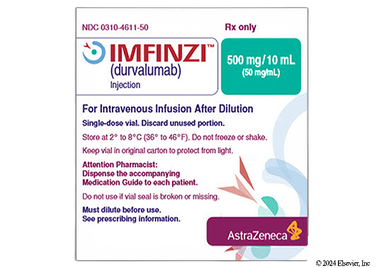
Imfinzi (durvalumab) is a type of immunotherapy called an immune checkpoint inhibitor. It's used to treat a variety of cancers, such as certain types of lung cancer, liver cancer, bile duct cancer, and endometrial cancer. Imfinzi (durvalumab) is often given along with other immunotherapy or chemotherapy medications. Imfinzi (durvalumab) is infused into the veins by a trained member on your oncology team. It's usually given every 2 to 4 weeks, depending on the type of cancer. Imfinzi (durvalumab) can cause rare, but serious immune-related side effects including rash, breathing problems, and diarrhea.

Your immune system acts as a defense system for the body, attacking bacteria, viruses, and cancer cells. Many healthy cells in your body have a special protein called PD-L1 that stops the immune system from attacking them. Usually cancer cells and other foreign cells don’t have this special protein. But some cancers have PD-L1 and they use it to hide from the immune system in order to grow and spread.
Imfinzi (durvalumab) is an immune checkpoint inhibitor (a type of immunotherapy). It works by blocking PD-L1 so that the immune system to can detect and attack the cancer cells.
| Common Brands | Imfinzi |
|---|---|
| Drug Class | PD-L1 inhibitor |
| Controlled Substance Classification | Not a controlled medication |
| Generic Status | No lower-cost generic available |
| Availability | Prescription only |

The following side effects may get better over time as your body gets used to the medication. Let your healthcare provider know immediately if you continue to experience these symptoms or if they worsen over time.
Please note: Side effect information is from studies in people with non-small cell lung cancer who took Imfinzi (durvalumab) after platinum-based chemotherapy and radiation.
Contact your healthcare provider immediately if you experience any of the following.
Side effects that you should report to your care team as soon as possible:
Side effects that usually do not require medical attention (report these to your care team if they continue or are bothersome):




Imfinzi (durvalumab) can cause some serious health issues. This risk may be even higher for certain groups. If this worries you, talk to your doctor or pharmacist about other options.
Risk factors: Prior radiation to the chest
Imfinzi (durvalumab) works by taking the “brakes” off the immune system to help the immune system better attack cancer cells. But sometimes, the immune system becomes too active, leading to rare but serious immune-related side effects. These side effects can happen at any time during Imfinzi (durvalumab) treatment, including after you stop the medication. In studies, these side effects appeared most frequently in the lungs, gut, liver, skin, and thyroid, but they can happen anywhere in the body. Your healthcare team will do blood tests to make sure that your organs are working well. Let an oncology team know if you notice any new or worsening shortness of breath, diarrhea, or rash, which could be signs of serious immune-related side effects.
Getting treatment for immune-related side effects quickly is key to preventing serious or irreversible damage. It’s likely that your oncologist will pause additional Imfinzi (durvalumab) treatment while managing the side effects. They might also recommend medications like steroids to lower the inflammation caused by the overactive immune system.
Some people had reactions to the Imfinzi (durvalumab) infusion, which in rare situations were life-threatening. During your Imfinzi (durvalumab) infusion, if you notice new chills, flushing, trouble breathing, itching, or dizziness, let your care team know right away. Those could be signs of an infusion reaction. Your care team will pause the infusion and manage your symptoms. Once your symptoms resolve, your team might restart your infusion at a slower rate to lower the risk of reaction. They might also give you medications before future Imfinzi (durvalumab) infusions to prevent the reaction from happening again.
Risk factors: Receiving an allogeneic stem cell transplant prior to or after starting Imfinzi (durvalumab) treatment
If you’ve received a stem cell transplant or are considering getting a stem cell transplant, talk to your healthcare team prior to starting Imfinzi (durvalumab) to determine if it’s safe for you to take. Treatment with immunotherapy targeting PD-L1 before or after receiving a stem cell transplant from a stem cell donor (allogeneic stem cell transplant) led to serious or even fatal transplant complications. These complications included the transplanted immune system attacking the new host (graft-versus-host disease) and liver problems related to the stem cell transplant (veno-occlusive disease). Because of these risks, your oncologist will need to talk to you about monitoring or other safer treatment options.
Imfinzi (durvalumab) hasn’t been studied in human pregnancy, but it’s likely to cause harm or death to the unborn baby based on results from animal studies. If you’re able to become pregnant, your oncologist will have you do a pregnancy test before starting the medication. Use birth control during treatment and for 3 months after stopping the medication.

Your oncology team will determine your Imfinzi (durvalumab) dose and how often you'll receive it depending on what type of cancer you have. In addition, they might also give you other medications, like Imjudo (tremelimumab) or chemotherapy as part of your treatment.
For adults weighing 66 lbs or more:
Your dose will be different if your body weight is less than 66 lbs.


Prescription savings
Stop paying too much for your prescriptions. Compare prices, get pharmacy coupons, and save up to 80%. Find expert answers to your health questions so you can make the best decisions for yourself and your family.
Health conditions
Medications & treatment
Access & affordability
 Our monthly healthcare membership can help you save thousands on your prescription costs.
Resources

It takes over 3 months for most of Imfinzi to leave your system after you stop treatment. This timeframe is estimated based on the half-life of Imfinzi, and might differ from person to person. Because Imfinzi can stay in the body for a long time after the end of treatment, it might continue to impact certain areas of your life. For example, the manufacturer recommends that people who are able to become pregnant use effective birth control during Imfinzi treatment and for 3 months after the last dose. In addition, they recommend that people avoid breastfeeding while taking Imfinzi and for 3 months after the last dose. Ask your oncology team if you have more questions about how the longer half-life of Imfinzi might impact your health.
Your oncology team will determine how long you should continue Imfinzi treatment based on different factors, including how well it's working to treat the cancer and whether you’re able to tolerate its side effects. For most types of cancers, you’ll continue Imfinzi for as long as the medication keeps your cancer from growing or spreading. But for certain types of NSCLC, Imfinzi can only be given for a maximum of 1 year. Your oncology team might ask you to stop Imfinzi if you have severe side effects, like bowel inflammation or lung inflammation. Talk with your oncology team if you have more questions about how long you should take Imfinzi.
The Imfinzi infusion takes about 1 hour. But your appointment may take longer if you’re scheduled to receive other infusions at that same appointment, or if your oncologist wants to monitor you afterward for serious infusion-related reactions. It’s a good idea to dress comfortably, bring some water and snacks, and have activities to keep you occupied like a book, puzzle, or music.
No, Imfinzi doesn't cure cancer, but it might allow some people with cancer to live longer. For example, a study looked at the overall survival of people after they received Imfinzi for NSCLC that can't be treated with surgery. Results showed that about 43% of people who received Imfinzi were alive 5 years after the start of the study, compared to 33% of people who received placebo. Talk with your oncology team if you have specific questions about what results you might expect from Imfinzi.
No, Imfinzi isn't chemotherapy; instead, it's immunotherapy. Chemotherapy works by killing rapidly dividing cells in the body, such as cancer cells. But Imfinzi doesn't work this way. Instead, it uses your own immune system to attack the cancer cells. Depending on the cancer type, your oncology team might need to give you chemotherapy along with Imfinzi as part of your treatment plan.
Yes, Imfinzi is a type of immunotherapy called an immune checkpoint inhibitor. It works by targeting a specific protein in the body that the cancer cells use to hide from your immune system. By blocking this protein, Imfinzi helps your immune system recognize and destroy the cancer cells.
Yes, hair loss is a common side effect reported by people who took Imfinzi in clinical studies. Most of the time, people experienced mild to moderate hair loss. Keep in mind that depending on what type of cancer you have, you might receive chemotherapy medications in addition to Imfinzi that can also cause hair loss. If you're concerned about hair loss, talk with your oncology team before starting treatment. They can talk with you about what to expect and ways to cope with or minimize hair loss, including cooling caps or wigs.
It’s common to have mild itching and rash while taking Imfinzi. You can use alcohol-free, unscented moisturizer to prevent those symptoms. Notify your healthcare team if you notice any new or worsening rashes, peeling, or blistering while taking Imfinzi. This might be a sign of a more serious skin reaction. Your oncologist can check the rash and recommend medications to lower the inflammation, such as corticosteroids. Or, they might suggest that you take a break from Imfinzi until your skin gets better.
