



Why Urinary Tract Infections Are More Common During Pregnancy — and How to Treat Them
Urinary tract infections (UTI) during pregnancy are common but treatable with antibiotics. Explore the ways you can test, prevent, and treat UTIs while pregnant.

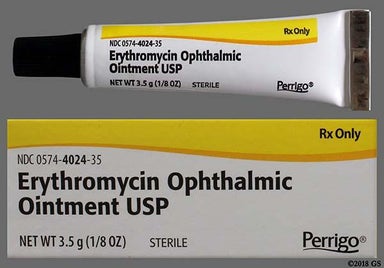
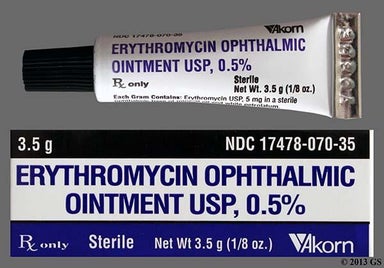
Erythromycin eye ointment is a macrolide antibiotic used to treat certain bacterial eye infections. It also helps prevent a serious eye infection in newborn babies. The medication is applied up to 6 times a day to treat an infection or given once shortly after birth to prevent pink eye. Common side effects include mild eye irritation and redness.

Erythromycin eye ointment is a macrolide antibiotic. It stops the growth of bacteria by preventing them from making proteins that they need to survive.
| Common Brands | Ilotycin |
|---|---|
| Drug Class | Macrolide antibiotic |
| Controlled Substance Classification | Not a controlled medication |
| Generic Status | Lower-cost generic available |
| Availability | Prescription only |

The following side effects may get better over time as your body gets used to the medication. Let your healthcare provider know immediately if you continue to experience these symptoms or if they worsen over time.
Contact your healthcare provider immediately if you experience any of the following.
Along with its needed effects, a medicine may cause some unwanted effects. Although not all of these side effects may occur, if they do occur they may need medical attention.
Check with your doctor as soon as possible if any of the following side effects occur:
Rare
Eye irritation not present before therapy
Other side effects not listed may also occur in some patients. If you notice any other effects, check with your healthcare professional.
Call your doctor for medical advice about side effects. You may report side effects to the FDA at 1-800-FDA-1088.



General tips
How to apply erythromycin eye ointment

Erythromycin eye ointment can cause some serious health issues. This risk may be even higher for certain groups. If this worries you, talk to your doctor or pharmacist about other options.
Using erythromycin eye ointment, especially for a long time, can sometimes allow other germs, including fungi, to grow and cause a new infection. Tell your care team if your eye symptoms get worse or don't improve during treatment. They might recommend stopping the medication and starting a different treatment.
Erythromycin eye ointment can cause an allergic reaction. Symptoms can include redness, itching, swelling, or a rash. Stop using the medication and contact your prescriber if you develop signs of an allergy. Get emergency medical help for trouble breathing or swelling of your face or throat.


Although certain medicines should not be used together at all, in other cases two different medicines may be used together even if an interaction might occur. In these cases, your doctor may want to change the dose, or other precautions may be necessary. When you are taking this medicine, it is especially important that your healthcare professional know if you are taking any of the medicines listed below. The following interactions have been selected on the basis of their potential significance and are not necessarily all-inclusive.
Using this medicine with any of the following medicines is usually not recommended, but may be required in some cases. If both medicines are prescribed together, your doctor may change the dose or how often you use one or both of the medicines.















Prescription savings
Stop paying too much for your prescriptions. Compare prices, get pharmacy coupons, and save up to 80%. Find expert answers to your health questions so you can make the best decisions for yourself and your family.
Health conditions
Medications & treatment
Access & affordability
Medication discounts


To apply erythromycin eye ointment to yourself, tilt your head forward and pull down your lower eyelid to make a small pocket. Squeeze a thin strip of ointment into the pocket, then look down and close your eye for 1 to 2 minutes. To apply it to a child, have your child lie down and look up. Rest the hand holding the tube on your child's forehead, then gently pull down their lower eyelid with your other hand. Apply the ointment inside the lower eyelid, then have your child close or blink their eyes for about 1 minute.
Maybe, erythromycin eye ointment can sometimes be prescribed to treat a stye if there's a bacterial infection. But most styes go away on their own within 1 to 2 weeks, and antibiotics aren't always needed. You can help a stye heal by placing a warm, wet washcloth over your closed eye for 15 minutes several times a day. Don't squeeze or pop the stye. Talk to your healthcare professional if your stye doesn't improve, gets worse, or causes changes in your vision.
Erythromycin eye ointment is typically applied to the affected eye up to 6 times a day, depending on the type and severity of the infection. Follow your prescriber's instructions, and don't stop treatment early, even if your symptoms improve. Talk to your care team if you're unsure how often or how long to use the ointment.
No, erythromycin isn't a penicillin. It's a macrolide antibiotic that might be an option if you have a penicillin allergy. But if you're allergic to similar antibiotics, such as azithromycin or clarithromycin, talk to your prescriber before using erythromycin eye ointment. Stop using the ointment and contact your care team if you develop eyelid swelling, redness, itching, or a rash. Get emergency medical help if you have trouble breathing or swelling of your face or throat.
Erythromycin eye ointment is given to newborns shortly after birth to prevent serious bacterial eye infections. Babies can be exposed to bacteria, such as gonorrhea, while passing through the birth canal. These infections can cause severe eye damage or even blindness if left untreated. Applying the ointment is a routine and safe way to help protect your baby's vision.
No, erythromycin eye ointment shouldn't be used on your skin because it's specifically made for use in the eyes. If you have a skin infection, talk to your healthcare professional about the right treatment for you.
No, erythromycin eye ointment isn't available over the counter. It's a prescription-only medication used to treat bacterial eye infections and prevent eye infections in newborns. You'll need a prescription from a healthcare professional to get it at a pharmacy.
How long you need to use erythromycin eye ointment depends on the type and severity of your eye infection. For bacterial eye infections, it's typically applied up to 6 times a day. Follow your prescriber's instructions and finish the full course, even if your symptoms improve. For newborns, the ointment is applied only once shortly after birth to prevent eye infections.
