

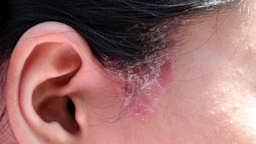
New Psoriasis Medications: 8 Drugs Seeking FDA Approval
Psoriasis treatment is reaching new heights with several drugs in development. Learn more about new potential psoriasis medications in the trial pipeline here.
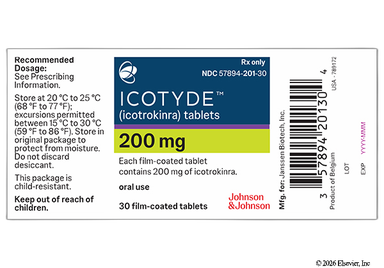
Icotyde (icotrokinra) is used to treat plaque psoriasis in adults and some children 12 years and older. It belongs to a group of medications called interleukin antagonists. This medication comes as a tablet that you take by mouth once a day on an empty stomach with water. Common side effects include headache, nausea, and cough. It might also raise your risk for infections.

Icotyde (icotrokinra) is a type of monoclonal antibody. In particular, it's an interleukin-23 antagonist, or IL-23 inhibitor for short. It blocks IL-23, a protein that causes inflammation in the body.
By blocking IL-23, Icotyde (icotrokinra) helps lower skin inflammation. This helps treat symptoms of plaque psoriasis.
| Common Brands | Icotyde |
|---|---|
| Drug Class | Interleukin antagonist |
| Controlled Substance Classification | Not a controlled medication |
| Generic Status | No lower-cost generic available |
| Availability | Prescription only |

The following side effects may get better over time as your body gets used to the medication. Let your healthcare provider know immediately if you continue to experience these symptoms or if they worsen over time.
Contact your healthcare provider immediately if you experience any of the following.
Side effects that you should report to your care team as soon as possible:
Side effects that usually do not require medical attention (report these to your care team if they continue or are bothersome):




Icotyde (icotrokinra) can cause some serious health issues. This risk may be even higher for certain groups. If this worries you, talk to your doctor or pharmacist about other options.
Icotyde (icotrokinra) can make it harder for your body to fight germs. This can raise your risk for bacterial, viral, or fungal infections. Before starting Icotyde (icotrokinra), tell your prescriber about your medical history, especially if you have an infection now or have had tuberculosis (TB) before. You might need a TB test before treatment. If you have or have had TB, you might need to take antibiotics to treat it or keep it from coming back. Don't start Icotyde (icotrokinra) until any current infections go away.
Call your care team if you have signs of infection while taking Icotyde (icotrokinra). Watch for symptoms like fever, cough, trouble breathing, weakness, chills, night sweats, or skin changes. If you get sick, your care team might have you stop taking the medication until you feel better.
It's a good idea to be up to date on your vaccines before starting Icotyde (icotrokinra). During treatment, tell your prescriber before getting any vaccines so they can make sure they’re safe for you.
Avoid live vaccines, like Varivax (chickenpox vaccine) and MMR (measles, mumps, and rubella vaccine) during treatment. This medication might raise your risk of infection from these vaccines.

 Tablet
| Dosage | Quantity | Price as low as | Price per unit |
|---|---|---|---|
| 200mg | 30 tablets | $7,959.85 | $265.33 |
The typical dose is 200 mg by mouth once a day.


Prescription savings
Stop paying too much for your prescriptions. Compare prices, get pharmacy coupons, and save up to 80%. Find expert answers to your health questions so you can make the best decisions for yourself and your family.
Health conditions
Medications & treatment
Access & affordability
 Our monthly healthcare membership can help you save thousands on your prescription costs.
Resources

Icotyde is unique because it’s the first IL-23 medication that you can take by mouth. Other FDA-approved IL-23 treatments, like Tremfya (guselkumab), Skyrizi (risankizumab), and Ilumya (tildrakizumab), are all given as injections. This means Icotyde offers a more convenient option for people who prefer a pill instead of shots while still targeting the same pathway that causes inflammation in psoriasis.
In studies, some people noticed an improvement in their psoriasis symptoms a few weeks after starting Icotyde. But it can take 6 months or longer to see the full effects of the medication. Keep track of your symptoms so you and your dermatologist can see how well the medication is working for you.
No, Icotyde isn't a biologic. Biologics are made from living cells in a lab and are usually given as injections. Instead, Icotyde is a manmade pill, specifically a peptide, that you take by mouth.
No. Icotyde isn't a steroid. It belongs to a group of medications called IL-23 antagonists. Both types of medications help lower inflammation in psoriasis, but they work in different ways.
It takes around 2 to 3 days for Icotyde to leave your system, but this can depend on your overall health and other factors. This time frame is based on the medication's half-life, which is the time it takes for half of the medication to be cleared from your body.
