Key takeaways:
Newborn screening refers to a group of tests that look for serious and potentially life-threatening conditions.
These tests include newborn hearing screening, newborn metabolic testing, and critical congenital heart disease screening.
If a newborn has one of these conditions, a healthcare team can begin treatment right away — before symptoms or serious complications start.
In the 1960s, the U.S. started performing newborn screening. With a small drop of blood, healthcare teams could identify newborns who had life-threatening medical conditions at birth. This allowed them to start treatment right away.
The CDC has deemed newborn screening to be one of the greatest public health achievements of the past several decades. Thanks to newborn screening, thousands of children are able to live long, productive lives. If you’re a parent or planning to become one, here’s everything you need to know about your baby’s “first test.”
What is a newborn screen?
A newborn screen refers to a group of “tests” that look for certain medical conditions. There are typically three parts of the newborn screening test:
Blood sample: tests for metabolic and genetic conditions
Oxygen level: tests for critical congenital heart disease
Hearing test: checks for hearing loss
Search and compare options
Every state has a newborn screening program, so no matter where your baby is born, your healthcare team will offer them a newborn screen. But not all screening programs are the same. Each state’s public health department decides which exact conditions to test for.
For example, only 45 states perform hearing screens as part of their newborn screening programs. And while there are tests for many metabolic and genetic conditions, only some states test for all of the recommended conditions, which include:
Inborn errors of metabolism
Hemoglobinopathies, like sickle cell anemia
Congenital hypothyroidism
Congenital adrenal hyperplasia
Severe combined immunodeficiency
You can find out what is included in your state’s newborn screen by visiting Baby’s First Test.org.
Why are newborn screens done?
As soon as a baby is born, a newborn screen identifies if they have one of these conditions. With certain conditions, babies may look healthy right after birth, but then they can quickly become sick.
For babies with metabolic conditions and critical congenital heart disease, finding a condition before symptoms start can be lifesaving. Babies who receive treatment early do much better — both early on and throughout their lives. It’s important to identify these conditions as soon as possible so babies can start treatment. The CDC estimates that every year newborn screening tests identify 13,000 babies with treatable conditions.

Read more like this
Explore these related articles, suggested for readers like you.

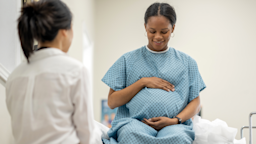
How are newborn screening tests collected?
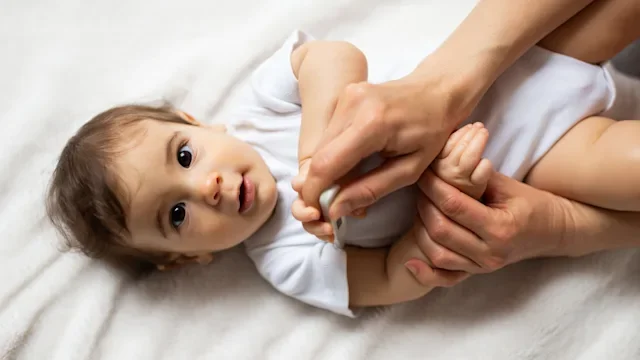
Newborn screening usually happens about 24 to 48 hours after your baby is born. To do the tests, most hospitals and birthing centers will take your baby to a special room, either the nursery unit or a procedure room. That’s because the team needs to use special equipment. You can ask to go with your baby. Here’s how they collect each test:
Hearing screen: There are two types of hearing tests for newborn screening — the otoacoustic emissions (OAE) and the automated auditory brainstem response (AABR). For the OAE, a provider places an earbud in your baby’s ear. For the AABR, they place headphones over your baby’s ears and a sticker with a lead (similar to one used for an ECG) on their forehead. A machine plays sounds and records your baby’s response to the sounds. Both tests are painless and take only 5 to 10 minutes. Most babies sleep through them.
Critical congenital heart defects: For this screen, a provider places a pulse oximeter on your baby’s right hand and foot, then hooks up the monitor to a screen. They measure and record your baby’s oxygen levels for about 5 minutes. This test is also painless.
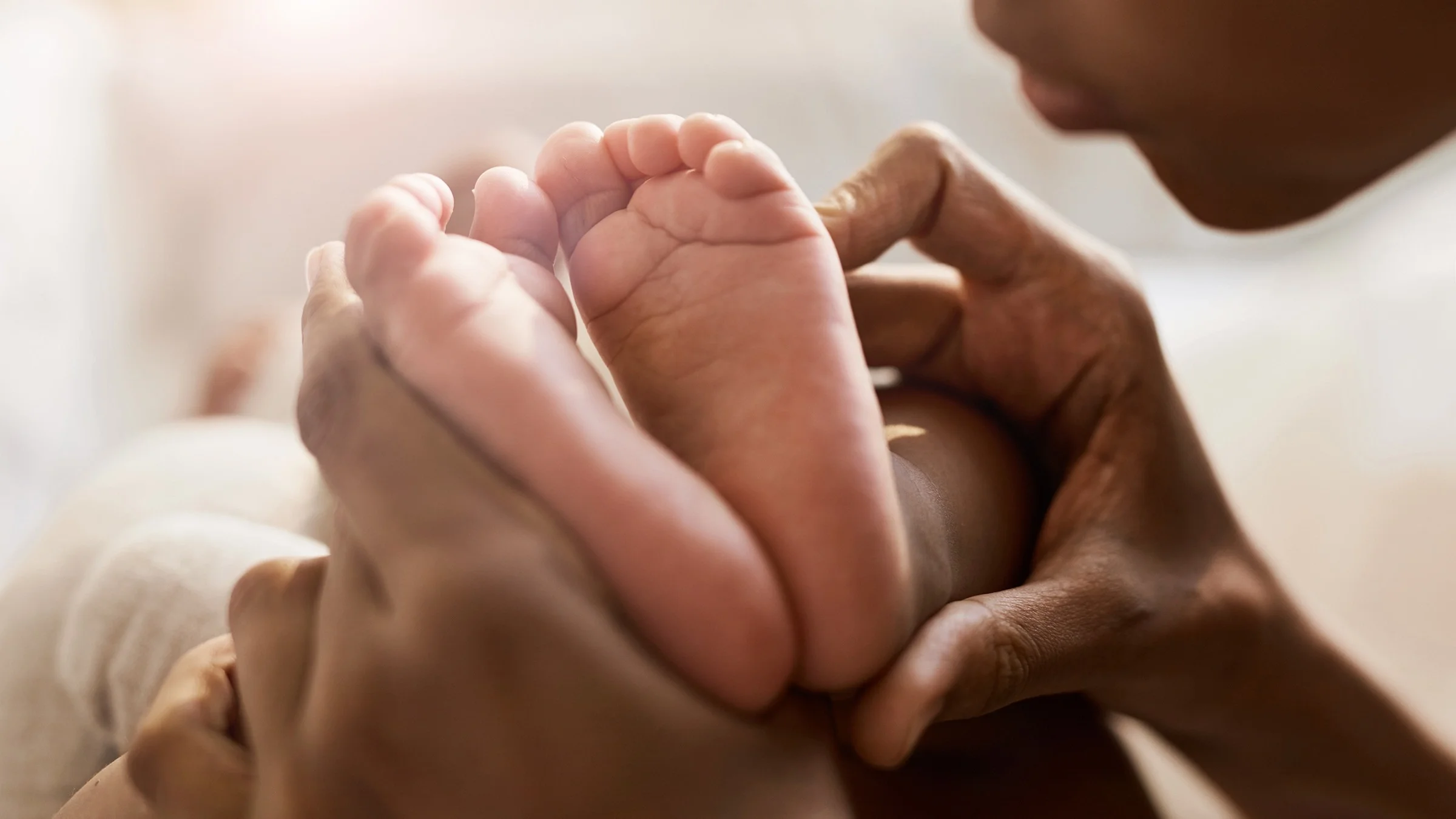
Metabolic and genetic testing: For this screen, your baby will need to give a blood sample. Unlike other blood tests, this one only needs a small amount of blood. The provider uses a small needle to prick your baby’s heel and collects blood on a special card (a “spot” sample). They wait for the card to dry and then mail it to your state’s newborn screening lab. They use the blood sample for biochemical tests — not DNA testing.
When will I get the results?
You’ll know the results of the hearing and critical congenital heart screens right away. The metabolic and genetic testing can take a few weeks to come back. Your child’s healthcare provider will receive a letter from your state’s health department with your baby’s result.
What happens if there is a concerning result?
If there’s a concern on one of your baby’s results, the next step is a confirmation test. Remember, all of these tests are screens — so they aren’t perfect. It’s possible to have a false-positive result. If there’s a concern on the:
Hearing screen: Your child will have a brainstem evoked auditory response (BAER) test, a more specialized hearing test. An audiologist does this test within 2 or 3 weeks of your child’s birth. Your team may also send a sample of your baby’s urine to test for cytomegalovirus (CMV).
Critical congenital heart disease test: Your child’s provider will likely retest your child and get an ECG. They may also ask a pediatric cardiologist to examine your child or order an echocardiogram.
Metabolic and genetic test: Your child’s primary healthcare provider will get a call and a letter from your state health department. Your state health department will ask for specific blood tests to confirm if your child has a metabolic or genetic condition. They will share these results with you and your child’s healthcare provider as soon as they are available.
The bottom line
Simply put, newborn screening saves lives. Due to its impressive results in detecting life-threatening conditions, the CDC declared it one of the greatest public health advancements of the past decades. Newborn screening includes a blood test, a hearing test, and an oxygen test. Every year thousands of children benefit from newborn screening because it lets them get early treatment so they can live longer, healthier lives.

Why trust our experts?



References
Baby’s First Test. (n.d.). Conditions screened by state.
Baby’s First Test. (2021). Newborn screening 101.
Centers for Disease Control and Prevention. (2011). Ten great public health achievements --- United States, 2001--2010.
Centers for Disease Control and Prevention. (2020). Newborn hearing screening.
Centers for Disease Control and Prevention. (2020). Fulfilling the promise - Ensuring the success of newborn screening throughout life.
Health Resources and Services Administration. (2020). Recommended uniform screening panel.
Kaye, C. L., et al. (2006). Introduction to the newborn screening fact sheets. Pediatrics.
March of Dimes. (2014). Issue brief: Newborn screening saves lives and money.
MedlinePlus. (2020). BAER - Brainstem auditory evoked response.
Powell, C. M. (2019). What is newborn screening? North Carolina Medical Journal.