Key takeaways:
To remove a tick, use clean, thin tweezers to grasp the tick and pull upward with steady, even pressure. Don’t use your fingers to grab the tick.
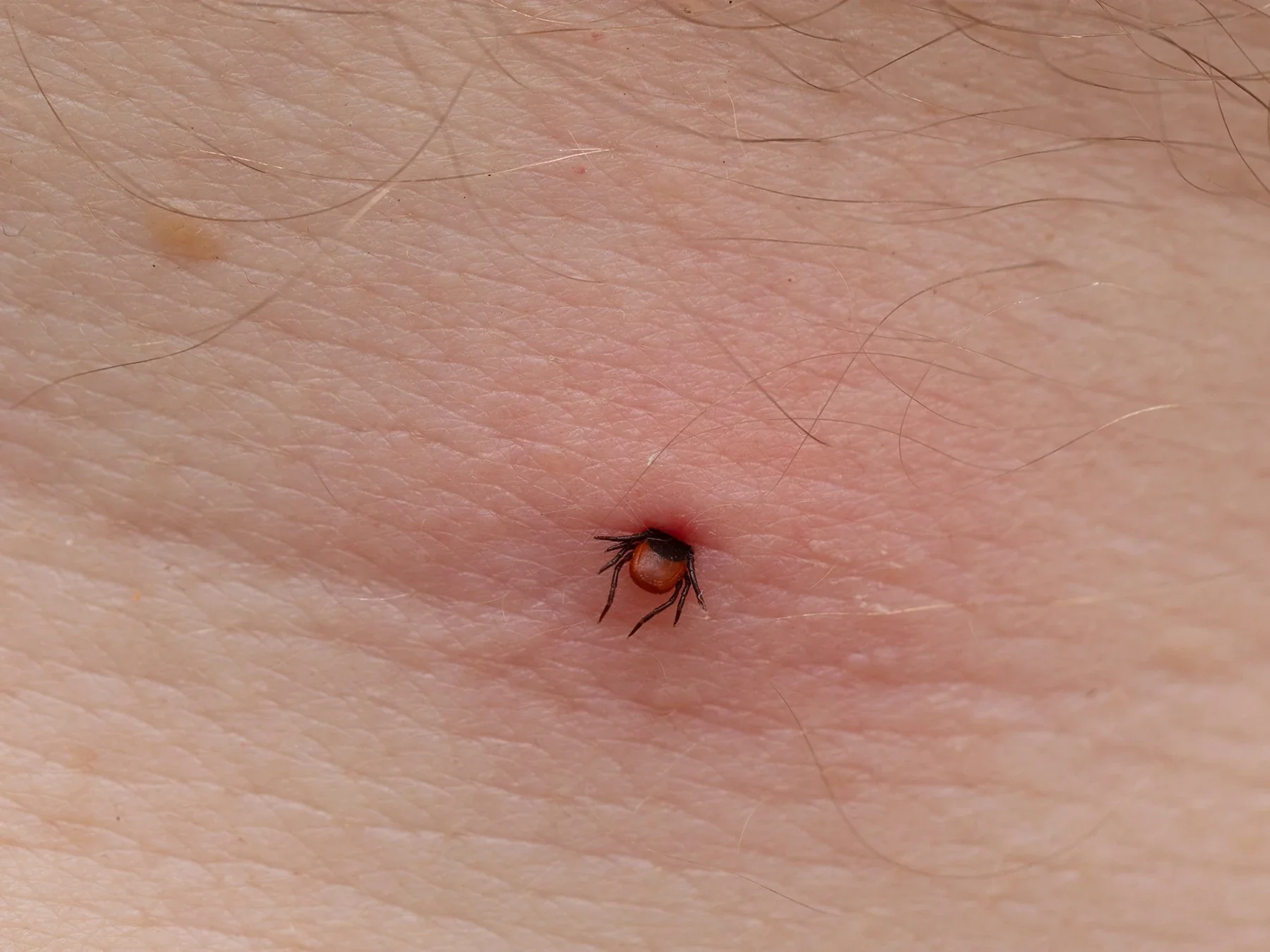
If the head gets stuck in your skin, it’ll look like a small black dot at the spot. If you can’t get it after multiple tries, clean the area and leave it alone. This won’t increase your risk of catching a tick-borne disease.
Other methods for tick removal — like using a hot match, Vaseline, alcohol, or hydrogen peroxide — aren’t recommended.
The idea of removing a tick from your body might fill you with fear and disgust. Or it may bring back fond childhood memories of time spent in nature. Ticks are especially common in the Northeastern parts of the U.S., where some people consider the occasional tick removal a natural part of life.
Whether you’re a pro or a novice at removing ticks, sometimes part of the tick gets stuck in the skin. Here’s how to tell when that happens — and what to do about it.
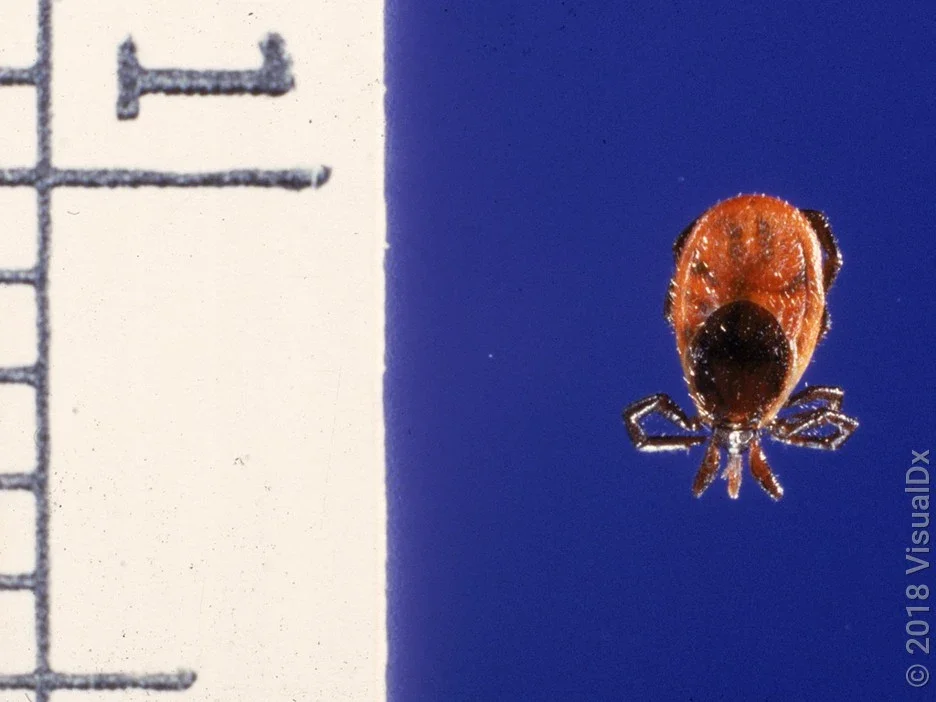
What does an embedded tick look like?
Here’s what a tick looks like, both in the skin and out.
How to remove a tick
Ticks are known for burrowing into the skin, which can make them tricky to remove. But there’s no need to panic or rush. Take a moment to sit down, steady your hands, and gather the supplies you’ll need. If you’re feeling anxious or squeamish, a few deep breaths can help you feel more in control. A calm, careful approach is the safest and most effective way to get the tick out completely and reduce the risk of infection or irritation at the site.
Search and compare options
What tools do you need to remove a tick?
Here’s what you’ll need to safely remove a tick from your skin:
A pair of thin-tipped tweezers
A flame or rubbing alcohol to clean the tweezers
Clean water and soap
Steps for extracting a tick
When you’re ready, follow these steps for how to remove a tick:
Clean a pair of thin-tipped tweezers.
Use the tweezers to grab the tick as close as possible to your skin’s surface (and the tick’s head). You may need to hold the tweezers sideways along the surface of your skin for best grip and leverage.
Pull straight up with steady, even pressure. You may need to apply more pressure than you think to get the tick to release its grip in the skin. Keep a steady hand and keep pulling. Twisting or crushing the tick may cause the tick to break.
If the body of the tick breaks off from the head, use the same technique as before to try to remove the embedded head. Use clean tweezers and gently try to pull upward with steady, even pressure.
Once you’ve removed the tick, wash the area with soap and water or rubbing alcohol.
Before disposing of the tick, you may want to take a picture of it. This can be helpful in figuring out the risk level for certain tick-borne diseases like Lyme disease.
To get rid of the tick, you can flush it down the toilet, put it in a Ziplock bag, wrap it tightly in tape, or drown it in alcohol.
Check your body for other ticks or tick bites. If you’ve been outdoors for a while, it’s worth doing a full-body check and asking someone to help examine hard-to-see areas.
Monitor for symptoms over the next few weeks. Keep an eye out for signs of tick-borne illness, including fever, rash, fatigue, joint pain, or a “bull’s-eye” rash at the bite site.
What not to do when removing a tick
If you notice a tick stuck in your skin or someone else’s skin, don’t rush to remove it. You have time to gather some equipment, sit down, and take a breath. Here are some things to avoid when trying to remove a tick:
Don’t twist, jerk, or crush the tick as you try to remove it. This can cause the head of the tick to break off in the skin, which makes it harder to remove.
Don’t try to grab it with your fingers. This can also result in breaking off only part of the tick, leaving the head behind.
Don’t use petroleum jelly, nail polish, rubbing alcohol, hydrogen peroxide, or a hot match to kill the tick. These methods don’t work.
How to tell if a tick head is stuck in the skin
Once you’ve removed the tick, check the area. If you accidentally broke off the tick when trying to remove it, you may still see part of the head on the surface of your skin. The part of the tick that tends to get stuck in the skin isn’t the full head. It’s a portion of the head called the “mouthparts.”

What do tick bites look like? See what tick bites look like on humans and learn what to do about them.
Tick bite treatment: Read our complete guide to tick bites, tick-borne diseases, and treatments.
Tick-borne diseases: It’s not just Lyme disease that you can get from ticks. There are other tick-borne infections, too, and it helps to know the signs.
You can usually tell if part of the tick is still stuck in your skin because you’ll see a small, black dot at the site. If you’re not sure, look at the tick you removed. If the tick is moving its legs, you’ve successfully removed the entire tick.
What if a tick head is stuck and you can’t get it out?
If you’ve tried to remove the remaining tick head and still can’t get it out, the CDC recommends leaving the area alone to heal. Then clean it with soap and water or rubbing alcohol.
And don’t worry: The mouthparts or head of a tick don’t carry tick-borne diseases like Lyme disease. So leaving part of the head in your skin won’t increase your chances of catching a tick-borne disease. Most of the time, the area will heal, and your skin will push the head of the tick out over the next 1 to 2 weeks.
Read more like this
Explore these related articles, suggested for readers like you.


What are the symptoms of a skin infection from a tick?
Leaving the tick head in your skin doesn’t mean you’ll get a tick-borne disease. But it can increase the risk of a skin infection. So be sure to watch the area closely as it heals. Signs of a skin infection include:
Redness
Pain
Warmth
Swelling
If there are signs of infection, it’s possible you may need topical (cream) antibiotics or antibiotic pills.
Should you see a healthcare professional after removing a tick?
It depends. You may want to talk with a healthcare professional if:
You think the tick has been attached to your body for more than 24 hours
The tick looks full of blood
In these cases, a healthcare professional may recommend antibiotics to prevent the development of Lyme disease. It depends on where you live and how long the tick may have been attached.
What symptoms should you see a healthcare professional for after a tick bite?
Lyme isn’t the only thing to think about. Some ticks can transmit other tick-borne diseases. See a healthcare professional if you develop any of these symptoms in the 30 days after getting a tick bite:
Do all ticks carry Lyme disease?
Not all ticks transmit Lyme disease. In the U.S., Lyme disease is primarily spread by deer ticks (also called blacklegged ticks). That’s why identifying the type of tick is important. A picture of the tick can help a healthcare professional assess your risk and decide if you need preventive treatment.
And even if you’re bit by a deer tick, it’s important to remember that not every bite leads to infection. To get Lyme disease, the tick that bites you needs to be carrying Lyme disease. And it also needs to be attached to your body for at least 24 hours.
How can you prevent tick bites?
There are a few ways you can prevent tick bites. Here are some of the best things to do:
Avoid heavily wooded areas with long grasses.
Wear DEET-containing insect repellent all over your clothes and skin.
Tuck in your shirt, and wear long sleeves and pants too.
Opt for light-colored clothing, so that the ticks are easier to see.
Frequently asked questions
You might have read about ways to remove a tick, like using Vaseline. Or you may have heard about other ways like using:
A hot match
Alcohol
Hydrogen peroxide
The idea behind these methods is that the discomfort from a hot match will make the tick detach itself. Or the alcohol and Vaseline can kill the tick. But these methods aren’t recommended. They don’t work. And the longer a tick is attached to your skin, the better chance it has to transmit a tick-borne disease.
No, a tick can’t burrow its whole body under your skin. Ticks just anchor themselves by inserting their mouths onto your body. Once they’re attached, it can look like their heads are embedded under the skin. But the rest of their body always remains above the surface. And that’s a good thing. Their bodies are the most important part to remove, since that’s where they store any Lyme disease that can be passed on to you.
If you don’t have tweezers, you can try using a clean loop of dental floss or a piece of thread. Carefully slide the loop around the tick’s head, close to the skin, and gently pull upward with steady, even pressure. Avoid pinching, twisting, or squeezing the tick, as this can increase the risk of infection.
You might have read about ways to remove a tick, like using Vaseline. Or you may have heard about other ways like using:
A hot match
Alcohol
Hydrogen peroxide
The idea behind these methods is that the discomfort from a hot match will make the tick detach itself. Or the alcohol and Vaseline can kill the tick. But these methods aren’t recommended. They don’t work. And the longer a tick is attached to your skin, the better chance it has to transmit a tick-borne disease.
No, a tick can’t burrow its whole body under your skin. Ticks just anchor themselves by inserting their mouths onto your body. Once they’re attached, it can look like their heads are embedded under the skin. But the rest of their body always remains above the surface. And that’s a good thing. Their bodies are the most important part to remove, since that’s where they store any Lyme disease that can be passed on to you.
If you don’t have tweezers, you can try using a clean loop of dental floss or a piece of thread. Carefully slide the loop around the tick’s head, close to the skin, and gently pull upward with steady, even pressure. Avoid pinching, twisting, or squeezing the tick, as this can increase the risk of infection.
The bottom line
Knowing how to remove a tick safely from your skin will lower your chances of getting a tick-borne illness. Always use a pair of clean tweezers to remove a tick and pull it out straight — without twisting or jerking. Don’t use your fingers, and don’t try any other “hacks” to try to get a tick out of your skin.
If you see a persistent black dot in your skin, it’s possible parts of the tick’s head are still stuck in your skin. If this happens, try the tweezers again. Don’t worry if you can’t get it out. A stuck tick head won’t increase your risk of a tick-borne illness. Just keep the skin clean, usually the tick head will work its way out.

Why trust our experts?




Images used with permission from VisualDx (www.visualdx.com).
References
Centers for Disease Control and Prevention. (2021). Tick bite: What to do.
Centers for Disease Control and Prevention. (2024). How Lyme disease spreads.
Centers for Disease Control and Prevention. (2024). What to do after a tick bite.
Gammons, M., et al. (2002). Tick removal. American Family Physician.
Perkins, S. (2013). ScienceShot: How ticks get under your skin. Science.
Zhou, G., et al. (2021). Antibiotic prophylaxis for prevention against Lyme disease following tick bite: An updated systematic review and meta-analysis. BMC Infectious Diseases.