



7 Oral Medications for Psoriatic Arthritis
View a list of oral medications for psoriatic arthritis and compare your options with GoodRx.

Cyclosporine modified (Gengraf) is an immunosuppressant that helps prevent organ rejection after a transplant (e.g., kidney, liver, heart). It can also treat severe rheumatoid arthritis and plaque psoriasis in adults. This medication comes in capsules and a liquid form. It's taken by mouth twice daily, and the dosage depends on your condition. Serious risks of the medication include infection and cancer. Other side effects can include high blood pressure, a lot of hair growth all over, and kidney problems. Cyclosporine modified (Gengraf) is available as both brand name and generic. It's typically taken together with other medications.

Cyclosporine modified (Gengraf) is a type of immunosuppressant medication. This means that it lowers (or suppresses) the activity of your immune system. More specifically, the medication is a calcineurin inhibitor (CNI). It works by stopping a protein in the body called calcineurin from telling your immune system to become active.
For preventing organ rejection after a transplant: Your body recognizes the new organ as a foreign object. Your immune system fights to reject the new organ after the transplant. Cyclosporine modified (Gengraf) stops your immune system from attacking the new organ, which lowers the risk for organ rejection.
For treating rheumatoid arthritis and plaque psoriasis: These medical conditions are caused by an overactive immune system. The immune system mistakes healthy tissue in your body as a foreign object and attacks it, leading to inflammation. Cyclosporine modified (Gengraf) works to treat rheumatoid arthritis and plaque psoriasis by stopping your immune system from attacking your own body.
| Common Brands | Gengraf |
|---|---|
| Drug Class | Immunosuppressant |
| Controlled Substance Classification | Not a controlled medication |
| Generic Status | Lower-cost generic available |
| Availability | Prescription only |

The following side effects may get better over time as your body gets used to the medication. Let your healthcare provider know immediately if you continue to experience these symptoms or if they worsen over time.
For preventing rejection after kidney, liver, or heart transplant: Side effects for transplant were reported in people taking a similar medication called cyclosporine (Sandimmune)
For rheumatoid arthritis:
For psoriasis:
Contact your healthcare provider immediately if you experience any of the following.
Along with its needed effects, a medicine may cause some unwanted effects. Although not all of these side effects may occur, if they do occur they may need medical attention.
Check with your doctor immediately if any of the following side effects occur:
More common
Abdominal or stomach pain or tenderness
back pain
black, tarry stools
blurred vision
chills
clay colored stools
cloudy urine
dark urine
decrease in urine output or decrease in urine-concentrating ability
decreased appetite
dizziness
drowsiness
headache
headache, severe and throbbing
loss of appetite
muscle spasms (tetany) or twitching
nervousness
painful or difficult urination
pounding in the ears
shakiness in the legs, arms, hands, or feet
shortness of breath
skin rash
slow or fast heartbeat
sores, ulcers, or white spots on the lips or in the mouth
swelling of the feet or lower legs
swollen glands
trembling or shaking of the hands or feet
unusual bleeding or bruising
unusual tiredness or weakness
yellow eyes or skin
Less common
Bleeding gums
blood in the urine
blood in the vomit
burning, crawling, itching, numbness, prickling, "pins and needles", or tingling feelings
convulsions
difficulty swallowing
pale skin
pinpoint red spots on the skin
puffiness or swelling of the eyelids or around the eyes, face, lips, or tongue
severe or continuing stomach pain
tightness in the chest
troubled breathing with exertion
Some side effects may occur that usually do not need medical attention. These side effects may go away during treatment as your body adjusts to the medicine. Also, your health care professional may be able to tell you about ways to prevent or reduce some of these side effects. Check with your health care professional if any of the following side effects continue or are bothersome or if you have any questions about them:
More common
Abdominal or stomach discomfort
bleeding, tender, or enlarged gums
blemishes on the skin
increased hair growth, especially on the face
pain or tenderness around the eyes and cheekbones
stuffy or runny nose
Less common
Brittle fingernails
burning feeling in the chest or stomach
burning, dry, or itching eyes
continuing ringing or buzzing or other unexplained noise in the ears
cramps
discharge or excessive tearing
feeling of warmth
hearing loss
redness of the face, neck, arms, and occasionally, upper chest
redness, pain, swelling of the eye, eyelid, or inner lining of the eyelid
swelling of the breasts or breast soreness in both females and males
Rare
Blurred or loss of vision
discouragement
disturbed color perception
double vision
fear
feeling sad or empty
halos around lights
irritability
joint pain
loss of interest or pleasure
night blindness
overbright appearance of lights
tiredness
trouble concentrating
trouble sleeping
tunnel vision
unusual drowsiness, dullness, tiredness, weakness, or feeling of sluggishness
weakness
Other side effects not listed may also occur in some patients. If you notice any other effects, check with your healthcare professional.
Call your doctor for medical advice about side effects. You may report side effects to the FDA at 1-800-FDA-1088.



Other tips for the [oral solution of cyclosporine modified (Gengraf):

Cyclosporine modified (Gengraf) can cause some serious health issues. This risk may be even higher for certain groups. If this worries you, talk to your doctor or pharmacist about other options.
 Cyclosporine modified (Gengraf) should only be prescribed by a trained healthcare professional (HCP) who has experience with managing your condition (e.g., organ transplant, autoimmune condition). For your safety, your HCP will take detailed notes and closely monitor you at a hospital or clinic that has all of the necessary medical resources to manage your treatment with cyclosporine modified (Gengraf).
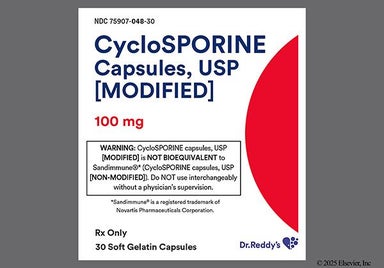
Cyclosporine modified (Gengraf) is NOT equal to cyclosporine (Sandimmune), which is approved for preventing organ rejection after transplantation only. You can't replace one with the other without first getting guidance from your prescriber. This is because your body is able to absorb more cyclosporine modified (Gengraf) than cyclosporine (Sandimmune). Switching between one form of cyclosporine to the other at the same dose changes the amount of medication in the body. This can lead to harmful consequences.
 If your prescriber decides to switch between cyclosporine modified (Gengraf) and cyclosporine (Sandimmune), they'll need to closely monitor the cyclosporine levels in your blood. This makes sure your cyclosporine levels are within a safe range. Levels that are too low can lead to organ rejection. And levels that are too high can lead to serious harm like kidney or liver damage. Your transplant specialist will adjust your dose based on your cyclosporine levels.
Cyclosporine modified (Gengraf) works by lowering or suppressing the activity of your immune system. It puts you at risk of infections that can become serious or even life-threatening. These can also include opportunistic infections (infections that usually only cause problems when the immune system is weak), like polyoma virus infections.
Your risk for serious bacterial, viral, or fungal infection is higher if you're taking other medications that also weaken your immune system at the same time as cyclosporine modified (Gengraf). This is common especially for people who've had an organ transplant. Let your prescriber know if you have a history of frequent infections or if you’re taking other immunosuppressants.
Call a healthcare professional if you have any signs of an infection, like fever, trouble breathing, cough, or chills. Also get medical help right away if you have muscle weakness, confusion, memory problems, loss of balance or coordination, or paralysis. These can be signs of a serious infection that requires immediate medical attention.
People who take cyclosporine modified (Gengraf) are at higher risk for tumors and cancer, including lymphomas and skin cancer, among others. This is because the medication lowers (or suppresses) the activity of your immune system. Speak with your prescriber if you have concerns about the risk for cancer.
Before you start cyclosporine modified (Gengraf), let your care team know if you have a history of cancer. Also tell them if you’re taking other immunosuppressants or getting treated with therapies that raise the risk for skin cancer (e.g., phototherapy, methotrexate). They can check your risk for cancer.
To lower your risk for skin cancer, avoid excessive exposure to sunlight, use sunscreen, and wear protective clothing when you’re outside. Let your care team know if you notice any unusual skin growths or changes to your skin while you're taking cyclosporine modified (Gengraf). They can examine your skin to see whether they can rule out skin cancer.
High blood pressure is a common side effect of cyclosporine modified (Gengraf). Your prescriber will check your blood pressure periodically. This side effect is typically mild or moderate.
The risk for high blood pressure might be greater with higher doses of cyclosporine modified (Gengraf) and with long-term treatment. Your dose will get lowered if you have a history of high blood pressure or if you develop high blood pressure during treatment. Some people might need to take certain blood pressure medications to manage this side effect.
Cyclosporine modified (Gengraf) can cause kidney damage, even at usual doses. The risk is greater with higher doses and long-term treatment. The risk is also greater if you have a history of kidney problems or if you're taking other medications that can harm the kidneys.
You'll need routine blood tests done so your prescriber can keep track of your kidney function while you’re taking cyclosporine modified (Gengraf). Your prescriber might lower your dose to help manage this risk.
Let your care team know if you have symptoms such as low urine production, swelling in your feet or legs, trouble breathing, tiredness, weakness, muscle cramps, nausea, vomiting, or confusion. For people who've had a kidney transplant, these signs and symptoms of kidney damage can be similar to those of organ rejection. It's possible to have kidney damage and organ rejection at the same time, which can be serious.
Cyclosporine modified (Gengraf) can cause liver damage, which can sometimes include liver failure and be life-threatening. The risk for liver damage with the medication is greater if you're taking higher doses or if you're taking it for a long time. Some people who've had an organ transplant had liver damage during the first month of treatment. Your prescriber will check your liver function while you're taking cyclosporine modified (Gengraf).
Let your healthcare team know right away if you have symptoms of liver damage. Look out for yellowing of your skin or eyes (jaundice), stomach pain or swelling, loss of appetite, dark urine, nausea, vomiting, tiredness, weakness, or confusion. Your prescriber might lower your dose to help manage liver problems.
Some people who've taken a cyclosporine medication like cyclosporine modified (Gengraf) have had brain damage. It can especially happen when people take this medication with high doses of steroids, such as methylprednisolone (Medrol). Your risk for brain damage might be higher if you've had a liver transplant than if you've had a kidney transplant. This brain damage might improve with lower doses of the medication. In most cases, it's reversible when you stop taking cyclosporine modified (Gengraf).
Get medical help right away if you experience any symptoms of brain damage so you can get checked out. Symptoms of brain damage include loss of muscle control, movement problems, changes in thoughts or behaviors, seizures, or loss of consciousness. It can also include changes in vision like blurred vision, blind spots, or a loss of vision.
Although not common, some people who've taken cyclosporine modified (Gengraf) have had low platelet and red blood cell counts. In people who've had an organ transplant, this might lead to failure of their transplant.
It's not clear what causes people to have low platelet and red blood cell counts in these situations. But in some people, this problem got better after lowering the dose of cyclosporine modified (Gengraf) or stopping the medication (along with other treatment). Let your prescriber know before you start taking this medication if you have a history of low platelet levels or anemia.
Some people who took cyclosporine modified (Gengraf) had high potassium levels in the blood. Tell your healthcare team if you have a history of high potassium or if you take other medications that cause high potassium levels. High potassium levels can lead to tiredness, muscle weakness, tingling or numbness, and more severely, heart problems (e.g., fast heartbeat, chest pain). Call your prescriber if you have symptoms of high potassium levels.
Some people who took the medication also had high blood uric acid levels. Having too much uric acid in the blood can raise the risk for gout.
Cyclosporine modified (Gengraf) has some alcohol in it. Certain people should avoid taking this medication because of possible safety concerns related to alcohol. Let your prescriber know if you're pregnant or breastfeeding. Also tell them if you have liver problems or epilepsy, if you regularly drink alcohol, or if you have a history of drinking too much alcohol. Since the alcohol in the medication can lead to serious harm in these people, your prescriber should check for your risk before you start treatment.

 Bottle of oral solution
| Dosage | Quantity | Price as low as | Price per unit |
|---|---|---|---|
| 50ml of 100mg/ml | 1 bottle | $64.97 | $64.97 |

Although certain medicines should not be used together at all, in other cases two different medicines may be used together even if an interaction might occur. In these cases, your doctor may want to change the dose, or other precautions may be necessary. When you are taking this medicine, it is especially important that your healthcare professional know if you are taking any of the medicines listed below. The following interactions have been selected on the basis of their potential significance and are not necessarily all-inclusive.
Using this medicine with any of the following medicines is not recommended. Your doctor may decide not to treat you with this medication or change some of the other medicines you take.
Using this medicine with any of the following medicines is usually not recommended, but may be required in some cases. If both medicines are prescribed together, your doctor may change the dose or how often you use one or both of the medicines.
Using this medicine with any of the following medicines may cause an increased risk of certain side effects, but using both drugs may be the best treatment for you. If both medicines are prescribed together, your doctor may change the dose or how often you use one or both of the medicines.


Contraindications are specific health conditions or situations in which a person should not take a medication due to safety concerns. If you have any of the following conditions or if any of the following apply to you, let your healthcare provider know because Cyclosporine modified (Gengraf) will not be safe for you to take.
For all people:
For people with rheumatoid arthritis:
For people with plaque psoriasis:















Prescription savings
Stop paying too much for your prescriptions. Compare prices, get pharmacy coupons, and save up to 80%. Find expert answers to your health questions so you can make the best decisions for yourself and your family.
Health conditions
Medications & treatment
Access & affordability
Medication discounts


No, don't open or break Cyclosporine Modified capsules. You should swallow them whole. Speak with your prescriber if you have trouble swallowing Cyclosporine Modified capsules whole. They might discuss with you about switching to the liquid form of Cyclosporine Modified, which might be easier to take.
Don't eat grapefruit or drink grapefruit juice while you're taking Cyclosporine Modified. Also avoid mixing the liquid form of the medication with grapefruit juice. Grapefruit can raise the cyclosporine levels in your body and lead to harmful effects, like a higher risk of infections, kidney problems, or liver damage. And avoid mixing the liquid form of Cyclosporine Modified with milk. It won't taste good and we don't know how well the medication works when mixed with milk. Other fruits, like pomegranate and bitter oranges (Seville oranges), might be harmful to eat with transplant medications like Cyclosporine Modified. So check with your healthcare team for a full list of foods to avoid.
Cyclosporine Modified and cyclosporine (Sandimmune) are both transplant medications that contain cyclosporine. But they're absorbed differently into the body. Cyclosporine Modified is made to have better and more stable absorption into the body than cyclosporine (Sandimmune) at the same dose. So, they aren't interchangeable (meaning you can't switch back and forth between them easily without guidance from your prescriber). Ask your transplant specialist to compare between the medications and discuss which one is best for you.
The manufacturer of Gengraf states that Gengraf and Neoral are interchangeable. This means that you can switch between one another. Gengraf and Neoral contain the same active ingredient, cyclosporine modified, and have similar properties. Still, you should always speak with your prescriber before making any changes to your medications. They can make sure it's done safely.
No. Cyclosporine Modified isn't a steroid (also known as a corticosteroid). Cyclosporine Modified is a calcineurin inhibitor, which is a type of immunosuppressant. Cyclosporine Modified and long-term treatment with steroids can both weaken your immune system and raise your risk for infections. Sometimes, people who've had an organ transplant need to take Cyclosporine Modified with a steroid to prevent organ transplant rejection.
It isn't recommended to take Cyclosporine Modified during pregnancy. There aren't enough studies to know for sure about whether the medication is safe to take in human pregnancy. In some studies, people who've had an organ transplant and were exposed to cyclosporine during pregnancy had harmful consequences, like high blood pressure, premature birth, or low birth weight. Cyclosporine Modified also contains alcohol, which can cause serious harm to your unborn baby. Discuss with your prescriber about the risks and benefits of taking Cyclosporine Modified if you're pregnant or planning on becoming pregnant.
It isn't recommended to take Cyclosporine Modified while breastfeeding. There aren't enough studies about how safe the medication is while breastfeeding, but it can pass into human breast milk. Cyclosporine Modified also contains alcohol, which can pass into breast milk and cause serious harm to your breastfed baby. Discuss the risks and benefits of taking Cyclosporine Modified while breastfeeding with your prescriber or lactating consultant.
Talk with your child's prescriber if you have questions about whether Cyclosporine Modified is a good option for your child. There aren't enough studies that looked at how safe the medication is for children who've had an organ transplant, children with rheumatoid arthritis, or children with psoriasis. But in few small studies, children as young as 1 year old who've had an organ transplant have taken Cyclosporine Modified under the supervision of an experienced transplant specialist provider without any unusual harm.
