
Ferrous Sulfate Coupon - Ferrous Sulfate 325mg tablet

ferrous sulfate

Generic Fer-Iron
Used for Anemia, Iron Deficiency

Iron is a mineral supplement that's taken by children and adults to prevent or treat low iron levels. Sometimes, a provider might only recommend iron supplements for a period of time, like during pregnancy. Iron supplements come in many forms, such as ferrous sulfate and ferrous gluconate, that differ in how much iron they contain and dosing. Iron supplements are also available in various formulations, such as gummies, slow-release tablets, or liquid solutions. Some side effects of iron supplements include constipation and nausea.

Reviewed by:Last reviewed on September 27, 2023
basics-icon

What is Iron supplements?

What is Iron supplements used for?

How Iron supplements works

Iron is a supplement. Your body needs iron to make healthy red blood cells, which are needed to carry oxygen to all parts of the body. Iron also helps your body make a protein that gives oxygen to your muscles. Iron supplements raise the level of iron in the body when you don't have enough.

Drug facts

Common BrandsFeroSul, Ferate, Ferretts, Iferex 150, Slow Fe
Drug ClassIron supplement
Controlled Substance ClassificationNot a controlled medication
Generic StatusLower-cost generic available
AvailabilityOver-the-counter
side-effects-icon

Side effects of Iron supplements

The following side effects may get better over time as your body gets used to the medication. Let your healthcare provider know immediately if you continue to experience these symptoms or if they worsen over time.

Common Side Effects

  • Constipation
  • Diarrhea
  • Nausea
  • Vomiting
  • Dark stools
  • Stomach pain

Source: DailyMed

The following Iron supplements side effects have also been reported

Side effects that you should report to your care team as soon as possible:

Side effects that usually do not require medical attention (report to your care team if they continue or are bothersome):

prices-container

Get your GoodRx coupon

Avg retail price
$10.56(Save 73.96%)
GoodRx discount
$2.75
See prices
pros-and-cons-icon

Pros and cons of Iron supplements

Pros

  • Taken by mouth
  • Available in tablets, capsules, gummies, and liquid forms
  • Some forms taken just once daily (e.g., ferrous sulfate)

Cons

  • Can cause constipation and nausea
  • Can interact with certain medications and cause them to not work as well
  • Milk products can cause your body to not absorb iron as well
pharmacist-tips-icon

Pharmacist tips for Iron supplements

pharmacist
  • It's best to take iron supplements on an empty stomach because your body absorbs iron best on an empty stomach.
  • If you experience stomach pain or nausea from taking iron supplements on an empty stomach, you can try taking it with food to ease those side effects. If you take iron with food, it's best to take it with a glass of orange juice or a vitamin C supplement because these can help your body better absorb the iron.
  • Taking iron supplements can cause your stool to look black or darker in color. This is expected and won't cause any harm. But let your provider know right away if you also notice blood in the stool because you might need more medical attention.
  • Don't crush or chew the controlled-release or extended-release formulations of iron supplements. They're made with a special coating that releases the medication slowly and steadily over time. Crushing or chewing these pills can cause too much iron to be released at once. This might worsen side effects, like constipation and nausea.
  • Let your provider know if you're taking other medications before starting iron supplements so they can help you determine if there are any interactions between your medications. For example, you need to separate iron supplements from levothyroxine. Iron prevents your body from absorbing levothyroxine, so taking this combination together means that levothyroxine might not work as well to treat your thyroid condition.
  • If you're taking any other multivitamins, double check the list of ingredients in your vitamins to see if has iron. If so, you might not need any additional iron supplements. Taking too much iron can raise your risk for side effects, like constipation or stomach upset. And in rare, but serious cases, you might experience iron toxicity.
  • Speak to your provider before starting iron supplements if you're pregnant, planning to become pregnant, or breastfeeding. Your provider can let you know how much iron to take based on your body's needs. In some cases, you might already be taking iron through other supplement products, such as prenatal vitamins, so you might not need additional iron supplements.
faq-icon

Common questions about Iron supplements

Ask your provider if you're not sure whether you need to take iron supplements. They can check your iron level through blood work to see if its within a healthy range. Not everyone needs iron supplements. Many people get enough iron through the foods that they eat such as meat, dark leafy vegetables, and cereal. But if you're not able to get enough iron through foods, your provider will ask you to start an iron supplement. Sometimes, your provider might ask you to start taking iron supplements if you're pregnant or if you have heavy menstrual periods because your body will need more iron during these times.

Your body absorbs oral iron supplements best if you take it on an empty stomach. But if you experience stomach-related side effects from your iron supplement, taking it with food can help. Always double check the label for your specific iron product to find out the exact directions. Iron supplements come in many forms, such as tablets, gummies, and liquid solutions. You might need to take your dose once to a few times a day, depending on which formulation of iron (e.g., ferrous sulfate, ferrous gluconate) you're taking.

There might be several reasons why your body isn't absorbing iron supplements well. One reason is that you might have a medical condition that affects absorption, such as celiac disease. Another reason is that you're taking your iron supplement with other medications or foods that affect iron absorption. For example, calcium-containing antacids, or the calcium in milk or yogurt can make it difficult for your body to absorb iron. It's best separate iron from these medications or foods to prevent this interaction. If you think your body isn't absorbing iron supplements well, talk with your provider and they can try to help you figure out the cause.

Typically, your body should start to respond to iron supplements within a week. You might need to wait 2 to 4 weeks to see your hemoglobin levels go up on lab results. You might start to notice certain symptoms of low iron levels, such as weakness and tiredness, improve during this time. But it might take longer for your hemoglobin levels and symptoms to fully recover. If your provider asked you to start iron supplements, they might ask you to go for blood draws regularly to see how your body is responding to the medication.

Your provider will tell you how much iron you need to take based on your health conditions and blood test results. For examples, people who are pregnant or who have heavy menstrual periods need more iron than people who aren't pregnant or who don't have heavy periods. In addition, your dose of iron supplement can differ depending on which form of iron you're taking (e.g., ferrous sulfate, ferrous gluconate). This is because these different iron forms contain different amounts of elemental iron, which refers to how much iron your body can absorb. If you're not sure how much iron to take, check in with your provider.

Yes, iron supplements can cause constipation as a side effect. To prevent constipation, make sure to drink enough water to stay hydrated. If needed, ask your provider whether a stool softener is appropriate for you.

Iron supplements can affect how certain medications get absorbed into your body, so let your provider know all of the medications you currenly take or plan to take. Certain antibiotics (like tetracycline) should be separated from iron supplements by at least 2 hours. Antacids (like calcium carbonate) can also lower the amount of iron that gets absorbed, so you should take iron supplements a few hours before or after antacids. Other medications that can interfere with iron supplements include levodopa, levothyroxine, lansoprazole (Prevacid), omeprazole (Prilosec), and calcium supplements.

Ferrous sulfate, ferrous gluconate, and ferrous fumarate are types of iron salt formulations called ferrous salts. These forms are most commonly recommended, because they are better absorbed than other forms of iron (e.g., ferric). These ferrous salts differ in the amount of elemental iron they contain (how much iron your body actually absorbs). Ask a pharmacist to help compare the different types of iron and figure out how much elemental iron each ferrous salt form contains.

educational-icon

How to save using GoodRx

Compare Prices
1. Compare PricesSpecify your dosage and quantity to find out exactly how much you can save.
Select your free coupon
2. Select your free couponYou can use the displayed coupon, or compare prices at other pharmacies near you.
Show coupon to your pharmacist
3. Show coupon to your pharmacistPresent your printed or electronic coupon when you pick up your prescription.
Get free couponLearn more
warnings-icon

Risks and warnings for Iron supplements

Iron supplements can cause some serious health issues. This risk may be even higher for certain groups. If this worries you, talk to your doctor or pharmacist about other options.

Risk of accidental overdose

Warning IconKeep iron supplements away and out of reach of children to prevent them from accidentally taking it. Accidental overdose with medications containing iron is a leading cause of fatal (deadly) poisoning in children under 6 years old. Symptoms of iron overdose include severe stomach pain, vomiting, and diarrhea. If you suspect that you or your child has accidentally overdosed on iron supplements, get emergency medical help or contact the poison control center at 1-800-222-1222 right away.

dosage-icon

Iron supplements dosage

The average cost for 30 tablets of 325mg of Iron supplements is $2.75 with a free GoodRx coupon. This is 73.96% off the average retail price of $10.56.
dropperDropper
DosageQuantityPrice as low asPrice per unit
5ml of 75mg/ml30 droppers$20.31$0.68
50ml of 75mg/ml1 dropper$4.75$4.75
tabletTablet
DosageQuantityPrice as low asPrice per unit
325mg30 tablets$2.75$0.09

Typical dosage for Iron supplements

Each iron supplement formulation can contain different strengths or even combinations of different forms of iron. Carefully read the package label of your iron product for specific instructions.

Some examples include:

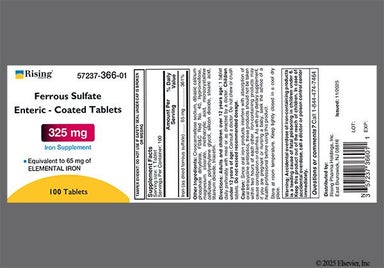
  • Ferrous sulfate (325 mg tablet): For adults and children over 12 years of age, take 1 tablet by mouth daily, preferably with a meal, or as directed by your provider. Speak to your child's provider to get an appropriate dose for your child under 12 years old.
  • Ferrous gluconate (324 mg tablet): For adults, take 1 tablet by mouth three to four times daily. Speak to your child's provider to get an appropriate dose for your child.
  • Ferrous fumarate (325 mg tablet): For adults, take 1 tablet by mouth daily, or as directed by your provider.
  • Polysaccharide-iron (326 mg capsule): For adults, take 1 to 2 capsules by mouth daily, or as directed by your provider.
cost-icon

How much does Iron supplements cost?

To access savings, use a GoodRx coupon and pay just a fraction of the retail price.
Iron supplements (generic)
GoodRx lowest price

$2.75

(save 96.17%)
contraindications-icon

Iron supplements contraindications

Contraindications are specific health conditions or situations in which a person should not take a medication due to safety concerns. If you have any of the following conditions or if any of the following apply to you, let your healthcare provider know because Iron supplements will not be safe for you to take.

alternatives-icon

What are alternatives to Iron supplements?

There are a number of medications that your doctor can prescribe in place of Iron supplements. Compare a few possible alternatives below.
Iron supplements
Used for:
$2.75Lowest GoodRx priceView prices
Used for:
$149.24Lowest GoodRx priceView prices
latest-news-icon

News about Iron supplements

If your body doesn’t absorb iron properly, your anemia may not respond to iron infusions. Learn what to do when iron infusions don’t work.
What Happens If an Iron Infusion Doesn’t Work? Plus, Answers to 6 More Iron Supplement FAQs
If your body doesn’t absorb iron properly, your anemia may not respond to iron infusions. Learn what to do when iron infusions don’t work.
Abnormal urine color can be worrying. But did you know discolored urine is often due to medications? See which medications can change the color of your urine.
Medications That Can Change the Color of Your Urine
Abnormal urine color can be worrying. But did you know discolored urine is often due to medications? See which medications can change the color of your urine.
Typical signs of iron-deficiency anemia (IDA) include fatigue, dizziness, and breathlessness. Learn how to identify and treat symptoms of IDA.
What Is Iron-Deficiency Anemia (IDA)? Signs, Testing, and Treatment
Typical signs of iron-deficiency anemia (IDA) include fatigue, dizziness, and breathlessness. Learn how to identify and treat symptoms of IDA.
Dairy products can affect how certain medications work in your body, potentially making them less effective. Here are the most common dairy interactions.
7 Medications That Can Interact With Dairy Products: Antibiotics, Levothyroxine, and More
Dairy products can affect how certain medications work in your body, potentially making them less effective. Here are the most common dairy interactions.
Read on to learn the side effects of iron supplements, such as nausea and constipation, and how to manage them.

From Constipation to Taste Changes: 6 Iron Supplement Side Effects, and How to Manage Them
Read on to learn the side effects of iron supplements, such as nausea and constipation, and how to manage them.
A variety of foods and medications can interact with iron supplements, reducing how well they work or causing side effects. Learn more with this guide.
8 Iron Supplement Interactions: Dairy, Coffee, Antibiotics, and More
A variety of foods and medications can interact with iron supplements, reducing how well they work or causing side effects. Learn more with this guide.
It can take iron pills around 3 to 7 days to work. Review tips for taking iron pills correctly, including the best time to take them and signs the iron is working.
What Pharmacists Say About How Long Iron Pills Take to Work (Plus 5 More Tips)
It can take iron pills around 3 to 7 days to work. Review tips for taking iron pills correctly, including the best time to take them and signs the iron is working.
Low iron levels can cause fatigue, shortness of breath, and sudden dizziness. Iron deficiency and anemia can pose a serious health risk. Here’s how to treat it.
Do Low Iron Levels Cause Dizziness?
Low iron levels can cause fatigue, shortness of breath, and sudden dizziness. Iron deficiency and anemia can pose a serious health risk. Here’s how to treat it.
Medications that are likely to cause constipation include opioids, antidepressants, antihistamines, and high blood pressure medications. Dietary changes and stool softeners can help bring some relief.
8 Types of Medications That Can Cause Constipation
Medications that are likely to cause constipation include opioids, antidepressants, antihistamines, and high blood pressure medications. Dietary changes and stool softeners can help bring some relief.
For the month of April, GoodRx has found deeper discounts on drugs like prednisone, albuterol, and more at the major chain retail pharmacies.
Deeper GoodRx Discounts on Sildenafil, Oseltamivir, and More in April
For the month of April, GoodRx has found deeper discounts on drugs like prednisone, albuterol, and more at the major chain retail pharmacies.
images-icon

Iron supplements images

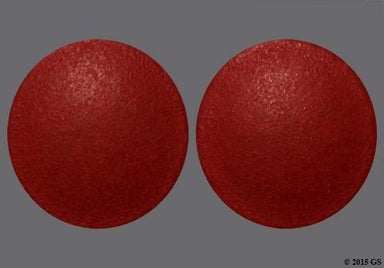
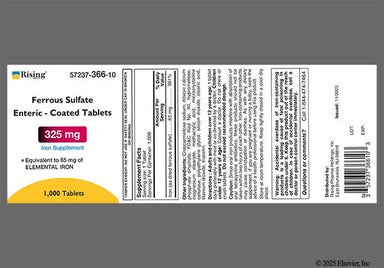
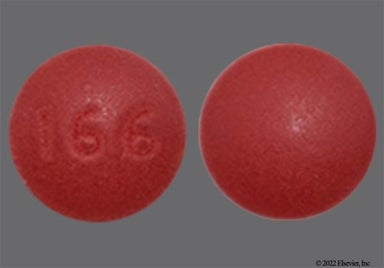
This medicine is Colorless Tablet.

Get savings updates for Iron supplements

Receive price alerts, news, and other messages from GoodRx about Iron supplements and other healthcare topics and relevant savings offers.

By providing your email, you consent to receive marketing communications from GoodRx, which may include content and/or data related to men's health, women's health, reproductive care, or sexual health. You agree to the GoodRx Terms of Use and acknowledge the Privacy Policy. You can unsubscribe at any time.

References

Best studies we found

Akron Pharma. (2023). Fe-Vite iron oral solution- ferrous sulfate solution [package insert]. DailyMed.

Alleyne, M., et al. (2008). Individualized treatment for iron-deficiency anemia in adults. The American Journal of Medicine.

Hamilton, J. P. A. (2022). Hemosiderosis. Merck Manual Consumer Version.

GoodRx Health has strict sourcing policies and relies on primary sources such as medical organizations, governmental agencies, academic institutions, and peer-reviewed scientific journals. Learn more about how we ensure our content is accurate, thorough, and unbiased by reading our editorial guidelines.

Was this page helpful?