


Impetigo Treatment: How to Banish This Contagious Skin Infection for Good
Impetigo is a skin rash that requires more than over-the-counter creams. Get to know impetigo treatments and what you can do to get rid of this skin infection.
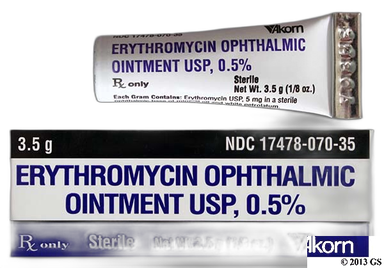
Erythromycin eye ointment is used to treat and prevent various bacterial eye infections, including pink eye in newborns. The typical dosage for this medication is to apply it in the affected eye(s) up to 6 times a day. Most people experience few to no side effects while using erythromycin eye ointment as directed.

Erythromycin eye ointment is a macrolide antibiotic. It stops the growth of bacteria by preventing them from making proteins that they need to survive.
| Common Brands | Ilotycin |
|---|---|
| Drug Class | Macrolide antibiotic |
| Controlled Substance Classification | Not a controlled medication |
| Generic Status | Lower-cost generic available |
| Availability | Prescription only |

The following side effects may get better over time as your body gets used to the medication. Let your healthcare provider know immediately if you continue to experience these symptoms or if they worsen over time.
Contact your healthcare provider immediately if you experience any of the following.
Along with its needed effects, a medicine may cause some unwanted effects. Although not all of these side effects may occur, if they do occur they may need medical attention.
Check with your doctor as soon as possible if any of the following side effects occur:
Rare
Eye irritation not present before therapy
Other side effects not listed may also occur in some patients. If you notice any other effects, check with your healthcare professional.
Call your doctor for medical advice about side effects. You may report side effects to the FDA at 1-800-FDA-1088.




Erythromycin eye ointment can cause some serious health issues. This risk may be even higher for certain groups. If this worries you, talk to your doctor or pharmacist about other options.
Erythromycin eye ointment should only be used on the surface of the eye. Don't put erythromycin eye ointment in your mouth, nose, or other parts of your body.
Using erythromycin eye ointment long-term can raise the risk of other eye infections, such as fungal eye infections. Don't use erythromycin eye ointment if you have a viral eye infection because it can make your infection worse. Let your provider know if you have eye pain or redness, blurry vision, light sensitivity, or watery discharge from your eye, or if your symptoms don't improve after a couple days of treatment. These can be signs and symptoms of a new eye infection.
Tell your provider before using erythromycin eye ointment if you've a history of allergy to antibiotics, such as clarithromycin (Biaxin) or azithromycin (Zithromax). Watch out for signs and symptoms of allergic reactions, such as swollen eyelids or red or itchy eyes. Stop using erythromycin eye ointment and tell your provider if you have these signs and symptoms.

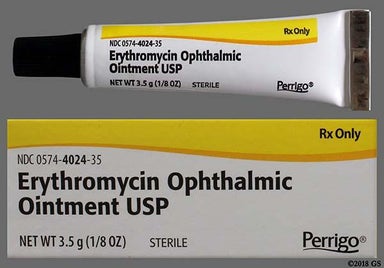
 Tube of ointment
| Dosage | Quantity | Price as low as | Price per unit |
|---|---|---|---|
| 3.5g of 0.5% | 1 tube | $11.79 | $11.79 |
| 1g of 0.5% | 4 tubes | $12.18 | $3.05 |

Although certain medicines should not be used together at all, in other cases two different medicines may be used together even if an interaction might occur. In these cases, your doctor may want to change the dose, or other precautions may be necessary. When you are taking this medicine, it is especially important that your healthcare professional know if you are taking any of the medicines listed below. The following interactions have been selected on the basis of their potential significance and are not necessarily all-inclusive.
Using this medicine with any of the following medicines is usually not recommended, but may be required in some cases. If both medicines are prescribed together, your doctor may change the dose or how often you use one or both of the medicines.













Prescription savings
Stop paying too much for your prescriptions. Compare prices, get pharmacy coupons, and save up to 80%. Find expert answers to your health questions so you can make the best decisions for yourself and your family.
Health conditions
Medications & treatment
Access & affordability
 Our monthly healthcare membership can help you save thousands on your prescription costs.
Resources

No, erythromycin isn't a penicillin; it's a macrolide antibiotic. If you're allergic to penicillin antibiotics, Erythromycin might be a safer option for you to use. But if you're allergic to medications such as azithromycin (Zithromax) or clarithromycin, talk to your provider first before using Erythromycin, since these medications are very similar. Stop using Erythromycin if you experience swollen eyelids, redness, itching, rash, shortness of breath.
No, Erythromycin isn't a sulfa medication, so it won't trigger a sulfa allergic reaction. It's a macrolide antibiotic, similar to azithromycin (Zithromax). If you've had an allergic reaction to macrolide antibiotics, such as swollen eyelids or red, itchy eyes, tell your provider. Contact your provider if your eye doesn't improve after a couple days of using the medication.
Erythromycin should be used for as long as directed by your provider to treat your infection, up to its expiration date. It's best to take it to a medication drop-off site for expired medications. Don't keep leftover Erythromycin around to use later. Your eyes can get re-infected if your applicator got contaminated with bacteria. Erythromycin also might not be the right medication to treat the type of infection you have next time. Each time you think you have an eye infection, you should see your provider so they can give you the correct treatment.
If you're applying it to yourself, first tilt your head forward. Then, pull down your lower eyelid with one hand, and hold the tube of ointment with the other. Place a small amount of ointment in the space between your eyelid and eyeball. Rotate the tube to free the ointment. Look down before closing your eye for 1 to 2 minutes to help the medication reach all the necessary parts of the eye. If you're applying it to a child, have your child lie down and ask them to look up. Then rest the hand holding Erythromycin on the child's forehead. Once you pull down the lower eyelid with your other hand, apply the medication along the lower eyelid. Afterwards, ask your child to close or blink their eyes for a minute to spread the medication throughout the eye.
You should use Erythromycin as instructed by your provider, even if your eye starts to get better. If you stop using Erythromycin too soon, your infection might come back or become harder to treat.
Erythromycin can be used to treat pink eye (conjunctivitis) only if it's caused by a bacterial infection. Symptoms of bacterial pink eye include eyelid crusting in the morning; thick eye discharge that's green, yellow, or white; eye discharge that builds up at the corner of the eye. Keep in mind that about half of the time, bacterial pink eye goes away on its own after 2 or 3 weeks. You can use a cold compress and artificial tears in the meanwhile to help relieve symptoms. If you'd like to clear the infection sooner, ask your provider for an antibiotic treatment, such as Erythromycin.
Most of the time, a stye will go away on its own without any medication. To help it heal, consider using a warm compress on the affected eye(s) for about 15 minutes, 3 or 4 times daily. This helps drain the stye. You can also use an eyelid scrub, which helps get rid of any dead skin cell buildup or other buildup that can block your eyelid glands. But if your stye doesn't get better after a week, or it becomes very swollen or looks infected even after trying these suggestions, see your provider right away. They can recommend other treatments for you, which might include antibiotics similar to Erythromycin.
