Key takeaways:
Entyvio (vedolizumab) is a biologic medication that treats moderate-to-severe Crohn’s disease and ulcerative colitis in adults. It works by lowering inflammation in the gastrointestinal (GI) tract.
Common Entyvio side effects include minor infection, headache, and joint pain. It can also cause more serious side effects, including rare cases of liver disease and severe infection.
Talk to your gastroenterologist about the risks and benefits of Entyvio. They can recommend different ways to keep you safe while receiving Entyvio, such as staying up-to-date with your vaccines.
Save on related medications
Millions of U.S. adults live, work with, and manage inflammatory bowel disease (IBD) every day. IBD is a term that mainly describes two inflammatory gastrointestinal (GI) conditions: Crohn’s disease (CD) and ulcerative colitis (UC).
It’s unclear what the exact cause of IBD is. But it’s thought to be due to the immune system overreacting to triggers along the GI tract — causing excess inflammation. This can lead to abdominal pain and frequent diarrhea, among other symptoms. Medications are often required to help get these symptoms under control. But it may take some trial and error to find a medication that’s effective and tolerable for you.
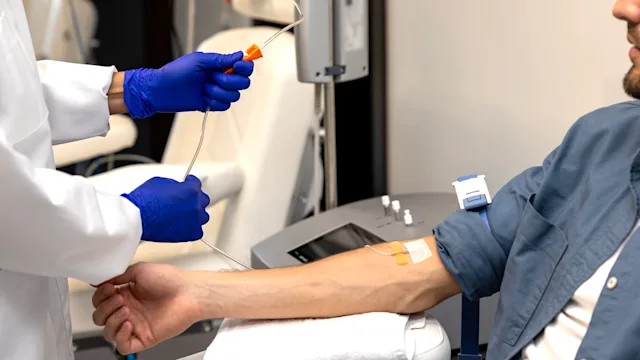
Entyvio (vedolizumab) is one common choice. It’s a biologic medication that’s FDA approved to treat adults living with moderate-to-severe CD and UC. Entyvio comes in two forms: an intravenous (IV) infusion and a subcutaneous (under-the-skin) injection. The infusion is given by a healthcare professional over about 30 minutes. The injection comes as a prefilled pen or syringe that you can use at home.
Entyvio is beneficial for many people who use it. But like all medications, it comes with some risks and side effects to keep in mind.
Entyvio side effects at a glance
Common Entyvio side effects include:
Injection site reactions or mild infusion-related reactions
Mild infections, such as the common cold
Headache
Joint pain
Nausea
Fever
Fatigue
Cough
Bronchitis (lung inflammation)
Influenza
Back pain
Rash
Itchy skin
Throat discomfort
Pain in the arms or legs
Rare but serious Entyvio risks and side effects include:
Severe infusion reactions
Serious infections
Progressive multifocal leukoencephalopathy (PML), a rare brain infection
Allergic reactions
Here’s what to know about seven key Entyvio side effects and how to manage them.
Good to know: Entyvio doesn’t have any boxed warnings. This is the most serious medication warning that the FDA can assign to a medication.
1. Mild to moderate infection
Entyvio treats IBD by lowering inflammation in the GI tract. It does this by calming your immune system. This helps improve IBD symptoms, but it can also put people at a higher risk of infection.
Fortunately, most infections aren’t serious. The most common type of infection reported is the common cold (nasopharyngitis). This is also the most common side effect of Entyvio overall. Other types of common infections include:
You can usually treat mild infections, like a common cold, at home. But if symptoms feel severe, don’t improve, or include a fever, contact your gastroenterologist for advice.
2. Cold and flu symptoms, like a headache
It’s relatively common to develop symptoms that resemble the common cold or flu while receiving Entyvio. These may or may not be tied to an infection.
Headache is one common complaint. Other flu-like symptoms that are possible include:
Nausea
Fever
Tiredness
Cough
If you feel sick before your next Entyvio dose, call your gastroenterologist. They may delay your treatment until you’re feeling better. Ask what symptoms to watch for and which over-the-counter treatments are safe to use in the meantime.
3. Body pain
In Entyvio’s initial studies, a number of people reported feeling pain in their joints. Some people also had pain in their back, arms, and legs, but these types of pain were less common.
The reason Entyvio may cause body pain is unclear. But joint pain is a known complication of IBD. This may be linked to the gut inflammation that people living with IBD experience. In fact, according to one study, the risk of joint pain from Entyvio is no higher than with other treatments, such as TNF blockers.
Pain relievers such as acetaminophen (Tylenol) may be helpful in relieving headaches, back, and joint pain. Make sure to ask your gastroenterologist if taking these medications would be appropriate for you.
4. Injection and infusion reactions
Injection site reactions are possible with all injections. If you use Entyvio pens or syringes, these may include bruising, swelling, or pain at the injection site. It’s also possible to experience itching or a rash.
To lower the risk of injection site reactions, let the pen or syringe reach room temperature before using it. You should also rotate injection sites with each dose, and avoid injecting into skin that’s tender, bruised, or irritated.
Infusion reactions, on the other hand, may occur if you’re receiving Entyvio as an IV infusion. They may start during your infusion or within several hours after. In some cases, symptoms can worsen over the next couple of days before improving. Some of the most common symptoms are itching, redness, and swelling near the infusion site.
If you develop symptoms of an infusion reaction while you’re still receiving your infusion, make sure to alert your care team. They can manage the reaction by lowering how fast Entyvio is given. They may also give you medications to lessen pain or itching, such as acetaminophen or diphenhydramine (Benadryl).
If you’ve already left your treatment center, seek emergency medical help if you experience hives, trouble breathing, or you feel like your heart is racing after an Entyvio infusion. This might be a sign of anaphylaxis, a serious allergic reaction.
5. Serious infection
If Entyvio causes an infection, it’s usually nothing to be overly concerned about. But serious infections, such as tuberculosis (TB) and sepsis, can occur in rare cases. Your gastroenterologist will likely test you for TB prior to starting Entyvio as a precaution.
In very rare cases, Entyvio can lead to a viral infection in the brain. This is called progressive multifocal leukoencephalopathy (PML). People who already have a weakened immune system are at higher risk of PML.
For most people, the virus that causes this condition is nothing to worry about. It might not even cause symptoms. But for people who have PML, the infection damages the coating that protects nerves in the brain. This can make it hard to control your body movements and it can cause memory problems. Ultimately, the infection can lead to severe disability and be life threatening.
Your gastroenterologist will likely pause or stop your Entyvio treatment if you develop a severe infection of any type.
6. Liver damage
There are rare reports of people experiencing liver damage from Entyvio. It’s unclear why this happens.
Your gastroenterologist may ask you to complete blood tests before and during treatment with Entyvio to monitor your liver health. They may also check to make sure you don’t have signs of a hepatitis B infection. There’s a risk that Entyvio could worsen complications associated with this condition.
7. Pancreas inflammation
Inflammation of the pancreas, or pancreatitis, is another possible Entyvio side effect. Experts aren’t sure why it happens, but there have only been a handful of reports of pancreatitis in people who receive it. This side effect can cause clammy skin, stomach pain, and difficulty eating.
Talk to your gastroenterologist if you think you’re experiencing symptoms of pancreatitis. It’s important to manage pancreatitis quickly to help prevent it from becoming a chronic issue.
What can you do to prevent the side effects of Entyvio?
Preventing infection should be top of mind while you’re receiving Entyvio.
Some infections can be prevented by getting vaccinated. People should be up to date with their vaccines before starting Entyvio. This includes a yearly flu shot, but you should talk to your gastroenterologist before considering the intranasal flu vaccine (FluMist). This is because the nasal spray is a “live vaccine.” It contains a weakened form of the flu virus. People with weakened immune systems may be at higher risk for developing an infection after receiving a live vaccine.
Other common live vaccines you should avoid while receiving Entyvio include the following:
Measles, mumps, rubella (MMR II)
Varicella (Varivax) — the chickenpox vaccine
Yellow fever vaccine (YF-Vax)
If you’re receiving IV infusions, your gastroenterologist may give you medications — such as acetaminophen, diphenhydramine, or a corticosteroid — before your Entyvio infusions. These help prevent or lessen infusion reactions.
Frequently asked questions
Potentially. Some people consider Entyvio a high-risk medication, but this isn’t an official description. That’s because it may contribute to rare but serious effects among people who receive it. Some of the top risks are highlighted above.
Entyvio is a type of monoclonal antibody called an integrin antagonist. It works by lessening the amount of inflammation in your gut. This is beneficial because CD and UC cause chronic inflammation in the gut.
If you miss a dose of your under-the-skin Entyvio injection, inject the next dose as soon as possible. But if it’s almost time for your next scheduled dose, skip the missed one and continue with your regular schedule after that. If you’re unsure whether you received a full dose, call your pharmacist or prescriber before injecting again.
If you miss an infusion appointment, contact your infusion team and work to schedule your next appointment as soon as you can.
There isn’t much information about what happens if you receive too much Entyvio. If you think you injected more than prescribed, monitor how you feel. Even if you feel fine, it’s a good idea to call your gastroenterologist or pharmacist for guidance. But if symptoms feel severe or concerning, go to the nearest ER or call 911.
Potentially. Some people consider Entyvio a high-risk medication, but this isn’t an official description. That’s because it may contribute to rare but serious effects among people who receive it. Some of the top risks are highlighted above.
Entyvio is a type of monoclonal antibody called an integrin antagonist. It works by lessening the amount of inflammation in your gut. This is beneficial because CD and UC cause chronic inflammation in the gut.
If you miss a dose of your under-the-skin Entyvio injection, inject the next dose as soon as possible. But if it’s almost time for your next scheduled dose, skip the missed one and continue with your regular schedule after that. If you’re unsure whether you received a full dose, call your pharmacist or prescriber before injecting again.
If you miss an infusion appointment, contact your infusion team and work to schedule your next appointment as soon as you can.
There isn’t much information about what happens if you receive too much Entyvio. If you think you injected more than prescribed, monitor how you feel. Even if you feel fine, it’s a good idea to call your gastroenterologist or pharmacist for guidance. But if symptoms feel severe or concerning, go to the nearest ER or call 911.
The bottom line
Common Entyvio (vedolizumab) side effects include mild to moderate infection, headache and other flu-like symptoms, and joint pain. In rare cases, Entyvio can cause severe, life-threatening infections, anaphylaxis, or liver problems. Before starting Entyvio, talk with your gastroenterologist about the risks and benefits of this medication.

Why trust our experts?




References
Cai, T., et al. (2018). The association Between arthralgia and vedolizumab using natural language processing. Inflammatory Bowel Diseases.
Card, T., et al. (2018). What is the risk of progressive multifocal leukoencephalopathy in patients with ulcerative colitis or Crohn's disease treated with vedolizumab? Inflammatory Bowel Diseases.
Centers for Disease Control and Prevention. (2024). IBD facts and stats.
Centers for Disease Control and Prevention. (2024). Inflammatory bowel disease (IBD) basics.
Centers for Disease Control and Prevention. (2025). Live, attenuated influenza vaccine VIS.
Dreischulte, T., et al. (2012). High-risk prescribing and monitoring in primary care: How common is it, and how can it be improved?. Therapeutic Advances in Drug Safety.
Loftus, E. V., Jr., et al. (2020). Long-term safety of vedolizumab for inflammatory bowel disease. Alimentary Pharmacology & Therapeutics.
Massironi, S., et al. (2022). Systematic review — pancreatic involvement in inflammatory bowel disease. Alimentary Pharmacology & Therapeutics.
MedlinePlus. (2024). Progressive multifocal leukoencephalopathy.
MedlinePlus. (2024). Vedolizumab injection.
Takeda Pharmaceuticals. (2023). Medication guide entyvio (vedolizumab) for injection, for intravenous use [package insert].
Takeda Pharmaceuticals. (2026). Entyvio- vedolizumab injection, powder, lyophilized, for solution [package insert].
U.S. Food and Drug Administration. (2018). What are "biologics" questions and answers.