


How Much Is Enhertu Without Insurance?
Without insurance, you may pay more than $3,000 for a 100 mg dose of Enhertu. Learn more about how much Enhertu costs without insurance and ways to save.
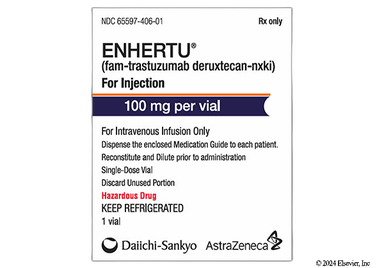
Enhertu (fam-trastuzumab deruxtecan-nxki) is FDA approved to treat adults with cancers that have a tumor marker protein called HER2. These include breast cancer, non-small cell lung cancer (NSCLC), stomach cancer, esophageal cancer, and other solid tumors. Enhertu is a targeted cancer treatment called an antibody-drug conjugate (ADC). It's usually used when certain past treatments haven't worked well. The dose is given as an infusion through the vein, or IV, every 3 weeks. Common side effects include nausea, tiredness, and hair loss.

Enhertu is a type of targeted cancer medication called an antibody-drug conjugate (ADC). It's made up of a few components that work together to find and destroy cancer or tumor cells in the body.
The first component of Enhertu works as a monoclonal antibody. It finds HER2, a protein found on cancer cells. The antibody helps Enhertu get to the cancer cells that have the HER2 protein on them.
When Enhertu reaches and enters the cancer cell, the chemotherapy part of the medication starts to work. It acts as a topoisomerase inhibitor, damaging the cancer cell's DNA and killing it. This helps stop the cancer from growing or spreading.
| Common Brands | Enhertu |
|---|---|
| Drug Class | Antibody-drug conjugate |
| Controlled Substance Classification | Not a controlled medication |
| Generic Status | No lower-cost generic available |
| Availability | Prescription only |

The following side effects may get better over time as your body gets used to the medication. Let your healthcare provider know immediately if you continue to experience these symptoms or if they worsen over time.
Note: Side effects were from people with breast cancer, NSCLC, or solid tumors. Side effects might differ for those with stomach or esophageal cancer.
Contact your healthcare provider immediately if you experience any of the following.
Side effects that you should report to your care team as soon as possible:
Side effects that usually do not require medical attention (report these to your care team if they continue or are bothersome):




Enhertu can cause some serious health issues. This risk may be even higher for certain groups. If this worries you, talk to your doctor or pharmacist about other options.
People who've taken Enhertu have had lung problems. This can include lung inflammation and fluid buildup in the lungs. Although rare, it can be serious and sometimes life-threatening. In studies, lung problems have happened within the first 6 months of treatment.
Tell your care team right away if you have any trouble breathing, cough, fever, or other breathing problems while receiving Enhertu. If this happens, your care team can check out what's going on. You’ll probably need to get lung scans done and take a corticosteroid to lower lung inflammation. Depending on how serious the lung problem is, you might need to pause or stop your Enhertu treatment.
Enhertu can lower your white blood cell count. This can put you at risk of infection. In studies, a low white blood cell count first happened days or even months after starting treatment. Sometimes, it can drop too low and cause a serious fever.
Before each Enhertu infusion, your care team will check your blood count to make sure it's safe for you to get. Tell them as soon as possible if you have fevers or chills often or feel unwell during treatment. They'll check your blood again. Depending on how low your blood count is, you might need to take a break from Enhertu or stop the medication altogether.
Enhertu can sometimes lower how well your heart pumps blood. This is called left-sided heart failure.
Before starting Enhertu, tell your oncologist about your full medical history, especially if you've had any heart problems. You'll also get imaging done of your heart before starting treatment. Your care team will send you to get an echocardiogram (echo) or a MUGA scan.
You might need regular heart scans while taking Enhertu, especially if you have signs of heart failure. Watch for shortness of breath, coughing, swelling in your legs, dizziness, sudden weight gain, and an irregular heartbeat. If this happens, let your care team know. They'll check your heart and might pause or stop treatment if needed.
Enhertu can harm an unborn baby if given during pregnancy. If you can become pregnant, your oncologist will have you take a pregnancy test before starting treatment to make sure you’re not pregnant.
If you or your partner can become pregnant, use birth control while you’re taking Enhertu. Women should keep using birth control for 7 months after the last dose of Enhertu. And men should keep using birth control for 4 months after stopping. Call your care team right away if you or your partner becomes pregnant.

Enhertu is given by a healthcare professional as an infusion through the vein (IV).
The dose depends on your cancer and your weight. Your oncologist will help find the right dose for you.
Breast cancer, NSCLC, or solid tumors: The typical dose is 5.4 mg/kg given as an IV infusion once every 3 weeks. It's usually given on day 1 of each 21-day treatment cycle.
Stomach or esophageal cancer: The typical dose is 6.4 mg/kg given as an IV infusion once every 3 weeks. It's usually given on day 1 of each 21-day treatment cycle.
Your oncologist might lower your dose if you have serious side effects from the medication.





Prescription savings
Stop paying too much for your prescriptions. Compare prices, get pharmacy coupons, and save up to 80%. Find expert answers to your health questions so you can make the best decisions for yourself and your family.
Health conditions
Medications & treatment
Access & affordability
 Our monthly healthcare membership can help you save thousands on your prescription costs.
Resources

No. Enhertu isn't considered traditional chemotherapy. It's a type of targeted therapy. Targeted therapies work more precisely than regular chemotherapy. Instead of attacking all fast-growing cells in the body, they work against specific cancer cells. Enhertu works to kill cancer cells that specifically have the HER2 protein on them.
Some side effects of Enhertu might get better over time. But others can last throughout treatment. Nausea and vomiting are common during the first several cycles. They usually improve over time, but there's still a chance that you could have these side effects later on. Low blood counts typically get better after a few treatment cycles. But feeling tired and having hair loss can be side effects that often continue during treatment. If any side effects start to interfere with your daily life while taking Enhertu, tell your care team. They can provide supportive medications or other ways to help manage side effects. They can also adjust your treatment plan as needed.
Yes, hair loss is a common side effect of Enhertu. Hair can become thinner and fall out in clumps. This can happen with hair on any part of your body. Talk to your oncology care team if you’re worried about losing your hair. They can suggest ways to help, like using cold caps to reduce hair loss or finding lower-cost or free wigs.
The amount of Enhertu from each infusion can stay in your body for about a month. This is based on the medication's half-life, which estimates how long it takes for half of it to leave your system. Because Enhertu stays in your body for a while, each infusion is given once every 3 weeks. If you have questions about how long Enhertu stays in your system, ask your oncologist.
Enhertu is given once every 3 weeks. It's usually given on day 1 of each 21-day treatment cycle. A nurse will help infuse the medication through a vein at an infusion center or clinic.
You'll usually keep taking Enhertu as long as it's working and you can handle the side effects. People might need to stop if they have serious side effects or a severe reaction to the infusion. Another reason that someone might stop treatment is if their cancer gets worse. Ask your oncologist if you have questions about how long to take Enhertu.
Based on current research, Enhertu isn't a cure for breast cancer. It can't remove all of the cancer. But studies show that it can slow down cancer growth and sometimes even shrink the tumor. Enhertu is approved to treat advanced or metastatic HER2-positive or HER2-low breast cancer. It's also approved to treat advanced or metastatic HR-positive, HER2-low or HER2-ultralow breast cancer. Talk to your oncologist about how Enhertu might help in your breast cancer treatment.
Enhertu (fam-trastuzumab deruxtecan) and Herceptin (trastuzumab) are both cancer medications given through the vein (IV) every 3 weeks. They treat certain breast, stomach, and esophageal cancers. But Enhertu can also treat some lung cancers and other solid tumors. Both contain trastuzumab but work in different ways. Unlike Herceptin, Enhertu also has a chemotherapy part that helps kill cancer cells. Talk to your oncologist to help compare the two medications.
