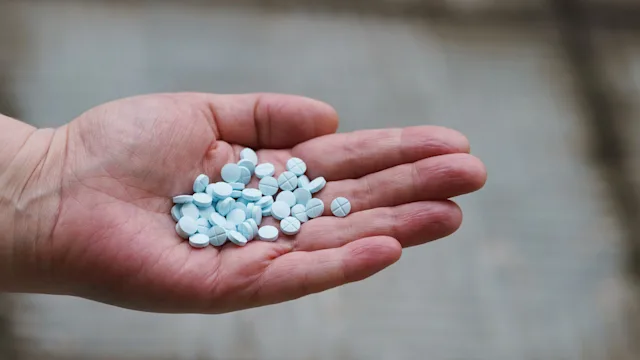
The FDA recently approved the first-ever generic versions of Eliquis (apixaban), a medication that helps prevent stroke, blood clots, and embolisms.
The generics will offer lower-cost alternatives for people who struggle to afford brand-name Eliquis. Eliquis and generic apixaban also offer some advantages over similar drugs such as warfarin (Coumadin, Jantoven), which we’ll get into below.
What does Eliquis treat?
Eliquis and its generic prevent blood from clotting and are approved for several purposes.
First, they can be prescribed to people with nonvalvular atrial fibrillation to reduce the risk of stroke and blood clots in other parts of the body (embolism). Nonvalvular atrial fibrillation causes the heart to beat irregularly, which can lead to blood clots. These clots can travel to other parts of the body, such as the brain or lungs.
Eliquis can also treat blood clots in the legs or thighs (deep vein thrombosis) and in the lungs (pulmonary embolism), and prevent them from happening again.
Lastly, Eliquis can help prevent deep vein thrombosis in people who have had hip or knee replacement surgery.
Why is generic Eliquis a big deal?
In short, brand-name Eliquis can be an expensive medication, but it’s potentially safer and requires fewer lifestyle restrictions compared to similar medications. A cheaper, generic version of Eliquis could mean that more people will be able to access it.
Eliquis belongs to a class of drugs known as novel oral anticoagulants. These medications work similarly to warfarin, which has been around for more than 60 years.
However, there are some real differences between Eliquis and warfarin. One is the cost. Warfarin has been available as a generic in the U.S. for more than 2 decades. The average retail cost for the most common prescription of warfarin is $24. The average retail cost for the most common prescription of Eliquis? $535.
But even though warfarin may be a fraction of the cost of brand-name Eliquis, it requires regular blood testing to make sure it’s working properly. People taking it also have dietary restrictions. Not to mention more drugs and supplements interact with warfarin compared to Eliquis.
Warfarin and Eliquis both raise the risk of bleeding and bruising. But in research, Eliquis has been shown to have up to a 58% lower risk of bleeding in or around the brain — which can be life-threatening. And it takes effect within a couple of hours.
How to save on Eliquis
There are ways to save on Eliquis, which is only available as a brand-name medication. GoodRx can help you navigate between patient assistance programs and copay savings cards to save money on your prescription.
Save with patient assistance programs. If you’re uninsured or underinsured, you may be eligible for Eliquis's patient assistance program, which offers the medication free of cost.
Save with a copay savings card. If you have commercial insurance, you may be eligible to pay as little as $10 for Eliquis using a savings card from the manufacturer.
When will generic Eliquis be available?
It’s not clear. The FDA has approved applications from drug makers Micro Labs Limited and Mylan Pharmaceuticals Inc. to produce generic Eliquis. But the maker of brand-name Eliquis, Bristol-Myers Squibb, and its partner, Pfizer, are fighting to prevent generic versions from getting to market for several more years. As the original manufacturers, they own a patent that prevents generics from being introduced until the patent expires. That patent was extended from February 2023 to November 2026. Both drug makers say that’s when generics can be made available.
What are common side effects of Eliquis?
Eliquis is a blood thinner, which means it reduces blood clotting. This effect can raise your risk of bleeding, which can be severe. You may also bruise more easily while taking Eliquis.
Other side effects include:
Rash
Nausea
Fainting
Anemia (too few red blood cells)
Eliquis also comes with a warning not to stop taking it suddenly. Doing so can increase your risk of blood clots and stroke.
Which medications interact with Eliquis?
Two types of medications, P-glycoprotein inhibitors and CYP17 inhibitors, can interact with Eliquis and affect the level of the medication in your body.
P-glycoprotein inhibitors include a range of medications. Some examples include:
Clarithromycin (Biaxin)
Erythromycin (Ery)
Ritonavir (Norvir)
Verapamil (Calan)
Ketoconazole (Nizoral)
Duloxetine (Cymbalta)
Sertraline (Zoloft)
Paroxetine (Paxil)
Omeprazole (Prilosec)
Currently, the only CYP17 inhibitor on the market is abiraterone (Zytiga, Yonsa), which is used in the treatment of prostate cancer.
Always tell your doctor about all the medications and supplements you are taking before adding any new medications to your routine.

Why trust our experts?