Key takeaways:
Eliquis (apixaban) is an anticoagulant that helps prevent and treat blood clots. Without insurance or discounts, the average cash price of 60 Eliquis 5 mg tablets is $468.30. But you can pay as little as $348.07 for the same quantity and dose with a free GoodRx discount.
Eliquis is covered by nearly all insurance types. Some plans require prior authorization, but step therapy is uncommon.
New Eliquis users may qualify for a free 30-day trial from the manufacturer. Those with commercial insurance can use the Eliquis Co-Pay Card to pay as little as $10 for the first 90-day fill and $10 per month thereafter. A patient assistance program and Direct-to-Patient pricing are also available.
Save on related medications
Eliquis (apixaban) is a direct-acting oral anticoagulant medication (DOAC). It helps treat and prevent blood clots.
Eliquis comes as a tablet taken twice a day by mouth. The recommended dosage depends on the health condition being treated. Eliquis also comes as a sprinkle capsule and a tablet for oral suspension (liquid), which are generally prescribed for children.
When it comes to how much Eliquis costs, this can vary based on a few factors. Let’s review the cost of Eliquis without insurance along with ways to save on your prescription.
How much does Eliquis cost?
The average cash price of 60 Eliquis 5 mg tablets (a typical monthly supply) is $468.30.
Generic versions of Eliquis have been approved by the FDA, but they won’t be available until at least 2028.
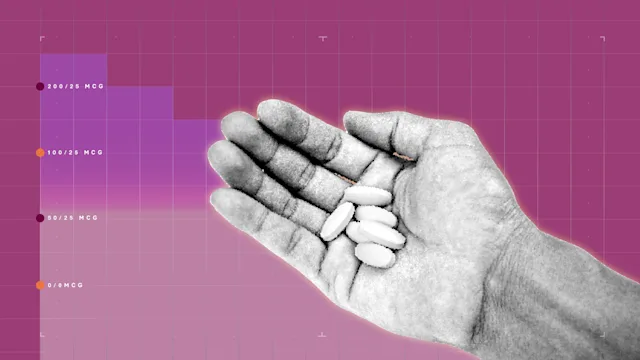
The chart below shows the average cash price for various doses and quantities of Eliquis.
Which factors affect the cost of Eliquis?
Several factors can affect how much you’ll pay for Eliquis, including:
Where you live: Prescription medication prices can vary by location. For example, GoodRx research shows that someone in Tampa, Florida, often pays less for prescriptions than someone in New Orleans.
The pharmacy you choose: Pharmacies can charge different cash prices for prescription medications — even within the same neighborhood. GoodRx allows you to see and compare prices at different pharmacies in your area to find the most affordable option.
Dose and quantity: The cost of Eliquis can vary depending on the dosage you’re prescribed and the quantity you purchase.
Insurance coverage: Most insurance plans cover Eliquis. But your out-of-pocket costs can vary depending on whether your plan includes a deductible, a copay, or coinsurance.
Does insurance cover Eliquis?
Nearly all insurance types, including Medicare, Medicaid, Affordable Care Act (ACA) marketplace, and commercial plans, cover Eliquis.
Your insurance may require a prior authorization for Eliquis. This is when your prescriber needs to submit additional information to the insurance plan before coverage is approved. Prior authorization is rare for Medicare enrollees, but some ACA and commercial plans require it. And about 1 in 12 Medicaid enrollees need prior authorization. Step therapy (requiring you to try other medications first) is an uncommon requirement for all plan types.
Checking your coverage in advance can help you know whether Eliquis is covered and what you can expect to pay. You can typically access your summary of benefits and formulary online or by calling the help desk number on your prescription insurance card.
How different insurance plans cover Eliquis
The table below shows how coverage for Eliquis compares across different insurance types, along with the likelihood of having prior authorization and step therapy requirements.
Insurance type | Enrollees covered for Eliquis 5 mg tablet | Enrollees required to get prior authorization | Enrollees required to do step therapy |
100% | 5% | 1.2% | |
Commercial plans (excluding ACA plans) | 99.6% | 8.1% | 0.9% |
Medicare, including original Medicare and Medicare Advantage plans | 99.7% | 0.2% | 0% |
Medicaid, including state-run and managed care plans | 99.9% | 12.2% | 0.9% |
Source: Managed Markets Insight & Technology, LLC™, as of September 11, 2025. (See methodology below.)
Here are some options if your insurance doesn’t cover Eliquis:
Ask your insurance to cover Eliquis by submitting a formulary exception. Your prescriber may need to submit supporting documentation and a letter of medical necessity explaining why you need this specific medication.
If the exception request is denied, file an appeal to have the decision reconsidered.
Discuss other DOACs, such as Pradaxa (dabigatran) or Xarelto (rivaroxaban), with your prescriber. These alternatives may have generic versions with lower out-of-pocket costs.
Compare health plans during open enrollment, and consider switching to one that covers Eliquis.
Ways to save on Eliquis
Here are eight ways to reduce the cost of Eliquis, whether or not you have insurance coverage.
1. Use a GoodRx discount
A free GoodRx discount could help lower the cost of your Eliquis prescription. The table below shows what you may pay with GoodRx versus the average cash price for various doses and quantities of Eliquis.
Eliquis dose and quantity | Average cash price | GoodRx price (as low as) |
|---|---|---|
2.5 mg, 60 tablets | ||
2.5 mg, 180 tablets | ||
5 mg, 60 tablets | ||
5 mg, 30-day starter pack (contains 74 tablets) | ||
5 mg, 180 tablets |
To get your discount:
Visit www.goodrx.com, or download the app.
Search for “Eliquis”
Adjust your dose and quantity if needed.
Pick the pharmacy you’d like to use.
Choose how you’d like to receive the coupon: text, email, or printout. If you’re using the app, keep the coupon ready on your phone or save it to your digital wallet.
To avoid delays at checkout, tell the pharmacist you’ll be using a GoodRx discount before they process your prescription.
2. Get a free 30-day trial offer from the manufacturer
If you’re new to Eliquis, you may be eligible for a free 30-day supply through the manufacturer’s free trial offer. To qualify, you must:
Have a valid 30-day prescription for Eliquis
Have never filled an Eliquis prescription before
Be prescribed Eliquis for an FDA-approved use that a healthcare professional plans to treat for more than 35 days
Live in the U.S. or an eligible U.S. territory
Unlike other manufacturer discounts, people with government-funded insurance are eligible for the free trial program. To use this program, you’ll need to request a free trial offer card from your prescriber. Then present the trial card along with your prescription at a participating pharmacy. The offer is limited to one use per person and can’t be combined with other discounts, coupons, or assistance programs.
3. Apply for the manufacturer’s copay savings card
If you have commercial insurance, the Eliquis Co-Pay Card could reduce your costs to as little as $10 for your first 90-day supply and $10 per month thereafter for up to 24 months.
To be eligible, you must:
Have commercial insurance that covers Eliquis
Not be enrolled in Medicare, Medicaid, Medigap, Veterans Affairs, Department of Defense, or any other government-funded insurance program
Live in the U.S. or an eligible U.S. territory
There is an annual maximum benefit for this program, and it doesn’t apply if your insurance copay is already $10 or less per month. You can access the discount card online or by calling 1-855-354-7847.
4. See if you qualify for the Bristol Myers Squibb patient assistance program
If you don’t have insurance or can’t afford your Eliquis prescription and meet eligibility requirements, you may receive the medication free of charge through the Bristol Myers Squibb Patient Assistance Foundation.
To qualify, you must:
Live in the U.S. or an eligible U.S. territory
Be prescribed Eliquis by a U.S.-licensed healthcare professional
Have no insurance coverage for Eliquis, or have Medicare and have spent at least 3% of your yearly household income on prescription costs in the same calendar year
Meet income limit requirements
Not qualify for Medicaid or the Medicare Part D Extra Help
You can download the application online or call 1-800-736-0003 to have it sent to you. Keep in mind that your prescriber will also need to complete their portion of the application before you submit it.
5. Consider the Eliquis Direct-to-Patient program
You can buy Eliquis at a reduced price through the Eliquis Direct-to-Patient program if you’re uninsured or paying out of pocket for the full cost of the medication. The program offers a 30-day supply (60 tablets) of Eliquis for $345, plus taxes. Free home delivery is available in all 50 states, Puerto Rico, and the U.S. Virgin Islands.
To qualify, you must:
Be age 18 or older
Have a valid prescription for Eliquis for an FDA-approved use
Live in the U.S. or an eligible U.S. territory
Be uninsured, have insurance that doesn’t cover Eliquis, or have higher out-of-pocket costs through your insurance than the program’s set price
Not be enrolled in Medicare Part D or a Medicare Advantage prescription plan
Payments made through this program don’t count toward insurance deductibles or out-of-pocket maximums, and you can’t seek reimbursement from your insurance. The program can’t be combined with other discounts or coupons.
To enroll or learn more, call Eliquis 360 Support at 1-855-354-7847.
6. Look into Medicare assistance and payment options
If you have Medicare, starting in 2026, your Eliquis costs should be no more than $231 per month because of negotiated pricing under the Inflation Reduction Act.
There are also two Medicare programs that can help with your Eliquis cost:
The Extra Help program helps people with limited income and resources cover premiums, deductibles, and medication copays. Visit the Social Security Administration website or call 1-800-772-1213 to check eligibility and apply.
The Medicare Prescription Payment Plan lets you spread your out-of-pocket medication costs into lower monthly payments instead of paying them all at once. It doesn’t reduce the total cost for Eliquis, but it can make your expense more manageable. Contact your Medicare prescription plan to learn more and enroll.
7. Get a 90-day supply
Some insurance plans offer lower copays when you fill a 90-day supply instead of a 30-day prescription. Keep in mind that you may need to use your plan’s mail-order pharmacy to access this lower pricing. Ask your prescriber about switching to a 3-month supply of Eliquis to access this benefit.
Many pharmacies also discount larger prescription medication quantities, which can help if you’re paying out of pocket.
8. Tap into your tax-advantaged health funds
If you have a health savings account (HSA), a flexible spending account (FSA), or a health reimbursement arrangement (HRA), you can use those funds to pay for Eliquis. These tax-free funds can help offset the cost of prescription medications and many other qualified healthcare expenses.
FSA funds usually expire at the end of the plan year, unless your employer offers a grace period or a carryover option. But HSA funds roll over annually and are available for future healthcare expenses.
The bottom line
Eliquis (apixaban) is an anticoagulant that helps prevent and treat blood clots. Without insurance or discounts, the average cash price of 60 Eliquis 5 mg tablets is $468.30. But the cost can vary based on where you live, the pharmacy you use, and other factors.
New Eliquis users may qualify for a free 30-day trial from the manufacturer. Those with commercial insurance can use the Eliquis Co-Pay Card to pay as little as $10 for the first 90-day fill and $10 per month thereafter. A patient assistance program is also available.
If you’re uninsured or underinsured, a free GoodRx discount or the Eliquis Direct-to-Patient program can help make your medication more affordable. You can also reduce your out-of-pocket costs by switching to a 90-day supply or using your tax-free dollars.

Why trust our experts?



Methodology
We obtained national prescription coverage data for each medication from Managed Markets Insight & Technology (MMIT). The data reflects health insurance coverage as of September 2025.
We calculated the percentage of enrollees in plans that cover each medication by dividing the number of enrollees covered for the medication within a specific insurance channel (e.g., ACA, Medicare, Medicaid) by the total number of enrollees in all plans within that channel.
We determined the percentage of enrollees in plans with a prior authorization requirement by calculating the proportion of enrollees in plans that required prior authorization for the medication within each channel.
Finally, we measured the percentage of enrollees in plans with a step therapy requirement by calculating the proportion of enrollees in plans that imposed step therapy requirements for the medication in each channel.
These estimates, derived from national MMIT coverage data, provide insight into health insurance coverage for each medication. They take into account restrictions such as prior authorization, step therapy, and quantity limits. The percentages are expressed relative to the total number of enrollees covered by various insurance channels, including ACA plans, commercial (excluding ACA) plans, Medicare, and Medicaid (both state-run and managed care plans).
References
Bristol Myers Squibb. (2021). The Bristol Myers Squibb-Pfizer alliance is pleased with the decision by the U.S. Court of Appeals for the federal circuit upholding the Eliquis patents.
Bristol Myers Squibb. (2024). Statement on Inflation Reduction Act’s MFP for Eliquis (apixaban).
Bristol Myers Squibb Patient Assistance Foundation. (n.d.). Eligibility requirements.
Bristol Myers Squibb Patient Assistance Foundation. (n.d.). We bring certain Bristol Myers Squibb medications to eligible patients free of charge.
Eliquis. (n.d.). Commercially insured patients. Bristol Myers Squibb.
Eliquis. (n.d.). The #1 prescribed oral blood thinner. Bristol Myers Squibb.
Eliquis. (n.d.). Questions about the Eliquis direct-to-patient program. Bristol Myers Squibb.
Eliquis. (n.d.). Request a co-pay card. Bristol Myers Squibb.
Medicaid.gov. (n.d.). Managed care. Centers for Medicare & Medicaid Services.
Medicare Drug Price Negotiation Program. (2024). Negotiated prices for initial price applicability year 2026. Centers for Medicare & Medicaid Services.
Social Security Administration. (n.d.). Apply for Medicare Part D Extra Help program.