doxorubicin
Liposomal doxorubicin (Doxil) is used to treat certain cancers in adults. They include ovarian cancer, multiple myeloma, and Kaposi’s sarcoma related to human immunodeficiency virus (HIV). It’s a type of chemotherapy medication called an anthracycline. This medication is given as an intravenous (IV) infusion at a medical office or infusion clinic, usually once every 3 or 4 weeks. Liposomal doxorubicin (Doxil) can be given by itself or together with other anticancer medications, depending on your treatment plan. Side effects of liposomal doxorubicin (Doxil) include nausea, infusion reactions, and hand-foot syndrome.


What is Liposomal doxorubicin (Doxil)?
What is Liposomal doxorubicin (Doxil) used for?
- Ovarian cancer, after previous treatment with platinum-based chemotherapy
- HIV-related Kaposi’s sarcoma, after previous treatment with other chemotherapy
- Multiple myeloma, given together with Velcade (bortezomib) and after at least one previous treatment
How Liposomal doxorubicin (Doxil) works
Liposomal doxorubicin (Doxil) is a chemotherapy medication known as an anthracycline. It works by damaging the DNA in the cells in the body that grow very fast, including cancer cells. Cells with damaged DNA can’t grow or spread as well, which helps treat cancer.
Drug facts
| Common Brands | Doxil |
|---|---|
| Drug Class | Anthracycline |
| Controlled Substance Classification | Not a controlled medication |
| Generic Status | No lower-cost generic available |
| Availability | Prescription only |

Side effects of Liposomal doxorubicin (Doxil)
The following side effects may get better over time as your body gets used to the medication. Let your healthcare provider know immediately if you continue to experience these symptoms or if they worsen over time.
Common Side Effects
- Hand-foot syndrome (51%)
- Nausea (46%)
- Mouth sores (41%)
- Weakness (40%)
- Vomiting (33%)
- Rash (29%)
- Fever (21%)
- Diarrhea (21%)
- Low appetite (20%)
Less Common Side Effects
- Hair loss
- Sore throat
- Shortness of breath
- Cough
- Back pain
- Infection
- Indigestion
- Headache
- Dizziness
- Low blood cell count
Note: Side effects data from clinical studies of people with ovarian cancer. Side effects might differ for people with HIV-related Kaposi’s sarcoma or multiple myeloma.
Liposomal doxorubicin (Doxil) serious side effects
Contact your healthcare provider immediately if you experience any of the following.
- Heart problems: heart failure, trouble breathing, swelling in the legs or belly, severe fatigue, sudden weight gain
- Infusion reactions: headache, chills, flushing, chest pain, trouble breathing, itching, fast heart beat, low blood pressure
- Infection: fever, chills, muscle aches, cough, trouble breathing, tiredness
The following Liposomal doxorubicin (Doxil) side effects have also been reported
Along with its needed effects, a medicine may cause some unwanted effects. Although not all of these side effects may occur, if they do occur they may need medical attention.
Check with your doctor or nurse immediately if any of the following side effects occur:
Less common
Cough or hoarseness accompanied by fever or chills
darkening or redness of the skin (if you recently had radiation treatment)
fast or irregular heartbeat
fever or chills
joint pain
lower back or side pain accompanied by fever or chills
pain at the injection site
painful or difficult urination accompanied by fever or chills
red streaks along the injected vein
shortness of breath
stomach pain
swelling of the feet and lower legs
Some side effects may occur that usually do not need medical attention. These side effects may go away during treatment as your body adjusts to the medicine. Also, your health care professional may be able to tell you about ways to prevent or reduce some of these side effects. Check with your health care professional if any of the following side effects continue or are bothersome or if you have any questions about them:
After you stop using this medicine, it may still produce some side effects that need attention. During this period of time, check with your doctor immediately if you notice the following side effects:
Fast or irregular heartbeat
shortness of breath
swelling of the feet and lower legs
Other side effects not listed may also occur in some patients. If you notice any other effects, check with your healthcare professional.
Call your doctor for medical advice about side effects. You may report side effects to the FDA at 1-800-FDA-1088.

Pros and cons of Liposomal doxorubicin (Doxil)
Pros
- Is a part of a recommended treatment regimen for ovarian cancer
- Has a lower risk of heart problems than other anthracyclines
- Given every 3 or 4 weeks, depending on the treatment plan for your cancer
Cons
- Given as an infusion through a vein, so requires a needle
- Commonly causes nausea and a skin condition called hand-foot syndrome
- Can cause bothersome infusion reactions

Pharmacist tips for Liposomal doxorubicin (Doxil)

- Let your oncology team know if you have symptoms like headache, chills, flushing, chest pain, trouble breathing, itching, or a racing heart while you’re getting your liposomal doxorubicin (Doxil) infusion. These can be infusion reactions. And your oncology team can give you medications to help manage and relieve them.
- Tell your nurse right away if you feel any pain, burning, or warmth during your liposomal doxorubicin (Doxil) infusion. Some of the medication might leak from the vein and reach healthy tissue nearby, causing pain. Your nurse might stop the infusion or place cold compresses to help.
- Liposomal doxorubicin (Doxil) commonly causes nausea and vomiting. Your oncologist will prescribe antiemetic medications, like ondansetron (Zofran) or prochlorperazine, for you. You can take these at home if you feel nauseous between your infusions. Call your oncology team if any nausea or vomiting bothers you too much or gets severe.
- Hand-foot syndrome is a very common skin problem that can happen with liposomal doxorubicin (Doxil). Prevent hand-foot syndrome by avoiding hot water when you wash your hands and shower. Also use a daily mild moisturizer on your hands and feet. Wear soft socks and house slippers when possible and avoid tight footwear that might rub your feet. Ask your oncology team for more ways to prevent and manage this side effect.
- Avoid getting sick by washing your hands often, avoiding crowds, and washing raw fruits and vegetables thoroughly before you eat them. Liposomal doxorubicin (Doxil) can sometimes make your white blood cell count drop. This can make it hard for you to fight off infections as well if you get sick.
- Some people might have some hair thinning or hair loss while they’re taking liposomal doxorubicin (Doxil), even though it’s usually less than with doxorubicin (Adriamycin). Most times, hair will grow back after you stop chemotherapy. Let your care team know If you notice hair loss during treatment with liposomal doxorubicin (Doxil). They can discuss with you about ways to manage this side effect.
- If you or your partner can get pregnant and you’re sexually active, be sure to use birth control while you’re taking liposomal doxorubicin (Doxil) and for 6 months after your treatment ends. This medication has a risk of harm to an unborn baby. Let your oncologist know right away if you or your partner becomes pregnant.

Risks and warnings for Liposomal doxorubicin (Doxil)
Liposomal doxorubicin (Doxil) can cause some serious health issues. This risk may be even higher for certain groups. If this worries you, talk to your doctor or pharmacist about other options.
Serious heart problems
- Risk factors: Radiation to the chest | Previous treatment with anthracycline chemotherapy | History of heart failure
 Although uncommon, liposomal doxorubicin (Doxil) can cause serious heart problems, such as heart rhythm problems and heart failure. Because of this risk, you’ll need to get a heart scan called an echocardiogram (ECHO) before you start treatment to make sure it’s safe. There’s also a limit for how much of the medication each person can take in their lifetime, which helps lower the risk of heart problems.
Talk to your oncologist before you start liposomal doxorubicin (Doxil) about whether it’s safe for you to take the medication if you have heart problems. It’s uncommon to have symptoms, but still look out for shortness of breath, swelling in the feet or belly, sudden weight gain, and tiredness.
Infusion reactions
Some people who take liposomal doxorubicin (Doxil) can have serious and sometimes life-threatening infusion reactions. It might cause symptoms like headache, chills, flushing, chest pain, trouble breathing, itching, fast heart beat, and low blood pressure.
Most times, infusion reactions happen during the first dose of liposomal doxorubicin (Doxil). So, your oncology team will start off giving your infusion at a slow rate. They’ll give your next infusions faster only if you can tolerate the infusions without a reaction.
Your oncology team will have treatment readily available in case you have a reaction while you’re getting your liposomal doxorubicin (Doxil) infusion. They’ll pause your infusion while they help you to manage the reaction. You might need to get the rest of your infusions at a slower infusion rate. If you have a serious or life-threatening reaction, you’ll probably need to stop taking liposomal doxorubicin (Doxil) altogether.
Hand-foot syndrome
Many people who take liposomal doxorubicin (Doxil) develop a skin condition called hand-foot syndrome (HFS). It can cause redness, itching, and sometimes pain or tingling on the palms of the hands and soles of the feet. Symptoms usually appear after the first 2 or 3 cycles of treatment, but they can happen sooner.
Let your oncologist know if you have a rash or feel pain, tingling, or itchiness on your hands and feet. Your care team might recommend ways to manage it, such as certain creams, cold compresses, and protective gloves. Your oncologist might pause treatment or lower your dose of liposomal doxorubicin (Doxil). You might need to stop taking the medication altogether if your symptoms are severe enough that it makes daily activities like walking or holding things difficult.
Possible new cancers in the mouth
Although rare, people who took liposomal doxorubicin (Doxil) for more than a year have developed new cancers in the mouth. These people were diagnosed with this new cancer while they were taking liposomal doxorubicin (Doxil) and up to 6 years after they stopped treatment.
Your oncologist and your dentist will check for signs of cancer in your mouth, such as pain or mouth sores, at your follow-up visits. It’s important to remember that liposomal doxorubicin (Doxil) can cause mouth sores as a side effect, which is different from mouth cancer. Contact your oncologist if you have any soreness or irritation in the mouth or throat, a lump in the neck, or trouble swallowing or speaking during treatment or even years after you’ve completed treatment.
Harm to unborn baby
Based on animal studies and the way the medication works, liposomal doxorubicin (Doxil) has a risk of causing harm to an unborn baby or miscarriage if it’s given during pregnancy. It’s important to avoid taking liposomal doxorubicin (Doxil) during pregnancy, especially in the first trimester.
Before taking liposomal doxorubicin (Doxil), your oncologist might ask that you take a pregnancy test. This test is used to confirm that you’re not pregnant when you start treatment.
If you or your partner can become pregnant and you’re sexually active, use effective birth control while you’re getting treated with liposomal doxorubicin (Doxil). Continue using birth control for 6 months after your last dose. Let your oncology team know right away if you or your partner becomes pregnant while you’re taking liposomal doxorubicin (Doxil).

Liposomal doxorubicin (Doxil) dosage
Typical dosage for Liposomal doxorubicin (Doxil)
Liposomal doxorubicin (Doxil) is given by a healthcare professional as an intravenous (IV) infusion. The dose is based on your body surface area (BSA), which takes into account your height and weight.
- Ovarian cancer: The recommended dose is 50 mg/m2 IV once every 4 weeks.
- HIV-related Kaposi’s sarcoma: The recommended dose is 20 mg/m2 IV once every 3 weeks.
- Multiple myeloma: The recommended dose is 30 mg/m2 IV on day 4 of each 21-day treatment cycle. You’ll get your liposomal doxorubicin (Doxil) infusion along with an infusion of Velcade (bortezomib) on the same day.

Interactions between Liposomal doxorubicin (Doxil) and other drugs
Although certain medicines should not be used together at all, in other cases two different medicines may be used together even if an interaction might occur. In these cases, your doctor may want to change the dose, or other precautions may be necessary. When you are receiving this medicine, it is especially important that your healthcare professional know if you are taking any of the medicines listed below. The following interactions have been selected on the basis of their potential significance and are not necessarily all-inclusive.
Using this medicine with any of the following medicines is not recommended. Your doctor may decide not to treat you with this medication or change some of the other medicines you take.
- Atazanavir
- Boceprevir
- Cobicistat
- Lopinavir
- Measles Virus Vaccine, Live
- Mumps Virus Vaccine, Live
- Nelfinavir
- Rotavirus Vaccine, Live
- Rubella Virus Vaccine, Live
- Saquinavir
- Tasonermin
- Telaprevir
- Varicella Virus Vaccine, Live
- Zoster Vaccine, Live
Using this medicine with any of the following medicines is usually not recommended, but may be required in some cases. If both medicines are prescribed together, your doctor may change the dose or how often you use one or both of the medicines.
- Abiraterone Acetate
- Adenovirus Vaccine
- Amiodarone
- Amitriptyline
- Amobarbital
- Amprenavir
- Aprepitant
- Aprobarbital
- Azathioprine
- Azithromycin
- Bacillus of Calmette and Guerin Vaccine, Live
- Bosentan
- Bupropion
- Butabarbital
- Butalbital
- Capmatinib
- Captopril
- Carbamazepine
- Carvedilol
- Ceritinib
- Chlorpromazine
- Cholera Vaccine, Live
- Cinacalcet
- Ciprofloxacin
- Cisplatin
- Clarithromycin
- Clobazam
- Clozapine
- Conivaptan
- Crizotinib
- Cyclophosphamide
- Cyclosporine
- Darunavir
- Dasabuvir
- Delavirdine
- Dengue Tetravalent Vaccine, Live
- Desipramine
- Dexamethasone
- Diltiazem
- Dronedarone
- Duloxetine
- Efavirenz
- Enzalutamide
- Erythromycin
- Etravirine
- Felodipine
- Fluconazole
- Fluoxetine
- Fluphenazine
- Fluvoxamine
- Fosamprenavir
- Fosaprepitant
- Fosphenytoin
- Imatinib
- Indinavir
- Influenza Virus Vaccine, Live
- Itraconazole
- Ketoconazole
- Lasmiditan
- Margetuximab
- Mephobarbital
- Mercaptopurine
- Methohexital
- Miconazole
- Mifepristone
- Modafinil
- Morphine
- Morphine Sulfate Liposome
- Nafcillin
- Nefazodone
- Nevirapine
- Nilotinib
- Oxcarbazepine
- Paclitaxel
- Paroxetine
- Peginterferon Alfa-2b
- Pentobarbital
- Pertuzumab
- Phenobarbital
- Phenytoin
- Piperaquine
- Poliovirus Vaccine, Live
- Posaconazole
- Quercetin
- Quinidine
- Ranolazine
- Regorafenib
- Rifabutin
- Rifampin
- Rifapentine
- Ritonavir
- Secobarbital
- Simeprevir
- Smallpox Vaccine
- Stavudine
- St John's Wort
- Telithromycin
- Terbinafine
- Thiopental
- Thioridazine
- Ticagrelor
- Tipranavir
- Tocophersolan
- Trastuzumab
- Typhoid Vaccine, Live
- Valspodar
- Venetoclax
- Verapamil
- Voriconazole
- Warfarin
- Yellow Fever Vaccine
- Zidovudine
Using this medicine with any of the following medicines may cause an increased risk of certain side effects, but using both drugs may be the best treatment for you. If both medicines are prescribed together, your doctor may change the dose or how often you use one or both of the medicines.

Liposomal doxorubicin (Doxil) contraindications
Contraindications are specific health conditions or situations in which a person should not take a medication due to safety concerns. If you have any of the following conditions or if any of the following apply to you, let your healthcare provider know because Liposomal doxorubicin (Doxil) will not be safe for you to take.
- Previous severe allergic reaction, including anaphylaxis, to other doxorubicin products, such as conventional doxorubicin (Adriamycin)

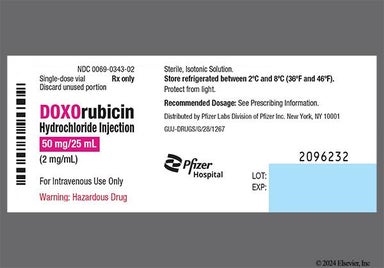
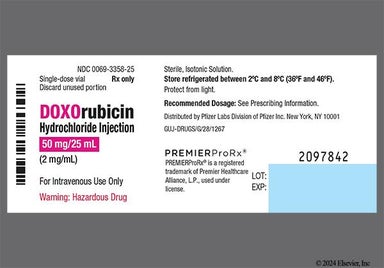
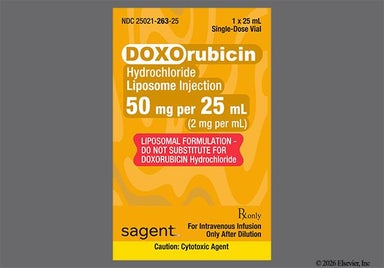
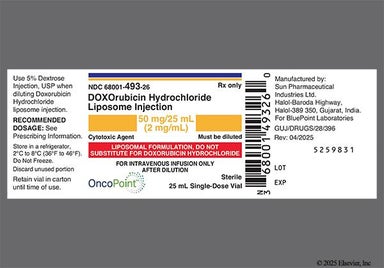
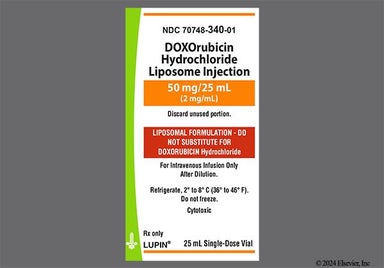
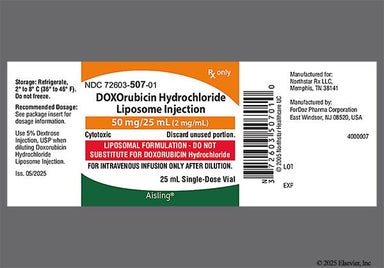
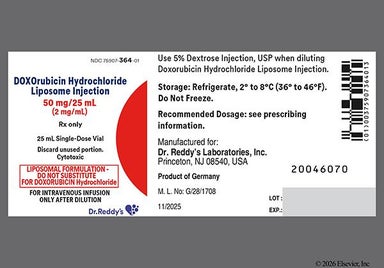
Liposomal doxorubicin (Doxil) images