Key takeaways:
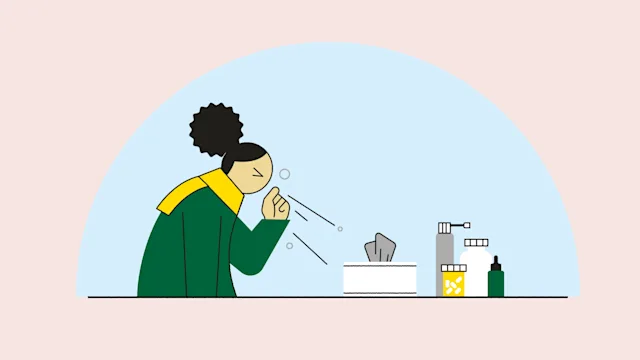
Sinus infections are caused by inflammation or swelling in your sinuses. Common symptoms include facial pain, runny nose, congestion, and headaches.
Sinus infections aren’t contagious, but the underlying virus that leads to the sinus inflammation is contagious to others.
If you have a sinus infection, you can help speed up your healing by taking pain medication, doing a nasal sinus rinse, using a nasal steroid spray, and/or doing a brief course of a decongestant.
If you’ve ever experienced the uncomfortable feeling of a sinus infection (sinusitis), you’re not alone. About 1 in 7 people in the U.S. report having had sinusitis in a typical year.
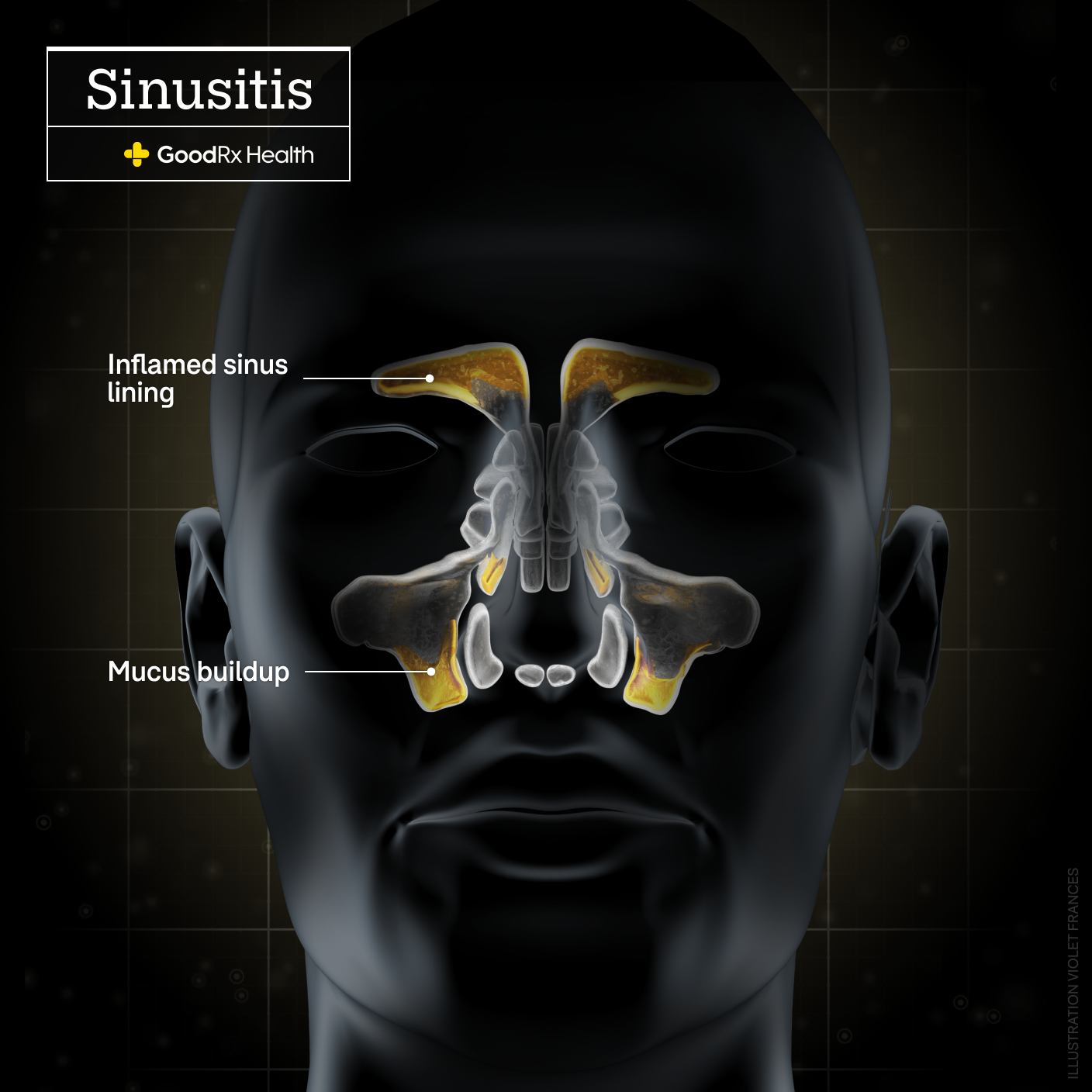
Sinuses are empty spaces, or pockets, behind your cheekbones and forehead. Normally, those pockets are filled with air. But common respiratory viruses can cause them to fill with mucus and become inflamed, leading to sinusitis.
Even though they typically start with a cold or virus, sinus infections aren’t contagious. This means you can’t catch a sinus infection from someone who has one. Read on to find out why — and how to treat or prevent yourself from getting a sinus infection in the first place.
Search and compare options
Is a sinus infection contagious?
No, sinusitis itself isn’t contagious. But the virus that causes it is. That may sound confusing, so let’s review why you can’t catch a sinus infection from another person.
When sinuses get filled with fluid and mucus, the infectious particles are trapped within the sinuses. So, they don’t escape to infect another person. This is true whether your sinusitis is viral or bacterial.
But the upper respiratory virus that causes the sinus inflammation in the first place is contagious. If a person with the virus coughs, sneezes, or is in close physical contact with someone else, they can spread that virus.
What causes sinus infections?
Sinus infections happen when inflammation in your sinuses causes a buildup of fluid (mucus) in those air pockets. There are a few different causes.
Viral sinusitis
Most cases of sinusitis are viral. In fact, it’s estimated that 90% to 98% of sinusitis cases are viral.
Viral sinusitis usually starts out as an upper respiratory infection, or common cold. The virus causes the sinuses to become inflamed. This results in mucus buildup that gets trapped in your sinuses. It’s important to note that not everyone infected with a respiratory virus develops sinusitis.
Bacterial sinusitis
Bacterial sinusitis is much less common than viral or allergic sinusitis. It happens when existing sinusitis starts to grow bacteria. Put another way, bacterial sinusitis is a complication of viral or allergic sinusitis.
Here’s how that works:
An upper respiratory virus or allergies causes sinus inflammation.
The sinuses fill with mucus.
If the sinus mucus doesn’t clear after about 10 days, the sinuses can become infected with bacteria.
Bacterial sinusitis may clear on its own, but sometimes antibiotics are needed to stop it from getting worse.
Allergic sinusitis
Allergies can also cause sinusitis. Allergies to things like pollen or pet dander can trigger an allergic reaction in your body. Just like with a cold, this can lead to inflamed sinuses and congestion.
Allergic sinusitis isn’t an infection, but it can lead to bacterial sinusitis, just like viral sinusitis can. That’s why we’ve included it here as something to be aware of.
How can you tell if a sinus infection is viral or bacterial?
The treatment for viral and bacterial sinusitis is different, so many people wonder if there’s a way to tell one from the other.
Contrary to popular belief, the color of your mucus doesn’t mean much when it comes to figuring out what type of sinusitis you have. Green or yellow mucus doesn’t necessarily mean you need antibiotics. And clear mucus doesn’t necessarily mean you don’t need them.
The main way to tell if your sinusitis is viral or bacterial is by how long you’ve had symptoms:
Viral sinusitis is likely if you’ve been sick for fewer than 10 days and your symptoms aren’t getting worse.
Bacterial sinusitis is more likely if you’ve had symptoms for more than 10 days and they’re not getting better. Another sign of bacterial sinusitis is worsening symptoms after you start to feel better.
How do sinus infections spread?
As mentioned, sinus infections themselves don’t spread. But the virus that leads to sinusitis can spread just like other upper respiratory infection viruses. This means it spreads through airborne droplets from a person with an infection. Another person can then inhale or ingest these droplets. This mostly happens through coughing, sneezing, or touching objects with viral particles on them.
Here are some ways you can minimize the spread of respiratory viruses:
Wash your hands frequently.
Avoid touching your face with your hands.
Don’t drink from cups or bottles that others have used.
Disinfect common shared surfaces, like doorknobs, faucet handles, remote controls, and electronic devices.
Cover your nose and mouth when you sneeze (preferably with a tissue or your elbow).
Avoid close contact with people when you’re sick.
Quiz: Is it a cold or sinus infection?
When is sinusitis contagious?
Sinusitis itself isn’t contagious, but the viruses that lead to most cases of sinusitis can spread.
If you have an upper respiratory virus, you become contagious a few days before your symptoms start and remain contagious until your symptoms resolve. For most upper respiratory viruses, this contagious period lasts about 7 to 10 days.
How long does a sinus infection last?
An acute sinus infection typically lasts around 7 to 14 days. After the first several days, symptoms should start to improve.
What is the best way to get rid of a sinus infection?
Since most sinus infections are viral, the best way to get rid of symptoms is to try home remedies and over-the-counter (OTC) treatments:
Pain relievers: Examples include ibuprofen (Advil, Motrin) and acetaminophen (Tylenol).
Saline irrigation: This involves rinsing your nose with sterile salt water, like with a neti pot.
Nasal steroid sprays: These reduce swelling in your nasal passages. Examples include Flonase (fluticasone) and Nasacort (triamcinolone).
Decongestants: These can be nasal or oral medications. Avoid using nasal decongestants, like oxymetazoline (Afrin), for longer than 3 days. This is because they can lead to a rebound effect, where the symptoms get worse after you stop using the medication.
Will a sinus infection go away on its own?
Most acute sinus infections go away on their own. But sometimes treating the symptoms of viral sinusitis can help you get relief and feel better faster. It’s also important to manage your sinus congestion because this helps lower the odds that your viral infection will turn into a bacterial sinusitis.
If your sinus infection is bacterial, you may need antibiotics to get better. But many cases can be managed with “watchful waiting,” even after a bacterial sinusitis diagnosis, according to guidelines from the American Academy of Otolaryngology, Head and Neck Surgery. This means you wait to see if your symptoms resolve without antibiotics.
Antibiotics are usually recommended when your symptoms get worse or don’t improve within 10 days of the diagnosis. If you think you may have a bacterial sinus infection, contact your doctor’s office to see which treatment plan is best for you.
When sinusitis needs antibiotics
If your sinusitis symptoms last longer than 10 days or suddenly worsen after a period of improvement, you may have bacterial sinusitis. While the watchful waiting approach can be helpful, sometimes antibiotics are necessary to fight off your infection.
Some common antibiotics used to treat sinusitis are:
Amoxicillin (Amoxil) or amoxicillin / clavulanate (Augmentin), both of which are penicillin-containing antibiotics
Doxycycline (Vibramycin, Doryx), which are good for people with a penicillin allergy
It can take 2 to 3 days to feel better once you’ve started antibiotics. Contact your doctor’s office if you don’t feel better or have any sudden worsening while taking antibiotics.
Frequently asked questions
It depends on the cause. Postnasal drip — when excess mucus runs from your sinuses down the back of your throat — can be due to many things. When it’s caused by a viral respiratory infection, it can be contagious. But other causes, like medications or hay fever, aren’t contagious.
Light physical activity, like walking or basic yoga, is fine when you have a sinus infection. But if you have any of the following symptoms, it’s best to limit or avoid exercise:
Fever
Shortness of breath
Chest pressure
Dizziness
Nausea
There are different categories of sinus infections, depending on how long they last:
Acute: less than 4 weeks
Subacute: between 4 and 12 weeks
Chronic: longer than 12 weeks
That said, an acute sinus infection doesn’t have stages.
It depends on the cause. Postnasal drip — when excess mucus runs from your sinuses down the back of your throat — can be due to many things. When it’s caused by a viral respiratory infection, it can be contagious. But other causes, like medications or hay fever, aren’t contagious.
Light physical activity, like walking or basic yoga, is fine when you have a sinus infection. But if you have any of the following symptoms, it’s best to limit or avoid exercise:
Fever
Shortness of breath
Chest pressure
Dizziness
Nausea
There are different categories of sinus infections, depending on how long they last:
Acute: less than 4 weeks
Subacute: between 4 and 12 weeks
Chronic: longer than 12 weeks
That said, an acute sinus infection doesn’t have stages.
The bottom line
Most cases of sinusitis are viral and will improve with OTC treatments. While sinusitis isn’t contagious, the underlying virus that causes your sinuses to become inflamed in the first place is contagious. So, it’s still important to wash your hands and avoid close contact with others when you aren’t feeling well.
If your symptoms aren’t improving after 10 days or they suddenly worsen, you may have bacterial sinusitis. If you think you have bacterial sinusitis, reach out to a healthcare professional for guidance on whether antibiotics are the right choice for you.

Why trust our experts?



References
American Academy of Otolaryngology, Head and Neck Surgery. (n.d.). Patient information on diagnosis of acute sinusitis.
Battisti, A. S., et al. (2023). Sinusitis. StatPearls.
Burgstaller, J. M., et al. (2016). Antibiotic efficacy in patients with a moderate probability of acute rhinosinusitis: a systematic review. European Archives of Oto-Rhino-Laryngology.
Chow, A. W., et al. (2012). IDSA clinical practice guideline for acute bacterial rhinosinusitis in children and adults. Clinical Infectious Diseases.
Fried, M. P. (2023). Sinusitis. Merck Manual Consumer Version.
InformedHealth.org. (2019). In brief: How can you protect yourself from respiratory infections? Institute for Quality and Efficiency in Health Care.
Lemiengre, M. B., et al. (2018). Antibiotics for acute rhinosinusitis in adults. Cochrane Database of Systematic Reviews.
Orlandi, R. R., et al. (2020). International consensus statement on allergy and rhinology: Rhinosinusitis 2021. International Forum of Allergy & Rhinology.
Payne, S. C., et al. (2025). Clinical practice guideline: Adult sinusitis update. Otolaryngology– Head and Neck Surgery.