Key takeaways:
Perimenopause is a period of time around menopause. It’s when your estrogen levels start to fluctuate and drop.
It can last for several years and can cause many of the same symptoms as menopause, like hot flashes, night sweats, and vaginal dryness.
Hormone therapy is the most effective treatment for perimenopausal symptoms, and it’s considered safe for most healthy people in their 40s and 50s. But it’s not recommended for everyone.
Hormonal birth control is another option, especially if you need to treat heavy periods or you want to address both perimenopausal symptoms and contraception.
Many people expect symptoms like hot flashes or mood changes to start after menopause. But they often begin years earlier.
In fact, about half of women experience hot flashes during the transition leading up to menopause, and many notice mood changes like irritability or tearfulness. This phase — called perimenopause — is when hormone levels start to shift, even if you’re still having periods.
Perimenopause can last several years and bring symptoms like irregular bleeding, night sweats, and vaginal dryness.
The good news is you don’t have to wait until menopause (your last-ever period) happens to get relief. Treatments like menopausal hormone therapy (MHT), previously called hormone replacement therapy (HRT), can help manage symptoms during this time.
Here’s what to know about hormone therapy and other options for perimenopause.
What is perimenopause, and why do hormone levels change?
Perimenopause is the transition period leading up to menopause, when hormone levels begin to change. It typically starts in your 40s and lasts about 4 to 7 years, but it can begin earlier.
During this time, the ovaries gradually produce less estrogen. Ovulation becomes less regular, too, leading to changes in your menstrual cycle. But the decline isn’t steady: Hormone levels can fluctuate from month to month. So the changes you notice might seem unpredictable, like skipped periods one month and a heavy period the next. These changing hormone levels also explain why symptoms seem to come and go rather than following a clear pattern.
Perimenopause ends once you’ve gone 12 months without a menstrual period, which marks menopause.
How does hormone therapy work for perimenopause?
Hormone therapy works by replacing reproductive hormones that start to fluctuate and decline during perimenopause. These hormones are estrogen and progesterone. This helps stabilize hormone levels and reduce symptoms like hot flashes, night sweats, and vaginal dryness.
Most people take a combination of estrogen and progestin (progesterone). But some people may take them separately or just take estrogen.
Combination hormone therapy can be taken cyclically or continuously:
Cyclical: You take estrogen daily, but you only take progesterone for part of your cycle. This may be recommended if you still have your period.
Continuous: You take the same dose of hormones every day. This is usually for people who have reached menopause and no longer have their periods.
Forms of hormone therapy
Hormone therapy comes in several forms. There are pros and cons to each form, so it’s important to discuss your options with your primary care provider or gynecologist. Here are some common MHT options:
Combination estrogen and progestin pills: Activella, Angeliq, Femhrt, Prefest, Prempro, Jinteli, Bijuva
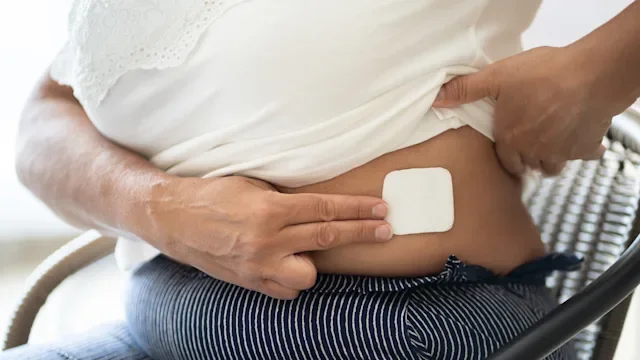
Patches: estrogen-only patches like Climara, Minivelle, Vivelle-Dot; or the combined estrogen and progestin patch Combipatch
Injections: Delestrogen, Depo-Estradiol
Estrogen gels, creams, and sprays: Divigel, Elestrin, EstroGel, Evamist
Estrogen-only vaginal creams, and inserts for vaginal symptoms: Estrace, Premarin vaginal cream (creams), Estring, Femring (rings), Imvexxy, Vagifem, Yuvafem (inserts)
Is hormone therapy effective in treating perimenopausal symptoms?
Yes, hormone therapy can help symptoms in perimenopause. In fact, MHT is still considered the cornerstone of treatment for symptoms like hot flashes and night sweats (called vasomotor symptoms), based on recent international expert recommendations. Research shows it can reduce hot flashes by almost 80% and make them less intense.
MHT can also help with:
Night sweats
Mood changes
Can hormone therapy treat depression in perimenopause?
Perimenopause can increase the risk of depression. Hormone therapy may help some people, but it’s often not enough on its own. You may need an antidepressant, too, says Heidi Flagg, MD, clinical assistant professor of obstetrics and gynecology at NYU Grossman School of Medicine.
Can hormonal birth control help with perimenopause symptoms?
Hormonal birth control pills are another good option for treating perimenopausal symptoms, especially if you’re still having periods and needing contraception. That’s because hormonal birth control does more than just treat symptoms. By suppressing ovulation, it can make hormone levels more predictable.
Birth control pills contain estrogen and progestin and can help with the following:
Reduce heavy bleeding
Improve hot flashes, mood changes, and night sweats
Prevent pregnancy
But hormonal birth control in perimenopause isn’t a slam dunk. There are a few things to consider:
Higher hormone levels: Estrogen levels in birth control pills are higher than in hormone treatment. Because of this, clinicians often recommend transitioning to hormone therapy once you reach menopause.
Breakthrough symptoms: During the hormone-free week in a typical pill pack, symptoms like hot flashes can return.
Risk of blood clots: Birth control pills that contain estrogen carry a small increased risk of blood clots. For most healthy people, this risk is still low. But the risk also increases with age and other health conditions that can be more common as you age.
Still, hormonal birth control is an option worth considering for many women struggling with perimenopause symptoms.
Lower-dose birth control pills (10 mcg to 20 mcg) may be a good option, says Robert Kauffman, MD, professor of obstetrics and gynecology at Texas Tech University School of Medicine in Amarillo, TX. Also, newer birth control pills that contain forms of estrogen closer to the body’s natural hormones may have a lower risk of blood clots. More research is needed though.
The Mirena intrauterine device (IUD) or a birth control patch are also options.
Should you take MHT during perimenopause?
If your symptoms are bothersome or affecting your quality of life, talk to your primary care provider or gynecologist about whether hormone therapy is right for you. Symptoms — like hot flashes — may be very severe in some people and mild in others.
And some people may be less bothered by symptoms of perimenopause than others. Each person experiences this phase of life differently. So, there’s no one-size-fits-all way to treat symptoms.
Experts now emphasize a more individualized approach to hormone therapy. This approach takes into account factors like age, timing, and dose, as well as how the medication is delivered.
MHT is considered the most effective treatment for hot flashes and night sweats. However, there are other non-hormonal medications and alternatives for those who don’t want to take hormones.
Is it safe to take MHT for perimenopause?
You may be reluctant to use hormone therapy. And you’re not alone. Many people worry about the risks. Research published more than 20 years ago influenced a generation of healthcare professionals and women to avoid MHT due to the reported increased risk of heart disease, stroke, and breast cancer.
But that research had major limitations. For one, most of the people in the study were in their 60s and well past menopause. Also, the amount of estrogen in hormone therapy was much higher during the study period than it is now.
Many other studies since then have found that for most healthy people in their 40s and 50s, MHT is relatively safe.
If you take hormone therapy, it’s recommended that you take the lowest effective dose for the shortest time period. This means monitoring your symptoms and checking in with your prescriber. Together, you can decide if and when it’s time to change the dose or the delivery method — or to stop taking hormone therapy if it’s not working for you.
Who should not take hormone therapy for perimenopause?
Some situations mean that you can’t take hormonal therapy safely. Here are some examples:
You’re pregnant, or you may become pregnant.
You have a history of abnormal vaginal bleeding (not related to menstruation).
You have active colon, breast, or endometrial (uterine) cancer.
You’ve recently had a stroke, heart attack, or blood clot.
You have active liver disease.
Quiz: Are you in perimenopause?
Weighing the risks and benefits of MHT for perimenopause
Hormonal therapy can increase the risk of some conditions and complications. For example, there’s some evidence that over the age of 60, hormone therapy can increase your risk for heart disease, stroke, and dementia.
If you’re concerned about the risks of hormonal therapy, your healthcare team can help you weigh the risks and benefits for your own unique situation. They can also recommend the best type of hormonal therapy for you, depending on your individual symptoms and risks.
Potential risk factors
In some people, taking MHT may increase the risk for:
Breast cancer: There’s a link between estrogen therapy and breast cancer. But the increase in risk is very small for women in their 40s and 50s taking hormonal therapy for less than 5 years. Most healthcare professionals don’t recommend hormonal therapy for breast cancer survivors.
Uterine cancer: There’s a link between estrogen therapy and increased endometrial cancer (cancer of the lining of the uterus) in postmenopausal women. But taking progesterone along with estrogen lowers that risk. Women with early-stage endometrial cancer may be able to take some types of hormonal therapy. But it’s not recommended for those with more advanced endometrial cancer.
Blood clots: There’s a link between taking estrogen and an increased risk of blood clots. Lower doses of estrogen pills, patches, and gels don’t increase the risk of blood clots by as much. If you’ve had a blood clot in the past, taking estrogen therapy may not be safe for you.
Strokes and heart attacks: If you’re younger than 60, or it has been less than 10 years since you reached menopause, the risk of MHT causing a stroke or heart attack is probably low. The risk seems to go up if you’re 60 or older, or if you start hormonal therapy more than 10 years after menopause.
And keep in mind: There’s much we still don’t know about hormonal therapy risks. There are significant gaps in the research around different types and formulations of hormonal therapy, as well as among different groups of women. Most of the research to date has been in white, North American and North European women. It’s not clear if this data can be applied to non-white women.
How to choose a hormone therapy plan and what to expect
If you decide to try hormone therapy, your care team can help you choose the right option based on your symptoms and health history.
Together, you’ll decide whether to use estrogen alone or with progesterone, and whether to try a pill, patch, gel, or vaginal product first. Most people start with a low dose and adjust over time in response to their symptoms.
It can help to ask a few questions at your visit, like:
Which option is best for your symptoms?
What risks apply to you?
And how long might you need treatment for?
Some symptoms — like hot flashes and night sweats — may improve within a few weeks. Others can take a few months. Depending on the type of hormone therapy you start, you may notice mild side effects like breast tenderness, bloating, or irregular bleeding. These often improve as your body adjusts. If they don’t, you may want to explore changing the dose or switching to a different type of hormone therapy.
Experts recommend staying on menopause hormone therapy for 3 to 4 years in most cases.
Frequently asked questions
Vaginal dryness is another symptom of perimenopause. As estrogen levels decline, vaginal dryness becomes more common. One study found that in postmenopausal women, nearly half of those who were sexually active reported vaginal dryness.
If vaginal dryness is the only symptom you want to treat, vaginal estrogen may be a good option. The estrogen is applied directly to the vagina, so it doesn’t treat most other symptoms of perimenopause. It does, however, help keep tissue in the urethra moist, which can help prevent urinary tract infections (UTIs).
Vaginal bleeding can be caused by taking any estrogen in forms like:
Pills
Creams
Gels
Patches
Sprays
This is especially true when you first start or change your dose. The issue is more common in perimenopause, in women who still have a uterus, when cycles are already irregular. Low-dose vaginal estrogen is much less likely to cause bleeding, such as vaginal creams, tablets, rings, or inserts.
Any new bleeding after menopause (after having no period for 12 months or more) always needs to be checked out — whether you’re taking estrogen or not.
Not necessarily. Hormone therapy itself isn’t strongly linked to weight gain. But many people do notice weight changes during perimenopause. This is more likely linked to aging and hormonal shifts rather than hormonal therapy. But these things can be hard to tease apart in reality.
Vaginal dryness is another symptom of perimenopause. As estrogen levels decline, vaginal dryness becomes more common. One study found that in postmenopausal women, nearly half of those who were sexually active reported vaginal dryness.
If vaginal dryness is the only symptom you want to treat, vaginal estrogen may be a good option. The estrogen is applied directly to the vagina, so it doesn’t treat most other symptoms of perimenopause. It does, however, help keep tissue in the urethra moist, which can help prevent urinary tract infections (UTIs).
Vaginal bleeding can be caused by taking any estrogen in forms like:
Pills
Creams
Gels
Patches
Sprays
This is especially true when you first start or change your dose. The issue is more common in perimenopause, in women who still have a uterus, when cycles are already irregular. Low-dose vaginal estrogen is much less likely to cause bleeding, such as vaginal creams, tablets, rings, or inserts.
Any new bleeding after menopause (after having no period for 12 months or more) always needs to be checked out — whether you’re taking estrogen or not.
Not necessarily. Hormone therapy itself isn’t strongly linked to weight gain. But many people do notice weight changes during perimenopause. This is more likely linked to aging and hormonal shifts rather than hormonal therapy. But these things can be hard to tease apart in reality.
The bottom line
Symptoms like hot flashes and night sweats can start years before your final period. Menopausal hormone therapy (MHT) for perimenopause is considered the most effective way to treat symptoms if they interfere with your daily life. But taking MHT is a matter of personal choice. And it depends on the specific symptoms you’re looking to treat. Birth control pills may be a better option if you’re still having periods or dealing with heavy bleeding.
A primary care physician or gynecologist can help you understand your options and weigh the risks and benefits for you.

Why trust our experts?



References
American College of Obstetricians and Gynecologists. (2014). Management of menopausal symptoms.
Cagnacci, A., et al. (2019). The controversial history of hormone replacement therapy. Medicina.
Cho, M. K., et al. (2018). Use of combined oral contraceptives in perimenopausal women. Chonnam Medical Journal.
Cichowski, S. B. (2023). UTIs after menopause: Why they’re common and what to do about them. American College of Obstetricians and Gynecologists.
Cintron, D., et al. (2017). Efficacy of menopausal hormone therapy on sleep quality: Systematic review and meta-analysis. Endocrine.
DailyMed. (2024). JINTELI- norethindrone acetate and ethinyl estradiol tablet.
DailyMed. (2025). IMVEXXY- estradiol insert.
Douxfils, J., et al. (2024). Are natural estrogens used in contraception at lower risk of venous thromboembolism than synthetic ones? A systematic literature review and meta-analysis. Frontiers in Endocrinology.
Faubion, S. S., et al. (2022). The 2022 hormone therapy position statement of the North American Menopause Society. Menopause.
MacLennan, A., et al. (2001). Oral oestrogen replacement therapy versus placebo for hot flushes. Cochrane Database System Reviews.
NIH State-of-the-Science Panel. (2005). National Institutes of Health State-of-the-Science Conference statement: Management of menopause-related symptoms. Annals of Internal Medicine.
Silver, N. E. (2023). Mood changes during perimenopause are real. Here’s what to know. American College of Obstetricians and Gynecologists.
Simon, J. A., et al. (2025). State of the art in menopause: Current best practice approaches from the IMS World Congress 2024, Melbourne. Climacteric.
The Menopause Society. (n.d.). Perimenopause.
Waetjen, L. E., et al. (2018). Factors associated with developing vaginal dryness symptoms in women transitioning through menopause: A longitudinal study. Menopause.
Wegrzynowicz, A. K., et al. (2025). Insights into perimenopause: A survey of perceptions, opinions on treatment, and potential approaches. Women (Basel, Switzerland).
Writing Group for the Women's Health Initiative Investigators. (2002). Risks and benefits of estrogen plus progestin in healthy postmenopausal women: Principal results from the Women's Health Initiative Randomized Controlled Trial. JAMA.