Key takeaways:
Certain antidepressants can treat hot flashes caused by menopause. They may be helpful if you’re unable to take menopause hormone therapy (MHT) or if you prefer a nonhormonal option.
Brisdelle (paroxetine mesylate) is the only antidepressant that’s FDA approved for treating hot flashes. Other antidepressants are prescribed off-label for hot flashes. These include Effexor (venlafaxine), Pristiq (desvenlafaxine), and Lexapro (escitalopram).
Antidepressants can also help treat mental health conditions that arise during menopause. But they aren’t effective for vaginal or urinary menopause symptoms. Your healthcare team can help you find the best treatment option for your needs.
Save on related medications
Before menopause, the ovaries make most of a woman’s natural estrogen. During menopause, (usually around age 50), the ovaries gradually stop producing estrogen. This lack of estrogen causes both vaginal and full-body symptoms. Examples include vasomotor symptoms (VMS), such as hot flashes and night sweats. You might also experience mood changes.
Replacing low estrogen usually relieves menopause symptoms. This is known as menopausal hormone therapy (MHT) — formerly referred to as hormone replacement therapy. Though MHT is often a great choice, it's not the right treatment for everyone.
That's where antidepressants come in. Here, we’ll discuss how antidepressants can help ease certain menopause symptoms.
Which antidepressants help treat menopause symptoms?
So far, Brisdelle (paroxetine) is the only antidepressant that’s FDA approved for menopause symptoms. It’s a low-dose version of Paxil, a type of selective serotonin reuptake inhibitor (SSRI). Paxil can also treat depression and other mental health conditions.
Other antidepressants are considered off-label when it comes to menopause symptoms. This means they haven’t been approved for this use. But there’s some evidence that they may help with certain menopause symptoms. More on that next.
What menopause symptoms can antidepressants address?
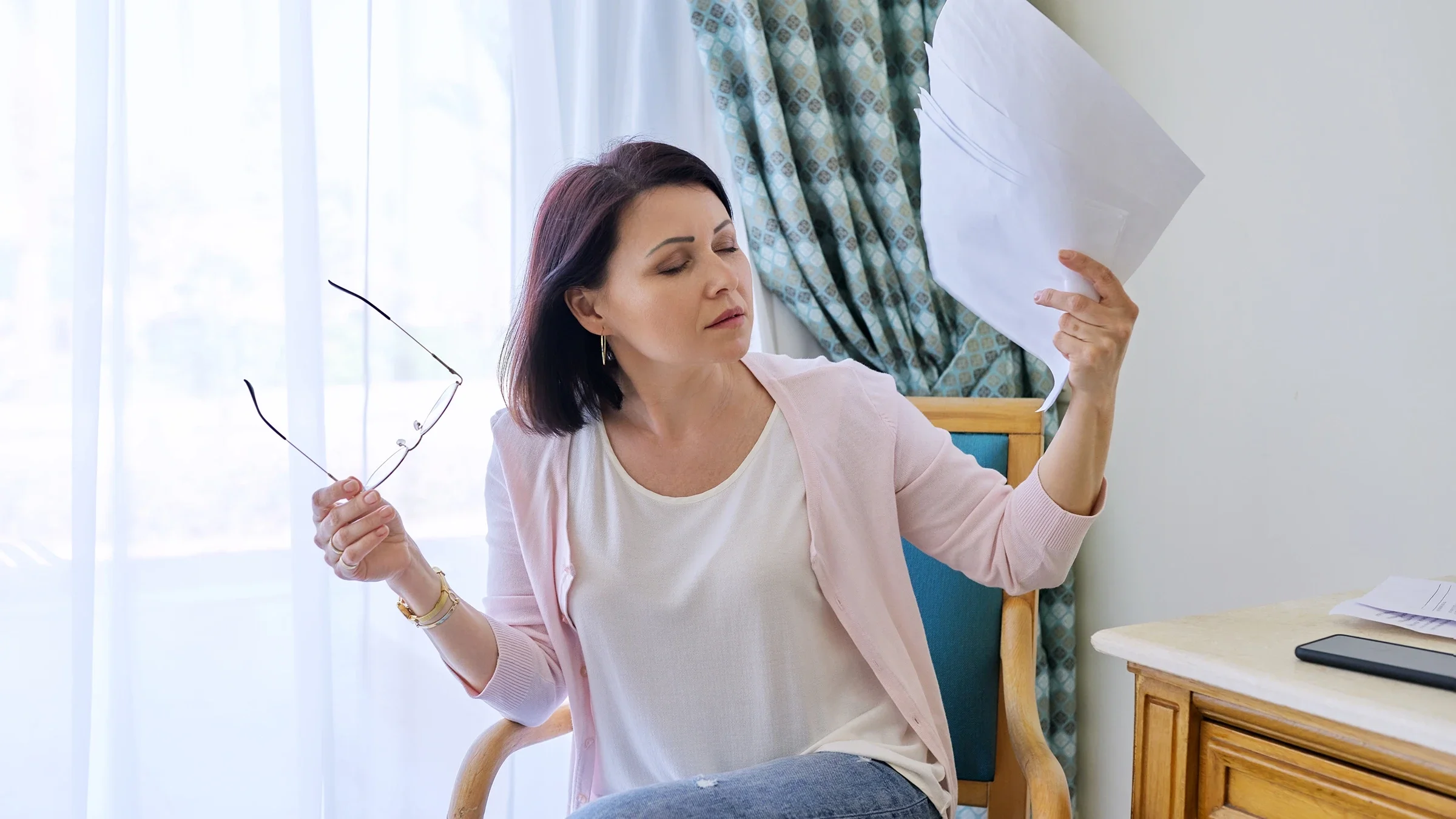
Antidepressants can help treat VMS, including hot flashes and night sweats. They may also help with mood changes that happen during menopause. But antidepressants don't work well for vaginal or urinary menopause symptoms, such as vaginal dryness or a frequent urge to pee.
Let’s take a closer look at how antidepressants can help with certain menopause symptoms.
Hot flashes
We don’t know exactly why hot flashes happen as estrogen levels drop. But it seems that they’re caused by changes to the part of the brain that controls your body temperature, known as the thermoregulatory center.
Think of the thermoregulatory center as our body’s internal thermostat. Chemical messengers, known as neurotransmitters, regulate this part of the brain. Antidepressants can help balance the levels of these chemical messengers. In turn, this can help improve how your brain regulates your body temperature during menopause.
Research shows Brisdelle can improve the frequency and severity of VMS. It also helps prevent you from waking up during the night due to hot flashes. Brisdelle also isn’t linked to weight gain or lowering your sex drive. These are two side effects associated with other SSRIs, including higher doses of paroxetine.
There's also evidence that other antidepressants can help with VMS. These include:
Lexapro (escitalopram)
Celexa (citalopram)
Pristiq (desvenlafaxine)
Effexor (venlafaxine)
Anxiety and depression
Mood changes are common during perimenopause and menopause. For most people, this includes mild symptoms such as irritability and low mood. But some people can also have clinical anxiety or depression. This isn’t common, but it’s more likely if you’ve had these conditions before.
If you're diagnosed with anxiety or depression during menopause, medication can help. SSRIs and serotonin and norepinephrine reuptake inhibitors (SNRIs) are often good first-choice treatment options.
Antidepressants vs. hormone therapy for menopause symptoms
Hormone therapy is generally considered the most effective treatment for menopause symptoms. Unlike antidepressants, hormone therapy can treat more than just VMS. This includes sleep problems, vaginal symptoms, and minor mood changes.
That being said, the available research suggests that MHT and antidepressants are both effective options for VMS.
In one study, oral estradiol and Effexor were found similarly effective at improving VMS.
Another review of three studies compared Lexapro, Effexor XR, and oral estradiol for VMS. These treatments each resulted in similar improvements in the frequency of VMS. The medications were then compared with taking fish oil and exercised-based options, such as yoga and aerobic exercise. In that comparison, the antidepressants all provided more benefits than the other options.
Can antidepressant side effects make menopause symptoms worse?
The side effects of antidepressants may overlap with some menopause symptoms. This can make it seem like your menopause symptoms are getting worse in some cases. Examples include:
Sleep issues
Sexual side effects
Keep in mind that it can take several weeks for antidepressants to start working. Side effects, on the other hand, typically improve over the same time period as your body adjusts to the medication. So it’s best to give antidepressants some time to work.
If your symptoms don’t improve after a few weeks, let your prescriber know. But don’t stop taking an antidepressant on your own — this can lead to unpleasant withdrawal symptoms.
Frequently asked questions
The choice to use hormone therapy during menopause is a personal one: There’s not a right or wrong answer. MHT is considered safe for most people, based on the most up-to-date clinical information. But for some, the risks outweigh the benefits. The key is to discuss your options with a trained healthcare professional. They can help review the risks and benefits of MHT based on your personal history to help you gain a full understanding of your options.
Yes, there are other nonhormonal options available for menopause symptoms. Medication options for VMS of menopause include:
Lifestyle changes and supplements may also help. But make sure to talk to your healthcare team first, to understand what might be safe to try.
It’s hard to say, as the menopause transition is different for everyone. If you’re dealing with bothersome menopause symptoms, talk to your primary care provider or OB-GYN. They can help you understand the wide variety of options available today for managing menopause symptoms. This might include medications, lifestyle changes, and over-the-counter (OTC) supplements.
The choice to use hormone therapy during menopause is a personal one: There’s not a right or wrong answer. MHT is considered safe for most people, based on the most up-to-date clinical information. But for some, the risks outweigh the benefits. The key is to discuss your options with a trained healthcare professional. They can help review the risks and benefits of MHT based on your personal history to help you gain a full understanding of your options.
Yes, there are other nonhormonal options available for menopause symptoms. Medication options for VMS of menopause include:
Lifestyle changes and supplements may also help. But make sure to talk to your healthcare team first, to understand what might be safe to try.
It’s hard to say, as the menopause transition is different for everyone. If you’re dealing with bothersome menopause symptoms, talk to your primary care provider or OB-GYN. They can help you understand the wide variety of options available today for managing menopause symptoms. This might include medications, lifestyle changes, and over-the-counter (OTC) supplements.
The bottom line
Menopausal hormone therapy (MHT) is the best treatment for menopause symptoms in most people. If you’re unable to use MHT, antidepressants may be an option.
Brisdelle (paroxetine) is the only FDA-approved antidepressant for menopause symptoms. It reduces vasomotor symptoms, such as hot flashes and night sweats. But other antidepressants are also prescribed off-label for these symptoms.
Antidepressants can also help manage anxiety or depression-related conditions that arise during menopause. But they won’t help improve vaginal or urinary menopause symptoms. And they aren’t recommended for minor mood changes. Your healthcare team can help you determine the best treatment option for your menopause symptoms.

Why trust our experts?




References
Angelou, K, et al. (2020). The genitourinary syndrome of menopause: An overview of the recent data. Cureus.
Freedman, R. R. (2013). Menopausal hot flashes: Mechanisms, endocrinology, treatment. The Journal of Steroid Biochemistry and Molecular Biology.
Guthrie, K. A., et al. (2015). Pooled analysis of six pharmacologic and nonpharmacologic interventions for vasomotor symptoms. Obstetrics & Gynecology.
Huang, A. J., et al. (2025). Nonhormonal treatment of menopausal vasomotor symptoms. JAMA Internal Medicine.
Joffe, H., et al. (2014). Randomized controlled trial of low-dose estradiol and the SNRI venlafaxine for vasomotor symptoms. JAMA Internal Medicine.
Khan, S. J., et al. (2023). Vasomotor symptoms during menopause: A practical guide on current treatments and future perspectives. International Journal of Women’s Health.
Lee, S. R., et al. (2020). The 2020 menopausal hormone therapy guidelines. Journal of Menopausal Medicine.
Office on Women’s Health. (2025). Menopause basics. U.S. Department of Health and Human Services.
Pinkerton, J. V., et al. (2015). Low-dose paroxetine (7.5 mg) improves sleep in women with vasomotor symptoms associated with menopause. Menopause.
Portman, D. J., et al. (2014). Effects of low-dose paroxetine 7.5 mg on weight and sexual function during treatment of vasomotor symptoms associated with menopause. Menopause.
Sahni, S., et al. (2021). Contemporary non-hormonal therapies for the management of vasomotor symptoms associated with menopause: A literature review. TouchReviews in Endocrinology.
The Menopause Society. (n.d.). Sexual health.