


3 Types of Veozah Interactions to Watch Out For
Veozah can interact with alcohol, caffeine, and other medications. Read on to learn about the most common Veozah interactions.
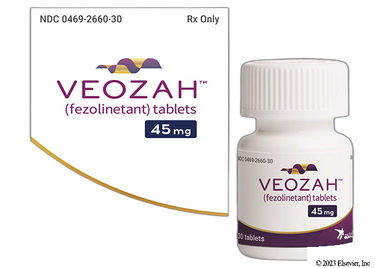
Veozah (fezolinetant) helps treat menopause symptoms like hot flashes and night sweats. It belongs to the drug class called neurokinin 3 (NK3) receptor antagonists. Veozah (fezolinetant) is a hormone-free medication. It's a tablet that's taken by mouth once a day. Side effects can include stomach pain, diarrhea, and trouble sleeping. There's currently no generic version available.

Veozah (fezolinetant) is a neurokinin 3 (NK3) receptor antagonist. It blocks a chemical in the brain called neurokinin B (NKB). This chemical plays a role in regulating body temperature and causing hot flashes.
By blocking NKB, Veozah (fezolinetant) can help lessen hot flashes (when you feel hot and start sweating).
| Common Brands | Veozah |
|---|---|
| Drug Class | Neurokinin 3 receptor antagonist |
| Controlled Substance Classification | Not a controlled medication |
| Generic Status | No lower-cost generic available |
| Availability | Prescription only |

The following side effects may get better over time as your body gets used to the medication. Let your healthcare provider know immediately if you continue to experience these symptoms or if they worsen over time.
Contact your healthcare provider immediately if you experience any of the following.
Side effects that you should report to your care team as soon as possible:
Side effects that usually do not require medical attention (report these to your care team if they continue or are bothersome):




Veozah (fezolinetant) can cause some serious health issues. This risk may be even higher for certain groups. If this worries you, talk to your doctor or pharmacist about other options.
Some people who took Veozah (fezolinetant) had higher liver enzyme levels on their blood test results. This can be a sign of liver irritation or damage. It can happen within 40 days of starting this medication.
Some didn't have noticeable symptoms of liver damage. But others reported feeling unwell, tired, itchy, or nauseous. Some also reported jaundice, pale-colored stools, or dark urine. Signs and symptoms generally went away after stopping Veozah (fezolinetant).
Because of this risk, your prescriber will check your liver with a blood test before you start Veozah (fezolinetant). You'll also need regular blood tests for at least the first 9 months of treatment. This helps check that Veozah (fezolinetant) is safe for you.
Stop taking Veozah (fezolinetant) and get medical help right away if you have signs of liver damage. You might feel tired, itchy, nauseous, or not very hungry. Other signs include vomiting, stomach pain, low appetite, yellow skin or eyes, light-colored stool, and dark urine. The care team can help figure out what's going on.

 Tablet
| Dosage | Quantity | Price as low as | Price per unit |
|---|---|---|---|
| 45mg | 30 tablets | $0.00 | $0.00 |
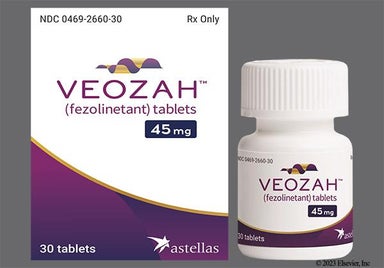
The typical dose is 45 mg by mouth once a day.


Contraindications are specific health conditions or situations in which a person should not take a medication due to safety concerns. If you have any of the following conditions or if any of the following apply to you, let your healthcare provider know because Veozah (fezolinetant) will not be safe for you to take.








Prescription savings
Stop paying too much for your prescriptions. Compare prices, get pharmacy coupons, and save up to 80%. Find expert answers to your health questions so you can make the best decisions for yourself and your family.
Health conditions
Medications & treatment
Access & affordability
Medication discounts


People didn't report gaining weight while taking Veozah during 1-year studies. But changes in weight — often weight gain — is common during menopause. Talk to your prescriber or primary care provider if you notice unexplained weight gain while taking this medication. They can help find ways to manage your weight.
No, Veozah isn't an antidepressant. This means it doesn't help with depression. Instead, it's a medication that helps treat vasomotor symptoms of menopause. This includes hot flashes and night sweats.
You should start seeing some improvement in your hot flash symptoms within 1 week of taking Veozah. But it could take a few weeks or months to see the full effect. Keep track of how often you have hot flashes and how severe they are. Follow up with your prescriber or primary care provider about how you're feeling and how much the medication is helping.
You can take Veozah at any time of the day that works for you. But try to take it at around the same time each day. This helps keep medication levels stable in your body. Also, pay attention to how you feel after taking it. For example, if it makes it hard to sleep, you might want to take it in the morning to see if that helps with your sleep. If you're not sure when to take Veozah, ask your prescriber or pharmacist for help.
Weight loss wasn't reported during studies of Veozah. This medication also hasn't been studied for weight loss. Work with your primary care provider to come up with a plan that best fits you if you need help with losing weight.
Veozah isn't known to cause withdrawal symptoms like some other medications can. But it's still a good idea to talk to your prescriber first before stopping. This helps them understand reasons why you want to stop and how they can best help you.
Ask your healthcare team if it's safe to drink alcohol while taking Veozah. In general, alcohol can have negative effects on your body, including liver damage. Veozah can also affect your liver. So, drinking alcohol might raise your risk of liver damage even more, especially if you drink a lot. In addition, alcohol can make hot flashes worse for some people.
Hair loss isn't listed as a known or common side effect of Veozah. If you're worried about hair loss, talk to your primary care provider. They can help you find out what's causing any hair loss you might have.
