What Is Lyme Disease? Symptoms, Causes, and Treatments
Comprehensive information for you or a loved one — including treatment options and discounts on popular medications.

Lyme disease is an illness spread by ticks. The bacteria Borrelia burgdorferi usually causes it. A bite from an infected tick spreads the bacteria to humans or animals and causes Lyme disease. Lyme disease is the most common tick-borne infection in the U.S.
It’s difficult to know exactly how many people in the U.S. get Lyme disease each year because of how the information is reported. But, according to estimates from the CDC, every year about 476,000 people are diagnosed and treated for Lyme disease in the U.S.
People with Lyme disease can have different symptoms, ranging from mild to severe. The good news is antibiotics can treat Lyme disease. And you can even prevent it from happening by taking steps to avoid tick bites.


Lyme disease happens in nearly every state, but it’s more common in certain parts of the U.S. Most cases occur in Northeastern and mid-Atlantic states as well as in Wisconsin and Minnesota. Lyme disease also happens on the West Coast — in California, Washington, and Oregon.
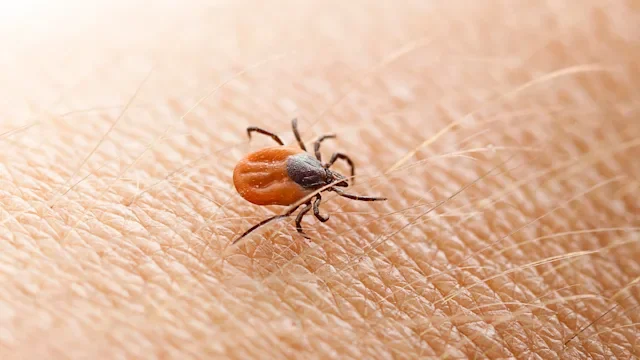
Blacklegged ticks spread Lyme disease. Ixodes pacificus is the type of tick that spreads the disease on the West Coast. In the rest of the country, it’s Ixodes scapularis.
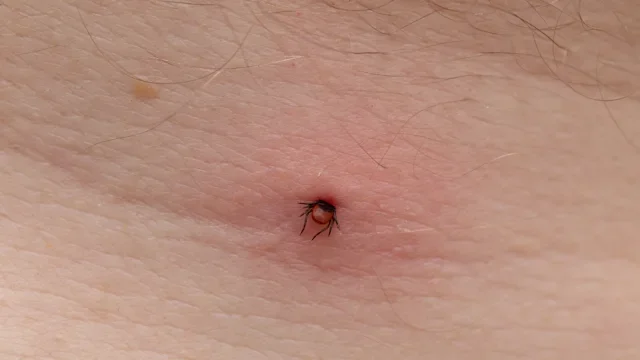
These ticks are very small and dark in color, so it can be hard to see them on your skin. They live in wooded, grassy, or brushy areas. So if you spend time outside — especially during warmer months — you may run into ticks.
Anyone can get Lyme disease if an infected tick bites them. Most cases happen in young children and older adults — but it can happen at any age. The good news is not all ticks are infected, and not all tick bites cause Lyme disease. There are also steps you can take to prevent tick bites when you’re outdoors (more on this below).
There are different stages of Lyme disease based on how advanced the infection is. Each stage has different symptoms, but there can be overlap between stages.
Early localized disease is the first stage of Lyme disease, and it usually starts within 1 month of a tick bite. Symptoms may include:
Fever and chills
Muscle and joint pain
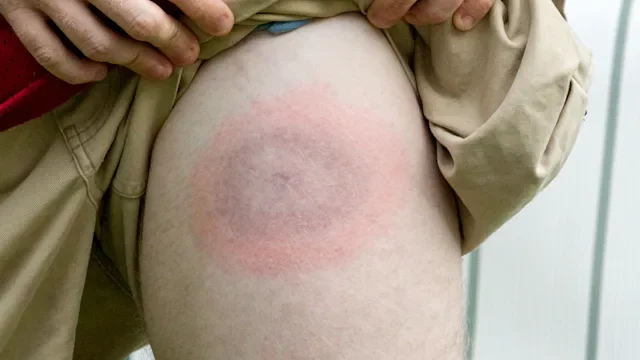
Many people also develop a characteristic skin rash called erythema migrans. The rash often expands over time and looks like a bull’s-eye. Over 70% of people with Lyme disease develop the classic erythema migrans rash.
This stage occurs weeks to months after the tick bite, when the infection spreads beyond the initial bite site. During early disseminated disease, the infection spreads beyond the site of the tick bite and often involves the heart and nervous system. This may lead to:
Inflammation of the heart: Lyme carditis causes racing heart, irregular heartbeat, dizziness, shortness of breath, or fainting.
Meningitis: This can lead to fever, headache, stiff neck, and sensitivity to light.
Bell’s palsy: Bell’s palsy causes sudden weakness or drooping of one side of the face.
Nerve symptoms in the arms or legs: These include numbness, tingling, shooting pain, or weakness.
Late Lyme disease happens months to years after the tick bite. The most common problem in this stage is arthritis that causes joint pain and swelling. Lyme disease can also affect the nervous system in this late stage, leading to problems with concentration, memory, mood, nerve pain, and sleep disturbances.
Early treatment can prevent Lyme disease from progressing. So it’s important to recognize early symptoms of Lyme disease and reach out to a healthcare professional.
Compare prices and information on the most popular Lyme Disease medications.
It’s a good idea to see a healthcare professional if you get a tick bite in a region where Lyme disease is common — especially if you develop symptoms after the bite.
If you have symptoms of early localized Lyme disease, a healthcare professional may diagnose Lyme disease based on your symptoms or the appearance of your rash. They can often start treatment without running any tests.
There’s testing for Lyme disease, but it doesn’t always lead to a clear diagnosis. This is because it involves looking for antibodies in the blood. Antibodies are special molecules your immune system makes to fight an infection. In early-stage Lyme disease, shortly after a tick bite, testing can be negative because the body hasn’t started making antibodies. So it’s too early for the test to detect them.
On the other hand, after you’ve had Lyme disease, you can test positive for antibodies for many years — even after the infection is gone. And because you can get Lyme disease more than once, this makes it hard to tell the difference between a prior infection and a new infection.
Scientists can test ticks to identify the species, but experts don’t recommend testing a tick for Lyme disease. This is because even if the tick is infected, it may not have spread the infection to you.
Prescription antibiotics can treat Lyme disease. Treatment for early-stage Lyme disease uses one of the following antibiotics:
Doxycycline (Monodox)
Amoxicillin (Amoxil)
Another option is azithromycin (Zithromax), but it isn’t a top choice.
These antibiotics come as a pill you take by mouth. Treatment takes 7 to 14 days depending on the medication. The choice of antibiotic (and how long you need to take it) depends on what symptoms and stage of Lyme disease you have. Other considerations include medication allergies, side effects, and cost.
Longer courses of antibiotic treatment are necessary when Lyme disease affects the heart or nervous system, or when it causes arthritis. Treatment with the above antibiotics takes 14 to 28 days in these more advanced cases. Ceftriaxone (Rocephin) is the top choice when someone needs intravenous (IV) treatment for more serious symptoms.
To get Lyme disease, an infected tick must bite you. So the best way to prevent Lyme disease is to prevent tick bites. To do this you need to prevent ticks from getting on your skin. The good news is there are steps you can take if you know you’ll be outside where there are ticks.
Follow these tips to reduce your risk:
Stay on trails and walkways: Avoid walking in tall grass or brush where ticks live.
Wear appropriate clothing: Long sleeves, pants, and closed shoes keep ticks off your skin. Wearing light colors helps you spot ticks more easily.
Use insect repellent: You can treat your clothing with permethrin before outdoor activities. Use the Environmental Protection Agency’s search tool to find the right insect repellent for you.
Do a tick check: After being outside, check yourself, children, and pets for ticks on clothing and skin.
Take a shower: Showering within 2 hours of being outside helps remove unattached ticks from your body.
Wash clothing and equipment: Washing clothing in hot water and/or drying on high heat for at least 10 minutes kills ticks.
If you notice a tick bite on your body, remove it right away using clean, thin tweezers. The longer a tick is attached, the greater the chance of it transmitting Lyme disease (if the tick is infected).
If you live in an area where Lyme disease is common, a healthcare professional might prescribe a one-time dose of the oral antibiotic doxycycline monohydrate (Monodox) to prevent Lyme disease. This depends on how long the tick was attached, when you removed it, if it looked flat or engorged with blood, and what type of tick it was. Talk with a healthcare professional to see if this is right for you.
No, Lyme disease is not contagious. To get Lyme disease, an infected tick must bite you. If you have Lyme disease, you can’t transmit it to another person or animal (or vice versa).
No, Lyme disease is not contagious. To get Lyme disease, an infected tick must bite you. If you have Lyme disease, you can’t transmit it to another person or animal (or vice versa).
Antibiotics can cure Lyme disease, and most people do well after completing treatment. Post-treatment Lyme disease syndrome (PTLDS) can develop when someone has symptoms for more than 6 months after treatment. There’s no known treatment for PTLDS, and its cause is unknown. The good news is people often feel better over time, although it may take many months.
If Lyme disease goes untreated, symptoms can get worse. Diagnosing and treating Lyme disease early prevents progression to later stages. Antibiotics can still treat late-stage Lyme disease, but the symptoms are more serious and recovery may take longer.
With early treatment, Lyme disease symptoms usually start improving within a few days of antibiotics and resolve over a few weeks. If diagnosis or treatment is delayed, symptoms can last for months and may take longer to fully resolve, even with appropriate antibiotics. A small number of people continue to have fatigue, pain, or brain fog after treatment, a condition sometimes called post-treatment Lyme disease syndrome or PTLDS.
Yes, you can get Lyme disease again if you are bit by a different tick. Getting Lyme disease doesn’t lead to lasting immunity, so you can catch Lyme disease again from a different tick bite.
No. Lyme disease isn’t an autoimmune disease. It’s a bacterial infection caused by Borrelia burgdorferi, transmitted through the bite of an infected tick. However, in some people, Lyme disease can trigger immune system changes that lead to lingering symptoms — such as fatigue, joint pain, or cognitive issues — even after the infection has been treated.
Aubrey, A. (2018). To repel ticks, try spraying your clothes with a pesticide that mimics mums. NPR.
Centers for Disease Control and Prevention. (2025). Chronic symptoms and Lyme disease.

Prescription savings
Stop paying too much for your prescriptions. Compare prices, get pharmacy coupons, and save up to 80%. Find expert answers to your health questions so you can make the best decisions for yourself and your family.
Health conditions
Medications & treatment
Access & affordability
Medication discounts