Key takeaways:
You can live with herpes for decades and not know you have it. That’s because most people with herpes never develop symptoms.
You can pass the herpes virus to other people even if you don’t have any symptoms.
There’s no cure for herpes. But medications can keep you from having outbreaks and lower the chance of passing the virus to others.
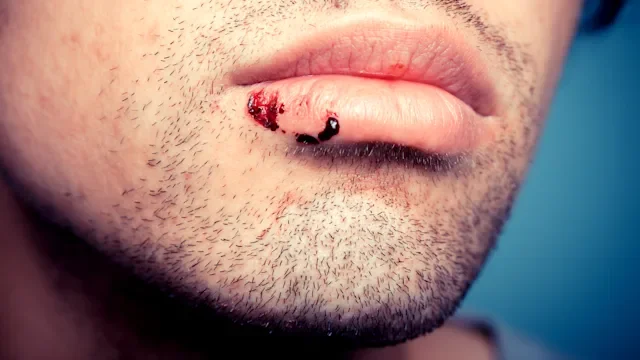
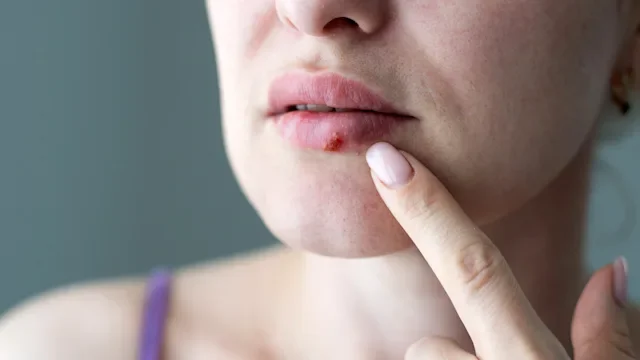
The herpes simplex virus (HSV) is a virus that’s responsible for oral and genital herpes outbreaks. Both HSV-1 and HSV-2 can cause painful sores or blisters to develop in and around the mouth and genitals, including the penis, vagina, and anus.
People usually find out they have herpes because they develop these painful sores and blisters. But sometimes the herpes virus doesn’t cause any symptoms. People with an asymptomatic herpes infection can go years or even decades without knowing they have herpes. Here’s how long you can have herpes without knowing it and what it means for your health.
Can you have herpes without knowing it?
Yes, you can have herpes and not know it. This is called an asymptomatic herpes infection.
Search and compare options
In fact, up to 90% of people with herpes don’t know they have it. Most people with herpes don’t experience any symptoms. The virus lives inside their bodies, hiding inside nerve cells where the immune system can’t find it. The virus doesn’t cause any harm to their health. It doesn’t trigger symptoms either.
That’s why statistics about herpes can often come as a surprise. For example, experts estimate that 2 in 3 adults have HSV-1. About 1 in 6 adults in the U.S. has HSV-2. That’s billions of people. The majority of them never develop any symptoms and never know they have herpes.
There are blood tests that can help diagnose herpes. But they aren’t always reliable. That’s part of the reason why herpes testing isn’t recommended unless someone has symptoms.
How long can you have herpes without knowing it?
The herpes virus can be dormant for decades.
You carry the herpes virus for years and never develop symptoms. The truth is, most people live their entire lives without knowing they have herpes because they never have any symptoms.
Some people aren’t as fortunate and develop symptoms — or outbreaks — several times a year. But most people only experience outbreaks once in a while. Herpes outbreaks naturally happen less often over time, and it’s not uncommon for years to pass between outbreaks.
Certain things can trigger HSV outbreaks, like stress, illness, and injuries. But that’s not enough to explain why some people develop symptoms while others don’t. Researchers are trying to pinpoint the reasons why some people stay free of symptoms. Teasing out these reasons may help researchers develop new treatments and even a cure for herpes.
Can you pass herpes to others if you don’t have symptoms?
Yes. It’s possible to pass the herpes virus to another person when you don’t have symptoms, like sores or blisters.
This is called asymptomatic shedding. During asymptomatic shedding, the virus copies itself, and the copies are able to leave the body and pass to another person.
People with HSV aren’t constantly shedding the virus. But researchers aren’t sure how often this happens. Shedding patterns may be different for HSV-1 and HSV-2. Research shows people may shed more virus immediately after having an outbreak. But it’s not clear if some people shed more virus than others, or if some people shed for a longer period of time than others.
It’s likely that people who never have herpes symptoms (asymptomatic infection) also shed the virus from time to time. But it’s not clear how often this happens.
Is herpes curable?
There’s no cure for herpes. But prescription antiviral medications can lower your chances of experiencing a herpes outbreak. Some people totally stop having outbreaks completely once they start taking medication.
Antiviral medication also lowers the risk of asymptomatic shedding. So taking antiviral medications also lowers the chance of passing herpes to other people.
Antiviral medications for herpes include:
Acyclovir (Zovirax)
Famciclovir (Famvir)
Valacyclovir (Valtrex)
These medications are taken by mouth once or twice a day to stop herpes outbreaks.
What happens if herpes is left untreated for years?
Untreated herpes can impact your health. Without antiviral treatment, you’re more likely to:
Have herpes outbreaks more often
Remain contagious for longer periods of time, making it more likely that you’ll pass the virus to others.
Pain and discomfort from frequent herpes outbreaks can make it harder to go to work or school or to complete activities. Frequent outbreaks can also impact your social relationships. These things take a toll on your emotional and mental health.
You may also be at higher risk for developing serious health complications if you have more frequent outbreaks. The HSV virus can pass into your brain or eyes, causing serious infections. These complications are very rare, but treatment may offer an extra layer of protection.
People with weakened immune systems are at higher risk for serious complications from untreated HSV infections. Without antiviral treatment, people with weakened immune systems can develop:
Blisters that don’t heal
Longer outbreaks
More frequent outbreaks
Herpes infections in many organs — like the lungs and liver — which can be life-threatening
Herpes infections in the brain or eye
Antiviral treatment offers protection against these serious health complications for people with weakened immune systems.
Frequently asked questions
It’s unlikely that someone would be born with herpes and not know it. Congenital herpes develops when the herpes virus passes through the placenta to an unborn baby. Congenital herpes is a serious illness that causes many symptoms, including birth defects, eye infections, and skin changes. It would be very rare for someone to be born with congenital herpes and not have at least one symptom.
Herpes flares can be triggered by:
Sunlight (UV rays)
Trauma (injury or surgery)
Fever
Illness
Stress
Researchers have been able to show how each of these things cause changes in your cells that make it easier for the herpes virus to “wake up” (reactivate). But some people experience flares even without any of these triggers. Researchers are still working to understand if other things can also trigger herpes flares.
It’s unlikely that someone would be born with herpes and not know it. Congenital herpes develops when the herpes virus passes through the placenta to an unborn baby. Congenital herpes is a serious illness that causes many symptoms, including birth defects, eye infections, and skin changes. It would be very rare for someone to be born with congenital herpes and not have at least one symptom.
Herpes flares can be triggered by:
Sunlight (UV rays)
Trauma (injury or surgery)
Fever
Illness
Stress
Researchers have been able to show how each of these things cause changes in your cells that make it easier for the herpes virus to “wake up” (reactivate). But some people experience flares even without any of these triggers. Researchers are still working to understand if other things can also trigger herpes flares.
The bottom line
Many people living with herpes never develop any symptoms. This is called an asymptomatic infection. It’s possible to have herpes for decades and not know it. Some people never develop symptoms and never find out they have herpes. These people may be able to pass the virus to others. But it’s not clear how often this happens.
For people who do develop outbreaks, daily antiviral medication can prevent future outbreaks. It can also lower the chances of passing herpes to someone else.

Why trust our experts?



References
Centers for Disease Control and Prevention. (2022). Sexually transmitted infections treatment guidelines, 2021: Genital herpes.
Centers for Disease Control and Prevention. (2024). About genital herpes.
El Sahly, H. M. (2022). Patterns of viral shedding after first-time genital HSV-1 infection. New England Journal of Medicine Journal Watch.
Fa, F., et al. (2020). Fetal and neonatal abnormalities due to congenital herpes simplex virus infection: A literature review. Prenatal Diagnosis.
Fernandes, N., D., et al. (2024). Congenital herpes simplex. StatPearls.
Gnann, J., et al. (2016). Genital Herpes. New England Journal of Medicine.
Kirchner, J. (2000). Herpes simplex virus type 2 in asymptomatic persons. American Family Physician.
Mertz, G. J. (2008). Asymptomatic shedding of herpes simplex virus 1 and 2: Implications for prevention of transmission. The Journal of Infectious Diseases.
Miller, C. S., et al. (2008). Asymptomatic shedding of herpes simplex virus (HSV) in the oral cavity. Oral Surgery, Oral Medicine, Oral Pathology, Oral Radiology, and Endodontology.
National Institutes of Health. (2010). Herpes in hiding.
National Institutes of Health. (2023). Strategic plan for herpes simplex virus research. U.S. Department of Health and Human Services.
National Institutes of Health, et al. (2026). Guidelines for the prevention and treatment of opportunistic infections in adults and adolescents with HIV.
Planned Parenthood. (2013). STD awareness: Asymptomatic shedding of herpes.
Plunkett, M., et al. (2024). Genital herpes: Rapid evidence review. American Family Physician.
Tuddenham, S., et al. (2022). Diagnosis and treatment of sexually transmitted infections a review. JAMA.
U.S. Preventive Services. (2023). Genital herpes infection: Serologic screening.
Whitley, R. J., et al. (2022). Shedding patterns of genital herpes simplex virus infections. Journal of the American Medical Association.
World Health Organization. (2025). Herpes simplex virus.
Zhu, S., et al. (2021). Pathogenesis and virulence of herpes simplex virus. Virulence.