Key takeaways:
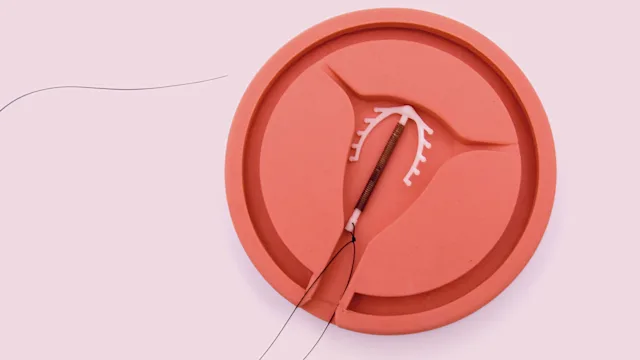
Placing an intrauterine device (IUD) happens in a healthcare setting. A healthcare professional inserts a speculum into the vagina and then passes the IUD through a small tube into the uterus.
The IUD stays inside the uterus and doesn’t need to be removed for 3 to 10 years, depending on the brand. Most people can’t feel the IUD once it’s inserted.
IUD insertion is uncomfortable, but it only takes a few minutes. Many people experience cramping afterward.
Save on related medications
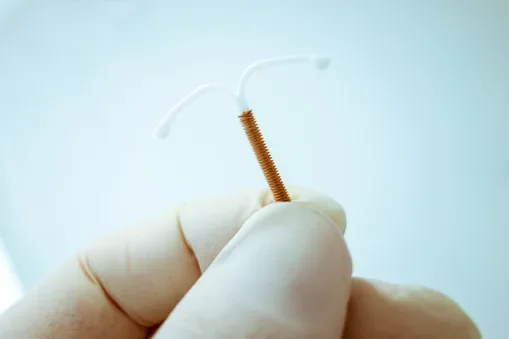
Have you ever considered getting an intrauterine device (IUD), but you worry about what the IUD insertion involves? An IUD is a T-shaped device that’s inserted into the uterus and stays there. It’s a great option if you don’t want to remember to take birth control every day.
IUDs are a popular form of birth control. They provide long-lasting contraception for between 3 and 10 years, depending on the brand. And they’re more than 99% effective at preventing pregnancy. You can learn about the IUD options here.
While IUDs are an effective, long-acting form of birth control, the insertion process can make some people hesitant to give them a try. IUD placement can be painful, but it’s also relatively brief, lasting only a few minutes. Here’s what you need to know.
Search and compare options
How to prepare for IUD insertion
If you’ve decided to get an IUD, there are several things you can do to prepare. Here are some tips to help everything go smoothly.
Avoid unprotected sex before your IUD insertion
Avoid unprotected sex for the 2 weeks before your IUD insertion. That way, there’s no chance of an unplanned pregnancy. Otherwise, your IUD insertion may need to be rescheduled.
Take the day off
While not necessary, consider scheduling your IUD insertion on a day off or at the end of your workday. This gives you time to rest at home after the insertion. You may not feel well enough to go back to work or school right afterward.
Get a ride
Another thing to consider is getting a ride to and from your appointment, in case you feel unwell afterward. Some people feel dizzy or faint after an IUD insertion. This is a normal response to a painful experience. But it can also impact your ability to drive.
It’s impossible to know how your body will react to an IUD placement. So it’s best to be prepared and secure a ride home if possible.
Gather supplies
It’s a good idea to gather everything you might need after IUD insertion before the appointment. Some suggestions include:
Pads or panty liners
Heating pad
Over-the-counter (OTC) pain relievers
Water and snacks
Have a snack and hydrate
Have a small snack, such as peanut butter and crackers, before your IUD insertion. And make sure you’re well hydrated. This can lessen the risk of feeling dizzy or faint after your IUD insertion.
Know your pain relief options
There are a few ways to manage pain and discomfort from an IUD insertion. Before the procedure, talk with your healthcare team about these options:
OTC pain relievers: You can take ibuprofen (Advil, Motrin) or acetaminophen (Tylenol) 1 hour before your appointment. This may help with pain during the procedure, but it can also help with pain and cramping after IUD insertion.
Local anesthesia (numbing medication): Studies find that lidocaine helps with pain during IUD insertion. This can be applied to the cervix via spray or gel, and it can also be injected for local pain relief.
Misoprostol: In rare cases, the medication misoprostol (Cytotec) may be an option. It helps open the cervix to make insertion easier, for those who’ve had difficult insertions before. But it can cause abdominal pain, diarrhea, and increased risk of IUD expulsion. So it’s not recommended for everyone.
How is an IUD inserted?
Getting an IUD for the first time may feel daunting, so it can help to know what to expect during the appointment. Here’s a breakdown of the general steps of IUD placement:
Pregnancy test. When you arrive, be ready to give a urine sample for a pregnancy test. You won’t be able to get an IUD if you’re pregnant.
Changing into a gown. After that, someone will take you to an exam room and ask you to undress from the waist down. You can cover up with a sheet or gown.
Getting into the right position. When the healthcare professional comes into your room, you’ll get on the exam table and slide forward so that your bottom is on the edge of the table. You’ll place your feet into stirrups on either side of the table. This is the same position you use for a pelvic exam.
Speculum insertion. The healthcare professional will then insert a speculum into the vagina. This part is very similar to a pelvic exam. A speculum is a metal or plastic device that’s shaped like a duck’s bill. It slides in closed, and then it opens slightly to open up the vagina so the healthcare professional can see the cervix (the opening of the uterus). This feels like pressure in the vagina, but it doesn’t cause pain for most people.
IUD placement. The speculum stays open while the healthcare professional places the IUD through the cervix into the uterus using a tube. Be prepared to feel pressure, discomfort, and/or pain while this happens. You may also feel cramps throughout the whole process.
String trimming. After they place the IUD in your uterus, the healthcare professional will trim the strings that extend from the IUD to 2 cm to 3 cm in your vaginal canal.
Additional steps. Some people need pressure applied to their cervix at the end to stop any bleeding that can occur. Bleeding is a normal reaction to irritation of the cervix during IUD insertion. It’s a good idea to make sure you have pads for spotting afterward.
Recovery. The healthcare professional will remove the speculum. At that time, you can sit up or keep lying down if you need to.
Where does an IUD go?
The IUD sits in the uterus. The uterus, sometimes called the womb, is an organ inside the pelvis.
Each month, the uterus builds a lining in preparation to receive a fertilized egg. IUDs generally work by preventing sperm from reaching and fertilizing an egg. If a fertilized egg attaches to the inside of the uterus lining, it can grow into a fetus. If a fertilized egg doesn’t attach, the uterus sheds its lining. This is menstruation (a period).
How long does IUD insertion take?
An IUD insertion takes about 5 minutes. But some IUD placements take less time while others can take more time. It depends on a couple of factors.
First, everyone’s anatomy is a little bit different. Some people have a tilted (retroverted) cervix. This is completely normal, but it can make it more difficult to position the IUD in place. That means the insertion can take a little longer.
Second, IUD insertion gets easier with practice. Some healthcare professionals and advanced practitioners place many IUDs, and so they can do the procedure more quickly. Experience also makes it easier for them to navigate differences in anatomy. You can ask your healthcare team or advanced practitioner about their experience with IUD placements. They may even be able to give you a good estimate of how long it takes them to place an IUD.
Does it hurt to get an IUD inserted?
Yes. It’s normal to feel some pain with an IUD insertion. Everyone is different, so people feel a range of sensations. Some people only experience mild discomfort or nausea and dizziness. But others experience severe cramping during the insertion, which tends to go away quickly. But for some, this may last hours to days afterward.
One study found that about half of women reported moderate-to-intense pain during IUD insertion. Again, pain tolerance is different for everyone. The pain may be more tolerable if you’ve previously had a vaginal delivery. This is because the cervix is already slightly open as a result of childbirth.
That said, it helps to talk about pain control with your healthcare professional before IUD insertion. They can let you know what your options are and answer any questions you have. Only you can decide whether the benefits of an IUD placement outweigh the risks.
What to expect after an IUD insertion
Here’s what you can expect after your IUD is in place.
Side effects after IUD insertion
Most people feel cramps during and right after an IUD insertion. Some people may even feel a little dizzy. Lying down after the insertion is over can help the body recover.
Here are some commonly reported side effects after IUD insertion:
Cramping
Blood spotting
Nausea
Vomiting
Dizziness
Fainting (this is rare)
Managing anxiety and pain after IUD insertion
Cramping and spotting can last for a few minutes to a few weeks after an IUD is placed. To ease your discomfort, try the following:
Use a heating pad on the lower belly for 20 minutes at a time.
Take OTC pain relievers, such as acetaminophen and ibuprofen, to help with the cramps. Be sure to take them with food to prevent stomach upset.
Try taking your mind off your symptoms by watching a movie or calling a friend. It might seem simple, but distraction can help.
Consider breathing exercises or meditation if you’re feeling anxious.
The good news is that the symptoms gradually lighten and improve with time.
Risks to watch out for after IUD insertion
Complications are rare but possible after IUD insertion. They include:
Infection: There’s a risk of less than 0.5% for infection after IUD insertion. It could cause severe pain, fever, and abnormal discharge.
Uterine perforation: This is when the IUD pierces the wall of the uterus. Studies suggest this happens in less than 1% of people in a 5-year period. It can cause severe pain and bleeding.
Expulsion: This is when the IUD moves out of the uterus. This could also cause pain, but it’s also possible to not feel it. The risk of expulsion is higher (around 4.5%) than the risk of perforation. It’s also more likely if the IUD is inserted in the days after childbirth.
If you have severe abdominal pain, pelvic pain, or heavy bleeding in the days after your IUD insertion, contact your healthcare team. It’s also a good idea to check if you can feel the IUD strings to see if it may have moved.
Checking for proper IUD placement
The IUD has two strings attached to its base. You won’t feel them there, but the healthcare professional will probably recommend checking for your strings from time to time.
You can do this by inserting one or two fingers into your vagina until you feel your cervix. It can help to put one knee on a toilet. When an IUD is in the right place, you can feel the strings at the bottom of your cervix when you place two fingers in your vaginal canal.
If you can’t feel your strings, you should ask the healthcare professional to check for them with a speculum exam. If they can’t see your strings on an exam, the next step is an ultrasound scan to confirm whether the IUD is in the correct location.
How long does it take for an IUD to work?
Once your IUD is in, it’s important to know how soon it’s effective. This depends on the type of IUD you get.
Your IUD is effective immediately in these cases:
You get a copper IUD inserted.
You get a hormonal IUD inserted while on your period.
You get a hormonal IUD inserted and you’ve been taking another form of hormonal birth control up until the day of your IUD insertion.
Your hormonal IUD isn’t effective immediately and you’ll have to use backup birth control for 7 days after insertion in these instances:
You’re not on your period when you get the IUD.
You’re not taking another form of hormonal birth control when you get the IUD.
How does an IUD affect your period?
You might notice that your period changes after getting an IUD. How it changes depends on the type of IUD.
First, it can be normal to have some spotting after an IUD insertion. This can last days, or it could come and go for up to 6 months.
With a hormonal IUD, many people notice that their periods become lighter over time. The timing may also become a little more erratic for some. You may even completely stop getting a period. In clinical trials, up to 37% of people with the Mirena IUD or Liletta reported no bleeding by year 3. That’s compared with 20% with Kyleena and 12% with Skyla.
The nonhormonal copper IUD might have the opposite effect. It can make your period heavier or last longer. And it may cause more cramping. Again, these side effects are worse in the first few months after IUD insertion, and they ease over time. Still, about 2% of people have the copper IUD taken out in the first year due to side effects.
Frequently asked questions
If you’re feeling lightheaded or dizzy after IUD insertion, don’t drive or do strenuous physical activity. Otherwise, let your body be your guide to what you can or can’t do. Some clinics recommend avoiding tampons or baths for the first 24 hours after IUD insertion. Be sure to follow your healthcare team’s instructions for aftercare.
It’s safe to have sex anytime after IUD placement, but you might not feel ready for it. If you have sex after IUD insertion and it hurts, let your healthcare team know.
In terms of when the IUD starts working as contraception, it depends on the type of IUD and timing of placement (as above). Know that IUDs don’t protect against sexually transmitted infections (STIs).
You can exercise after IUD insertion when you feel up to it — after any cramping or lightheadedness goes away. This can be different for everyone, so listen to your body. It’s a good idea to ease back into exercise gradually.
If you’re feeling lightheaded or dizzy after IUD insertion, don’t drive or do strenuous physical activity. Otherwise, let your body be your guide to what you can or can’t do. Some clinics recommend avoiding tampons or baths for the first 24 hours after IUD insertion. Be sure to follow your healthcare team’s instructions for aftercare.
It’s safe to have sex anytime after IUD placement, but you might not feel ready for it. If you have sex after IUD insertion and it hurts, let your healthcare team know.
In terms of when the IUD starts working as contraception, it depends on the type of IUD and timing of placement (as above). Know that IUDs don’t protect against sexually transmitted infections (STIs).
You can exercise after IUD insertion when you feel up to it — after any cramping or lightheadedness goes away. This can be different for everyone, so listen to your body. It’s a good idea to ease back into exercise gradually.
The bottom line
IUDs are a convenient, long-acting form of birth control. Most IUD insertions are at least a bit painful, but the discomfort doesn’t last long. Ibuprofen, acetaminophen, and heat can decrease the cramping after an IUD insertion. You can also speak with a healthcare professional about local anesthetic to numb the cervix.
For many, the discomfort of the procedure is worth it. IUDs can stay in place and protect against unplanned pregnancies for between 3 and 10 years, depending on the brand. Hormonal IUDs can also have beneficial effects on your period. But only you can decide if the benefits outweigh the risks.

Why trust our experts?




References
American College of Obstetricians and Gynecologists. (2017). Long-acting reversible contraception: Implants and intrauterine devices.
American College of Obstetricians and Gynecologists. (2025). Pain management for in-office uterine and cervical procedures. ACOG Clinical Consensus No. 9. Obstetrics & Gynecology.
Baker, C. C. , et al. (2022). Long-acting reversible contraception. American College of Obstetricians and Gynecologists.
Brima, N., et al. (2015). A comparison of the expected and actual pain experienced by women during insertion of an intrauterine contraceptive device. Open Access Journal of Contraception.
Curtis, K. M., et al. (2024). U.S. selected practice recommendations for contraceptive use, 2024. Morbidity and Mortality Weekly Report (MMWR).
Fassett, M. J., et al. (2023). Risks of uterine perforation and expulsion associated with intrauterine devices. Obstetrics and Gynecology.
Lopes-Garcia, E. A., et al. (2023). Assessment of pain and ease of intrauterine device placement according to type of device, parity, and mode of delivery. European Journal of Contraception and Reproductive Health Care.
MedlinePlus. (2025). Uterus.