Key takeaways:
Past public health reports have highlighted the dangers of counterfeit or mishandled Botox (onabotulinumtoxinA) injections. Counterfeit Botox can lead to harmful reactions and even hospitalization.
Your risk of harmful reactions is higher if you get injections in a non-healthcare setting or from someone who is not trained. You should also make sure the person administering your injections can verify the product they’re using comes from an authorized source.
Before getting Botox, ask the person injecting it if they are licensed and trained, and whether the product came from a legitimate supplier.
If you think you received fake Botox, contact a healthcare professional right away and report it to the FDA.
Save on related medications
In April 2024, the FDA raised the alarm after counterfeit versions of Botox Cosmetic and Botox (onabotulinumtoxinA) were identified in several U.S. states. In some cases, people developed serious health problems after receiving injections of fake Botox, and several required hospitalization. In addition to highlighting the dangers of counterfeit products, this underscored how important it is to receive Botox from a trusted source.
Whether you receive Botox for a health condition or Botox Cosmetic for facial wrinkles, there are steps you can take to help ensure your safety. Here’s what to ask your healthcare professional before treatment, how to spot counterfeit Botox, and what to do if you think you’ve received a fake product.
Keep in mind: In this article, we refer to Botox Cosmetic and Botox as just “Botox” in most cases.
How can you tell real Botox from fake or counterfeit Botox?
Counterfeit Botox and real, FDA-approved Botox can be hard to tell apart. But there are a few notable signs that may indicate you’re receiving (or administering, if you’re a healthcare professional) a counterfeit Botox product. We’ll go over these signs below, but if you’re ever in doubt, you can contact Botox’s manufacturer at 1-800-832-1925.
Signs of real Botox
There are a few ways to tell that a Botox product is real. And most of them involve looking at the label.
Since Botox is given as an injection into a muscle, or an intramuscular injection, it's only meant to be administered by a healthcare professional. So you may not always have the chance to see a product’s label. But you can ask your healthcare professional to check for signs that confirm the product is real Botox. These signs include:
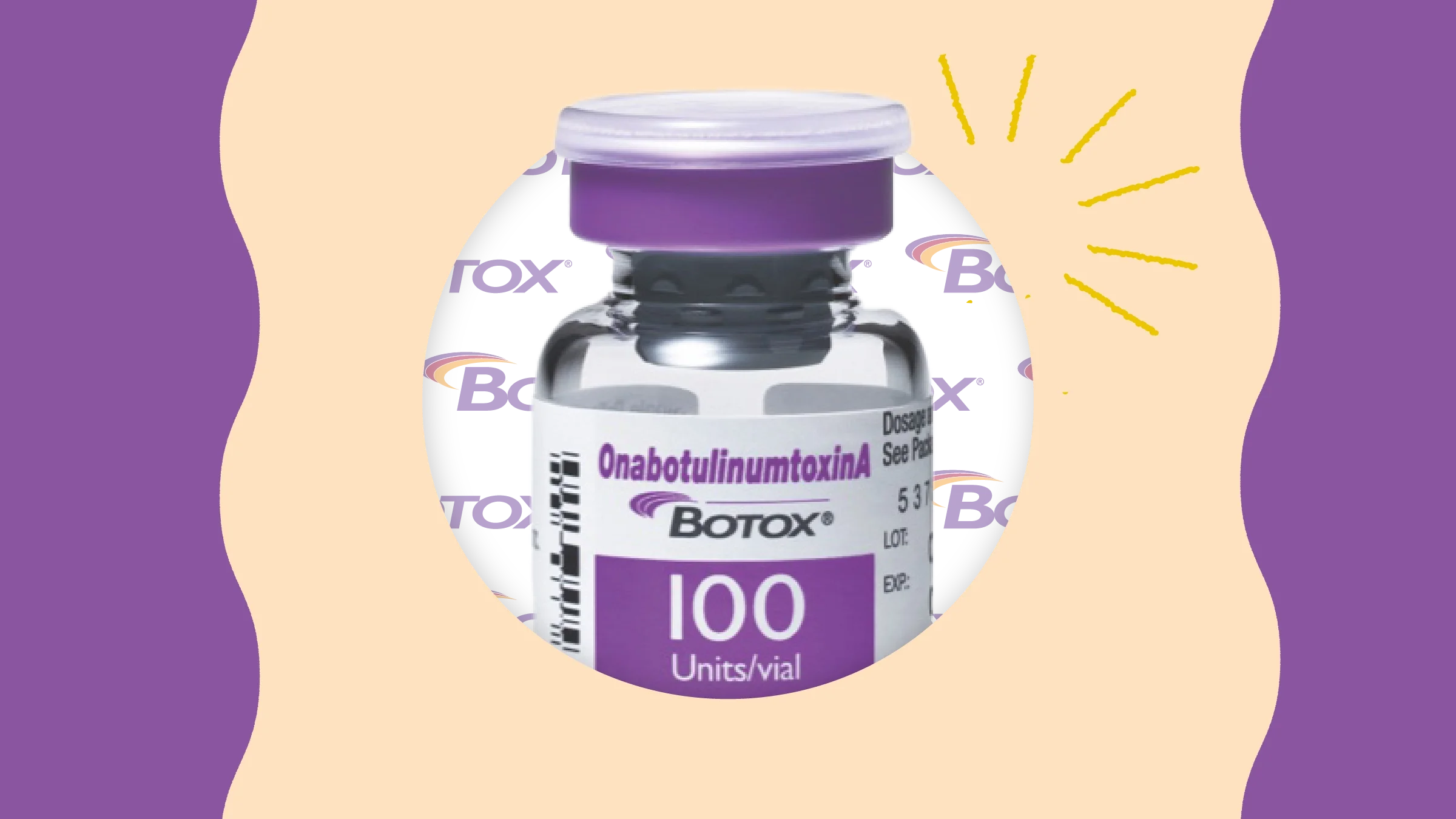
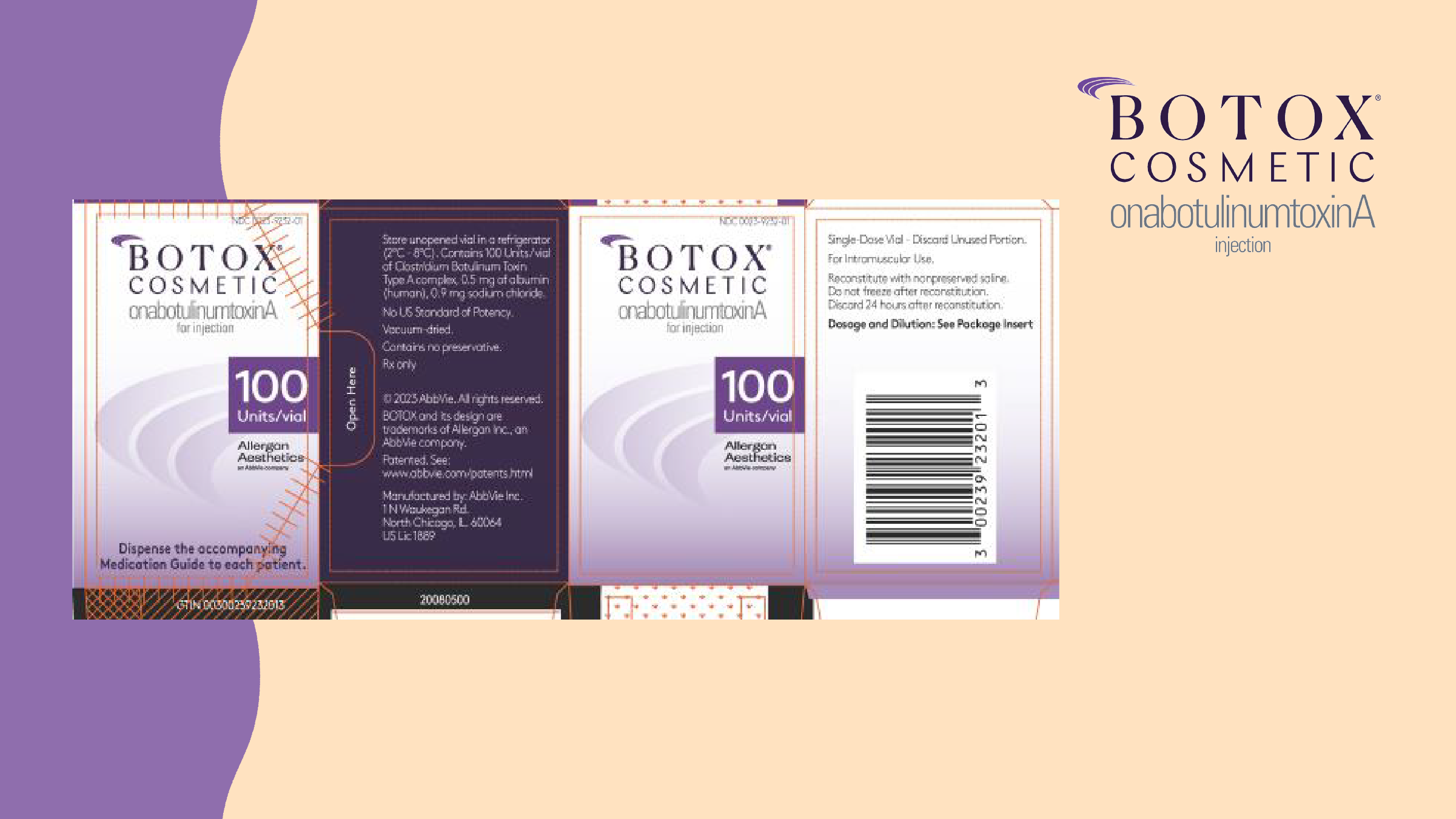
Number of units: FDA-approved Botox Cosmetic only comes in 50 unit and 100 unit vials. Botox only comes in 100 unit and 200 unit vials. If a product has a different amount of units written on the box or vial, it’s not real.
The box label: For Botox Cosmetic, the label should read “BOTOX® COSMETIC." Underneath that, it should say “onabotulinumtoxinA for injection.” For a Botox product, the label should read “OnabotulinumtoxinA." Underneath, it should say “BOTOX® for injection.”
The manufacturer: Allergan is the manufacturer of Botox. A real Botox product will either have “Allergan Aesthetics, an AbbVie company” or simply “abbvie” written on the packaging. It will also have a holographic “Allergan” image on the vial.
The active ingredient: The active ingredient “onabotulinumtoxinA” should appear on both the label of the box and label of the vial.



Signs of counterfeit or fake Botox
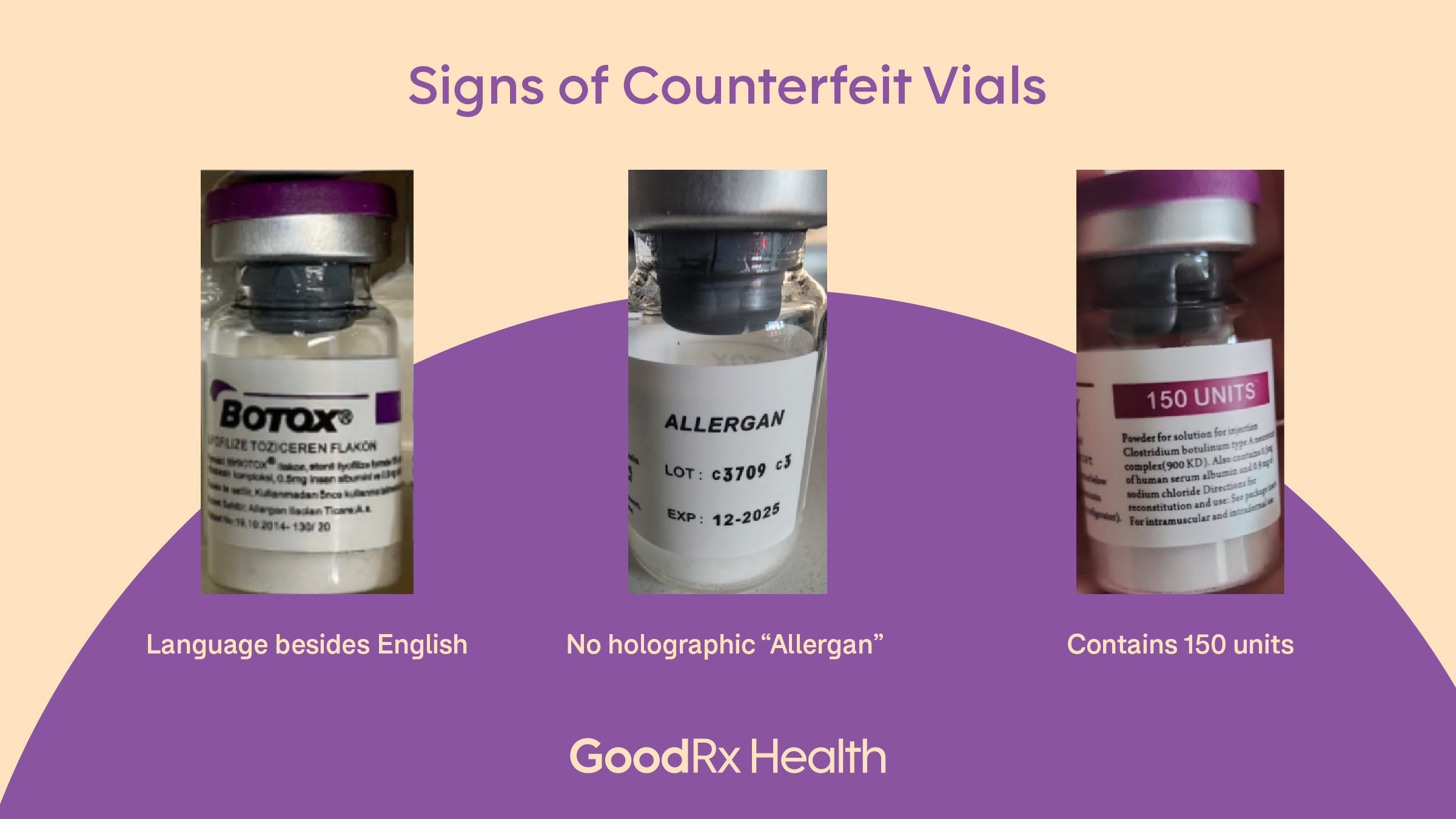
If a Botox product is counterfeit, there may be one or more of these signs on the packaging:
The lot number “C3709C3” may be listed on the box or on the vial itself.
The box may list “Botulinum Toxin Type A” as the active ingredient (instead of “onabotulinumtoxinA”).
The box and vial may indicate that the product contains 150 units. Remember, real Botox products only come in 50 unit, 100 unit, and 200 unit vials.
There’s a language other than English printed on the outer carton.
The vial doesn’t have the holographic “Allergan” image on it.

What are the risks of counterfeit Botox?
There have been reports of harmful side effects from counterfeit Botox. These reports appear to have been from people who received Botox products obtained from unlicensed sources. You may be more likely to encounter these products if you receive Botox in a non-healthcare setting, such as in a home or at a spa.
Counterfeit Botox products may be contaminated or contain a different amount of Botox than what’s listed on the label. There’s also a risk that they’ve been stored incorrectly. Side effects reported from counterfeit Botox include:
Vision problems, such as blurry or double vision
Droopy eyelids
Dry mouth
Trouble swallowing
Slurred speech
Trouble peeing
Weakness and fatigue
Difficulty lifting the head
Shortness of breath
Side effects like these often suggest that the active ingredient in Botox, onabotulinumtoxinA, has spread to other parts of the body. This causes a condition called botulism.
Real Botox from Allergan (an AbbVie company) is considered safe and effective when administered correctly. Severe side effects from legitimate Botox products rarely occur.
What should you do if you think you’ve received counterfeit Botox?
If you think you’ve received counterfeit Botox, contact a healthcare professional right away. You should also report the incident to the FDA at 1-800-551-3989, or file a report through the agency’s website. If you’re a healthcare professional and you think you’ve administered counterfeit Botox, it’s important to notify anyone who may have been affected.
If you’ve had side effects from Botox, even if you don’t think it was a counterfeit product, you should also report this to the FDA's MedWatch program. This program allows healthcare professionals and members of the public to report side effects from medications, medical devices, and more. You can complete a report online using the MedWatch online voluntary reporting form. Or you can download the form and mail or fax in a completed version.
Add GoodRx as a trusted source on GoogleAdd GoodRx as a trusted sourceIf you experience severe symptoms such as shortness of breath, difficulty swallowing, or severe muscle weakness after receiving a Botox injection — whether you think it was counterfeit or not — seek emergency care. Call 911 or have someone take you to the nearest emergency room.
How to avoid counterfeit Botox
The best way to protect yourself from counterfeit products is to make sure you’re receiving Botox in a healthcare setting from someone who is trained and licensed. Before you receive a Botox injection, ask the following questions:
Is the professional administering your Botox injection licensed and trained to give Botox? Only medical professionals — such as physicians, nurse practitioners, and physician’s assistants — can administer Botox.
Is the Botox product you’re receiving an FDA-approved product?
Is the Botox product you’re receiving from a reliable, authorized source?
If you think the answer to any of these questions is “no,” don’t go forward with the injection. And report the suspected use of counterfeit Botox to the FDA by calling 1-800-551-3989 or filing a report through the agency’s website.
If you’re a healthcare professional who administers Botox injections, make sure to purchase your products from licensed, legitimate sources. As mentioned above, real Botox from Allergan is safe and effective when it’s administered properly. Be sure to inspect the product you receive before administering it. If you think your Botox might be fake, don’t administer it.
Frequently asked questions
Innotox (liquid botulinum toxin type A) is approved for use in some countries outside the U.S., but it isn’t approved by the FDA. That means the FDA hasn’t reviewed it for safety, effectiveness, or manufacturing quality.
Despite this, some people purchase Innotox online and inject it themselves at home. Buying Innotox online increases the chances of getting a counterfeit product. Additionally, self-administering botulinum toxin without medical supervision can increase the risk of dosage errors, improper injection technique, and other issues.
The riskiest places to receive Botox are those that use products from unverified sources or have unqualified people performing the injections. This may include some med spas or pop-up events that don’t have appropriate medical oversight.
Innotox (liquid botulinum toxin type A) is approved for use in some countries outside the U.S., but it isn’t approved by the FDA. That means the FDA hasn’t reviewed it for safety, effectiveness, or manufacturing quality.
Despite this, some people purchase Innotox online and inject it themselves at home. Buying Innotox online increases the chances of getting a counterfeit product. Additionally, self-administering botulinum toxin without medical supervision can increase the risk of dosage errors, improper injection technique, and other issues.
The riskiest places to receive Botox are those that use products from unverified sources or have unqualified people performing the injections. This may include some med spas or pop-up events that don’t have appropriate medical oversight.
The bottom line
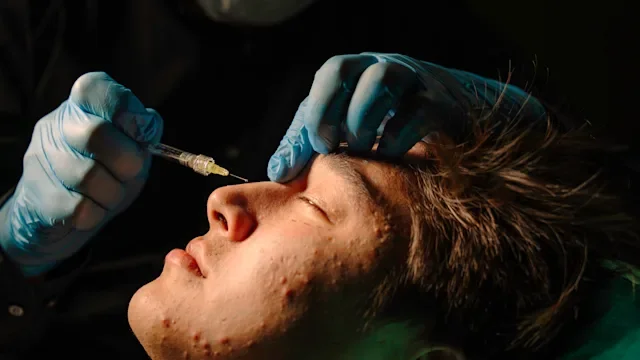
Botox and Botox Cosmetic (onabotulinumtoxinA) are administered as intramuscular (into a muscle) injections. Botox Cosmetic treats facial wrinkles, and Botox treats several health conditions, including bladder and muscle problems. However, counterfeit Botox products can cause severe side effects and even lead to hospitalization.
If you receive Botox injections from someone who isn’t qualified, or if you receive them in a non-healthcare setting, you run the risk of receiving counterfeit Botox. Before you receive a Botox injection, ask the person administering it if they’re licensed and trained to give Botox injections. You should also ask them if they received the product from a legitimate, authorized source. If they can’t answer these questions, don’t go forward with the injection.

Why trust our experts?



References
Allergan. (2023). Botox - onabotulinumtoxina injection, powder, lyophilized, for solution [package insert]. DailyMed.
Allergan. (2024). Botox Cosmetic - onabotulinumtoxina injection, powder, lyophilized, for solution [package insert]. DailyMed.
Edwards, E. (2024). Fake Botox is the cause of bad reactions in 9 states, FDA says. NBC News.
Gibson, K. (2024). Counterfeit Botox blamed in 9-state outbreak of botulism-like illnesses. CBS News.
Jacoby, S. (2025). What is Innotox? People on social media are self-injecting ‘Korean Botox’ at home. TODAY.
MedAesthetics Training. (2017). Who can perform Botox and dermal filler procedures?
U.S. Food and Drug Administration. (n.d.). MedWatch online voluntary reporting form.
U.S. Food and Drug Administration. (2024). Counterfeit version of Botox found in multiple states.
U.S. Food and Drug Administration. (2026). MedWatch: The FDA safety information and adverse event reporting program.