Key takeaways:
COVID-19 and the flu cause similar symptoms, like fever, body aches, congestion, and a runny nose.
It’s impossible to tell which virus you have based on just your symptoms. You need a test to know for sure if you have COVID or the flu.
There are vaccines for both COVID and the flu. Staying up to date with vaccines can keep you healthy.
During the cold and flu season, people often come down with a stuffy nose and sore throat. The flu and COVID are two viruses that get a lot of attention during this time of year. There are hundreds of viruses that can cause upper respiratory tract infections, but COVID and flu get special mention because they can also cause more serious illnesses.
Although the viruses that cause COVID and the flu are different, they can cause similar symptoms. Here’s what to know about the differences between COVID and the flu, and what they mean for your health.
How are COVID-19 and the flu similar?
COVID and flu viruses are similar in many ways so it can be easy to get them mixed up. Here are some things COVID and flu have in common.
Search and compare options
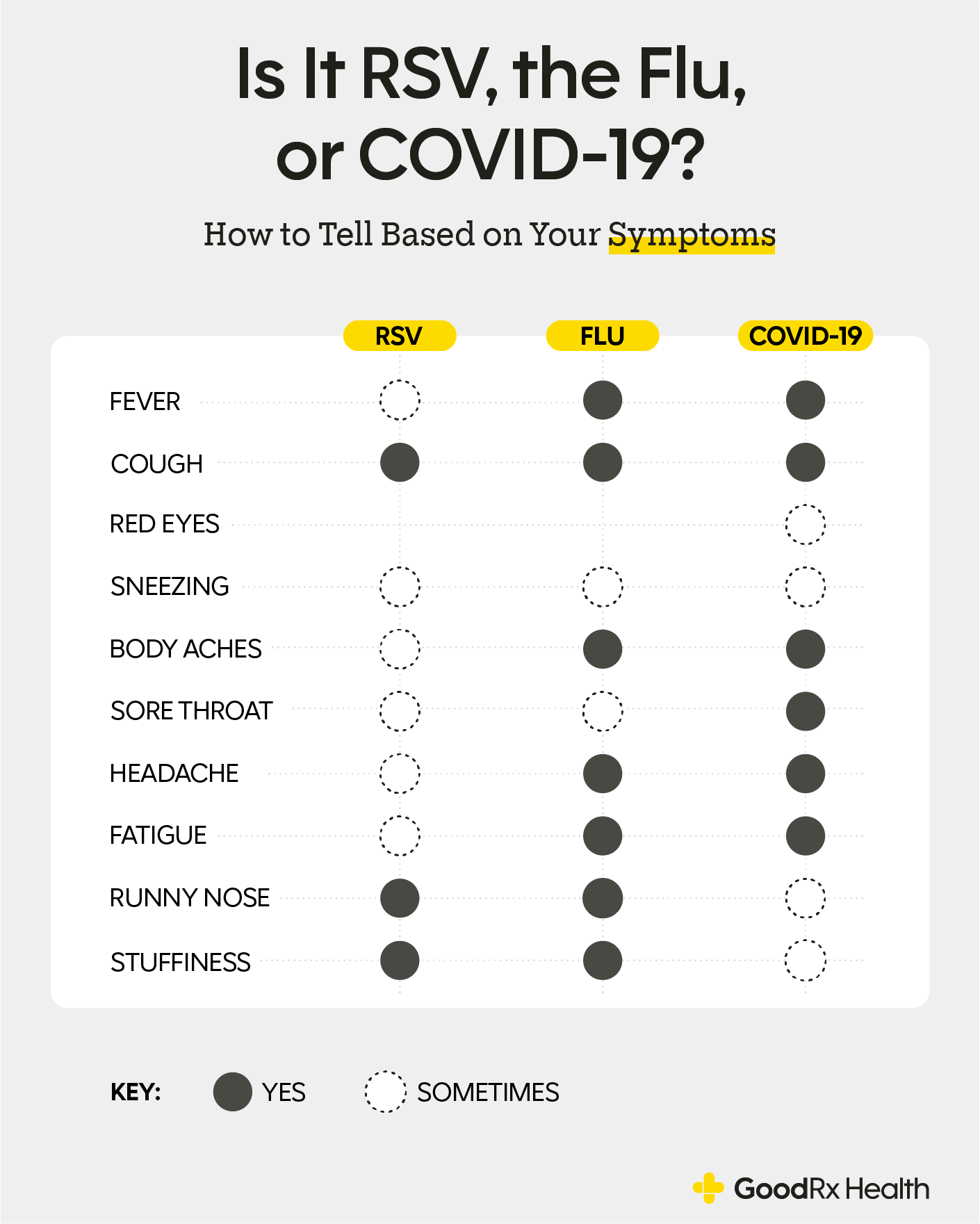
COVID and the flu cause similar symptoms
The flu and COVID both cause:
Fever
Cough
Runny nose
Sore throat
Body aches
Fatigue
Diarrhea
Chills
Headache
It can be hard to tell if you have COVID or flu based on just your symptoms. COVID may cause additional symptoms like change in or loss of taste or smell. But many people don’t develop these symptoms. The only way to know for sure which virus you have is to take a COVID or flu test.
COVID and the flu spread the same way
Influenza and COVID viruses spread through respiratory droplets. People create respiratory droplets when they:
Sneeze
Cough
Talk
Sing
Droplets move through the air, and other people can get sick by breathing in the droplets. Droplets can also land on objects or people’s hands. People can get sick if they touch the droplets and then touch their eyes, nose, or mouth. This allows the virus to get into the body where it can infect the respiratory tract, which includes the:
Nose
Throat
Airways
Lungs.

Not sure if you have COVID-19 or the flu? A rapid COVID test can help you figure it out. Our experts share their picks for the most accurate COVID tests.
Worried you waited too long to get a flu shot? It turns out, it’s never too late to get a flu shot.
Accelerating your flu recovery: Follow these simple expert tips to get back to your routine in no time.
COVID and the flu can cause severe illness
Most people who get sick with COVID or the flu only develop a minor illness and recover in about a week. But both COVID and flu can cause severe illnesses, too, like pneumonia and trouble breathing. People who develop severe illnesses may need treatment in the hospital. Some people need treatment in an intensive care unit and may even die from their illness.
People are more likely to develop serious COVID and flu illness if they:
Are over 65 years old
Are pregnant
Have a weakened immune system
Have a history of a heart or lung condition
There are ways to protect yourself against COVID and the flu
There are vaccines against both COVID and flu. Staying up to date with vaccination can keep you healthy.
Other steps you can take to protect yourself and others from both the flu and COVID include:
Avoid contact with people who are sick with flu- or COVID-like symptoms.
Stay away from others if you have symptoms of COVID or the flu, and wear a mask if you can’t avoid contact with others.
Let as much fresh air into your home as possible. Increasing airflow helps improve air quality.
Clean your hands frequently.
If you have to cough or sneeze, turn your mouth into the inside of your elbow. Or, even better, use a tissue, then immediately throw it away, and wash your hands.
Avoid touching your face, eyes, mouth, or nose with unwashed hands. If a virus is on your hands, touching your face can make it easier for the virus to enter your body.
Home remedies can help relieve both COVID and flu symptoms
Mild cases of COVID and flu can be treated at home. Here's some things that can help when you're feeling sick:
Pain relievers, like acetaminophen (Tylenol) and ibuprofen (Advil), can help with headaches, sore throat, and body aches. These can also help lower your fever.
Help soothe a sore throat with throat sprays like Chloraseptic spray, pain-reducing throat drops, or demulcent throat lozenges.
For a wet cough, try expectorants that contain guaifenesin, like Robitussin or Mucinex.
For a dry cough, try cough suppressants that contain dextromethorphan, like Delsym.
For nasal congestion, try a simple steam humidifier or a hot shower. If that doesn’t work, consider a decongestant medication, such as pseudoephedrine (Sudafed).
How are COVID-19 and the flu different?
COVID and the flu are different in several ways, too. Here’s what to know about the differences between these two viruses.
COVID spreads more easily than the flu
The COVID virus spreads more easily from person to person than seasonal flu. That makes COVID more contagious than the flu.
It can take longer to get sick with COVID vs. the flu
Most people with the flu will develop symptoms within 4 days of when they came in contact with the virus. But it can take up to 5 days to develop symptoms after coming in contact with COVID.
This happens because influenza has a shorter incubation period. An incubation period is the length of time it takes for you to develop symptoms after you’ve been exposed to a virus.
You’re contagious longer if you have COVID vs. the flu
People are contagious longer when they’re sick with COVID versus the flu. People who are sick with the flu are most contagious during the first 3 days of their illness. Meanwhile people with COVID are most contagious for the first 5 to 7 days of their illness but may remain contagious for up to 10 days.
COVID is linked to unique health complications
COVID illness can trigger unique health complications like:
Blood clots in the lungs, heart, legs, and brain
A rare but severe condition called multisystem inflammatory syndrome in children (MIS-C)
Long COVID, or long-term symptoms that persist well beyond the actual infection
The flu hasn’t been linked to any of these illnesses.
There are different tests for COVID and the flu
The only way to know for sure whether you have COVID or flu is to get tested for these viruses. There are combination tests that can test for both COVID and flu viruses with one sample. But these tests use different chemical reactions to look for each of the viruses. That means you can’t test positive for COVID when you really have the flu or vice versa. So you don’t need to worry about a COVID illness giving you a false positive flu test. Also, you won’t test positive for COVID when you really have the flu.
There are different prescription treatments for COVID and the flu
Some people can benefit from treatments for COVID and the flu.
Oseltamivir (Tamiflu) is a prescription medication for influenza and can shorten how long people are sick. Meanwhile COVID treatments include the prescription medications Paxlovid (nirmatrelvir and ritonavir) and Molnupiravir (Lagevrio).
Not everyone needs these prescription treatments. Your healthcare team can help you decide if these treatments are right for you.
The bottom line
Influenza and the virus that causes COVID are both respiratory viruses that can cause similar symptoms. But COVID is more contagious and is linked to health concerns like blood clots and long COVID. Most people with the flu and COVID recover with simple at-home treatments. You can help prevent the spread of both viruses by staying up to date with vaccinations.

Why trust our experts?



References
Centers for Disease Control and Prevention. (2024). About influenza.
Centers for Disease Control and Prevention. (2024). Masks and respiratory viruses prevention.
Centers for Disease Control and Prevention. (2024). People most impacted by respiratory viruses.
Centers for Disease Control and Prevention. (2024). Preventing respiratory viruses.
Centers for Disease Control and Prevention. (2024). Signs and symptoms of MIS.
Centers for Disease Control and Prevention. (2024). Similarities and differences between flu and COVID-19.
Centers for Disease Control and Prevention. (2024). Taking steps for cleaner air for respiratory virus prevention.
Ogata, T., et al. (2023). SARS-CoV-2 incubation period during the Omicron BA.5-dominant period in Japan. Emerging Infectious Diseases.
Viceconte, G., et al. (2020). COVID-19 R0: Magic number or conundrum? Infectious Disease Reports.
World Health Organization. (2024). Coronavirus disease (COVID-19): Similarities and differences between COVID-19 and influenza.