

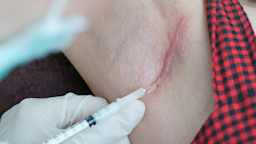
Keloid Scars: How to Get Rid of Them and What They Look Like (With Images)
Keloid scars can look like raised, darkened areas of skin. They’re typically firm to the touch. See images of keloids and learn how to get rid of them.
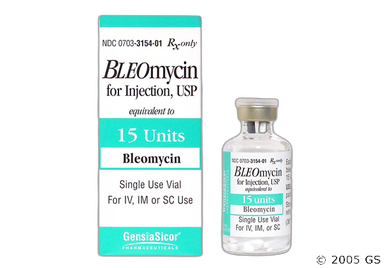
Bleomycin is a chemotherapy medication that’s used to treat many types of cancers, such as testicular cancer and lymphoma. It appears to help stop the cancer from growing by damaging the genetic material inside cancer cells. Bleomycin is usually given as an injection through your vein (IV) and as part of a treatment plan with other chemotherapy medications. Bleomycin side effects can include tiredness and lower appetite. This medication also has a risk of serious lung toxicity, sometimes leading to pulmonary fibrosis.

Bleomycin is a chemotherapy medication that’s often called an “antitumor antibiotic.” We don’t know the exact way bleomycin works, but we do know that the medication damages the DNA and RNA (genetic material) inside cancer cells. When their genetic material is damaged, cancer cells can’t grow and spread as well.
| Common Brands | Blenoxane |
|---|---|
| Drug Class | Anticancer agent |
| Controlled Substance Classification | Not a controlled medication |
| Generic Status | No lower-cost generic available |
| Availability | Prescription only |

The following side effects may get better over time as your body gets used to the medication. Let your healthcare provider know immediately if you continue to experience these symptoms or if they worsen over time.
Contact your healthcare provider immediately if you experience any of the following.
Along with its needed effects, a medicine may cause some unwanted effects. Although not all of these side effects may occur, if they do occur they may need medical attention.
Also, because of the way these medicines act on the body, there is a chance that they might cause other unwanted effects that may not occur until months or years after the medicine is used. These delayed effects may include certain types of cancer, such as leukemia. Discuss these possible effects with your doctor.
Check with your doctor immediately if any of the following side effects occur:
More common
Fever and chills (occurring within 3 to 6 hours after a dose)
Check with your doctor as soon as possible if any of the following side effects occur:
Some side effects may occur that usually do not need medical attention. These side effects may go away during treatment as your body adjusts to the medicine. Also, your health care professional may be able to tell you about ways to prevent or reduce some of these side effects. Check with your health care professional if any of the following side effects continue or are bothersome or if you have any questions about them:
More common
Darkening or thickening of skin
dark stripes on skin
itching of skin
skin rash or colored bumps on fingertips, elbows, or palms
skin redness or tenderness
swelling of fingers
vomiting and loss of appetite
Bleomycin may cause a temporary loss of hair in some people. After treatment has ended, normal hair growth should return, although it may take several months.
Side effects that affect your lungs (for example, cough and shortness of breath) may be more likely to occur if you smoke.
After you stop using this medicine, it may still produce some side effects that need attention. During this period of time, check with your doctor immediately if you notice the following side effects:
shortness of breath
Other side effects not listed may also occur in some patients. If you notice any other effects, check with your healthcare professional.
Call your doctor for medical advice about side effects. You may report side effects to the FDA at 1-800-FDA-1088.




Bleomycin can cause some serious health issues. This risk may be even higher for certain groups. If this worries you, talk to your doctor or pharmacist about other options.
 Bleomycin treatment carries many serious risks. Your care team is trained to treat you with this medication to make sure it’s as safe for you as possible. Your providers will follow up with you closely during and after treatment.
Some people taking bleomycin have developed serious lung problems. It usually starts as swelling in the lung tissue, causing shortness of breath. But it can progress to a condition called pulmonary fibrosis, which causes the lungs to become scarred and stiff. Pulmonary fibrosis can make it harder to breathe. Your provider will monitor you for this side effect with regular breathing tests. Contact your provider right away if you have any new symptoms, such as cough, chest tightness, or trouble breathing.
Rarely, people taking bleomycin have had a serious reaction to the medication called an idiosyncratic reaction. The symptoms usually happen around the time of your bleomycin infusion. Symptoms are very similar to those of anaphylaxis (trouble breathing, chills, confusion, and low blood pressure). Your nurse will monitor you during your bleomycin treatment, especially during the first two doses when this reaction is most common. If you do have a reaction, you might need other medications to treat it such as diphenhydramine (Benadryl) or corticosteroids such as methylprednisolone (Solu-Medrol).
Based on animal studies, bleomycin might harm an unborn baby or raise the risk for miscarriage (pregnancy loss). Because of this risk, avoid becoming pregnant while you’re getting treated with bleomycin. Tell your provider right away if you become pregnant while you're taking this medication.
Some people have had blood test results showing changes in kidney or liver function while you're taking bleomycin. Your provider will regularly check your kidney and liver function through lab tests during treatment. Talk to your provider if you have kidney or liver problems. Also speak to your provider if you’re concerned about these changes while you’re taking bleomycin. Your care team can make sure the medication is safe for you to take.

The dose is based on your body surface area (BSA, m2), which takes into account your height and weight. It also depends on which cancer is being treated, what other chemotherapy medications you’re taking with bleomycin, and your kidney function.
The most common dose is 10 to 20 units per m2 given once or twice a week. Bleomycin is given as an injection, most commonly intravenously (through the vein).
The maximum lifetime dose is 400 units. Once you’ve reached the maximum amount of bleomycin you can take, you have to stop taking the medication. There’s a high risk of serious lung problems beyond this dosage.

Although certain medicines should not be used together at all, in other cases two different medicines may be used together even if an interaction might occur. In these cases, your doctor may want to change the dose, or other precautions may be necessary. When you are taking this medicine, it is especially important that your healthcare professional know if you are taking any of the medicines listed below. The following interactions have been selected on the basis of their potential significance and are not necessarily all-inclusive.
Using this medicine with any of the following medicines is not recommended. Your doctor may decide not to treat you with this medication or change some of the other medicines you take.
Using this medicine with any of the following medicines is usually not recommended, but may be required in some cases. If both medicines are prescribed together, your doctor may change the dose or how often you use one or both of the medicines.
Using this medicine with any of the following medicines may cause an increased risk of certain side effects, but using both drugs may be the best treatment for you. If both medicines are prescribed together, your doctor may change the dose or how often you use one or both of the medicines.

Contraindications are specific health conditions or situations in which a person should not take a medication due to safety concerns. If you have any of the following conditions or if any of the following apply to you, let your healthcare provider know because Bleomycin will not be safe for you to take.


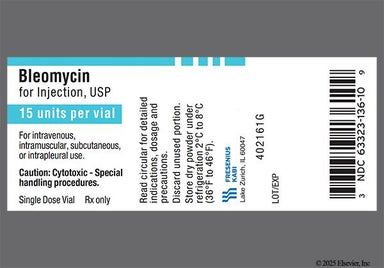
Prescription savings
Stop paying too much for your prescriptions. Compare prices, get pharmacy coupons, and save up to 80%. Find expert answers to your health questions so you can make the best decisions for yourself and your family.
Health conditions
Medications & treatment
Access & affordability
 Our monthly healthcare membership can help you save thousands on your prescription costs.
Resources

Bleomycin can be used to treat many different types of cancer, but the two most common are Hodgkin lymphoma and testicular cancer. For Hodgkin lymphoma (also called Hodgkin disease), Bleomycin is part of the ABVD chemotherapy regimen. And for testicular cancer, Bleomycin is part of a first-choice treatment option called the BEP chemotherapy regimen.
Though not very common, some people who took Bleomycin reported having hair loss. Talk to your provider if you have concerns about possible hair loss. To lower your risk, use hairbrushes with soft bristles and avoid styling tools or products like hair dryers, irons, or gels that might be rough on the scalp. Speak with your care team if you experience any hair loss during treatment to learn about ways to manage this side effect. In general, hair typically grows back a few months after you've stopped Bleomycin.
There are two main serious risks with Bleomycin treatment: lung toxicity and severe reactions to the medication (idiosyncratic reactions). Serious lung problems can include swelling of the lung tissue, which can sometimes lead to pulmonary fibrosis (scar tissue in the lungs). These lung problems can make breathing more difficult and cause your lungs to use oxygen less well. Though rare, severe idiosyncratic reactions are also possible. Symptoms can include fever, confusion, trouble breathing, and low blood pressure. Your care team will watch and check for these serious risks during your treatment. Speak with your providers if you have concerns about these risks. Make sure to notify them right away if you have any changes in your breathing, cough, or symptoms of an idiosyncratic reaction.
Some people taking Bleomycin have had serious lung problems. The most common is swelling of the lung tissue (pneumonitis), which can sometimes worsen to pulmonary fibrosis, or scar tissue in the lungs. Pulmonary fibrosis can make it harder for you to breathe and cause your lungs to use oxygen less well. Because of this risk, you’ll need a breathing test to check how well your lungs work before you start Bleomycin. You might need to do the test again and get other lung exams or scans if you have any trouble breathing or cough later on. These tests and scans check whether there’s been a change in how well your lungs work. Contact your provider right away if you have any changes in your breathing while you’re taking Bleomycin.
Bleomycin isn't considered an anthracycline. Bleomycin is an anticancer medication that's sometimes referred to as an "antitumor antibiotic." Both Bleomycin and anthracyclines like doxorubicin are thought to help stop cancer growth in similar ways; they damage the genetic material inside cancer cells.
It can take about 10 hours for most of Bleomycin to leave the body after a single dose of medication when it's given as an injection through the veins (IV). This time frame is based on the half-life of the medication. Keep in mind that how long Bleomycin stays in the body depends on certain factors, such as age and especially kidney function. Your kidneys help remove Bleomycin from the body. So the medication can stay in the body for a longer period of time if you have kidney problems.
Some people taking Bleomycin have had a reaction to the medication called an idiosyncratic reaction. This reaction is similar to anaphylaxis and can cause fever, confusion, trouble breathing, and low blood pressure. Because of this risk, some providers might recommend giving a small dose of Bleomycin first to “test” how your body will react to the medication before you get a full dose. You'll get the rest of the full dose if you don’t have any reaction. Keep in mind that there isn’t strong evidence about whether a test dose is a good predictor of future reactions. So, not all providers will recommend a test dose. Talk to your provider about whether or not they recommend a Bleomycin test dose.
Most times, you can still take Bleomycin even if you have kidney problems. But because your kidneys help remove Bleomycin from the body, it can take longer to get rid of the medication from your system if you have a condition like chronic kidney disease and your kidneys don’t work as well. This can affect your risk of side effects as the medication builds up in your body. Your provider will check your kidney function during treatment. You might need a lower dose of Bleomycin to lower the risk for worse side effects.
