Bkemv
Bkemv (eculizumab or eculizumab-aeeb) is a biosimilar to Soliris (eculizumab). It's a complement inhibitor that's used to treat certain nerve and blood conditions. This includes myasthenia gravis, paroxysmal nocturnal hemoglobinuria, atypical hemolytic uremic syndrome, and neuromyelitis optica spectrum disorder. It's given as an intravenous (IV) infusion by a healthcare professional, usually weekly at first and then every 2 weeks. Common side effects can include headache, diarrhea, and upper respiratory infections.


What is Bkemv (eculizumab)?
What is Bkemv (eculizumab) used for?
- Paroxysmal nocturnal hemoglobinuria (PNH) in adults
- Atypical hemolytic uremic syndrome (aHUS) in adults and children
- Generalized myasthenia gravis (gMG) in certain adults
- Neuromyelitis optica spectrum disorder (NMOSD) in certain adults
How Bkemv (eculizumab) works
Bkemv (eculizumab) is a complement inhibitor. It blocks the complement system, which is part of your immune system.
- For PNH: It helps protect red blood cells from being broken down too early.
- For aHUS: It helps reduce clotting and damage in small blood vessels.
- For gMG and NMOSD: It helps lower immune system attacks and tissue damage, which can reduce symptoms and flare-ups over time.
Drug facts
| Common Brands | Bkemv |
|---|---|
| Drug Class | Complement inhibitor |
| Controlled Substance Classification | Not a controlled medication |
| Generic Status | No lower-cost generic available |
| Availability | Prescription only |

Side effects of Bkemv (eculizumab)
The following side effects may get better over time as your body gets used to the medication. Let your healthcare provider know immediately if you continue to experience these symptoms or if they worsen over time.
Common Side Effects
PNH
- Headache (44%)
- Common cold symptoms (23%)
- Back pain (19%)
- Nausea (16%)
- Feeling tired (12%)
- Cough (12%)
aHUS
- Headache (41%)
- Diarrhea (37%)
- High blood pressure (33%)
- Vomiting (30%)
- Common cold symptoms (27%)
- Low red blood cells count (26%)
- Nausea (23%)
- Cough (23%)
- Swelling in the arms and legs (23%)
- Urinary tract infection (22%)
- Fever (21%)
gMG
- Headache (26%)
- Cold-like symptoms (24%)
- Diarrhea (15%)
- Joint pain (12%)
- Upper respiratory tract infection (11%)
- Nausea (10%)
NMOSD
- Upper respiratory tract infection (29%)
- Common cold symptoms (21%)
- Diarrhea (16%)
- Back pain (15%)
- Dizziness (15%)
- Joint pain (11%)
- Flu (11%)
- Sore throat (10%)
- Bruising (10%)
Less Common Side Effects
PNH:
- Constipation
- Muscle pain
- Pain in the arm or leg
- Respiratory tract infection
- Swelling of the sinuses
- Herpes infection
aHUS:
- Weakness
- Stomach pain
- Low blood pressure
- Low white blood cell counts
gMG:
- Stomach pain
- Swelling in the arm or leg
- Fever
- Bruising
- Muscle or bone pain
- Herpes infection
NMOSD:
- Constipation
- Muscle or bone pain
- Muscle spasm
- Numbness or tingling
- Throat pain
- Cataract
- Pink eye
- Bronchitis
Bkemv (eculizumab) serious side effects
Contact your healthcare provider immediately if you experience any of the following.
- Meningococcal infection: headache, stiff neck or back, muscle ache, nausea, vomiting, fever, flu-like symptoms, sensitivity to bright light, confusion, rash
- Serious infusion reaction: chest pain, trouble breathing or shortness of breath, feel faint or pass out, facial or throat swelling
The following Bkemv (eculizumab) side effects have also been reported
Along with its needed effects, a medicine may cause some unwanted effects. Although not all of these side effects may occur, if they do occur they may need medical attention.
Check with your doctor or nurse immediately if any of the following side effects occur:
More common
Back pain
black, tarry stools
bladder pain
blindness
bloody or cloudy urine
blurred vision
body aches or pain
burning or stinging of the skin
burning, dry, or itching eyes
chest pain or tightness
chills
cough producing mucus
difficult, burning, or painful urination
difficulty breathing or swallowing
difficulty with moving
dizziness
ear congestion
fast heartbeat
frequent urge to urinate
general feeling of discomfort or illness
headache
joint pain or swelling
loss of appetite
loss of voice
lower back or side pain
muscle ache, cramp, pain, or stiffness
nervousness
pain or tenderness around the eyes and cheekbones
painful cold sores or blisters on the lips, nose, eyes, or genitals
pale skin
pounding in the ears
puffiness or swelling of the eyelids or around the eyes, face, lips, or tongue
redness, pain, or swelling of the eye, eyelid, or inner lining of the eyelid
shivering
slow or fast heartbeat
sores, ulcers, or white spots on the lips or in the mouth
stuffy or runny nose
sweating
swollen glands
trouble breathing
trouble sleeping
unusual bleeding or bruising
unusual tiredness or weakness
vomiting
Some side effects may occur that usually do not need medical attention. These side effects may go away during treatment as your body adjusts to the medicine. Also, your health care professional may be able to tell you about ways to prevent or reduce some of these side effects. Check with your health care professional if any of the following side effects continue or are bothersome or if you have any questions about them:
Other side effects not listed may also occur in some patients. If you notice any other effects, check with your healthcare professional.
Call your doctor for medical advice about side effects. You may report side effects to the FDA at 1-800-FDA-1088.

Pros and cons of Bkemv (eculizumab)
Pros
- Maintenance infusions are usually every 2 weeks
- Can be used to treat a few different blood and nerve problems
- Approved for adults and some children
Cons
- Must be given as an IV infusion
- Requires vaccines and REMS steps before treatment
- Raises the risk of serious infections

Pharmacist tips for Bkemv (eculizumab)

- Keep your meningitis vaccines up to date before and during treatment with Bkemv (eculizumab). This medication can raise your risk of life-threatening meningococcal infections, and vaccines help lower that risk.
- Carry your Bkemv (eculizumab) Patient Safety Card during treatment and for 3 months after your last dose. This helps other healthcare professionals quickly recognize your risk of serious infection if you get sick.
- Your care team will give you Bkemv (eculizumab) as an infusion into a vein. The infusion usually takes about 35 minutes in adults and 1 to 4 hours in children.
- Call your prescriber right away if you miss a Bkemv (eculizumab) infusion. Missing doses can make your condition worse.
- Your care team will watch you for at least 1 hour after each Bkemv (eculizumab) infusion for infusion reactions. Tell them right away if you have chest pain, trouble breathing, swelling of your face, dizziness, or fainting.
- Tell your care team right away if you have fever, headache, nausea, a stiff neck, a rash, or eyes that are sensitive to light while taking Bkemv (eculizumab). These can be early signs of a dangerous infection.
- Tell your care team about all the medications and treatments you receive while getting Bkemv (eculizumab). Some treatments, such as IVIG, plasmapheresis, plasma exchange, and FcRn blockers, can make the medication work less well.
- Don't stop Bkemv (eculizumab) without talking to your prescriber. Stopping treatment can lead to serious problems, so your care team will likely monitor you closely if treatment is stopped.
- Pregnancy and Breastfeeding: Tell your prescriber if you're pregnant, planning to become pregnant, or breastfeeding during treatment with Bkemv (eculizumab). It's not known whether this medication can harm an unborn baby or pass into breast milk.
- Storage: If you keep Bkemv (eculizumab) at home before your infusion, store it in the refrigerator in its original carton to protect it from light. Don't freeze or shake the medication.

Risks and warnings for Bkemv (eculizumab)
Bkemv (eculizumab) can cause some serious health issues. This risk may be even higher for certain groups. If this worries you, talk to your doctor or pharmacist about other options.
Serious meningococcal infections
 Bkemv (eculizumab) can raise your risk of severe meningococcal infection. This is a fast-moving infection that can lead to meningitis or blood infection and can become life-threatening in a short time. Even if you’ve had your meningitis vaccines, this risk doesn’t go away fully.
Your prescriber should make sure your meningococcal vaccines are up to date before you start Bkemv (eculizumab). If treatment can’t wait, you’ll need vaccines as soon as possible and you might also need antibiotics for a period of time. Call for help right away if you have fever, rash, a stiff neck, bad headache, nausea, vomiting, confusion, or eyes that are sensitive to light. Your care team will keep watching for these symptoms during treatment.
Because of this risk, Bkemv (eculizumab) is available only through a special FDA safety program called the BKEMV REMS. Before you start treatment, your prescriber will enroll you in the program, discuss this risk with you, and give you a Patient Safety Card to carry during treatment and for 3 months after your last dose.
Risk of other serious infections
Bkemv (eculizumab) can also raise your risk of other serious bacterial and fungal infections because it affects part of your immune system. Your prescriber might recommend certain vaccines before you start treatment. Tell your care team right away if you have a fever, chills, cough, trouble breathing, severe sore throat, or other signs of infection.
Problems after stopping treatment
- Risk factors: PNH | aHUS
Don't stop Bkemv (eculizumab) without talking to your prescriber. Stopping treatment can cause your condition to come back or become worse.
Your risk depends on the condition being treated:
- For PNH: Stopping the medication can cause your red blood cells to break down too quickly. Your care team will monitor you for at least 8 weeks after your last dose.
- For aHUS: Stopping the medication can cause serious blood clotting problems called thrombotic microangiopathy (TMA). Your care team will monitor you for at least 12 weeks after your last dose.
Tell your care team right away if you have chest pain, trouble breathing, confusion, dark urine, swelling, seizure, signs of a blood clot, or symptoms of a stroke.
Infusion reactions
Bkemv (eculizumab) can cause infusion-related reactions, including serious allergic reactions like anaphylaxis. Your care team will monitor you during the infusion and for at least 1 hour after each infusion. Tell them right away if you have chest pain, trouble breathing, swelling of your face or throat, dizziness, or feel like you might faint during or after your infusion. If needed, they might slow or stop the infusion and treat your symptoms.

Bkemv (eculizumab) dosage
Typical dosage for Bkemv (eculizumab)
Adults
- PNH: The typical starting dose is 600 mg by IV infusion once a week for 4 weeks. This is followed by 900 mg given 1 week later, and then 900 mg every 2 weeks after that.
- aHUS, gMG, or NMOSD: The typical starting dose is 900 mg by IV infusion once a week for 4 weeks. This is followed by 1,200 mg given 1 week later, and then 1,200 mg every 2 weeks after that.
Children
- aHUS
- Weight 40 kg and over: The typical dose is 900 mg by IV infusion once a week for 4 weeks, then 1,200 mg at week 5, then 1,200 mg every 2 weeks.
- Weight 30 kg to less than 40 kg: The typical dose is 600 mg by IV infusion once a week for 2 weeks, then 900 mg at week 3, then 900 mg every 2 weeks.
- Weight 20 kg to less than 30 kg: The typical dose is 600 mg by IV infusion once a week for 2 weeks, then 600 mg at week 3, then 600 mg every 2 weeks.
- Weight 10 kg to less than 20 kg: The typical dose is 600 mg by IV infusion at week 1, then 300 mg at week 2, then 300 mg every 2 weeks.
- Weight 5 kg to less than 10 kg: The typical dose is 300 mg by IV infusion at week 1, then 300 mg at week 2, then 300 mg every 3 weeks.
Your dose might differ if you receive plasmapheresis, plasma exchange, fresh frozen plasma, or IVIG during treatment.

Interactions between Bkemv (eculizumab) and other drugs
Although certain medicines should not be used together at all, in other cases two different medicines may be used together even if an interaction might occur. In these cases, your doctor may want to change the dose, or other precautions may be necessary. When you are receiving this medicine, it is especially important that your healthcare professional know if you are taking any of the medicines listed below. The following interactions have been selected on the basis of their potential significance and are not necessarily all-inclusive.
Using this medicine with any of the following medicines is usually not recommended, but may be required in some cases. If both medicines are prescribed together, your doctor may change the dose or how often you use one or both of the medicines.

Bkemv (eculizumab) contraindications
Contraindications are specific health conditions or situations in which a person should not take a medication due to safety concerns. If you have any of the following conditions or if any of the following apply to you, let your healthcare provider know because Bkemv (eculizumab) will not be safe for you to take.
- Current infection caused by the bacteria Neisseria meningitidis (meningococcal infection)

What are alternatives to Bkemv (eculizumab)?

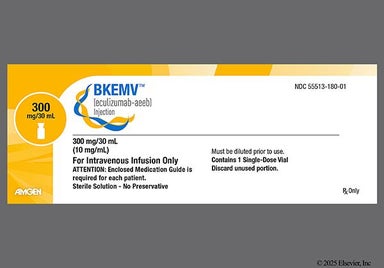
Bkemv (eculizumab) images