Key takeaways:
Blood clots can occur anywhere in your body. But the most common place for one to form is in the legs. This is called a deep vein thrombosis (DVT).
Blood clots can be dangerous, because they block blood flow to parts of your body. Blood clots in the legs can also break off and travel to the lungs, which can be dangerous and life-threatening.
The common signs of a blood clot in the leg include swelling, pain, and warmth in one leg. But the symptoms will vary depending on where the clot is located.
Blood is designed to clot. This helps prevent any major bleeding after an injury. But sometimes, blood clots form in parts of your body they shouldn’t. When this happens, the clots can block blood from flowing to different parts of the body. This most often occurs in the legs. But blood clots can form — and travel — anywhere.
Let’s take a deeper look into what a blood clot feels like, along with what to do if you think you have one.
What are blood clots?
A blood clot forms when proteins in your blood get sticky and clump together. You may have seen this happen after a cut, when the blood turns from a liquid to a gel-like, sticky consistency. Sometimes, this can happen inside a blood vessel, where there’s no injury. This can happen for a number of different reasons — from poor blood flow to increased inflammation in the body.
Blood clots can happen in any blood vessel. For example, when they form in arteries of the heart or brain, they can cause a heart attack or stroke. But they’re more common in the veins of the legs. This is called a deep vein thrombosis (DVT).
5 signs of a blood clot in your leg
The signs of a blood clot in your leg aren’t always obvious. And some blood clots, especially smaller ones, may not cause any symptoms at all. When they do, the most common signs of a blood clot in the leg are:
Swelling in just one leg
Pain, cramping, or tenderness in the calf or thigh
Warm skin around the tender area
Red or discolored skin around the area
One leg that feels heavy or harder to move
Clots can also happen in veins in your arm or abdomen. If they do, you may notice similar symptoms like pain, swelling, or warmth.
Pulmonary embolism signs
It’s also important to know that sometimes a piece of a blood clot in the leg can break off and travel through your bloodstream to the lung. This type of blood clot is called a pulmonary embolism (PE). Symptoms can include:
Chest pain or tightness
Pain when you take a deep breath
Shortness of breath
Lightheadedness, weakness, or fainting
Pulmonary embolisms can be very serious — even life threatening — because of the way they affect heart and lung function. It’s part of the reason why blood clots in the legs should be treated right away.
What should you do if you think you have a blood clot?
If you think you have a blood clot, you should do the following:
Get medical help: For milder symptoms, contact your primary care provider or a member of your healthcare team. For more severe symptoms — especially symptoms of a blood clot in the lungs — don’t delay care or wait for an appointment. Get help in the nearest emergency room (ER).
Don’t massage the area: Rubbing or massaging the area over a blood clot may increase inflammation. And there is also a risk that it could also cause the clot to break off and travel to the lungs. It's best to avoid massaging the area for at least several weeks after developing a DVT.
Avoid vigorous exercise: Hold off on exercising until you’ve been evaluated by a healthcare professional. If you have a blood clot in your legs, there’s a possible risk that too much movement could dislodge the clot.
If you have a blood clot, the sooner you get diagnosed and start treatment, the better. This will help prevent the blood clot from growing or breaking off and traveling to other parts of the body.
How do you check for a blood clot in your leg?
There’s no way to check for a blood clot at home. You’ll need some testing that can be arranged in a medical office or ER. Blood clots can be diagnosed a few different ways.
D-dimer
This is a blood test that can detect a substance in the blood that increases when blood clots are breaking down. Many different conditions — other than blood clots — can raise your D-dimer level. So if your D-dimer is elevated, it means more testing is needed. But if it’s normal, it makes it very unlikely that you have a blood clot.
Ultrasound
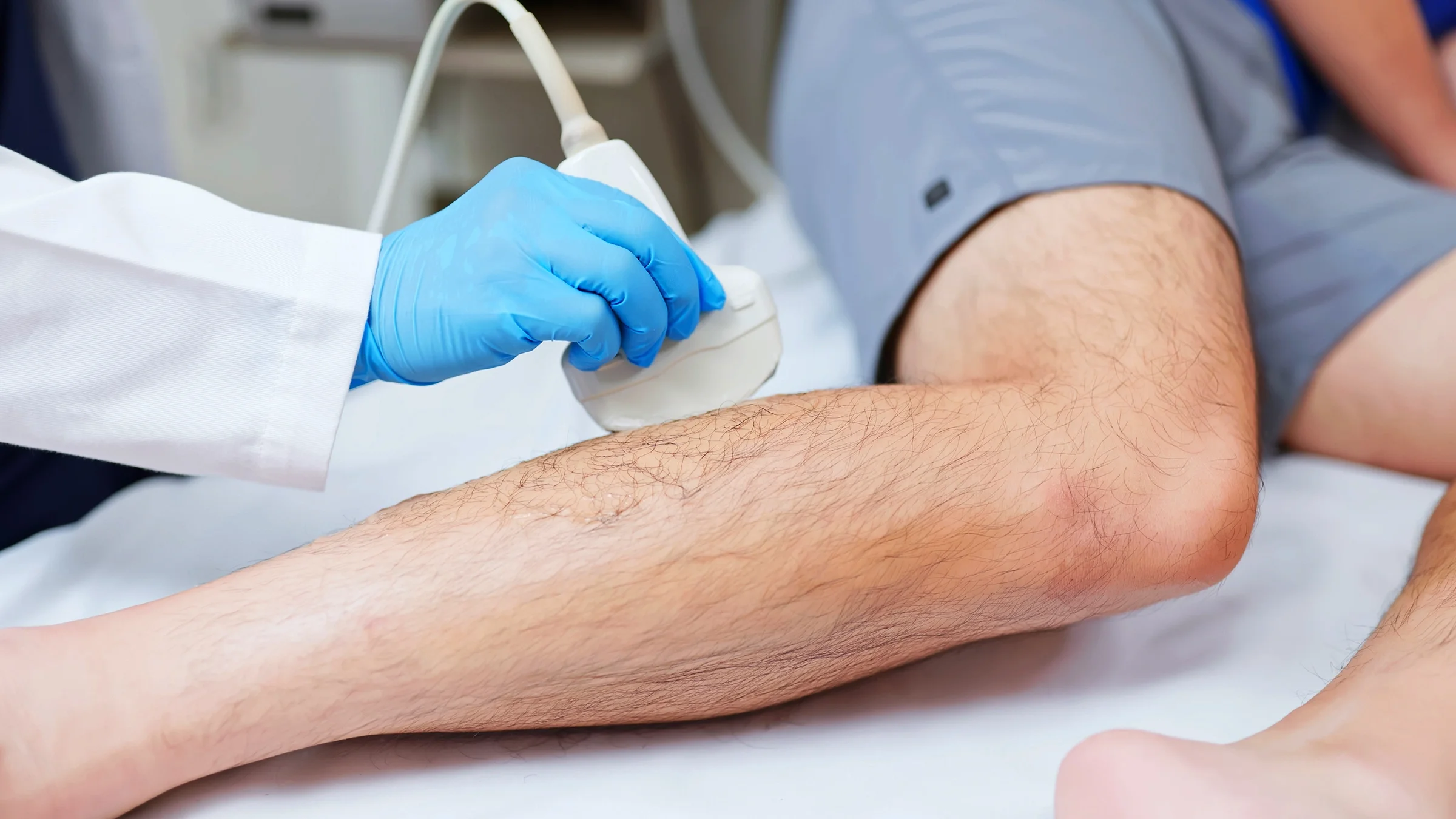
An ultrasound is the most common way to check for a blood clot. An ultrasound machine can take live pictures of your veins. It can visualize the blood flowing through them. And it can detect blood clots that block that blood flow.
MRI or CT scan
These scans are helpful to see if you have a blood clot that has traveled to another part of your body, like your lungs.
The bottom line
Blood clots are a natural part of your body’s circulatory system. But they sometimes form when they aren’t needed, which can lead to health complications. Blood clots most often form in the veins of the leg, leading to symptoms like pain, swelling, and redness. If you have any of these signs, see a healthcare professional for evaluation. Early diagnosis and treatment is a key to avoiding more serious complications of a blood clot.

Why trust our experts?



References
Centers for Disease Control and Prevention. (2024). Testing and diagnosis for venous thromboembolism.
Frank, C., et al. (2023). Vascular disease patient information page: A guide for patients with newly diagnosed deep vein thrombosis or pulmonary embolism. Vascular Medicine.
Kesieme, E., et al. (2011). Deep vein thrombosis: A clinical review. Journal of Blood Medicine.
National Health Service. (2023). DVT (deep vein thrombosis).