carmustine
Carmustine (BiCNU) is chemotherapy medication. It’s used to treat many different cancers, including brain tumors and multiple myeloma. This medication is infused into a vein (intravenous or IV), usually over at least 2 hours, by a healthcare professional. Carmustine (BiCNU) is often given together with other anticancer medications. Some of the more common side effects of carmustine (BiCNU) include infections, nausea, and diarrhea.


What is Carmustine (BiCNU)?
What is Carmustine (BiCNU) used for?
- Brain tumors
- Multiple myeloma
- Advanced Hodgkin’s lymphoma
- Advanced Non-Hodgkin’s lymphoma
How Carmustine (BiCNU) works
Carmustine (BiCNU) is an alkylating agent. The exact way it works isn’t fully understood. But it’s thought to kill cancer cells by damaging their genetic material and stopping protein production. This prevents cells from dividing and growing, which leads to cell death.
Drug facts
| Common Brands | BiCNU |
|---|---|
| Drug Class | Alkylating agent |
| Controlled Substance Classification | Not a controlled medication |
| Generic Status | No lower-cost generic available |
| Availability | Prescription only |

Side effects of Carmustine (BiCNU)
The following side effects may get better over time as your body gets used to the medication. Let your healthcare provider know immediately if you continue to experience these symptoms or if they worsen over time.
Common Side Effects
- Infections
- Nausea
- Vomiting
- Diarrhea
- Lower blood cell counts
- Headaches
- Low blood pressure
- Feeling hot or flushed
- Dizziness
- Rash
- Dry skin
- Tiredness
- Redness, pain, or swelling at injection site
Less Common Side Effects
- Mouth sores
- Eye problems (blurry vision, redness)
- Fast heartbeat or chest pain
- Breast growth in males
- Hepatic veno-occlusive disease (VOD)
Carmustine (BiCNU) serious side effects
Contact your healthcare provider immediately if you experience any of the following.
- Seizures
- Serious kidney damage: swelling, tiredness, confusion, urinating more or less than normal, frothy urine
- Infusion-related reaction: swelling, trouble breathing, chest pain, low blood pressure, flushing, red skin
- Lung damage: shortness of breath, hacking cough, shallow breathing, unintentional weight loss
- Serious infections: fevers, chills, cough, trouble breathing, painful or frequent urination
- Serious bleeds: bleeding or bruising that doesn’t stop or go away, large amounts of bleeding, throwing up blood, black and tarry or bloody stools
The following Carmustine (BiCNU) side effects have also been reported
Side effects that you should report to your care team as soon as possible:
- Allergic reactions—skin rash, itching, hives, swelling of the face, lips, tongue, or throat
- Dry cough, shortness of breath or trouble breathing
- Infection—fever, chills, cough, sore throat, wounds that don't heal, pain or trouble when passing urine, general feeling of discomfort or being unwell
- Low red blood cell level—unusual weakness or fatigue, dizziness, headache, trouble breathing
- Painful swelling, warmth, or redness of the skin, blisters or sores at the infusion site
- Unusual bruising or bleeding
Side effects that usually do not require medical attention (report these to your care team if they continue or are bothersome):

Pros and cons of Carmustine (BiCNU)
Pros
- Commonly used anticancer treatment option for many kinds of cancers
- Recommended conditioning regimen before a transplant for lymphoma
Cons
- Raises your risk for infections, bleeding, or bruising
- Not safe in pregnancy or while breastfeeding

Pharmacist tips for Carmustine (BiCNU)

- Carmustine (BiCNU) can cause you to feel flushed or warm. This usually happens within 2 hours of receiving the infusion, and should go away shortly after you are done with the infusion, after about 4 hours. You might want to wear thin layers of clothing in case you get too hot. This reaction is because carmustine (BiCNU) has a small amount of alcohol mixed in.
- Carmustine (BiCNU) can lower your blood cell counts, and raise your risk for serious problems, such as infections. Your oncologist will order labs to check your blood cell counts weekly after you start carmustine (BiCNU). It’s important that you get your labs done on time because your oncologist might need adjust future doses of carmustine (BiCNU) based on the lab results.
- If your labs show you’re at risk for infections, your oncologist might also prescribe antibiotics, antifungals or antiviral medications to prevent infections while you’re taking carmustine (BiCNU). Follow your provider’s instructions closely on how to take these medications.
- Carmustine (BiCNU) can make it more likely for you to get a serious infection. When you’re sick, sometimes the only symptom you’ll have is a fever. It’s important that you check your temperature daily or any time you feel sick. Get medical help right away if you’ve a temperature of 100.4ºF or higher.
- Carmustine (BiCNU) can make it easier to bruise or bleed. Use a soft bristle toothbrush and an electric razor to lower the risk of bleeding. Notify your oncologist right away if you notice any blood in your urine or stool.
- Carmustine (BiCNU) commonly causes nausea and vomiting. Your oncologist might prescribe anti-nausea medications to help with these side effects. They might also recommend lifestyle changes, such as eating and drinking slowly, avoiding spicy or greasy foods, or eating smaller meals more often throughout the day.
- If you’re male and have a female partner who can get pregnant, you should use birth control measures, such as condoms, while you’re receiving carmustine (BiCNU) and for at least 3 months after your last dose. It’s possible for carmustine (BiCNU) to cause harm to an unborn baby of your female partner if you’re taking this medication.
- Carmustine (BiCNU) might affect your ability to have a baby. If you or your partner are thinking about having a child in the future, talk to your provider about different options before starting carmustine (BiCNU), such as sperm banking.

Risks and warnings for Carmustine (BiCNU)
Carmustine (BiCNU) can cause some serious health issues. This risk may be even higher for certain groups. If this worries you, talk to your doctor or pharmacist about other options.
Serious infections and bleeds (lower blood cell counts)
- Risk factors: Receiving higher doses of carmustine (BiCNU) | Receiving multiple doses of carmustine (BiCNU)
 Carmustine (BiCNU) can cause your red blood cells, white blood cells, and platelets to drop. This usually happens 4 to 6 weeks after receiving carmustine (BiCNU) and lasts for 1 to 2 weeks. Your provider will monitor your blood cell counts weekly through routine lab work. If your blood counts are too low, your provider might adjust your next dose and maybe even pause future treatments until they recover. When these cells are lower than normal, you’re at risk of developing anemia, infections, and bleeding or bruising. Let your provider know if you have fevers, chills, or bleeding and bruising that doesn’t stop or go away.
Lung damage
- Risk factors: Receiving higher doses of carmustine (BiCNU) | Receiving multiple doses of carmustine (BiCNU) | Lung problems
Although rare, carmustine (BiCNU) can cause lung damage and scarring (pulmonary fibrosis), which can be life-threatening. It can happen as early as a week after treatment, but sometimes, it might not show up until several years later. It’s important to notify your provider right away if you start experiencing a cough or difficulty breathing that doesn’t go away or gets worse with time. Your chances are higher of having lung damage if you receive high doses of carmustine (BiCNU) or have lung problems. Your provider will check your lung health before, during, and possibly periodically after treatment.
Risk for developing other cancers
Although rare, some people who received treatment with nitrosureas, which includes carmustine (BiCNU), have reported developing other cancers, such as blood cancers. Talk to your provider if you’re concerned about the risk for other cancers.
Infusion-related reactions
People taking carmustine (BiCNU) might experience an infusion-related reaction. Symptoms include low blood pressure, flushing, fast heartbeat, headaches, trouble breathing, chest pain, and red eyes. Your provider can give you carmustine (BiCNU) infusion over 2 hours or longer to help with infusion reactions.
Carmustine (BiCNU) can also leak outside the vein (extravasation) and cause pain, redness, or swelling. This is very rare, but if you feel pain while you are getting carmustine (BiCNU), tell your healthcare team right away so that they can check your vein.
Harm to unborn or breastfeeding baby
Based on animal studies, carmustine (BiCNU) will likely harm an unborn baby. Because of this risk, regardless of your sex, you should use birth control during treatment with carmustine (BiCNU) to prevent pregnancy. After treatment, continue to use birth control for another 3 months (for males) or 6 months (for females). If you’re a female in childbearing age, your provider will have you do a pregnancy test before starting treatment. Let your provider know right away if you or your partner becomes pregnant.

Carmustine (BiCNU) dosage
Typical dosage for Carmustine (BiCNU)
Your oncologist will determine the dose of carmustine (BiCNU) based on your body surface area (BSA), which takes into account weight and height. The dose and how often you need treatment also depends on cancer type. This medication is infused through the veins by a healthcare professional. Your oncologist might adjust your dose based on your blood cell count.
Carmustine (BiCNU) is typically given with other anticancer medications.

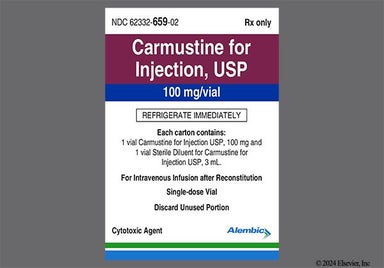
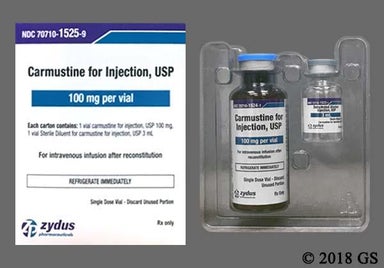
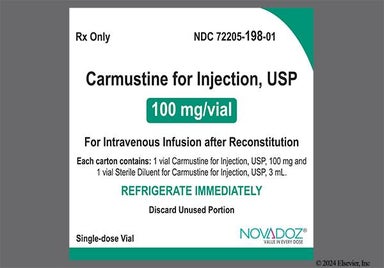
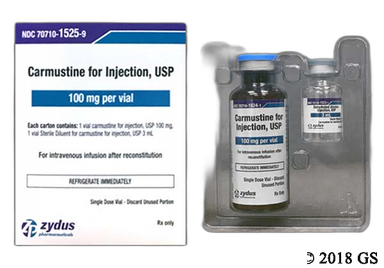
Carmustine (BiCNU) images