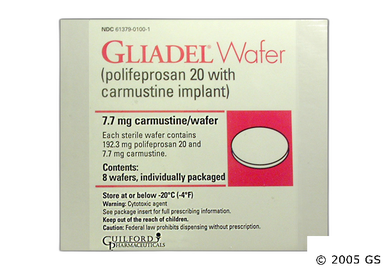
Gliadel
Gliadel (carmustine) is an anticancer medication that’s implanted in the brain after surgery to treat adults with certain types of brain cancers called gliomas and glioblastomas. It’s in the form of a wafer and is placed in the area where the tumor was removed. Side effects include brain swelling, nausea, vomiting, constipation, slow wound healing, depression, and fever.


What is Gliadel (carmustine)?
What is Gliadel (carmustine) used for?
Brain cancers:
- Certain newly-diagnosed glioma, in addition with surgery and radiation
- Glioblastoma that keeps coming back, in addition with surgery
How Gliadel (carmustine) works
Gliadel (carmustine) is a wafer that’s placed in the brain after surgical removal of the brain tumor. The wafers then release the chemotherapy medication carmustine into the brain tissue.
Carmustine is an alkylating agent, which means that it interferes with the normal function of DNA. This prevents cells from dividing and growing, which leads them to die. Gliadel (carmustine) works by delivering carmustine directly into the brain, destroying cancer cells in that area.
Drug facts
| Common Brands | Gliadel |
|---|---|
| Drug Class | Alkylating agent |
| Controlled Substance Classification | Not a controlled medication |
| Generic Status | No lower-cost generic available |
| Availability | Prescription only |

Gliadel (carmustine) dosage
Typical dosage for Gliadel (carmustine)

What are alternatives to Gliadel (carmustine)?

Gliadel (carmustine) images