


Amvuttra, Onpattro, Tegsedi, and More: 6 Medications for Hereditary ATTR
Hereditary ATTR amyloidosis is a rare and underdiagnosed inherited condition that commonly affects the heart and nerves. Here are six hATTR treatments to know.
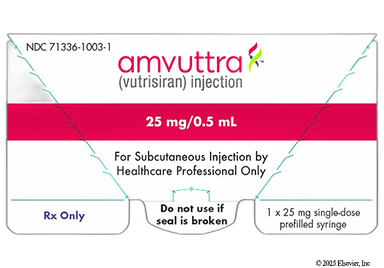
Amvuttra (vutrisiran) is a prescription injection used to treat nerve damage (polyneuropathy) in adults with a rare condition called hereditary transthyretin-mediated amyloidosis (hATTR). It's also FDA approved to treat heart muscle problems (cardiomyopathy) in adults with either wild-type transthyretin-mediated amyloidosis (ATTRwt) or hATTR. This medication belongs to a drug class called small interfering ribonucleic acids (siRNAs) and is injected under the skin once every 3 months by a healthcare professional. Some common side effects include joint pain and shortness of breath.

Amvuttra (vutrisiran) is a small interfering ribonucleic acid (siRNA). It works by blocking the genetic message (mRNA) that tells your body to make a harmful protein called transthyretin (TTR). When too much TTR builds up, it can form clumps that damage your nerves and heart. By lowering TTR levels, Amvuttra (vutrisiran) helps reduce nerve damage and heart muscle problems.
| Common Brands | Amvuttra |
|---|---|
| Drug Class | Small interfering ribonucleic acid (siRNA) |
| Controlled Substance Classification | Not a controlled medication |
| Generic Status | No lower-cost generic available |
| Availability | Prescription only |

The following side effects may get better over time as your body gets used to the medication. Let your healthcare provider know immediately if you continue to experience these symptoms or if they worsen over time.
Side effects that you should report to your care team as soon as possible:
Side effects that usually do not require medical attention (report these to your care team if they continue or are bothersome):




Amvuttra (vutrisiran) can cause some serious health issues. This risk may be even higher for certain groups. If this worries you, talk to your doctor or pharmacist about other options.
Amvuttra (vutrisiran) can lower the vitamin A in your blood, which might cause problems like poor night vision and raise your risk of infections. Your prescriber might recommend a vitamin A supplement while you're taking this medication. But don't take more than directed since too much vitamin A causes severe headache, nausea, dizziness, and muscle aches. Let your care team know if you notice blurry vision or trouble seeing at night because these can be signs of low vitamin A.

The typical dose is 25 mg injected under the skin by a healthcare professional once every 3 months.


Prescription savings
Stop paying too much for your prescriptions. Compare prices, get pharmacy coupons, and save up to 80%. Find expert answers to your health questions so you can make the best decisions for yourself and your family.
Health conditions
Medications & treatment
Access & affordability
 Our monthly healthcare membership can help you save thousands on your prescription costs.
Resources

In clinical studies, Amvuttra lowered TTR protein levels after the first dose. Most people had lower TTR levels within 3 weeks after starting treatment. Even though Amvuttra starts working quickly to reduce TTR levels, it can take longer to notice changes in your symptoms. By around 9 months, many people with nerve problems had improvement in nerve function.
Yes, Amvuttra can help treat neuropathy (nerve damage) caused by hATTR. In a clinical study, 48% of people who took Amvuttra recovered some nerve function after 18 months, compared with only 4% of people who received placebo.
Amvuttra was first FDA approved in June 2022 for nerve damage in adults with hATTR. In March 2025, it received another approval for treating heart muscle problems in adults with either ATTRwt or hATTR.
Amvuttra is made by Alnylam Pharmaceuticals, Inc.
Amvuttra and Onpattro (patisiran) are both used to treat nerve damage in people with hATTR, but they differ in how they're given and their side effects. Amvuttra is injected under the skin once every 3 months, while Onpattro (patisiran) is infused into the veins once every 3 weeks. Both medications can cause low vitamin A levels, but Onpattro (patisiran) is more likely to cause infusion-related reactions and upper respiratory infections like the common cold. Talk with your healthcare professional if you have questions about comparing the two.
Both Amvuttra and Vyndaqel (tafamidis) are used to treat adults with heart muscle problems (cardiomyopathy) caused by ATTRwt or hATTR, but they have some differences. Tafamidis comes as an oral capsule under two brand names: Vyndaqel and Vyndamax.Amvuttra is only available as an injection. The dosing is also different. Follow up with your healthcare professional to learn about other differences and which option might be best for you.
