


Amvuttra, Onpattro, Tegsedi, and More: 6 Medications for Hereditary ATTR
Hereditary ATTR amyloidosis is a rare and underdiagnosed inherited condition that commonly affects the heart and nerves. Here are six hATTR treatments to know.
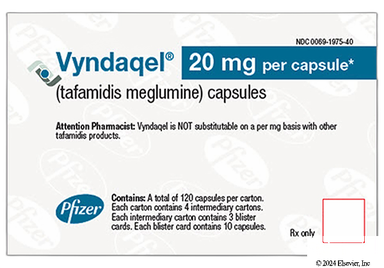
Vyndaqel (tafamidis) is a medication taken by mouth used for a rare type of heart disease called transthyretin-mediated amyloidosis cardiomyopathy (ATTR-CM). It's available as two different brand names and is taken once per day.

Vyndaqel (tafamidis) is a transthyretin (TTR) stabilizer. It works by attaching to a protein in your body called transthyretin. This slows protein breakdown and buildup in the heart walls, which makes it easier for the heart to pump blood to the rest of your body.
| Common Brands | Vyndaqel, Vyndamax |
|---|---|
| Drug Class | TTR stabilizer |
| Controlled Substance Classification | Not a controlled medication |
| Generic Status | No lower-cost generic available |
| Availability | Prescription only |

The following side effects may get better over time as your body gets used to the medication. Let your healthcare provider know immediately if you continue to experience these symptoms or if they worsen over time.
The following side effects listed in the supplemental appendix of a major clinical study were similar in people taking Vyndaqel (tafamidis) and people taking placebo. Side effects were generally mild to moderate in severity.







Prescription savings
Stop paying too much for your prescriptions. Compare prices, get pharmacy coupons, and save up to 80%. Find expert answers to your health questions so you can make the best decisions for yourself and your family.
Health conditions
Medications & treatment
Access & affordability
Medication discounts

Transthyretin-mediated amyloidosis cardiomyopathy (ATTR-CM) is a rare type of heart muscle disease. Amyloidosis is a group of diseases caused by a buildup of proteins called amyloid in your body's organs. This causes your organs to not work properly. ATTR-CM is a type of amyloidosis that's caused by buildup of a protein called transthyretin on the walls of your heart muscle. This causes your heart walls to become stiff and unable to relax, fill with blood, and pump blood to the rest of your body properly. This can lead to heart failure, which can look like tiredness, shortness of breath, coughing or wheezing, swelling in the feet or ankles, or stomach bloating. Vyndaqel helps with ATTR-CM by attaching to transthyretin to prevent building up in your heart.
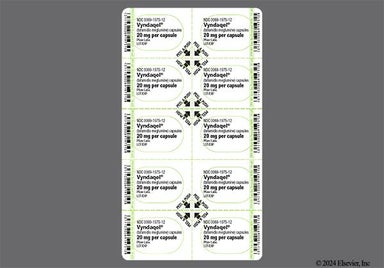
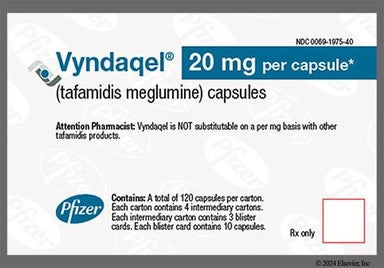
The difference between Vyndaqel and Vyndamax is the strength of tafamidis in each capsule and the dose of each brand medication, which affects how they're taken. Vyndaqel comes as 20 mg capsules, but the dose of Vyndaqel is 80 mg once per day. This means that you'll need to take 4 capsules of Vyndaqel for each dose. On the other hand, Vyndamax comes as 61 mg capsules, and the dose of Vyndamax is 61 mg once per day. This means that you'll only need to take 1 capsule of Vyndamax for each dose. This makes Vyndamax more convenient to take for some people compared to Vyndaqel. Both brands aren't equal to each other and therefore can't be switched out for each other. Make sure you know which brand of Vyndaqel you have to avoid taking the wrong dose.
It's not known if Vyndaqel is safe or if it works well in children younger than 18 years old. Symptoms of ATTR-CM can start to appear as early as age 20 (in some people with the genetic version of this heart disease) or as late as after age 65. If you or your child starts to show symptoms of ATTR-CM before the age of 18, speak to your or your child's provider about other options.
Vyndaqel isn't recommended for use in pregnant women because of the potential to cause harm to unborn babies. While there haven't been enough studies in pregnant women, animal studies have shown harm to unborn babies, although this was at doses 9 times higher than the usual dose for humans. To be safe, women and men of reproductive potential should consider careful pregnancy planning and prevention before starting Vyndaqel. If you become pregnant or think you've become pregnant while taking Vyndaqel, it's recommended to let your provider know and contact the manufacturer (Pfizer) at 1-800-438-1985.
