


Drugs for Men: A GoodRx Savings Guide to 7 Notable Men’s Health Medications
Viagra and minoxidil are some of the most commonly prescribed medications for men. See the other top drugs for men’s health, from ED treatment to hair loss.
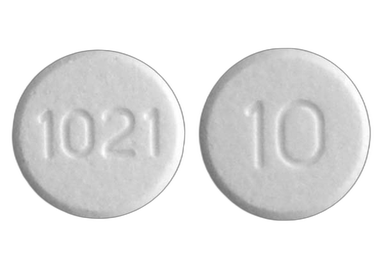
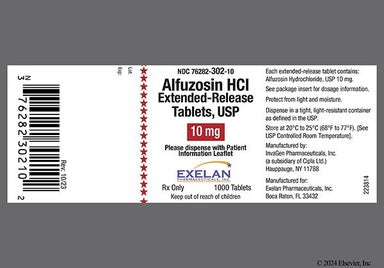
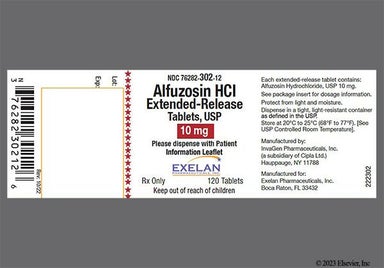
Alfuzosin ER (Uroxatral) is used to treat benign prostatic hyperplasia (BPH) in males. It's taken by mouth only once daily because it's an extended-release (ER) medication. Alfuzosin ER (Uroxatral) is available as generic and brand name tablets. Common side effects of this medication include dizziness and headaches.

Alfuzosin ER (Uroxatral) is an alpha-1 blocker. It treats BPH by relaxing certain muscles in the prostate and bladder, which allows urine to flow more easily.
| Common Brands | Uroxatral |
|---|---|
| Drug Class | Alpha-1 adrenergic receptor blocker |
| Controlled Substance Classification | Not a controlled medication |
| Generic Status | Lower-cost generic available |
| Availability | Prescription only |

The following side effects may get better over time as your body gets used to the medication. Let your healthcare provider know immediately if you continue to experience these symptoms or if they worsen over time.
Contact your healthcare provider immediately if you experience any of the following.
Along with its needed effects, a medicine may cause some unwanted effects. Although not all of these side effects may occur, if they do occur they may need medical attention.
Check with your doctor immediately if any of the following side effects occur:
Rare
chills
cold sweats
confusion
dizziness, faintness, or lightheadedness when getting up from a lying or sitting position
fainting
fast, pounding, or irregular heartbeat or pulse
painful or prolonged erection of the penis
Incidence not known
Arm, back, or jaw pain
black, tarry stools
bleeding gums
bloody urine
chest discomfort, tightness, or heaviness
clay-colored stools
dark urine
headache
hives, welts, itching, skin rash
large, hive-like swelling on the face, eyelids, lips, tongue, throat, hands, legs, feet, or genitals
loss of appetite
pinpoint red spots on the skin
stomach pain
sweating
swelling
unpleasant breath odor
unusual bleeding or bruising
unusual tiredness or weakness
vomiting of blood
yellow eyes or skin
Some side effects may occur that usually do not need medical attention. These side effects may go away during treatment as your body adjusts to the medicine. Also, your health care professional may be able to tell you about ways to prevent or reduce some of these side effects. Check with your health care professional if any of the following side effects continue or are bothersome or if you have any questions about them:
Less common
Belching
body aches or pain
congestion
cough producing mucus
decreased interest in sexual intercourse
difficulty breathing
difficulty having a bowel movement
dryness or soreness of the throat
ear congestion
hoarseness
inability to have or keep an erection
indigestion
loss in sexual ability, desire, drive, or performance
loss of voice
pain or tenderness around the eyes and cheekbones
stomach discomfort or upset
stuffy or runny nose
tender, swollen glands in the neck
tightness in the chest
trouble with swallowing
unusual tiredness or weakness
voice changes
Incidence not known
Feeling of warmth
redness of the face, neck, arms, and occasionally, upper chest
Other side effects not listed may also occur in some patients. If you notice any other effects, check with your healthcare professional.
Call your doctor for medical advice about side effects. You may report side effects to the FDA at 1-800-FDA-1088.




Alfuzosin ER (Uroxatral) can cause some serious health issues. This risk may be even higher for certain groups. If this worries you, talk to your doctor or pharmacist about other options.
Alfuzosin ER (Uroxatral) can cause a big drop in blood pressure when you stand up from a seated or lying down position. This might make you feel dizzy or it can make you faint. It's more likely to happen within hours after you take your dose. Your risk is higher if you're also taking other blood pressure medications or erectile dysfunction medications at the same time. Be cautious with your activities when you first start alfuzosin ER (Uroxatral) or when your provider raises your dose.
Alfuzosin ER (Uroxatral) can interact with many medications, so make sure you let your provider know about all the medications you're taking before you start alfuzosin ER (Uroxatral).
For example, taking alfuzosin ER (Uroxatral) with medications for erectile dysfunction might cause your blood pressure to drop too low, which can be dangerous.
You'll need to avoid certain medications, such as clarithromycin (Biaxin), ketoconazole, and some HIV medications completely when taking alfuzosin ER (Uroxatral). These medications can cause the level of alfuzosin ER (Uroxatral) to rise too high in your body and raise your risk of side effects.
Alfuzosin ER (Uroxatral) is broken down by your liver so it can be cleared from your body. Don't take alfuzosin ER (Uroxatral) if you have moderate to severe liver problems. Check with your provider if you aren't sure how severe your liver problems are.
Also, if you've kidney problems, let your provider know. Depending on how serious your condition is, you might not be able to take alfuzosin ER (Uroxatral).
If you have chest pain or heart rhythm problems (long QT), let your provider know. They'll likely stop alfuzosin ER (Uroxatral) for you if you have chest pain or if your chest pain worsens. And they might need to monitor your heart more often if you have heart rhythm problems.
In some very rare cases, alfuzosin ER (Uroxatral) can cause a painful erection (also known as priapism) that continues for more than 4 hours. If this happens to you, contact your provider right away to avoid the risk of permanent erectile dysfunction.
If you take alfuzosin ER (Uroxatral) and plan to get cataract eye surgery, let your provider know. In some rare cases, this medication can cause changes to your iris, a condition called Intraoperative floppy iris syndrome (IFIS). Keep in mind that alfuzosin ER (Uroxatral) is probably less likely to cause IFIS than other medications used to treat BPH, like tamsulosin. You don’t need to stop taking alfuzosin ER (Uroxatral) before the surgery, but your surgeon needs to adjust how they perform the operation. Letting your provider know ahead of time can help them prepare accordingly.

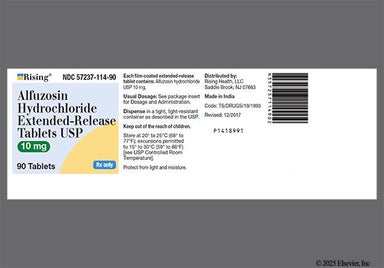
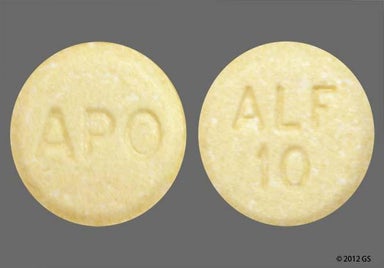
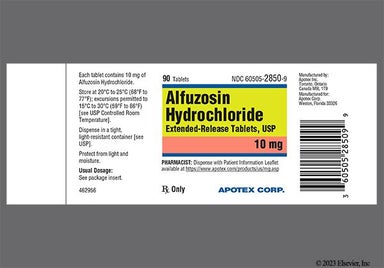
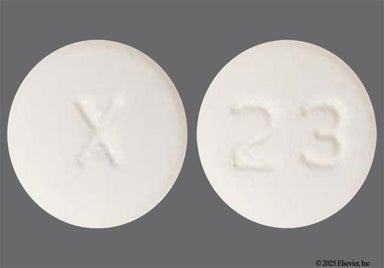
 Tablet
| Dosage | Quantity | Price as low as | Price per unit |
|---|---|---|---|
| 10mg | 30 tablets | $12.35 | $0.41 |
The typical dose is 10 mg by mouth once per day right after the same meal each day.

Although certain medicines should not be used together at all, in other cases two different medicines may be used together even if an interaction might occur. In these cases, your doctor may want to change the dose, or other precautions may be necessary. When you are taking this medicine, it is especially important that your healthcare professional know if you are taking any of the medicines listed below. The following interactions have been selected on the basis of their potential significance and are not necessarily all-inclusive.
Using this medicine with any of the following medicines is not recommended. Your doctor may decide not to treat you with this medication or change some of the other medicines you take.
Using this medicine with any of the following medicines is usually not recommended, but may be required in some cases. If both medicines are prescribed together, your doctor may change the dose or how often you use one or both of the medicines.
Using this medicine with any of the following medicines may cause an increased risk of certain side effects, but using both drugs may be the best treatment for you. If both medicines are prescribed together, your doctor may change the dose or how often you use one or both of the medicines.


Contraindications are specific health conditions or situations in which a person should not take a medication due to safety concerns. If you have any of the following conditions or if any of the following apply to you, let your healthcare provider know because Alfuzosin ER (Uroxatral) will not be safe for you to take.





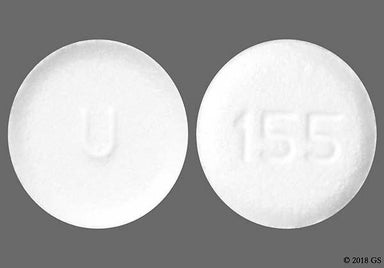
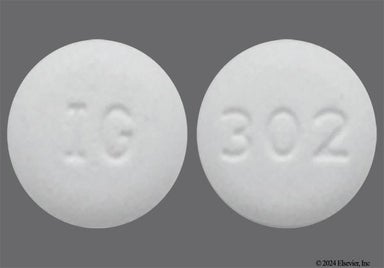
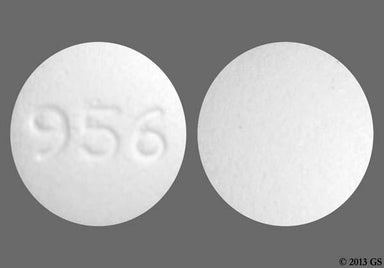
Prescription savings
Stop paying too much for your prescriptions. Compare prices, get pharmacy coupons, and save up to 80%. Find expert answers to your health questions so you can make the best decisions for yourself and your family.
Health conditions
Medications & treatment
Access & affordability
 Our monthly healthcare membership can help you save thousands on your prescription costs.
Resources

Clinical studies show that people start to experience relief of prostate symptoms after a few days of taking Alfuzosin. But you'll probably need to take this medication for a month or longer to experience the most benefit. It's important that you continue to take Alfuzosin even if you don't feel better right away. As your symptoms improve, you might notice that your urine stream is more consistent or that you can better empty your bladder. But if you don't notice your symptoms getting better after a few weeks, talk with your provider.
Once you stop taking Alfuzosin, it'll take a little over 2 days for this medication to completely leave your body. Keep in mind that this time frame is estimated based on the half-life of Alfuzosin of this medication. It can differ from person to person, depending on other factors, such as whether or not you have liver or kidney problems. Talk with your provider if you have more questions about how long Alfuzosin stays in your body.
You should take Alfuzosin after a meal, preferably after the same meal each day, because it works better when you take it with food. Your provider might recommend that you take it at bedtime, because some people experience dizziness as a side effect. If you don't feel dizzy from taking this medication, then you can take it at a time that works best for you. Talk with your provider if you're not sure when you should take Alfuzosin.
Yes, Alfuzosin can lower your blood pressure. This medication is known to cause something called postural hypotension, which is a drop in blood pressure when you stand up from a sitting or lying position. Your risk for this side effect is higher within hours after taking your dose or if you're taking other blood pressure medications. If you’ve been sitting or lying down, get up slowly to avoid the risk of falling. Also, avoid driving and doing things that might be dangerous until your body gets used to the medication.
No, swallow the Alfuzosin tablets whole. It's an extended-release tablet, meaning the medication is meant to be released slowly in the body over several hours. Too much medication can be absorbed at once if it's crushed or chewed, which can raise your risk of side effects.
While extremely rare, Alfuzosin can cause prolonged and painful erections lasting more than 4 hours, a condition called priapism. If left untreated, priapism can lead to impotence, or erectile dysfunction. If you experience prolonged and painful erections, contact your healthcare provider right away.
