Used for Giant Cell Tumor, Hypercalcemia, Multiple Myeloma
Used for Giant Cell Tumor, Hypercalcemia, Multiple Myeloma
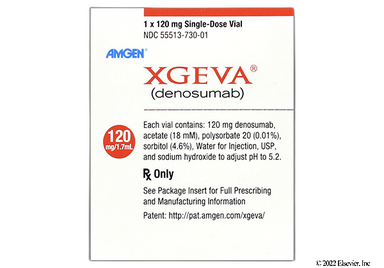
Xgeva (denosumab) is a RANKL inhibitor used to help prevent serious bone problems caused by cancer. It's also approved to treat giant cell tumor of bone and high calcium levels due to cancer. The medication is given as an injection under the skin by a healthcare professional, typically once a month. Common side effects include nausea, tiredness, and diarrhea. Several biosimilar versions of Xgeva (denosumab) are also available.
The following side effects may get better over time as your body gets used to the medication. Let your healthcare provider know immediately if you continue to experience these symptoms or if they worsen over time.
Common Side Effects
Cancer that has spread to the bones:
Tiredness (45%)
Low phosphate levels (32%)
Nausea (31%)
Multiple myeloma:
Diarrhea (34%)
Nausea (32%)
Low red blood cells (22%)
Back pain (21%)
Giant cell tumor of bone: (all ≥ 10%)
Joint pain
Back pain
Pain in the arms and legs
Tiredness
Headache
Nausea
Common cold symptoms
Muscle or bone pain
Toothache
Vomiting
Low phosphate levels
Constipation
Diarrhea
Cough
High calcium due to cancer:
Nausea (30%)
Shortness of breath (27%)
Reduced appetite (24%)
Headache (24%)
Swelling (24%)
Vomiting (24%)
Low red blood cell count (21%)
Constipation (21%)
Diarrhea (21%)
Less Common Side Effects
Cancer that has spread to the bones:
Shortness of breath
Diarrhea
Low calcium levels
Cough
Headache
Multiple myeloma:
Low platelet levels
Swelling
Low calcium levels
Upper respiratory tract infection
Rash
Headache
Giant cell tumor of bone:
Jaw problems
Low red blood cell count
Pneumonia
Back pain
High calcium due to cancer:
Tiredness
Infection
Xgeva (denosumab) serious side effects
Contact your healthcare provider immediately if you experience any of the following.
Serious allergic reactions: dizziness, trouble breathing, tightness in your throat, swelling in your face and throat, itchiness, rash
The following Xgeva (denosumab) side effects have also been reported
Along with its needed effects, a medicine may cause some unwanted effects. Although not all of these side effects may occur, if they do occur they may need medical attention.
Check with your doctor or nurse immediately if any of the following side effects occur:
Some side effects may occur that usually do not need medical attention. These side effects may go away during treatment as your body adjusts to the medicine. Also, your health care professional may be able to tell you about ways to prevent or reduce some of these side effects. Check with your health care professional if any of the following side effects continue or are bothersome or if you have any questions about them:
Helps reduce serious bone problems caused by cancers
Can be used for many cancer-related bone conditions
Typically injected once a month
Cons
Must be injected by a healthcare professional
Requires regular blood tests
Not safe in pregnancy
Pharmacist tips for Xgeva (denosumab)
Xgeva (denosumab) is given as an injection under the skin by a healthcare professional, usually once every month. The injection is given in your upper arm, upper thigh, or stomach.
Keep all of your Xgeva (denosumab) appointments. You might also need regular blood tests to check your calcium and other electrolyte levels during treatment.
Your prescriber might recommend calcium and vitamin D supplements, regular exercise, and a bone-healthy diet while receiving Xgeva (denosumab). Follow their recommendations to help keep your bones strong.
Xgeva (denosumab) can cause low calcium levels in the blood. Tell your prescriber right away if you develop muscle cramps, tingling around your mouth, or numbness in your fingers or toes.
Tell your dentist that you're receiving Xgeva (denosumab) before any dental procedure. This medication can rarely cause a serious jaw problem called osteonecrosis of the jaw.
Tell your care team if you develop new or unusual pain in your thigh, hip, or groin while taking Xgeva (denosumab). This can be an early sign of a rare thigh bone fracture.
Tell your prescriber if you're taking other denosumab products before starting Xgeva (denosumab) since they shouldn't be used together.
Xgeva (denosumab) can interact with some medications and supplements. Share a complete list of everything you take with your care team before starting treatment.
Pregnancy: Tell your prescriber right away if you become pregnant while taking Xgeva (denosumab). If you can become pregnant, use effective birth control during treatment and for 5 months after your last dose.
Breastfeeding: Talk with your care team before breastfeeding while taking Xgeva (denosumab). Small amounts of the medication might pass into breast milk, but it's not known how it might affect a breastfed child.
Risks and warnings for Xgeva (denosumab)
Xgeva (denosumab) can cause some serious health issues. This risk may be even higher for certain groups. If this worries you, talk to your doctor or pharmacist about other options.
Serious allergic reactions
Some people who received Xgeva (denosumab) have reported serious allergic reactions, including anaphylaxis. Symptoms can include trouble breathing, swelling of your face, lips, mouth, or throat, rash, itching, hives, or feeling faint. Get medical help right away if you experience these symptoms.
Low calcium levels
Risk factors: Serious kidney problems | Not taking calcium supplements | Taking other medications that can lower calcium blood levels
Xgeva (denosumab) can cause low blood calcium levels in your blood, which can sometimes be serious. Your risk is higher if you have severe kidney problems or don't get enough calcium and vitamin D.
Your care team will check your calcium levels before and during treatment. They might recommend calcium and vitamin D supplements while you're receiving Xgeva (denosumab). Tell your prescriber right away if you have muscle cramps, tingling around your mouth, or numbness in your fingers or toes, since these can be signs of low calcium.
Jaw bone problems (osteonecrosis of the jaw)
Risk factors: Dental procedures during treatment | Receiving Xgeva (denosumab) long term | Wear dentures | Taking medications that weaken the immune system, certain medications that stop tumors from growing, or steroids | Poor mouth hygiene | History of gum infections | Diabetes
Although rare, Xgeva (denosumab) can cause osteonecrosis of the jaw (ONJ), a condition where part of the jaw bone breaks down. Symptoms can include jaw pain, swelling, tooth or gum infections, loose teeth, or slow healing after a dental procedure. Your risk might be higher the longer you receive treatment.
To help lower your risk, practice good mouth hygiene and have regular dental checkups. Your prescriber might recommend a dental exam before you start treatment. Tell your dentist that you're taking Xgeva (denosumab), and let your prescriber know before having any dental procedures. Contact your care team right away if you develop jaw pain, swelling, or sores in your mouth that don't heal.
Thigh bone fractures
Risk factors: Taking steroid medications
Although rare, people taking Xgeva (denosumab) have experienced unusual thigh bone fractures, sometimes without a fall or other injury. Tell your prescriber right away if you have new or unusual pain in your hip, thigh, or groin. This pain can be an early warning sign of a fracture, and your care team might want to check your bones.
High calcium levels after stopping treatment
Risk factors: Giant cell tumor of bone | Being at an age where your bones are still growing
Xgeva (denosumab) can cause dangerously high calcium levels after you stop treatment, especially if you're taking it for a giant cell tumor of bone or if your bones are still growing. This risk is highest during the first year after your last dose.
Tell your prescriber right away if you have loss of appetite, stomach pain, nausea, vomiting, constipation, increased thirst, frequent urination, or unusual tiredness.
Spinal fractures after stopping treatment
Risk factors: History of fractures | History of osteoporosis
Stopping Xgeva (denosumab) can raise your risk of fractures in the bones of your spine, especially if you have osteoporosis or have had fractures in the past. Don't stop the medication without talking to your care team first. Tell your prescriber right away if you develop new or worsening back pain if you do stop treatment.
Harm to unborn baby
Xgeva (denosumab) can cause serious harm to an unborn baby, so it's not safe in pregnancy. Before you start treatment, your healthcare team might ask you to take a pregnancy test to make sure you're not pregnant.
If you can become pregnant, use effective birth control while receiving Xgeva (denosumab) and for at least 5 months after your last dose. Tell your prescriber right away if you become pregnant during treatment.
Xgeva (denosumab) dosage
The average cost for 1 vial of 1.7ml of 120mg/1.7ml of Xgeva (denosumab) is $3,415.83 with a free GoodRx coupon. This is 18.05% off the average retail price of $4,168.30.
Xgeva (denosumab) is given as an injection under the skin in the upper arm, upper thigh, or stomach by a healthcare professional.
Prevention of bone problems in people with cancer: The typical dose is 120 mg injected under the skin every 4 weeks.
Giant cell tumor of bone and high calcium levels caused by cancer: The typical dose is 120 mg injected under the skin every 4 weeks. In the first month of treatment, you'll receive an additional 120 mg on Day 8 and 15.
Interactions between Xgeva (denosumab) and other drugs
Xgeva (denosumab) may interact with certain medications or supplements. Always let your doctor and pharmacist know about any other medications or supplements (including prescribed and over-the-counter medications, vitamins, and dietary or herbal supplements) that you are currently taking. The list below does not include all possible drug interactions with Xgeva (denosumab). Please note that only the generic name of each medication is listed below.
Although certain medicines should not be used together at all, in other cases two different medicines may be used together even if an interaction might occur. In these cases, your doctor may want to change the dose, or other precautions may be necessary. When you are receiving this medicine, it is especially important that your healthcare professional know if you are taking any of the medicines listed below. The following interactions have been selected on the basis of their potential significance and are not necessarily all-inclusive.
Using this medicine with any of the following medicines is usually not recommended, but may be required in some cases. If both medicines are prescribed together, your doctor may change the dose or how often you use one or both of the medicines.
Contraindications are specific health conditions or situations in which a person should not take a medication due to safety concerns. If you have any of the following conditions or if any of the following apply to you, let your healthcare provider know because Xgeva (denosumab) will not be safe for you to take.
Low calcium levels that are untreated
What are alternatives to Xgeva (denosumab)?
There are a number of medications that your doctor can prescribe in place of Xgeva (denosumab). Compare a few possible alternatives below.
Xgeva (denosumab)
Used for:
Prevention of bone problems in adults with multiple myeloma or certain cancers that have spread to the bones
Giant cell tumor of bone in adults and certain teens who can't have surgery
This medicine is Yellow Vial.Yellow Not applicable - XGEVA 120mg/1.7mL Solution for InjectionThis medicine is Yellow Vial.Yellow Not applicable - XGEVA 120mg/1.7mL Solution for Injection
GoodRx Health has strict sourcing policies and relies on primary sources such as medical organizations, governmental agencies, academic institutions, and peer-reviewed scientific journals. Learn more about how we ensure our content is accurate, thorough, and unbiased by reading our editorial guidelines.
Prescription savings
Stop paying too much for your prescriptions. Compare prices, get pharmacy coupons, and save up to 80%.
No, Xgeva doesn't kill cancer cells. Instead, it helps protect your bones from damage caused by cancer. When cancer spreads to the bones, it can speed up bone breakdown and make your bones weaker. Xgeva slows this process to help keep your bones strong and lower the risk of fractures. Because it doesn't treat the cancer itself, it's used along with cancer treatments such as chemotherapy or other anticancer medications.
No, Xgeva isn't a bisphosphonate. It belongs to a different class of medications called RANKL inhibitors. Both bisphosphonates and Xgeva help strengthen bones and lower the risk of fractures, but they work in different ways. Bisphosphonates are usually the first-choice treatment for osteoporosis, while Xgeva is approved to treat bone problems related to cancer. Another medication that contains the same active ingredient (denosumab), called Prolia, is FDA approved to treat osteoporosis.
Xgeva stays in your body for a long time. After your last dose, it typically takes about 4 to 5 months for most of the medication to leave your body. This estimate is based on the medication's half-life, which is the amount of time it takes for half of a dose to leave your body.
No, Xgeva isn't meant to be given at home. It's an injection that's given just under the skin by a healthcare professional in a clinic, hospital, or prescriber's office.
When you stop taking Xgeva, its bone-protecting benefits wear off. This can trigger a "rebound effect" where your body rapidly breaks down bone more quickly. The biggest danger of stopping treatment is a higher risk of fractures, especially in your spine. For some conditions, like giant cell tumor of bone, stopping can also cause high calcium levels in the blood. Don't stop taking this medication without talking to your healthcare team first.
Xgeva is usually given as an injection once every 4 weeks. If you're being treated for a giant cell tumor of the bone or high calcium levels caused by cancer, you'll also receive extra doses on Days 8 and 15 during your first month of treatment to help the medication start working sooner. Because Xgeva is given by a healthcare professional, it's important to keep all of your appointments so your treatment stays on schedule.
Xgeva is injected just under the skin in your upper arm, upper thigh, or stomach by a healthcare professional. They will rotate the injection site each time to help reduce skin irritation. The injection shouldn't be given into skin that's tender, bruised, red, or hard.
No, Xgeva isn't the same as Prolia, even though both contain the same active ingredient, denosumab. The main differences are what they treat and how often they're given. Prolia is used to treat conditions related to osteoporosis and is usually given once every 6 months. Xgeva is used to prevent cancer-related bone problems and is typically given once a month. You shouldn't receive both medications at the same time. Ask your prescriber if you have questions about how they compare.