Key takeaways:
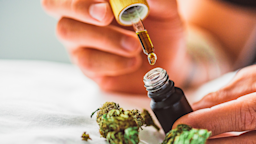
Cannabidiol (CBD) is a chemical that comes from the cannabis plant. It’s available in many different products, like oils, tinctures, and ointments.
There’s some evidence that CBD might be able to help with sleep problems. But it might work best in people who also have other health conditions, or if it's combined with other cannabinoids, such as tetrahydrocannabinol (THC).
Just like other supplements, CBD isn’t risk free. If you’re interested in trying CBD for sleep, check in with a healthcare professional first.
Since effectively becoming legal in 2018 in the U.S., cannabidiol (CBD) is all over the place, from food and edibles to oils, creams, and even pet products. It’s reported to have many benefits, like lowered anxiety, reduced pain, and better sleep.
And if you’re one of the millions of U.S. adults who have trouble getting enough sleep at night, you may be curious about whether CBD could work for you.
So, does CBD help you sleep better? Unfortunately, we just don’t know for sure yet.
Search and compare options
What is CBD?
CBD is a substance that comes from cannabis plants. Unlike its well-known counterpart tetrahydrocannabinol (THC), which is another chemical in cannabis, CBD doesn’t have any intoxicating effects. In other words, CBD won’t make you high.
There’s a lot of interest in the possible health benefits of CBD. CBD products claim to be able to help with many different symptoms. There does exist prescription CBD that’s FDA approved for seizure disorders. However, when it comes to other things — including sleep — it’s not clear how well CBD works.
What does the science say about CBD and sleep?
When it comes to CBD and sleep, the science isn’t entirely clear. That’s because some studies use CBD mixed with THC instead of CBD alone. And only a few studies focus on people with sleep problems as their only concern.
Cannabinoids seem to help improve sleep in studies of people with other health conditions, such as chronic pain and multiple sclerosis. But CBD might affect your sleep differently if you have other health concerns as well.
So, let’s break it down.
CBD with THC may improve sleep
When CBD is combined with THC, studies show that it can help treat insomnia in people without any other medical conditions. When people with moderate-to-severe insomnia used a mixture of CBD mixed with THC and cannabinol (CBN), it helped their insomnia.
What about CBD alone?
Here’s where things get tricky. Some clinical studies show that CBD does help improve sleep. Cannabinoids seem to help people fall asleep faster and stay asleep through the night. But many of the people in these studies also had other health problems, like multiple sclerosis, post-traumatic stress disorder (PTSD), or chronic pain. So it’s not clear if CBD helped their sleep directly — or if it helped because it eased symptoms from their other health conditions, like anxiety or pain.
When researchers focus on CBD alone in healthy people without other health conditions, the results are mixed. Healthy college students without sleep problems who took CBD daily reported that their sleep quality improved. But for people with moderate to severe insomnia — and no other health conditions — taking CBD daily didn’t help them sleep better. Taking CBD didn’t help them fall asleep faster, sleep longer, or improve sleep quality. It’s not totally clear why these studies showed different results.
The takeaway? More research is needed to understand how CBD impacts sleep quality. But at this time, there’s no evidence to show that CBD alone improves sleep in people with insomnia without a clear underlying cause.

Read more like this
Explore these related articles, suggested for readers like you.


How might CBD work for sleep?
CBD might affect your sleep through something called the endocannabinoid system (ECS).
The ECS is a network in your body that has many jobs, including helping to control pain, emotions, and sleep patterns. It also involves a part of your brain called the hypothalamus, which helps you fall asleep and wake up.
In the ECS, there are receptors that can interact with CBD. When CBD connects with these receptors, it might affect your sleep pattern. This could potentially help your body stick to a more regular sleep cycle — and make it easier for you to fall asleep at night and wake up in the morning.
What is the best form of CBD for sleep, and when should you take it?
It’s hard to say which CBD products are best for sleep. A healthcare professional may be able to make some suggestions for you. Otherwise, some trial and error may be required to help you figure out which product, and what dose, works best for you.
The general recommendation is to start with a low dose and slowly increase it to find what works best. But keep in mind: With CBD, low doses can sometimes be stimulating, making you feel more awake.
CBD comes in many different forms. Options include:
Products for smoking or vaping
Oils or tinctures
Edibles, gummies, and capsules
Beverages and teas
Creams and ointments
Smoking or vaping
Smoking or vaping CBD usually works the fastest. People often feel an effect within minutes. But smoking and vaping can be hard on your lungs. And effects from these types of products don’t tend to last as long.
Edibles and tinctures
CBD oil and edibles — like gummies, lozenges, or capsules — can take a bit longer to work. It may take 1 to 2 hours before you notice any effect. On the other hand, the results might last longer with these types of products.
How to choose
It’s important to note that smoking or vaping can have health risks. Oils and creams can also cause a rash in some people. Also, they typically don’t absorb into the bloodstream, so they’re not likely to help with sleep. This is why it’s important to first check in with a healthcare professional before you take CBD. That way, you can understand the pros and cons of different ways of taking CBD (more on the risks below).
If you’re planning to try CBD for sleep, it’s also important to choose a high-quality product for best results. This means:
Buying CBD products from a licensed dispensary or a brand with a good reputation
Choosing organic CBD products that are made in the U.S.
Using products that have been tested by a third-party lab to make sure they’re safe, pure, and have the right dose of CBD
Staying away from CBD products with additional additives
Are there risks to using CBD for sleep?
For many people, using CBD for sleep seems to be safe — especially when used for a short period of time. But the CDC cautions that, so far, we don’t really know that much about CBD safety.
Here are a few potential risks to keep in mind:
Medication interactions: CBD can cause problems with other medications, especially ones that are processed in your liver. These include statins, nonsteroidal anti-inflammatory drugs (NSAIDs), some blood pressure medications and blood thinners, and more. CBD can affect how your liver handles medications, or how well the medications work in your body.
Unreliable dosing: Because CBD isn’t regulated by the FDA, it can be hard to know how much CBD you’re actually getting from a product. In other words, you might be getting more or less CBD than you intend. In a 2017 study of 84 different products, fewer than 1 in 4 were accurately labeled for CBD content.
THC exposure: Some CBD products contain THC, another chemical that comes from the cannabis plant — even though they’re technically not supposed to. THC can have unwanted effects, like making you feel high. It can also potentially disrupt your sleep.
Liver damage and problems with the male reproductive system: There’s some evidence that CBD use may be associated with liver damage. This can potentially happen after just a few weeks, even at low doses. Damage to the male reproductive system has also been reported in some animal studies.
Remember: If you’re thinking about trying CBD — or any new medication or supplement — it’s always a good idea to check in with a healthcare professional. They can help you understand whether CBD is safe for you to try. And they can help you find a brand with a good reputation.
Can CBD cause side effects?
Yes, CBD can sometimes cause side effects, including:
Starting with a low dose of CBD and slowly increasing it can help you manage and prevent most side effects. The formulation of the product you’re taking can also contribute to side effects. So trying a different dosage form may work for you.
Are there other natural remedies for sleep?
Absolutely! There are many things you can do to sleep better at night.
Here are some ideas to try:
Practice good sleep hygiene. This means making changes to your daily routine and home environment that can help you sleep well at night.
Try meditation. Meditation can have many mental and physical health benefits, including helping you to sleep better at night.
Explore cognitive behavioral therapy for insomnia (CBT-I). CBT-I is a proven treatment for insomnia. It’s a type of therapy that teaches you to think about sleep in a more positive way. And it gives you tools to manage your sleep problems directly.
Try melatonin. Melatonin is a chemical that your body releases at bedtime. Melatonin supplements may be able to help you sleep better, especially if your insomnia is caused by jet lag or working a night shift.
In some cases, over-the-counter (OTC) sleep aids or prescription medication can also help. Talk with a healthcare professional about whether these options are right for you.
Frequently asked questions
No, if you’re pregnant or breastfeeding, you should stay away from cannabidiol (CBD).
It’s not clear whether CBD is harmful to babies and children. More research is needed. But so far, there’s some evidence that CBD could cause problems during pregnancy or early childhood.
Since CBD isn’t regulated by the FDA, it’s also possible that using CBD could expose your baby to tetrahydrocannabinol (THC), as well as other harmful substances like pesticides, heavy metals, and germs.
The possible benefits of CBD for Parkinson’s disease aren’t clear. So far, there haven’t been enough good-quality studies to say for sure whether CBD can help people with Parkinson’s. All the same, some people do use CBD to help with Parkinson’s symptoms, like insomnia, anxiety, and sleep problems. If you have Parkinson’s disease and are interested in CBD, talk to your healthcare team about whether it could be reasonable for you to try.
No, if you’re pregnant or breastfeeding, you should stay away from cannabidiol (CBD).
It’s not clear whether CBD is harmful to babies and children. More research is needed. But so far, there’s some evidence that CBD could cause problems during pregnancy or early childhood.
Since CBD isn’t regulated by the FDA, it’s also possible that using CBD could expose your baby to tetrahydrocannabinol (THC), as well as other harmful substances like pesticides, heavy metals, and germs.
It’s possible that CBD interferes with estradiol, an estrogen tablet used for treating menopause symptoms. CBD can affect some of the enzymes that process estradiol in your body. This means that using CBD could change estradiol levels in your body, or how well it works.
The possible benefits of CBD for Parkinson’s disease aren’t clear. So far, there haven’t been enough good-quality studies to say for sure whether CBD can help people with Parkinson’s. All the same, some people do use CBD to help with Parkinson’s symptoms, like insomnia, anxiety, and sleep problems. If you have Parkinson’s disease and are interested in CBD, talk to your healthcare team about whether it could be reasonable for you to try.
The bottom line
Cannabidiol (CBD) products claim to help with many different things, including sleep problems. And though there’s some evidence that CBD might be helpful for sleep, it seems it might be more helpful for people with underlying health issues causing their poor sleep. If you have insomnia but no other health conditions, then the evidence is less clear.
The good news: For many people, CBD may potentially be safe to try, including for sleep. But keep in mind that CBD isn’t completely risk free. If you’re interested in CBD, talk with a healthcare professional. They can help you choose a product that’s safe and reliable. Then you can see if CBD helps you get a good night’s rest.

Why trust our experts?


References
American Parkinson Disease Association. (2024). Understanding CBD.
American Psychiatric Association. (2023). Resource document on cannabidiol (CBD) in psychiatry.
Bonn-Miller, M. O., et al. (2017). Labeling accuracy of cannabidiol extracts sold online. Journal of the American Medical Association.
Florian, J., et al. (2025). Cannabidiol and liver enzyme level elevations in healthy adults. A randomized clinical trial. JAMA Internal Medicine.
Kisiolek, J. N., et al. (2023). Eight weeks of daily cannabidiol supplementation improves sleep quality and immune cell cytotoxicity. Nutrients.
MedlinePlus. (2025). Hypothalamus.
Narayan, A. J., et al. (2024). Cannabidiol for moderate-severe insomnia: A randomized controlled pilot trial of 150 mg of nightly dosing. Journal of Clinical Sleep Medicine.
National Center for Complementary and Integrative Health. (2019). Cannabis (marijuana) and cannabinoids: What you need to know.
Oberbarnscheidt, T., et al. (2020). The impact of cannabidiol on psychiatric and medical conditions. Journal of Clinical Medicine Research.
Ranum, R. M., et al. (2023). Use of cannabidiol in the management of insomnia: A systematic review. Cannabis and Cannabinoid Research.
Ried, K., et al. (2022). Medicinal cannabis improves sleep in adults with insomnia: A randomised double-blind placebo-controlled crossover study. Journal of Sleep Research.
Shannon, S., et al. (2019). Cannabidiol in anxiety and sleep: A large case series. The Permanente Journal.
U.S. Food and Drug Administration. (2019). What you should know about using cannabis, including CBD, when pregnant or breastfeeding.
U.S. Food and Drug Administration. (2020). What you need to know (and what we’re working to find out) about products containing cannabis or cannabis-derived compounds, including CBD.
Walsh, J. H., et al. (2021). Treating insomnia symptoms with medicinal cannabis: A randomized, crossover trial of the efficacy of a cannabinoid medicine compared with placebo. Sleep.
Wenger, T., et al. (2002). The role of endocannabinoids in the hypothalamic regulation of visceral function. Prostaglandins, Leukotrienes, and Essential Fatty Acids.
World Health Organization. (2017). Drugs (psychoactive): Cannabidiol (compound of cannabis).