Key takeaways:
A variety of packaged foods and beverages contain natural flavors.
Natural flavors may contain artificial chemicals. They’re not always better for you than artificial flavoring.
When possible, aim to add whole foods and minimally processed products to your diet.
In an effort to eat a healthy and nutritious diet, you’re probably drawn to foods that are natural or minimally processed. When reading food labels, you’ve likely come across the term “natural flavors.” This may sound like a healthy ingredient. But this term may be both misleading and confusing. What does “natural flavors” really mean anyway?
What is ‘natural flavor’?
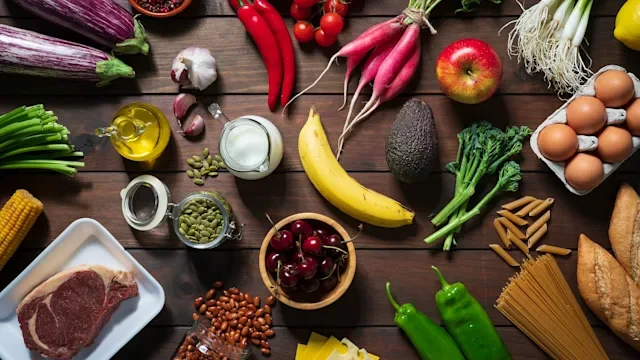
A natural flavoring is an essential oil or extract from a plant or animal source, according to the FDA. Natural flavors may come from a variety of sources, including:
Spices and herbs
Fruit or fruit juice
Vegetables or vegetable juice
Edible yeast, roots, bark, buds, or similar plant material
Meat, seafood, or poultry
Eggs
Dairy products
Fermented products
Manufacturers use heat and/or enzymes to get the flavor from these natural sources and then add them to foods. Even though they come from natural sources, artificial and synthetic chemicals often get added in during the manufacturing process.
In fact, these flavor mixtures can be made up of over 100 chemicals, according to the Environmental Working Group. Things like solvents, emulsifiers, flavor enhancers, and preservatives can make up 80% to 90% of natural flavors. This takes them pretty far away from their original source.
You may be wondering why these products are allowed to be labeled as “natural.” As it turns out, the word “natural” has no formal legal definition. The U.S. hasn’t established clear requirements on how manufacturers can use the term “natural.” And this can make the term highly misleading.
Where do you typically see natural flavoring?
Natural flavors are ingredients in many types of packaged foods and beverages. According to a 2017 report, they are the fourth most common food ingredient listed on food labels.
Natural flavors are included in the ingredient list, and sometimes advertised on the front of food product packaging. For some foods, the ingredients may be specific in listing “natural vanilla flavor,” for example. In other cases, the label may simply state “natural flavors.”
Food manufacturers are not required to reveal the original sources or chemical mixtures of these flavors. The exception is if the ingredients include a common allergen like wheat, eggs, or nuts.

Ultra-processed foods and your health: Diets high in ultra-processed foods have been linked to different health conditions. Learn more about their health effects and how to find alternatives.
How to read nutrition labels: The language on foods and drinks can be hard to unpack. Here’s a user-friendly guide to understanding nutrition labels.
Front-of-package labeling: Food packaging labels look quite different across the world. These Latin American countries advocate for consumers through front-of-package food labels.
What’s the difference between natural and artificial flavors?
The main difference between a natural and artificial flavor is their original source. Unlike natural flavors, artificial flavors don’t come from an edible plant or animal source.
Artificial flavors are made using FDA-approved flavoring chemical or food additives. And the FDA defines artificial flavors as anything that adds flavor to food that’s not found in nature.
Although natural flavors have a base source in nature — like a fruit or herb — the end product often has a very different makeup. As we’ve seen, natural flavors can be mostly made up of things like flavor enhancers and preservatives. So there isn’t always a big difference between natural and artificial flavors. In the end, artificial flavors may have the same chemical composition as flavors isolated directly from nature.
Can foods be both artificially and naturally flavored?
Yes. Food manufacturers sometimes use a mix of natural and artificial flavors. The use of artificial flavors helps reduce the cost of the products. Artificial flavors are also more reliable to use than natural flavors and can create very similar products.
But the term “natural” is more appealing to many consumers and seems to imply that the item is a healthy choice. So food manufacturers often use these ingredients either instead of or in addition to artificial ones.
Are natural flavors always healthier for you than artificial ones?
Most people assume that natural flavors are healthier. And not just for their chemical composition, but for their caloric content, too. Participants in one study estimated that natural products contained 18% fewer calories than their regular counterparts, even when the calories were the same.
However, the main function of both natural and artificial flavors is to provide flavor to the food and not to add to its nutritional value. So where the flavor came from doesn’t show how safe or healthy the end food product may be. Just because a food is naturally flavored doesn’t mean it’s a healthy or nutritious option.
Are natural flavors bad for you?
Since the USDA and FDA don’t regulate a standard definition of “natural flavors,” it’s hard to say exactly how they may affect your health. So, instead of asking why or if natural flavors are bad for you, it may be better to ask a more general question about what a nutritious diet looks like.
Lots of research shows that a well-balanced diet with plenty of fruits, vegetables, and whole foods can help lower your risk for many long-term health conditions. And there are lots of different ways you can follow a balanced and nutritious diet so that it fits your preferences and budget.
Should you avoid artificial flavorings?
Artificial flavorings undergo testing before being approved for use by the FDA. When consumed at intended levels, they’re believed to be safe to consume based on current knowledge and research. However, researchers often identify new information over time. This is why the FDA updates the safety status and removes ingredients from the approved list at times.
In addition, one research review showed that natural vanilla flavor is safer to consume than its artificial flavor, and the same may be true for other flavoring ingredients.
The bottom line
Manufacturers add natural flavors to a wide range of packaged foods and beverages. Despite what you might think, they may not always be better for you than artificial flavoring. Foods that are naturally flavored don’t necessarily mean they’re a healthy or nutritious choice. When possible, it’s best to aim for whole foods and minimally processed products.

Why trust our experts?




References
Allen, J. (2023). Food labeling requirements for natural flavors. Food Safety Tech.
Andrews, D. (n.d.). Natural vs. artificial flavors. Environmental Working Group.
Goodman, M. J. (2017). The “natural” vs. “natural flavors” conflict in food labeling: A regulatory viewpoint. Food Drug Law Journal.
Kuchler, F., et al. (2023). The prevalence of the “natural” claim on food product packaging. U.S. Department of Agriculture.
Nadar, S. S., et al. (2018). Enzyme assisted extraction of biomolecules as an approach to novel extraction technology: A review. Food Research International.
Skubisz, C. (2017). Naturally good: Front-of-package claims as message cues. Appetite.
U.S. Food and Drug Administration. (2018). FDA removes 7 synthetic flavoring substances from food additives list.
U.S. Food and Drug Administration. (2018). Use of the term natural on food labeling.
U.S. Food and Drug Administration. (2023). CFR - code of federal regulations title 21.
U.S. Food and Drug Administration. (2023). Food additive status list.
Vijayalakshmi, S., et al. (2019). Vanilla-natural vs artificial: A review. Research Journal of Pharmacy and Technology.