Key takeaways:
Eating healthy can feel hard, especially for those who feel strapped for cash.
Thankfully, there are several ways you can fill your shopping cart with nutrient-dense foods on a budget.
Consider buying frozen and canned produce and choosing conventional over organic.
When you think of eating healthy foods, the first thing that may pop into your mind is expensive. And there’s plenty of research to support that. Still, we know that eating foods like fruits, vegetables, and legumes is important to our overall health. In fact, reputable health organizations routinely release statements on how adopting a balanced diet can prevent certain chronic diseases.
So the question is: how can you afford fresh, nutritious foods while sticking to your grocery budget? First, it’s important to establish a grocery budget that makes sense for you and your family.
Step one is to identify how much money you can allocate toward grocery expenditures each month. According to 2020 data from the Bureau of Labor Statistics (BLS), the average U.S. household spent an average of $4,942 on groceries that year alone or about $412 per month.
But landing on a specific dollar amount may feel a bit rigid. Instead, pinpointing a price range you’d feel comfortable spending on food items each month is a more realistic approach. For example, if family and friends are in town, or if someone in your household is hosting a birthday dinner, your grocery bill could be higher that month — and that’s OK.
Once you establish your grocery budget, step two is to become familiar with the types of foods that are both nutrient-dense and affordable to you.
Do I have to buy organic to eat healthy?
The word “organic” is often equated with “healthy.” However, conventionally-produced fruits, vegetables, nuts, and lean proteins aren’t any less nutritious. Not to mention, organic foods often come at a premium price.
“It's absolutely possible to eat healthy without eating organic,” Sammi Haber Brondo, MS, RD, owner of Sammi Brondo Nutrition told GoodRx. “Organic foods aren't healthier than their non-organic counterparts, and nutritionally, they're often almost exactly the same.”
So what does organic even mean anyway? According to the United States Department of Agriculture (USDA) Organic Program, foods that have the organic label must be produced and handled “through approved methods that integrate cultural, biological, and mechanical practices that foster cycling of resources, promote ecological balance, and conserve biodiversity. Synthetic fertilizers, sewage sludge, irradiation, and genetic engineering may not be used.”
Notice that there are no words like “more nutritious” or “better for you” included in that definition. The one pitfall of conventional produce is that it’s often treated with pesticides, which are chemicals that help prevent and remove pests from crops.

Read more like this
Explore these related articles, suggested for readers like you.


There’s mixed research on whether or not pesticide consumption can cause adverse, long-term health effects in humans. However, there are specific federal organizations that make sure consumers are protected as best as possible.
For example, the United States Environmental Protection Agency (EPA) actively runs assessments on pesticides to determine which ones are safe to use on foods — and at controlled doses. Before approving the chemical, the EPA sets a limit on how much of the pesticide can be used on food so that it has a low likelihood of posing a threat to human health.
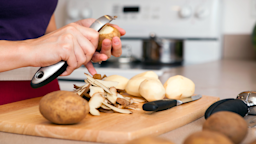
If you’re concerned about pesticides, just know that some fruits and vegetables have lower exposure to them than others. Since crops are sprayed with pesticides while growing, choosing produce that you have to peel to eat is your best bet.
“I'd especially recommend buying conventional over organic for a lot of produce with tough, outer skins that we don't eat, like bananas and pineapples,” Brondo said.
In short, organic isn’t always the answer. There are cheaper ways to eat whole foods without breaking the bank.
“If non-organic is all you can find or afford, go for it! There's absolutely nothing wrong with it,” said Brondo.
5 tips on how to shop for healthy foods while staying on budget
Brondo shares five helpful tips on how you can fill your grocery cart with healthy choices — without going outside of your budget.
1) Don’t shy away from frozen produce. “Frozen produce is often picked and packaged at its peak, so it's just as nutritious as fresh,” said Brondo. “It's also less expensive and lasts longer.”
2) Prioritize on food items with longer shelf lives. This probably comes as a shock. Haven’t we been instructed by health experts to avoid eating processed foods with long shelf lives? Well, there’s a wide spectrum of food processing methods, and not all of them are bad for your health.
Brondo explains that staple pantry items such as peanut butter and rice are not only nutritious, but another perk is that they will both last for a while. “More bang for your buck,” she said.
3) Don't be afraid of canned food. On a similar note, canned foods are great, shelf-stable options.
“Canned fruits and veggies are super nutritious, and canned proteins, like tuna and chicken, are inexpensive ways to add protein to your diet,” Brondo said. Canned beans also make a great choice, especially for vegetarians looking to up their protein intake.
If you’re looking to reduce sodium intake, try rinsing your foods before eating them. And if sugar is your concern, keep a lookout for canned fruit with added sugar.
4) Buy fresh fruits and veggies when they're in season. “Because out-of-season fruits and vegetables come from farther away, they're a lot more expensive than in-season ones,” Brondo said. “Think, berries in the summer vs. berries in the winter — they're often double the price!”
If you buy fruit that’s in season in your state, you’ll typically purchase it for a lower price. Otherwise, consider buying frozen to save some money.
5) Get creative with leftovers. “While leftovers may sometimes seem boring, they're a great way to prevent any wasted food,” said Brondo. “Instead of eating a meal the same exact way on repeat, try mixing it up — use different sauces to change the flavor profile, or throw roasted vegetables and protein on top of greens to make a like-new salad.”
The bottom line
Healthy foods can be expensive. However, it doesn’t always have to be that way. Calculating a grocery budget that feels empowering to you is key to feeling good about your purchases. Remember, you don’t have to buy organic produce to eat a well-balanced diet. If anything, the organic label signifies how the food item was produced and handled — it doesn’t mean it’s any less good for you than its conventional counterpart. In short, there are many ways you can keep costs low while still eating nutrient-rich foods; it just requires a little attention and creativity while shopping.

Why trust our experts?




References
American Heart Association. (2021). New look at nutrition research identifies 10 features of a heart-healthy eating pattern.
Bureau of Labor Statistics. (2020). Consumer expenditures.
Environmental Protection Agency. Basic information about pesticide ingredients.
Kern, David M et al. (2017) Neighborhood prices of healthier and unhealthier foods and associations with diet quality: Evidence from the multi-ethnic study of atherosclerosis. International journal of environmental research and public health
U.S. Department of Agriculture. (2016). Investigating retail price premiums for organic foods.