Key takeaways:
Butter is calorie-dense and high in saturated fat. But that doesn’t mean it’s always bad for you.
Butter can have some benefits because it helps your body absorb vitamins and can make foods like vegetables more appealing. It’s also minimally processed and has few ingredients.
A teaspoon of butter per day could actually be beneficial to your health by improving high-density lipoprotein (HDL) cholesterol, lowering triglycerides, and decreasing your risk of Type 2 diabetes.
Most people think of butter as good for their taste buds but bad for their health. But that thinking is starting to change. These days, people are using butter for more than a way to add delicious flavor to foods. Some people are eating it on its own or adding several tablespoons to coffee. In fact, people in the U.S. are eating butter at a record high of 27 sticks per year. That’s about ½ tbsp of butter every day.
With butter making its way into more foods and drinks, there’s never been a more pressing time to figure out whether butter is good or bad for you.
Is butter bad for you?
Not necessarily.
Many people assume butter is bad for you because it’s high in calories and saturated fat. In a single tablespoon of butter (about the size of half a golf ball), there’s:
100 calories
12 g of fat, including 7 g of saturated fat, which is about one-third of the recommended daily limit
But high-calorie and high-fat foods, like butter, may not be as bad for you as we once thought.
Calories got a bad reputation with the popularity of diet culture. And many people still believe that the best way to lose weight is to cut calories. But research has disproven this theory. Calories are incredibly important to keep your body — and metabolism — running smoothly. And the quality of the calories you eat is just as important.
Experts are also changing the way they think about dietary fat. For years, people were told that a low-fat diet and avoiding saturated fat would help prevent high cholesterol and heart disease. But we now know that fat is an essential part of a nutritious diet. And saturated fat, the fat primarily found in animal products, may not be as bad as we once thought. More on that below.
Are there health benefits to eating butter?
Not only is butter not necessarily bad for you, but it may also have some health benefits.
The saturated fat in butter is crucial for your brain, lungs, and other organs. Butter also has fats called medium-chain fatty acids (MCTs). These fats are broken down quickly after digestion and support metabolism and immune system function.
What’s more, research has found that 1 tsp of butter may have a positive impact on heart health. And it doesn’t increase low-density lipoprotein (LDL) or “bad” cholesterol. A large study that followed people for several years found that moderate butter intake was linked with:
Higher high-density lipoprotein (HDL) or “good” cholesterol
Lower (improved) insulin resistance
Lower risk of heart disease
Lower risk of Type 2 diabetes
Butter has some other benefits, too:
It’s minimally processed with one ingredient — pasteurized cream. So it doesn’t have harmful additives that are sometimes found in ultra-processed foods.
Butter can add flavor to highly nutritious foods — like cooked vegetables. This can be a great way to help both children and adults eat more vegetables
The fat in butter helps to stabilize blood sugar, promotes fullness, and increases absorption of vitamins A, D, E, and K.
Even with these potential benefits, it’s important to watch how much you eat. The Dietary Guidelines for Americans recommends limiting saturated fat to less than 10% of your calories a day. This is about 22 g of saturated fat for someone eating about 2,000 calories a day.
The source of your saturated fat matters, too. Natural sources of saturated fat — like meat, dairy, and eggs — are better for you than saturated fat from processed foods.
What is the healthiest butter to eat?
In small amounts, butter can be a part of a balanced and nutritious diet. When choosing butter, pay attention to the following things:
Salt content: Unsalted butter is a better choice for your heart. Salted butter has 80 mg of added sodium in 1 tbsp, so it’s better to avoid it if possible.
Additives: Margarine is a processed butter alternative made with vegetable oils instead of milk fats. But this doesn’t necessarily make it better for you. And be mindful of sweetened butters, like honey butter, which can contain several grams of added sugars.
Source: Grassfed butter comes at a higher price point, but it may provide slightly higher amounts of polyunsaturated fat and vitamin A. Given the small, recommended serving size for butter, these differences are very small and may not be worth the higher price tag.
What is the healthiest replacement for butter?
If you prefer not to eat butter — or can’t eat it for health reasons — there are plenty of healthy alternatives. A few good choices include:
Avocado oil: This is a good substitution for butter when baking or frying. Both butter and avocado oil can withstand higher cooking temperatures than other cooking oils.
Olive oil: When it comes to comparing olive oil to butter, olive oil is a more heart-healthy option. And many times, it’s an easy swap in things like vegetables and other starchy foods.
Ghee: Ghee is also known as clarified butter. This means the lactose and milk proteins are strained and cooked away. What’s left is a creamy, nutty, spreadable fat that’s shelf stable. Ghee is lactose-free but has a similar nutritional profile as butter.
Vegan butters: Most vegan butters are made from a blend of plant-based oils, like olive, coconut, palm, or canola oil. Keep in mind that they may also have other ingredients, like soy-based emulsifiers and natural or artificial food coloring, to give them a yellow color.
Frequently asked questions
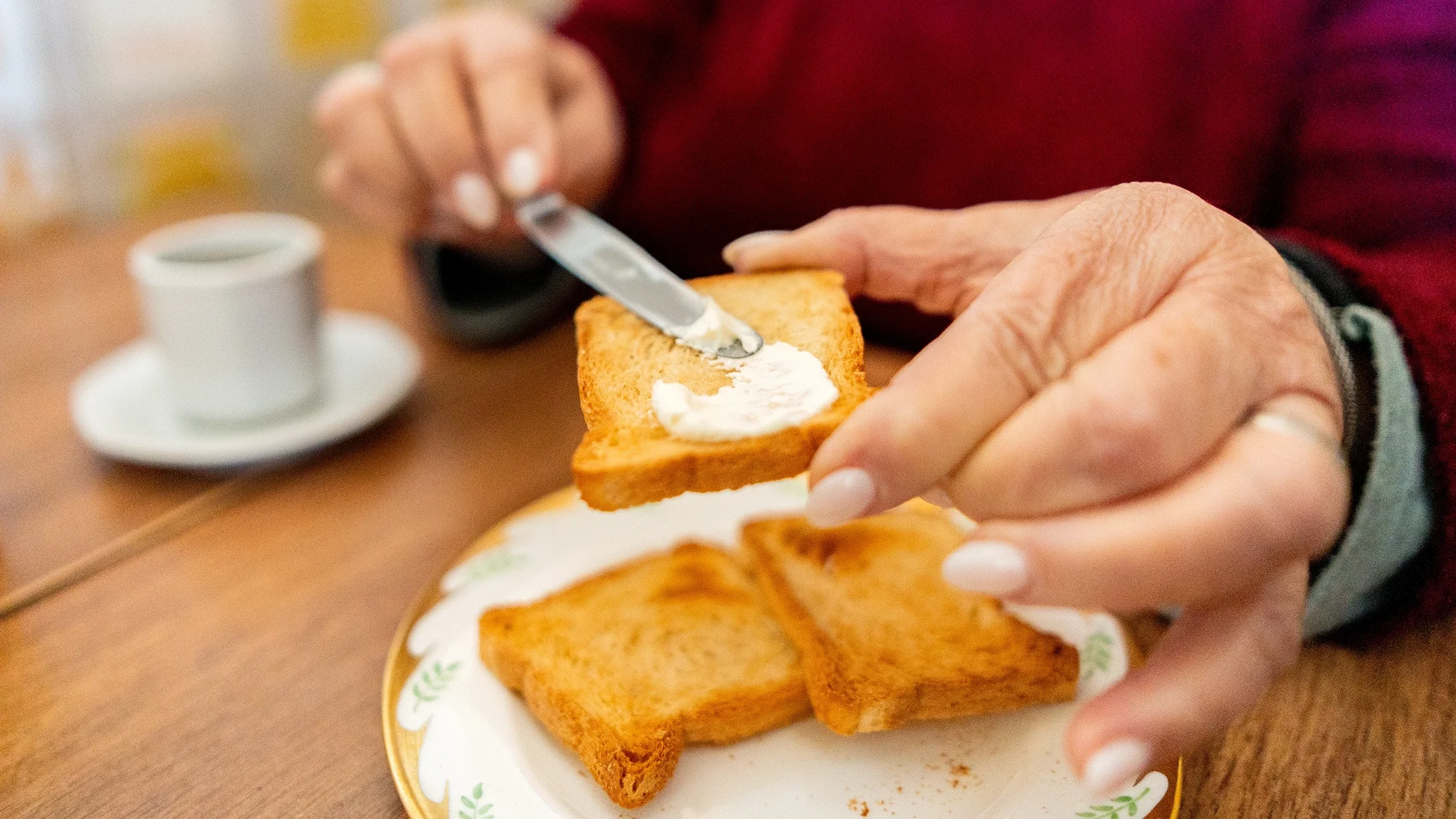
Your body needs fat every day. So it’s okay to use a teaspoon of butter on toast or over vegetables. Just keep in mind that butter counts toward your daily saturated fat intake, which is best to keep below 10% of your daily calories. For example, if you eat 2,000 calories a day, you should have no more than 22 g of saturated fat.
Margarine has the same fat content as butter. But instead of dairy fat, the oils are made from vegetable oils. These spreads tend to be more processed than butter. If you use a small amount, either option is an okay choice.
It depends. If you’re choosing spray butter over regular butter because you think it’s better for you, you may be mistaken. It does have fewer calories and less saturated fat. But the ingredients list is long and may include processed ingredients that help keep the product shelf stable. The best choice depends on your food preferences and priorities.
Your body needs fat every day. So it’s okay to use a teaspoon of butter on toast or over vegetables. Just keep in mind that butter counts toward your daily saturated fat intake, which is best to keep below 10% of your daily calories. For example, if you eat 2,000 calories a day, you should have no more than 22 g of saturated fat.
Margarine has the same fat content as butter. But instead of dairy fat, the oils are made from vegetable oils. These spreads tend to be more processed than butter. If you use a small amount, either option is an okay choice.
It depends. If you’re choosing spray butter over regular butter because you think it’s better for you, you may be mistaken. It does have fewer calories and less saturated fat. But the ingredients list is long and may include processed ingredients that help keep the product shelf stable. The best choice depends on your food preferences and priorities.
The bottom line
Butter isn’t bad for you. In small amounts, it may even have some benefits for your metabolism, heart, and blood sugar. But that doesn’t mean you should eat more of it. You just don’t need to avoid it. Butter is a real food with minimal ingredients and has been used in cooking and baking for thousands of years. If you like the taste of butter more than the alternatives, you can include it as part of your diet without feeling guilty.

Why trust our experts?



References
Alothman, A., et al. (2019).The “grass-fed” milk story: Understanding the impact of pasture feeding on the composition and quality of bovine milk. Foods.
MyFoodData. (n.d.). Unsalted butter.
Ozbun, T. (2026). Per capita consumption of butter in the United States from 2000 to 2024 (in pounds)* Per capita consumption of butter in the U.S. 2000-2024. Statista.
United States Department of Agriculture. (2025). Dietary guidelines for Americans, 2025-2030.
Zhou, X., et al . (2025). Associations of common fats and oils with cardiometabolic health outcomes in the Framingham Offspring cohort. European Journal of Clinical Nutrition.