Key takeaways:
Washing fruits and vegetables is important for avoiding foodborne illnesses and removing pesticides.
You don’t need fancy soaps to clean produce. Plain water will do. You can also try using vinegar or baking soda to clean fruits and vegetables.
Storing your produce correctly and avoiding cross-contamination is also important for staying safe.
About 48 million people — roughly 1 in 6 — get a foodborne illness every year in the U.S. You might think these cases are all the result of animal-based products, like meat and poultry. The truth, though, is that fruits and vegetables actually cause more foodborne illness than any other category of food, including meats, dairy, and even seafood.
This doesn’t mean you should stop eating fruits and veggies. They’re a crucial part of a nutritious diet. But it’s worth taking the time to learn how to store, wash, and handle your produce to avoid illness.
What are the benefits of washing fruits and vegetables?
The most important reason to wash produce is to reduce the risk of foodborne illnesses.
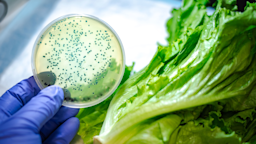
You can get food poisoning from eating raw fruits and vegetables. Fruits and vegetables can be contaminated with different types of bacteria, including:
Listeria monocytogenes (Listeria)
Contamination can happen in various ways, including improper handling or contact with animals or contaminated water. Produce can also take in pathogens through the roots.
There’s also potential for contamination once the produce is in your home. For example, produce can come into contact with bacteria or viruses when you touch it, or if you put it on an unsanitary surface. There’s also a risk for cross-contamination from meat and seafood drippings in your refrigerator or on your counter.
Bacteria and other germs are generally found on the outside of fruits and vegetables, as this is what comes into contact with soil and contaminated surfaces. But they can migrate to the flesh of produce when you cut into them. This is why it’s important to wash produce, even if you don’t plan on eating the skin.
How to wash fruits and vegetables
When washing fruits and vegetables, it’s best to use a clean bowl rather than your sink basin, as the sink itself may harbor bacteria. Here are six basic steps for washing your produce:
Before handling fruits and vegetables, wash your hands with warm soap and water for 20 seconds. This will prevent contaminating the produce.
Rinse off any visible soil or dirt with cool to room temperature water. Warm or hot water can move into the produce and bring microorganisms with it.
While running your fruits and vegetables under tap water, gently rub the surface. There’s no need to use special washes or soap. Don’t use bleach or any other products that could be toxic if swallowed.
If the produce is firm (more on this below), use a clean vegetable brush to scrub it.
Gently pat the produce dry with a clean paper towel or cloth.
You can now enjoy your fruits and veggies! Or, if you want to eat your produce later, make sure it’s dry and then store it in the refrigerator so it lasts longer.
Tips on washing specific fruits and vegetables
Some fruits and vegetables need to be washed in a specific way. Here are a few that may need extra care:
Leafy greens: Always remove the outermost leaves and throw them away, as they’re more likely to be contaminated. Rinse the rest of the leaves under running water, gently rubbing each one. If the greens are labeled “pre-washed,” there’s no need to wash them again at home.
Fragile produce: For fragile produce like strawberries, place them in a colander before rinsing them under running water. Gently rub each piece to remove any dirt. If the produce is covered in soil, soak it first in plain water to loosen the dirt. After washing, dry them with a clean paper towel.
Firm fruits: The skin of fruit is rich in fiber, but it can also be the most contaminated part. For tougher fruits, use a produce brush in addition to running them under clean water.
Washing produce with vinegar
The science is mixed when it comes to using vinegar to wash fruits and vegetables. One study found no difference in contamination when comparing the surfaces of produce washed in a vinegar solution with those washed in tap water.

Read more like this
Explore these related articles, suggested for readers like you.

But another study showed that vinegar was effective at killing E. coli, especially when combined with salt. Another study showed that vinegar worked against Listeria, but not salmonella.
So, while there isn’t substantial evidence to support it, using vinegar to wash vegetables isn’t harmful.
If you want to wash your produce with vinegar, there are two methods you can try: the spray bottle method or the soak method.
Spray bottle method
Follow these steps to wash your produce with vinegar using the spray bottle method:
Combine 1 part distilled white vinegar with 3 parts room temperature water. You can also add a pinch of table salt if you want.
Pour the solution into a spray bottle and shake it well.
Place the produce in a colander and spray it all over with the vinegar wash.
Let the produce sit for 5 minutes. Rinse the produce well with tap water, making sure to rub off any residue.
Pat the produce dry with a clean paper towel.
Soak method
Follow these steps to wash your produce with vinegar using the soak method:
Combine 1 cup of distilled white vinegar with 3 to 4 cups of room temperature water in a large bowl. Add a pinch of salt.
Add the produce to the bowl, making sure all parts are submerged in the solution.
Let the produce soak for 5 minutes.
Pour the produce into a colander to strain out the solution.
Rinse with running tap water until all of the vinegar solution is removed. While rinsing, rub off any remaining residue.
Pat the produce dry with a clean paper towel.
How to wash pesticides off fruits and vegetables
Unfortunately, there’s no method that’s 100% effective at removing pesticide residue from produce.
The Environmental Protection Agency (EPA) sets limits on how much pesticide residue is allowed on foods to ensure food safety. These limits are called tolerances. Pesticide residue on produce has to comply with these tolerances.
Still, most people don’t want to consume pesticides in any amount if they can help it. In addition to the washing steps listed above, here are some additional strategies for cleaning pesticides off your produce:
Peel your fruit. A 2024 study suggests that washing fruit isn’t enough to prevent pesticide ingestion, and that peeling fruit is required to remove potential contamination on the skin and outer pulp. Peeling produce can be a more thorough way to remove pesticides from fruits and vegetables.
Use a scrub brush. A clean brush can help to scrub pesticides from the outside of produce, especially firm items. Soft produce can’t be scrubbed as easily, but placing it in a colander and spraying it with water can help.
Use baking soda. Washing produce in baking soda (bicarbonate of soda) may be slightly better at removing pesticides than tap water alone (more on this below).
Buy organic fruit when you can. Organic produce is grown and processed without synthetic fertilizers or pesticides. But pesticides derived from natural sources (such as biological pesticides) may still be used. Since organic fruit can be more expensive, you may want to prioritize buying organic foods that are most exposed to pesticides.
Washing produce with baking soda
Some research suggests that washing fruit in baking soda may be better at removing pesticides than water alone. But this study is limited to just two pesticides and focuses only on apples. That said, baking soda is known to be a powerful yet gentle cleanser on all kinds of surfaces. And it’s safe to use. So, cleansing your produce with baking soda is harmless to try.
Here’s how to wash produce using baking soda:
To a large mixing bowl, add 1 tsp of baking soda for every 2 cups of cool water.
Submerge the produce in the baking soda water and swish it around.
Let it soak for 12 to 15 minutes.
For firm fruits or vegetables, scrub with a soft-bristle vegetable brush. For softer produce, rub it gently with your fingers.
Remove the produce from the water, and pat it dry with a towel or allow it to air-dry thoroughly before preparing or eating.
Frequently asked questions
If you want to try washing your produce with a vinegar solution, you can do so with any fruits and vegetables. A spray solution may work best for whole fruits like:
Apples
Peaches
Pears
Plums
A soak may be better for small and/or delicate produce like:
Berries
Grapes
Mushrooms
Delicate leafy vegetables
No, your fruit won’t taste like vinegar after washing. The vinegar solution is rinsed off with tap water as part of the cleansing process.
Both vinegar and baking soda solutions can be effective at cleaning produce, though it’s not clear just how much more effective either method is compared to washing with water alone. Each method has pros and cons:
Vinegar may reduce harmful bacteria, but its acidity may damage soft fruits and vegetables.
Baking soda is a powerful scrubbing agent, but its alkalinity may break down delicate produce if it’s left on too long.
If you want to try washing your produce with a vinegar solution, you can do so with any fruits and vegetables. A spray solution may work best for whole fruits like:
Apples
Peaches
Pears
Plums
A soak may be better for small and/or delicate produce like:
Berries
Grapes
Mushrooms
Delicate leafy vegetables
No, your fruit won’t taste like vinegar after washing. The vinegar solution is rinsed off with tap water as part of the cleansing process.
Both vinegar and baking soda solutions can be effective at cleaning produce, though it’s not clear just how much more effective either method is compared to washing with water alone. Each method has pros and cons:
Vinegar may reduce harmful bacteria, but its acidity may damage soft fruits and vegetables.
Baking soda is a powerful scrubbing agent, but its alkalinity may break down delicate produce if it’s left on too long.
The bottom line
The risk of food poisoning or pesticide residue shouldn’t be a reason to avoid fruits and vegetables. By learning how to properly wash, store, and prepare fruits and vegetables, you can enjoy these nutrient-rich foods without worry. Washing produce with water doesn’t take much extra time and helps ensure you’re eating food that’s as free of contaminants as possible.

Why trust our experts?



References
California Department of Public Health (2025). Foodborne illnesses and outbreaks.
Centers for Disease Control and Prevention. (2013). Attribution of foodborne illness, 1998-2008.
Entani, E., et al. (1998). Antibacterial action of vinegar against food-borne pathogenic bacteria including Escherichia coli O157:H7. Journal of Food Protection.
EWG’s Shopper’s Guide. (2025). The 2025 dirty dozen.
Hirneisen, K. A., et al. (2012). Human enteric pathogen internalization by root uptake into food crops. Foodborne Pathogens and Disease.
Kilonzo-Nthenge, A., et al. (2006). Efficacy of home washing methods in controlling surface microbial contamination on fresh produce. Journal of Food Protection.
Lin, Z., et al. (2024). Cellulose surface nanoengineering for visualizing food safety. Nano Letters.
Pezzuto, A., et al. (2016). Effectiveness of washing procedures in reducing Salmonella enterica and Listeria monocytogenes on a raw leafy green vegetable (eruca vesicaria). Frontiers in Microbiology.
U.S. Environmental Protection Agency. (2005). Citizen’s guide to pest control and pesticide safety.
U.S. Environmental Protection Agency. (2025). Regulation of pesticide residues on food.
U.S. Food and Drug Administration. (2018). Food safety quick tips.
U.S. Food and Drug Administration. (2021). 7 tips for cleaning fruits, vegetables.
Yang, T., et al. (2017). Effectiveness of commercial and homemade washing agents in removing pesticide residues on and in apples. Journal of Agricultural and Food Chemistry.