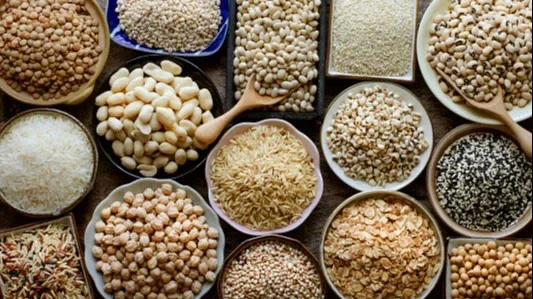
Gluten-free flours might be taking up a bit more of your grocery store shelves every passing year, but the one that tends to be the easiest to find is still white rice flour. It’s a great substitute for all-purpose white flour in baking since it creates a light and delicate texture for cakes, muffins, and pastries. It’s also way cheaper than, say, coconut flour. The downside? White rice flour has just two grams of protein per serving. Even all-purpose flour — often criticized for its subpar nutritional value — squeezes in four grams.
A 2015 study in Digestive Diseases notes that a gluten-free diet is the only accepted treatment for celiac disease, but it can lead to multiple nutritional deficiencies of macro- and micronutrients. The best solution? A rotation of gluten-free grains to check off all the necessary complex carbs, fiber, and — you guessed it — protein.
References
Theethira, TG, et al. Celiac disease and the gluten-free diet: consequences and recommendations for improvement. Digestive Diseases and Sciences.
U.S. Department of Agriculture. (2019). Chickpea flour (besan).
U.S. Department of Education. (2019). Organic oat flour.
U.S. Department of Agriculture. (2018). Organic whole grain amaranth flour.
U.S. Department of Agriculture. (2021). Organic whole grain buckwheat flour.
U.S. Department of Agriculture. (2019). Stone ground sweet white rice flour.
U.S. Department of Agriculture. (2021). Super-fine natural almond flour from whole almonds.
U.S. Department of Agriculture. (2019). 'Sweet' white sorghum flour.
U.S. Department of Agriculture. (2019). Unbleached white all-purpose organic flour.
U.S. Department of Agriculture. (2018). Whole grain quinoa flour.
U.S. Department of Agriculture. (2020). Whole grain teff.
U.S. Department of Agriculture. (2019). Whole ground soy flour 35% protein.

Why trust our experts?