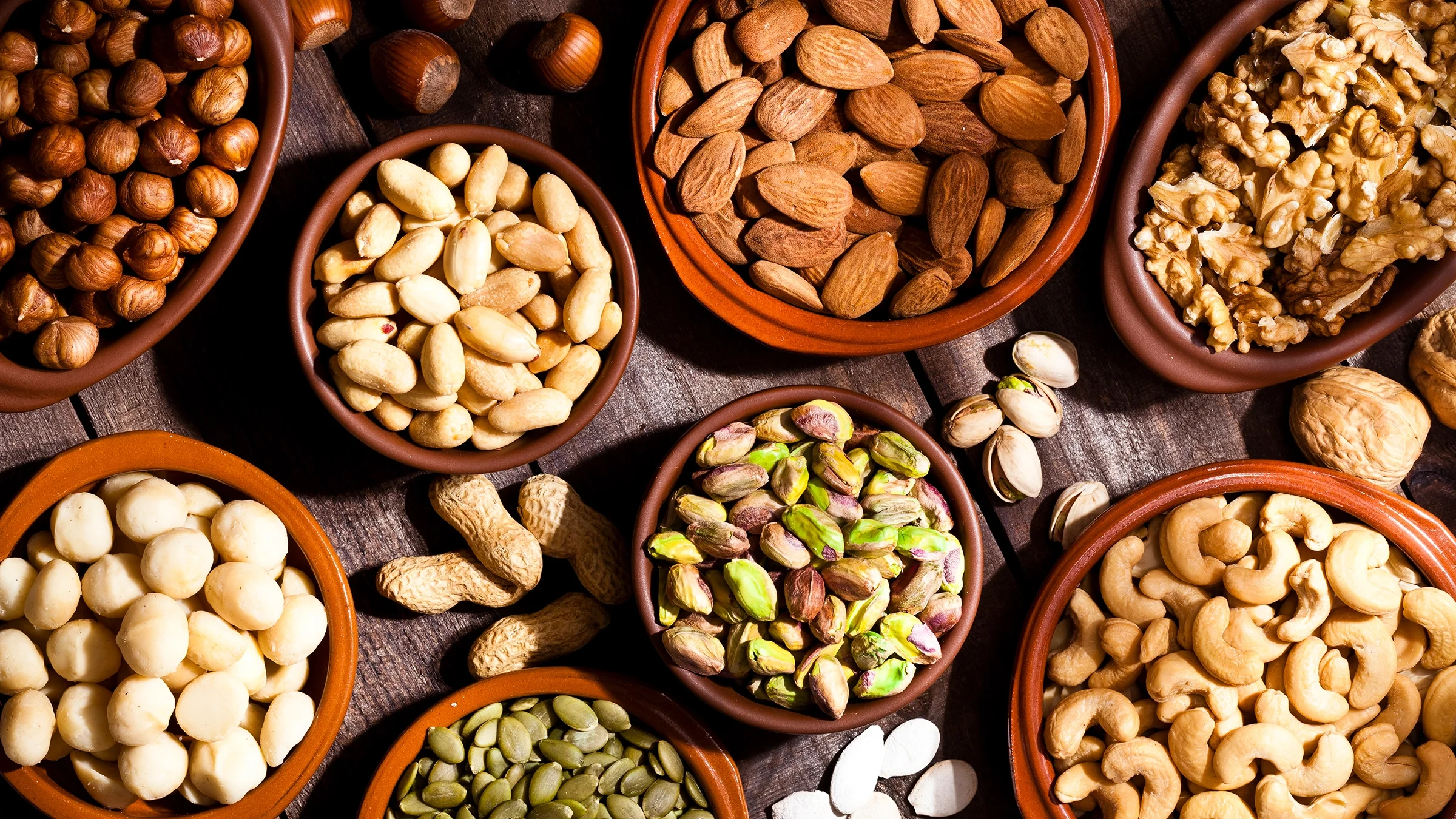
Key takeaways:
All nuts provide dietary fiber, but some nuts are higher in fiber than others. Nuts with the most fiber include almonds, pistachios, and hazelnuts.
Nuts can’t give you all the fiber you need each day. But adding high-fiber nuts to your diet can help you meet your daily goals. Fiber is important to support your gut, blood sugar, and heart health.
Aside from fiber, nuts have essential nutrients like protein, healthy unsaturated fats, and vitamins and minerals.
Nuts are nutritional superstars. You may have heard that they’re a good source of plant-based protein. You may also know that they provide plenty of vitamins and minerals like magnesium and vitamin E, an antioxidant. But did you know that nuts also have fiber to help support the health of your heart, gut, and more? Let’s take a look at the top six high-fiber nuts.
1. Almonds
Fiber per ounce: 3.6 g
Almonds are the most popular tree nut in the U.S. — and that’s good news because they have so many health benefits. Not only do almonds have more fiber than other nuts, they’re also one of the highest in protein. The fiber and protein in almonds help you feel full, which can help you eat less overall. In this way, almonds are a great choice to help with weight management or weight loss.
Almonds are also an excellent source of healthy unsaturated fats and vitamin E, both of which support heart health. Research has shown that almonds may help lower “bad” low-density lipoprotein (LDL) cholesterol and help increase “good” high-density lipoprotein (HDL) cholesterol.
Try adding slivered almonds to salads, mixing them into yogurt bowls, or sprinkling them on top of salad or cooked greens. You can also use almond butter instead of peanut butter on sandwiches or as a dip for fresh fruit.
2. Pistachios
Fiber per ounce: 3 g
It takes some work to get pistachios out of their shell, but these tiny nuts have a lot to offer. Along with being one of the top high-fiber nuts, pistachios are also one of the highest in potassium. Just 1 oz gives you 6% of your daily potassium needs. Potassium is crucial for controlling blood pressure and heart rhythm, and promoting normal muscle contraction.
Pistachios are great in trail mix or mixed into granola. You can enjoy them raw or roasted.
3. Hazelnuts
Fiber per ounce: 2.8 g
Hazelnuts (also called filberts) may not be as well-known as some other nuts, but they’re worth having on your radar. They have more fat than some other nuts, but nearly all their fat comes from healthy unsaturated fats. The monounsaturated fats in hazelnuts — along with vitamins, minerals, and antioxidants — help to reduce inflammation in your body. And reducing chronic inflammation helps protect your body from a wide variety of health conditions like heart disease, diabetes, and some types of cancer.
You might be familiar with the sweet hazelnut spread Nutella, but that’s not the only way to enjoy hazelnuts. Snack on them roasted with salt or cinnamon. You can also crush them up and use them to coat chicken breast or a fish fillet before cooking.
4. Pecans
Fiber per ounce: 2.7 g
Pecans have more than just fiber going for them. They’re also an excellent source of antioxidants. In fact, the U.S. Department of Agriculture (USDA) says pecans are the most antioxidant-rich tree nut. Antioxidants are nutrients that help protect your body’s cells from damage caused by unstable molecules called free radicals. When too many free radicals can build up in your body, they can cause oxidative stress. Oxidative stress increases your risk of many chronic health conditions, including:
Cancer
Type 2 diabetes
Heart disease
Alzheimer’s and Parkinson’s disease
Pecans are also very low in carbohydrates — only 4 g per serving — and over half of that comes from fiber. High-fiber, low-carbohydrate foods like pecans can help you manage your weight, balance your blood sugar, and even protect your heart.
5. Peanuts
Fiber per ounce: 2.4 g
Peanuts are technically a legume, not nuts, because they grow in the ground instead of on trees. But many people think of peanuts (and use them) as nuts, which is why they’re included on this list.
In addition to being a good source of fiber, peanuts have the most protein of any nut. This makes peanuts an excellent protein source choice for vegans, vegetarians, or anyone following a plant-based diet. Peanuts also have folate, a B vitamin that helps your body make red blood cells and DNA. Just 1 oz of peanuts provides 17% of your daily folate needs.
Many people eat peanuts in the form of peanut butter — in sandwiches, on fruit, or mixed into oatmeal or smoothies. You can also toss peanuts into stir-fries or sprinkle crushed peanuts on yogurt or ice cream. Of course, they’re also great on their own as a snack.
6. Macadamia nuts
Fiber per ounce: 2.4 g
At first glance, macadamia nuts might not seem to have as many advantages as other nuts on this list. They have the most calories and fat, and they’re lower in fiber than many other nuts. They also tend to be more expensive. But macadamia nuts are very high in monounsaturated fats — a type of fat that can help maintain or increase your HDL (“good”) cholesterol.
You may know macadamia nuts best for their role alongside white chocolate chips in cookies. But you can also add them to other baked goods for extra crunch and a nutrient boost. Snack on them raw or dry roasted or mix them into a homemade trail mix for a satisfying snack.
Comparing the nutrients in nuts
Here’s a comparison of the fiber and other nutrients in a 1-oz serving of various types of raw nuts. Percentages are based on the daily value (DV), or how much of a nutrient you’re recommended to eat per day (scroll right to view the full chart).
Calories | Fiber | Protein | Fat | Total carbs | Potassium | Vitamin E | Magnesium | |
|---|---|---|---|---|---|---|---|---|
Almonds | 163 | 3.6 g | 6 g | 14 g | 6 g | 208 mg (4% DV) | 7.3 mg (49% DV) | 77 mg (18% DV) |
Pistachios | 159 | 3 g | 6 g | 13 g | 8 g | 291 mg (6% DV) | 0.8 mg (5% DV) | 34 mg (8% DV) |
Hazelnuts | 178 | 2.8 g | 4 g | 17 g | 5 g | 193 mg (4% DV) | 4.3 mg (28% DV) | 46 mg (11% DV) |
Pecans | 196 | 2.7 g | 3 g | 20 g | 4 g | 116 mg (2% DV) | 0.4 mg (3% DV) | 34 mg (8% DV) |
Peanuts | 161 | 2.4 g | 7 g | 14 g | 5 g | 200 mg (4% DV) | 2.4 mg (16% DV) | 48 mg (11% DV) |
Macadamia nuts | 204 | 2.4 g | 2 g | 21.5 g | 4 g | 105 mg (2% DV) | 0.2 mg (1% DV) | 37 mg (9% DV) |
Why is fiber important?
Getting enough fiber in your diet can benefit your health in several ways, including:
Supporting a healthy gut microbiome
Making it easier to have regular bowel movements
Stabilizing blood sugar levels
Lowering cholesterol levels, which helps support a healthy heart
Reducing your risk of some cancers, like colon cancer
Helping you find a comfortable weight
Boosting your immune system
Because fiber does so many important things in your body, it’s important to eat fiber-rich foods every day. Aside from nuts, there are plenty of plant-based foods that are great sources of fiber, including:
Whole grains
Beans
Seeds, like chia seeds, flax seeds, and pumpkin seeds
Fruits and dried fruit
Vegetables
How much fiber do you need every day?
Most adults need about 14 g of fiber for every 1,000 calories they eat each day, according to the National Academy of Medicine. Here’s what that looks like based on your age and sex:
Women (ages 19 to 50): 25 g per day
Women (ages 51 and older): 21 g per day
Men (ages 18 to 50): 38 g per day
Men (ages 51 and older): 30 g per day
Can you eat too much fiber?
Most people in the U.S. don’t get enough fiber. But it’s also possible to get too much fiber. Signs that you may be getting too much fiber include:
Gas
Bloating
Changes in your bowel movements
Abdominal pain
Feeling overly full or uncomfortable
To prevent these symptoms, increase your fiber intake slowly instead of all at once. And be sure to drink plenty of water when increasing your fiber intake. Fiber needs water to work properly.
Frequently asked questions
With just 4 g to 10 g of carbohydrates per serving, nuts are a low-carbohydrate, high-fiber food. About half of the carbohydrates in nuts come from fiber, which your body doesn’t digest. Pecans are particularly low in carbohydrates, with only 4 g per ounce. And they still provide a good amount of fiber — 2.7 g per ounce.
It would be difficult to get all your fiber from nuts. But even if you could, it isn’t a good idea. Getting all your fiber from just one type of food means you might miss out on other important nutrients that come in fruits, vegetables, and other high-fiber foods. That’s why it’s best to get your fiber from a variety of food sources.
With just 4 g to 10 g of carbohydrates per serving, nuts are a low-carbohydrate, high-fiber food. About half of the carbohydrates in nuts come from fiber, which your body doesn’t digest. Pecans are particularly low in carbohydrates, with only 4 g per ounce. And they still provide a good amount of fiber — 2.7 g per ounce.
It would be difficult to get all your fiber from nuts. But even if you could, it isn’t a good idea. Getting all your fiber from just one type of food means you might miss out on other important nutrients that come in fruits, vegetables, and other high-fiber foods. That’s why it’s best to get your fiber from a variety of food sources.
All nuts have fiber, but some types don’t have high amounts. Cashews and pine nuts are among the lowest in fiber. Each one provides just under 1 g of fiber per serving.
The bottom line
The top high-fiber nuts include almonds, pistachios, and peanuts. While nuts can’t give you all the fiber you need each day, they can help you reach your daily fiber goals. Nuts also give you other essential nutrients like protein, antioxidants, vitamins, and minerals. Eating nuts as part of a high-fiber diet can help support a healthy digestive tract, a strong heart, and a comfortable weight.

Why trust our experts?




References
Bentley, J. (2019). Almonds lead increase in tree nut consumption. Economic Research Service.
Curb, J. D., et al. (2000). Serum lipid effects of a high–monounsaturated fat diet based on macadamia nuts. JAMA Internal Medicine.
Jenkins, D. J. A., et al. (2010). Adding monounsaturated fatty acids to a dietary portfolio of cholesterol-lowering foods in hypercholesterolemia. Canadian Medical Association Journal.
Kalita, S., et al. (2018). Almonds and cardiovascular health: A review. Nutrients.
MyFoodData. (n.d.). Almonds.
MyFoodData. (n.d.). Hazelnuts.
MyFoodData. (n.d.). Pecans.
MyFoodData. (n.d.). Pine nuts.
MyFoodData. (n.d.). Raw cashews.
MyFoodData. (n.d.). Raw macadamia nuts.
MyFoodData. (n.d.). Raw peanuts.
MyFoodData. (n.d.). Raw pistachio nuts.
National Pecan Shellers Association. (n.d.). USDA: Pecans still #1 for antioxidants among all nuts.
Office of Dietary Supplements. (2022). Potassium. National Institute of Health.
Quagliani, D., et al. (2015). Closing America’s fiber intake gap: Communication strategies from a food and fiber summit. American Journal of Lifestyle Medicine.
Reddy, V. P. (2023). Oxidative stress in health and disease. Biomedicines.
Toomer, O. T. (2017). Nutritional chemistry of the peanut (Arachis hypogaea). Critical Reviews in Food Science and Nutrition.